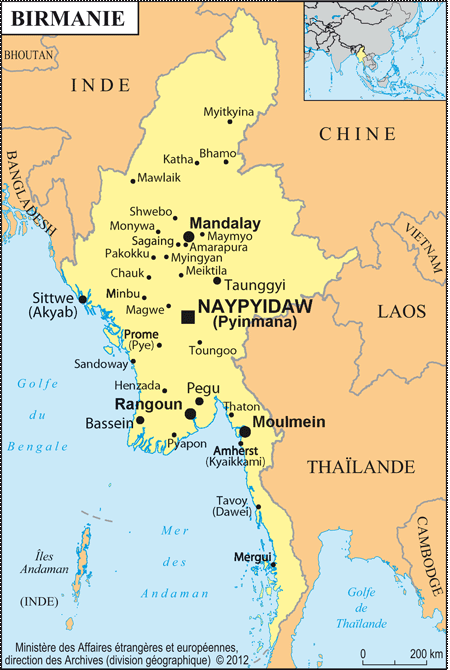
 The White House has announced a partial lifting of sanctions on Burma in recognition of progress in its democratic transition. Restrictions are to be dropped on state-owned banks and businesses, although some 100 companies and individuals linked to the armed forces will remain iced. This relaxation comes at the request of longtime democracy advocate Aung San Suu Kyi, who although barred from holding the presidency is effectively the country’s leader following November’s elections. But human rights concerns remain—especially around the fate of the Rohingya Muslims, persecuted and made stateless by the military junta that has now (mostly) surrendered power. And the multiple ethnic insurgencies in Burma’s opium-producing northern mountains, while receiving less world media attention lately, continue to vex the country.
In but the most recent abuse in these remote hinterlands, two civilians were this week apparently arbitrarily detained and beaten by Burmese army troops on suspicion of being Kachin Independence Army (KIA) militants in Waingmaw township, Kachin state. Despite a (partial) ceasefire signed ahead of the elections last year, much of Burma’s north remains a patchwork of areas controlled by militias either supported by or opposed to the regular army, known as the Tatmadaw—and all with their hands in the opium trade. And government eradication efforts leave opium-growing peasants little choice but to align with whatever militia will offer them some protection. The ceasefire accord (which only included a fraction of the militias) only mentions an eventual « consultation » on the eradication program. But this is unlikely to buy the program much support.
As Tom Kramer, a researcher with the Drugs and Democracy Program of the Amsterdam-based Transnational Institute told Burma’s Myanmar Times: « First of all, most opium farmers grow poppies due to poverty, and their needs have not been addressed yet. Second, a lot of opium and heroin production is now in areas controlled by Tatmadaw-backed militias, who are not included in the peace process. »
READ more:
http://ww4report.com/node/14862
00000000000000000000000000000000000000000
 AVISEUR INTERNATIONAL