Aviseur International renseigne, sans complaisance, sur la problématique de la drogue, du narcotrafic, de la corruption et sur les politiques mises en œuvre par les différents Etats et les dérives que s'autorisent les fonctionnaires des administrations — aviseurinternational@proton.me — 33 (0) 6 84 30 31 81
Latino, Afghan Drug Mafias Invest Over $3 Trln into ‘Business’ in 15 Years
11:59 16.12.2015
The functioning of narcotics production in both hemispheres of planetary centers with heroin in Afghanistan and cocaine in South America is comparable to the activities of global reserve systems of the criminal world supporting trafficking in Africa, Central America, and Central Asia, according to the head of Russia’s narcotics police.
MOSCOW (Sputnik) – Drug mafias from Latin America and Afghanistan have invested $3 trillion in developing their illicit business throughout the world, the head of Russia’s narcotics police said Wednesday.
La producción de la cocaína en América Latina aumentó 100 veces en medio siglo, comunicó este miércoles el director del Servicio Federal ruso de Control de Drogas (FSKN, en sus siglas rusas), Víctor Ivanov.
« El nivel de la producción de la cocaína en América Latina se elevó 100 veces en 50 años », dijo.
Ivanov detalló que en los años 50 la región producía 10 toneladas anuales de la cocaína, y en 2006 la cantidad ya fue de 1.030 toneladas.
Le code de la sécurité intérieure est complété par un livre VIII intitulé : « Du renseignement » et comprenant un article L. 801-1 ainsi rédigé : « Art. L. 801-1. – Le respect de la vie privée, dans toutes ses composantes, notamment le secret des correspondances, la protection des données personnelles et l’inviolabilité du domicile, est garanti par la loi. L’autorité publique ne peut y porter atteinte que dans les seuls cas de nécessité d’intérêt public prévus par la…
REPLAY – Afin de débusquer les 2,3 tonnes de cocaïne à l’intérieur du cargo, les douanes ont dû procéder à des investigations puis à une fouille poussée de plusieurs heures.
Pour pister le cargo moldave qui faisait route dans l’Atlantique, les douanes ont dû enquêter à partir d’indices qui les avaient alertés sur la possible présence d’une marchandise illégale. « La zone de navigation particulièrement sensible, le fait que ce bateau soit dans un état de vétusté assez avancé. On s’est rendu compte que le trajet qu’il effectuait depuis la zone Amérique du sud s’effectuait à vide… Autant de critères qui ont permis d’arriver à affiner un peu le ciblage et l’analyse », révèle-t-il. Une fouille d’une nuit entière
Après avoir intercepté le cargo mis à quai à Boulogne-sur-Mer, plusieurs agents spécialisés, sachant lire un plan du bateau et repérer les failles, ont passé plusieurs heures à la recherche de la marchandise, finalement débusquée derrière une plaque dans la salle des machines. Débutée à 20h30, la fouille aura duré toute la nuit avant que la cocaïne ne soit acheminée vers un autre endroit tenu secret. Au total, les sacs de drogue ont été estimés à environ 500 millions d’euros.
« Au regard de la quantité de marchandise, on a intérêt à s’entourer de toutes les précautions et à pouvoir détruire la marchandise le plus rapidement possible », confie ainsi l’invité de RTL Grand Soir. À l’heure actuelle, il n’en reste d’ailleurs quasiment plus rien. « La règle est de pouvoir détruire le plus rapidement possible ce type de produit après avoir pris des échantillons qui permettent de déterminer la pureté du produit (…) Je pense qu’à l’heure qu’il est, il ne doit plus rester énormément de marchandises », conclut-il.
British law enforcement officers have been working with drug officers in Colombia since 1989 in a bid to stem the flow of cocaine into the UK. For the first time, the National Crime Agency has provided a glimpse of the work it is doing there.
In the early hours of the morning, covered by darkness, a group of anti-narcotics special forces surround a cocaine-producing lab in a mountainous and forested area at Norte de Santander, north-eastern Colombia, close to the border with Venezuela.
They wait silently while a constant drizzle falls on them.
At about 5am, when the lab workers start to arrive, the officers raid the site – a complex of some five big green and black canvas tarpaulins set up within the dense forest – filled with big cans of chemicals, microwaves, a press, and other devices used in the cocaine production process.
‘Good result’
They manage to capture one man and collect evidence – among it the carved plastic slates used to brand the cocaine bricks – before blowing the lab up with C4 explosives.
The intelligence needed to find the lab and carry out the raid was gathered with help from officers of the UK’s National Crime Agency (NCA) working in Colombia.
Image caption Colombian police raided a cocaine lab near the Venezuelan border with help from UK officers
Image caption Officers seized plastic stamps used to brand the cocaine blocks
Image caption The cocaine lab was blown up with explosives after the raid
One of the NCA’s officers, whose identity cannot be revealed, was at the raid.
« Very happy, yeah, very happy after today. We’ve had a good exchange of intelligence with neighbouring countries and other NCA officers in other countries, so yeah, it’s been a good result, » he said.
« It just means that the flow of cocaine going into the UK is lessened. I mean, obviously, this is a small lab and this happens all the time but the more that we can do here working with the anti-narcotics police, the better. »
Image caption The NCA says a « large percentage » of the cocaine in the UK originates in Colombia
« Consumption of cocaine is still a major problem for the United Kingdom, » said Steve Reynolds, the NCA’s deputy director and head of international operations.
« We’ve got a large community of drug consumers and it does great harm to society, both in terms of health and in terms of feeding other forms of organised crime. »
Mr Reynolds, who spent 12 years working in Colombia, said a « large percentage » of the cocaine trafficked into the UK originated in the South American country.
« If we can help through a partnership with the Colombian law enforcement agencies to deal with that problem here at source, then it’s something that we feel that we should do, » he said.
« We are here with a small team of experts, with resources to support our Colombian colleagues to work in operations against specific drug trafficking groups. »
SAS trained
Beyond helping with intelligence gathering, the UK assists the Colombian anti-narcotics police with technical support and training.
The Jungla special commandos from the anti-narcotics police that raided the cocaine lab in Norte de Santander were originally trained by the UK’s SAS in 1989.
Image caption Colombian police believe they seize about half the cocaine produced in the country
British officers started operating on the ground in Colombia in the same year, first as British law enforcement, then in 2006 as the Serious and Organised Crime Agency, which was superseded by the NCA in 2013.
The UK’s financial contribution to Colombia is much more limited than that of the US, which has put $10bn into Colombia’s defence and security services over the past 15 years, according to Colombian government sources.
Having less spending power means the UK is much more strategic when choosing objectives and preparing operations.
The Colombian government says the British contribution to the fight against organised crime is invaluable, and that without its help, its officers would not be able to achieve the same results.
For its part, the NCA considers its working relationship with Colombia’s anti-narcotics authorities one of the best it has in Latin America.
Profitable business
It is estimated that a highly pure kilo of cocaine costs about $1,500 (£1,000) before leaving a Colombian lab, but can reach as much as $50,000 (£33,000) when it arrives in the US or Europe.
Image caption Traffickers use land, air and sea routes to smuggle cocaine out of Colombia
Dopo il sequestro di circa 130 kg portato a termine la scorsa settimana, i finanzieri del Nucleo di polizia tributaria di Venezia hanno intercettato un ulteriore carico di cocaina. Nella giornata del 9 dicembre, infatti, dal porto di Livorno è giunto un container destinato allo sdoganamento presso gli spazi doganali del porto veneziano.
Il carico ufficialmente dichiarato era costituito da banane, ma le Fiamme Gialle di Venezia sapevano già, grazie alle investigazioni condotte, che all’interno delle casse di frutta tropicale avrebbero trovato ben altro e, pertanto, hanno atteso l’arrivo del carico a Venezia con in mano un decreto di perquisizione della DDA veneziana.
Non appena giunto negli spazi doganali, il container è stato ispezionato a fondo dai militari del Nucleo di polizia tributaria, coadiuvati dai colleghi del II Gruppo di Venezia, dai “Baschi verdi” e dai funzionari dell’Agenzia delle Dogane.
Nel corso delle operazioni, nascosti fra i bancali, sono stati individuati 188 panetti di cocaina purissima, ciascuno del peso di circa 1.200 grammi, per un totale di oltre 220 kg.
Si trattava di una nuova partita di droga destinata al sodalizio criminale ‘ndranghetista smantellato la scorsa settimana, operante principalmente nel veneziano e nell’hinterland milanese, che era stata ordinata nello scorso mese di novembre e che i trafficanti avrebbero dovuto prendere in consegna proprio in questi giorni.
Gli arresti di giovedì scorso, invece, hanno fatto saltare completamente i piani e non hanno reso possibile fermare il carico, che era già salpato a bordo di una nave dal porto di Turbo, in Colombia.
Des trafiquants imaginatifs qui tentaient de faire entrer de la cocaïne au Canada dans des cartons de jus d’orange ont récemment été déjoués par les policiers de la Gendarmerie royale du Canada (GRC), selon un communiqué diffusé mardi.
Ce sont des douaniers du port d’Halifax qui ont d’abord sonné l’alerte en novembre dernier après avoir inspecté un conteneur provenant de Trinité-et-Tobago. Après inspection, ceux-ci y ont découvert, parmi diverses denrées alimentaires, environ 44 litres de cocaïne liquide dans des cartons de jus d’orange.
La GRC a ensuite été saisie du dossier et a arrêté deux Torontois le 26 novembre après une enquête. Les hommes, tous deux âgés de 46 ans, ont été relâchés après une première comparution et font face à de nombreux chefs d’accusation reliés au trafic de stupéfiants.
«Les résultats de cette enquête montrent bien que la collaboration efficace entre la GRC et ses organismes partenaires permet d’assurer la sûreté et la sécurité des Canadiens», a affirmé la GRC dans un communiqué.
Les cartons de jus traficotés auraient pu permettre à des criminels de produire 24 kg de cocaïne en poudre, a souligné la GRC.
Une dizaine de personnes ont été mises en examen dans ce dossier, dont Christophe Rocancourt, «l’escroc des stars», soupçonné de complicité de recel, et plusieurs policiers. La drogue, dont la valeur à la revente est estimée à deux millions d’euros, n’a jamais été retrouvée.
Le policier placé en garde à vue ce mardi est un ex-collègue de Jonathan G., le principal suspect du vol, qui a toujours nié en être l’auteur, a-t-on appris de source judiciaire. Jonathan G. avait été arrêté peu après la découverte de la disparition de la drogue, mis en examen et placé en détention provisoire en août 2014.
Plusieurs scandales au Quai des Orfèvres
Le Quai des Orfèvres, temple de la police judiciaire parisienne depuis un siècle, a connu plusieurs scandales depuis deux ans. Fin 2013, le patron de la PJ parisienne Christian Flaesch avait été remercié après un appel à Brice Hortefeux prévenant l’ancien ministre d’une prochaine convocation.
En avril 2014, trois policiers de la Brigade de recherche et d’intervention (BRI), un autre service de la PJ parisienne, avaient été accusés de viol survenu dans ses locaux par une touriste canadienne. Deux d’entre eux sont mis en examen pour viol en réunion. En février dernier, le successeur de Christian Flaesch, Bernard Petit, avait de son côté été suspendu pour avoir violé le secret d’une enquête concernant l’ex-patron et fondateur du GIGN, Christian Prouteau
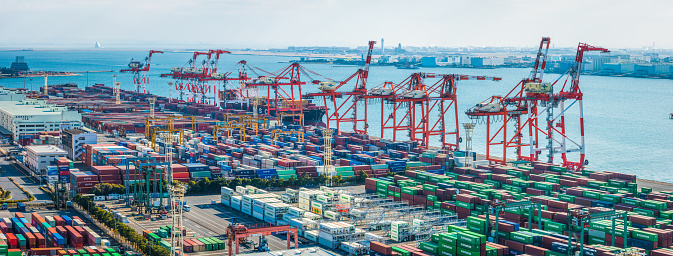


 Dopo il sequestro di circa 130 kg portato a termine la scorsa settimana, i finanzieri del Nucleo di polizia tributaria di Venezia hanno intercettato un ulteriore carico di cocaina. Nella giornata del 9 dicembre, infatti, dal porto di Livorno è giunto un container destinato allo sdoganamento presso gli spazi doganali del porto veneziano.
 AVISEUR INTERNATIONAL