Aviseur International renseigne, sans complaisance, sur la problématique de la drogue, du narcotrafic, de la corruption et sur les politiques mises en œuvre par les différents Etats et les dérives que s'autorisent les fonctionnaires des administrations — aviseurinternational@proton.me — 33 (0) 6 84 30 31 81
Othman El Ballouti (36 ans), considéré par les autorités belges comme l’un des barons de la drogue les plus puissants du plat pays, a été arrêté aux Emirats arabes unis. L’information, révélée ce mardi par le quotidien néerlandophone Het Laatste Nieuws, nous est confirmée de source judiciaire.
Authorities are staying on top of the encrypted messaging services that criminals use to undertake their activities. A joint investigation team (JIT) involving French and Dutch authorities has taken down another sophisticated encrypted messaging service, MATRIX. For three months, authorities were able to monitor the messages from possible criminals, which will now be used to support other investigations. During a coordinated operation supported by Eurojust and Europol, the messaging service was taken down by Dutch and French authorities and follow-up actions were executed by their Italian, Lithuanian and Spanish counterparts.
Dans le cadre d’une longue enquête soutenue par Europol, les autorités policières de Belgique 🇧🇪, d’Espagne 🇪🇸 et de Colombie 🇨🇴ont démantelé un réseau logistique orchestrant un trafic de cocaïne à grande échelle de la Colombie vers l’UE.
Les différents services nationaux ont arrêté 32 individus au total, dont le chef du réseau avec la saisie de 5,8 tonnes de cocaïne en Colombie (Carthagène et Baranquilla), sur le sol européen en Espagne (Barcelone et Valence) et en Belgique (Anvers).
L’opération a été coordonnée par la Taskforce opérationnelle d’Europol
Cette opération fait suite aux arrestations de deux fugitifs de la Camorra de haut niveau, relevant d’enquêtes différentes, qui ont entraîné les résultats de la journée d’action du 5 novembre 2024 : 6 arrestations en Colombie (Baranquilla, Cartagena, Colombia Medellin et El Guamo) ; 5 perquisitions domiciliaires ; Saisie de téléphones portables et de documents. Résultats globaux des actions ciblant ce réseau criminel : 32 arrestations en Colombie et en Espagne (26 effectuées en 2023) ; 5,8 tonnes de cocaïne saisies en Belgique, en Colombie et en Espagne ; Saisies de biens, notamment de biens mobiliers et immobiliers.
Lutte contre la corruption pour couper la chaîne logistique
L’enquête, menée dans le cadre de la Task Force opérationnelle d’Europol ciblant le trafic de cocaïne à grande échelle en provenance des pays d’origine d’Amérique latine, a été lancée en avril 2023. Lors de la journée d’action de cette semaine, la police nationale colombienne a arrêté des individus jouant différents rôles majeurs au sein de l’organisation. Parmi les six suspects figurent le chef présumé du réseau, des investisseurs, des coordinateurs des opérations de trafic, des autorités corrompues et des travailleurs tout au long de la chaîne logistique.
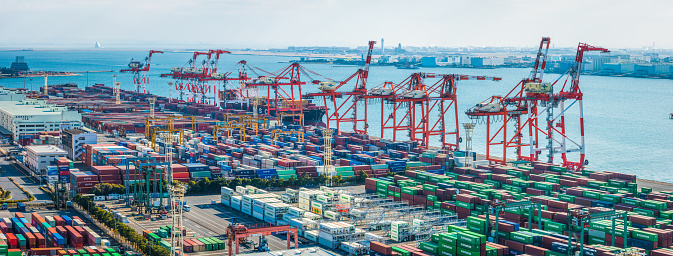
L’enquête a révélé que le cartel de la drogue ciblé était capable d’exporter des quantités importantes de cocaïne par le biais de navires commerciaux. Les suspects ont utilisé différentes routes maritimes. Ils ont dissimulé de la cocaïne dans des conteneurs, puis ont expédié la cargaison vers des ports européens depuis plusieurs ports colombiens, tels que Carthagène et Barranquilla. Le trafic maritime et les navires commerciaux jouent un rôle crucial dans l’exportation à grande échelle de stupéfiants.
Les membres du réseau collaboraient avec des autorités corrompues pour éviter les contrôles de police et de douane pendant les différentes phases du trafic de cocaïne.
L’identification et l’interception des fonctionnaires corrompus ont été cruciales pour démanteler toute la chaîne de commandement et l’organisation logistique de ce cartel. Le trafic de drogue à grande échelle nécessite une organisation logistique complexe, les cartels de la drogue ont tendance à corrompre les autorités pour faciliter le trafic de drogue tout au long des différentes phases, de la production à l’exportation.
Soutien et groupe de travail opérationnel d’Europol
Pendant les activités d’enquête, Europol a coordonné l’échange d’informations entre les autorités nationales, les réunissant pour cibler efficacement l’ensemble du réseau de trafic de drogue. En outre, Europol a fourni un développement et une analyse continus du renseignement pour aider les enquêteurs. Ces renseignements ont permis aux forces de l’ordre de découvrir une image complète du réseau secret opérant dans divers pays et continents. Les renseignements fournis par Europol ont contribué à certaines des saisies effectuées au cours de ces enquêtes. Au cours des journées d’action, Europol a déployé des experts en Colombie pour fournir un soutien analytique et technique aux agents sur le terrain.
Law enforcement authorities:
Colombia: Colombian National Police (Policía Nacional de Colombia)
Belgium: Belgium Federal Police (Federale Politie/Police Fédérale)
Spain: Civil Guard (Guardia Civil) and National Police (Policia Nacional)
Deux hommes âgés de 18 et 19 ans, ont été atteints par plusieurs projectiles au niveau des membres inférieurs.
Selon des témoins, une vingtaine de coups de feu ont été tirés en rafale, rue Très-Cloîtres, à proximité immédiate de la place Edmond-Arnaud où se trouve le point de deal du quartier.
The country’s longest ever running criminal trial heard that an international crime group smuggled billions of pounds of drugs into the UK
Paul Green
Eighteen members of an international organised crime group (OCG) have been convicted after a National Crime Agency investigation into the United Kingdom’s biggest ever detected drugs conspiracy.
The offenders are thought to have smuggled several billion pounds worth of heroin, cocaine and cannabis to the UK.
From south east England to Scotland, crime gangs were fed drugs from the OCG’s importations – which are believed to have contained more than 50 tonnes of drugs -the weight of around 30 family sized cars.
Two criminal trials were needed to try the defendants.
One trial lasted 23 months, a record in England and Wales – the other lasted nine months.
The judge who presided over the trials said the drug smuggling was “on an industrial and hitherto unprecedented scale”.
Today, at Manchester Crown Court, reporting restrictions were lifted upon verdicts in the second trial, and news of the NCA’s operation can be released.
Six seizures of drugs with a total street value of £40m were made from the OCG, which was based in north west England with accomplices in the Netherlands, between the indictment period of August 2015 and September 2018.
But NCA investigators proved there were at least 240 importations by the OCG, which went to great lengths to confuse the authorities and avoid justice.
Trial judge Paul Lawton said if only half of the importations contained the same quantities of drugs as the six recovered seizures, it would amount to £3billion worth.
The OCG was led by Paul Green, 59, (pictured above) who was jailed for 32 years.
It set up a series of front companies and warehouses in England and the Netherlands to mask offending.
And to avoid detection, the OCG concealed its drugs in consignments of strong-smelling foodstuffs such as onions, garlic and ginger. The crime group bought so many onions – between 40 tonnes and 50 tonnes a week, that it couldn’t get rid of them and often sent them back to the continent to act as another cover load.
“The stench of criminality is overpowering,” prosecuting KC Andrew Thomas told the jury as has he opened the case.
The OCG exercised a high degree of criminal tradecraft to evade the authorities.
Green rented a hotel room near his home in Widnes, Cheshire, so he could use its Wi-Fi without it being traced back to him.
Offenders used encrypted communications, faked documents, changed their names by deed poll and acquired live and defunct – but previously legitimate – businesses to disguise their drugs importations.
Companies the OCG was dealing with – suppliers and transport firms – would be far less suspicious about doing business with an organisation appearing to have an established trading history and, in some cases, an existing VAT number.
As well as bringing in his own OCG’s drugs for subsequent sale, Green specialised in operating a smuggling route for other UK based crime groups.
The criminal charges against OCG members related to five separate smuggling plots.
Green created a fake paper trail to smuggle £1.1m of amphetamine base oil in bottles of cream bought in Belgium.
But a Border Force dog sniffed out the drugs hidden in a van on 29 March 2016.
Undeterred, the OCG carried on.
The offenders used a front company cloned from a legitimate business in Truro, Cornwall, to try and smuggle 8kgs of cocaine worth nearly £1m into the UK.
Conspirators rented a warehouse in Uithoorn, northern Netherlands, and hid the cocaine in four cardboard boxes packed with ginger for deliveries to be made to warehouses they had rented in Bolton, Wigan and Ormskirk.
The OCG also rented warehouses in Leeds, Preston, Sheffield and Warrington over the course of their offending.
In September 2016 the plot was foiled when an innocent Dutch haulage driver employed to collect and deliver the consignment smelled a rat. He returned to his depot and called the police who found eight 1kg bricks of cocaine.
Each had different markings to denote the various OCGs they were destined for.
A month later Green’s OCG was trying to smuggle 57kg of amphetamine, worth about £1.1m, from the Netherlands to the UK.
But Dutch officers had group members under surveillance and were listening to their phone calls.
Russell Leonard, 47, an OCG foot soldier who spoke fluent Dutch, and a man who cannot be named for legal reasons, had the 57kgs in a van and were responsible for its safe keeping en route to the UK.
But Leonard, of Kirkby, Merseyside, who was usually responsible for packing the group’s drugs in the Netherlands, and his accomplice went out drinking all night and left the van unguarded in Amstelveen, a southern suburb of Amsterdam:
In a recorded conversation, Green told one of them: “If the van’s gone or been grabbed by the police then there’ll be f***ing murders.”
When the duo returned the following morning from their drinking session, they got in the van and drove off but were immediately stopped by Dutch police. Leonard was jailed for 24 years.
In 2017 the OCG recruited Sohail Qureshi, 64, Khaleed Vazeer, 58, and Ghazanfar Mahmood, 53, to develop a new transport route into the UK. They joined forces with a Dutch criminal group led by Barbara Rijnbout, 53, and Johannes Vesters, 54, who were jailed for 18 years and 20 years respectively after being extradited from the Netherlands.
In 2018, after the NCA and Dutch Police began working together, the vast scale of the OCG’s offending became clearer.
Joint working led to the seizure of 450kg of cocaine and heroin and two tonnes of cannabis across three seizures at the ports of Killingholme and Immingham, both Lincolnshire, and one in the Netherlands.
Green was also convicted of fraud by false representation.
He and accomplice Leslie Kewin, 63, of Runcorn, Cheshire, stole a man’s identity and raised a £262,000 mortgage on the victim’s four-bedroom house in Mount Way, Waverton, near Chester, to pay for a drugs debt.
Instructed by Green, Kewin rented the property and changed his name by deed poll to the same as the landlord.
Kewin then claimed he owned the house and obtained the fraudulent mortgage, provided by a small finance company. The OCG used the landlord’s name to: open several bank accounts; create a company called Blackpool Fruit and Veg; and rent a warehouse in Leeds.
When Green was arrested officers recovered almost £10,000 in cash from his home. His bank statements showed he and his wife spent more than £26,000 on watches and jewellery in the previous six months.
Between 2016 and 2018 more than £1.5m passed through Green and his partner’s bank accounts. Between 2013 and 2018, Green only submitted two tax returns for cleaning and hairdressing businesses. He declared a profit of £7,405 for 2014-15, and a profit of £17,396 for 2015-16.
Judge Paul Lawton told the offenders: “It was only the dedication, persistence and professionalism of the National Crime Agency working in conjunction with their Dutch counterparts that the scale and complexity of your operation was unmasked.”
He added: “The harm caused beyond the importation is incalculable. You facilitated the distribution of drugs by organised crime groups the length and breadth of the country. The evidence disclosed drugs being despatched to locations as far apart as London and Scotland.
“What you were actually distributing was addiction, misery, social degradation and in some cases death. All of that was foreseeable and known by you. You were also facilitating serious organised crime on a national scale and the violence that forms an inherent part of that culture.”
Rob Jones, NCA Director General of Operations, said: “Without criminals like these, there would be no young teenagers dealing drugs through County Lines. There would be no turf war murders or innocent members of the public killed in the crossfire.
“Paul Green and his accomplices enabled and helped deliver this kind of suffering and misery in communities across the country. They were the crucial link in moving drugs from source countries abroad all the way to UK towns and cities where lives were wrecked by them.
“They thought they could hide behind a web of front companies, false personas and encrypted communications. They were wrong.
“NCA investigators worked tirelessly to identify this international organised crime group involved in industrial scale drug trafficking.
“Our officers’ meticulous work unmasked them and evidenced the scale of harm they were causing to UK communities.
“The team brought together multiple sources of evidence from overseas partners, seizures at ports and analysis of travel which has dismantled a group operating at the highest levels of organised crime.”
Richard Harrison, NCA Regional Head of Investigations, said: “The offenders smuggled huge quantities of drugs into the UK. They had absolutely no ethics. They stooped incredibly low and left a trail of devastation for entirely innocent people by cloning businesses and stealing identities.
“Tackling the drugs threat is a top priority for the agency and this investigation shows the lengths we will go to in order to protect the public.
“We worked with a wide array of partners at home and abroad, all of whom provided crucial assistance in helping us put these criminals behind bars.”
Minister for Crime and Policing, Dame Diana Johnson said: “This was an extremely complex operation involving a huge number of agencies working together. My thanks go to every single officer who helped to bring these criminals to justice.
“We are determined to bring these organised drug gangs to justice and our streets will be safer with these criminals no longer free to prey on vulnerable people in the name of profit.”
Sara Drysdale, Specialist Prosecutor from the Crown Prosecution Service, said: “This case is believed to involve the largest ever drug smuggling operation ever detected in the UK. The scale of the importations was immense and the total value of the drugs was worth up to an estimated £7 billion.
“The defendants convicted in this case include several of the higher-level organisers who financed and organised the drug shipments and who went to extraordinary and complex lengths to disguise their involvement.
“The series of conspiracies to import drugs into the UK culminated in an alliance between UK and Dutch Organised Crime Gangs to import drugs predominantly on behalf of numerous others. This was a highly organised operation bringing three to four shipments of drugs a week and involving hundreds of kilos of drugs.
“We would like to thank the comprehensive investigation work of the National Crime Agency. They provided the evidence needed to build a prosecution case which enabled us to seek justice against these 18 convicted defendants. We also extend our thanks to the Dutch investigating authorities for their assistance in the provision of key evidence.
“We will be pursuing confiscation proceedings against defendants convicted in this case to recover money and assets they gained from their criminality.”
Les services de sécurité ont arrêté quatre personnes, dont un ressortissant français, à Alger.
L’opération qui a été menée par le Service central de lutte contre le trafic illicite des stupéfiants (SCLTIS), a permis la saisie de 100,34 kilos de cocaïne, de 89 kilos d’ecstasy et de 82 kilos de cannabis.


 In September 2016 the plot was foiled when an innocent Dutch haulage driver employed to collect and deliver the consignment smelled a rat. He returned to his depot and called the police who found eight 1kg bricks of cocaine.
 Kewin then claimed he owned the house and obtained the fraudulent mortgage, provided by a small finance company. The OCG used the landlord’s name to: open several bank accounts; create a company called Blackpool Fruit and Veg; and rent a warehouse in Leeds.
 Minister for Crime and Policing, Dame Diana Johnson said: “This was an extremely complex operation involving a huge number of agencies working together. My thanks go to every single officer who helped to bring these criminals to justice.
 AVISEUR INTERNATIONAL