 SEATTLE | Les autorités américaines sont aux trousses d’une Montréalaise en cavale, visée par une vaste enquête sur le blanchiment d’argent et le trafic de drogues perpétrés par un violent cartel mexicain et des trafiquants du Canada et des États-Unis.
OCT 02 (LOS ANGELES) – The leader of an international money laundering organization, Gurkaran Singh Isshpunani, made his initial appearance in the Central District of California today. Isshpunani, the highest level defendant listed in a 22-person federal indictment filed in November 2014, is allegedly the leader of an international ‘hawala’ ring that concealed narcotics proceeds for the Sinaloa drug cartel and other drug trafficking organizations. Isshpunani was apprehended by US Customs and Border Patrol personnel on September 14 while attempting to enter the United States from Canada at the Buffalo, New York Port of Entry. A federal magistrate ordered Isshpunani held without bond and directed that he be transported to Los Angeles, where he arrived last night.
The three-count indictment charges Isshpunani, 34, who is believed to reside in the Canadian province of Ontario, and 21 other defendants with conspiracy to launder money, conspiracy to operate an unlicensed money transmitting business (a hawala), and a substantive count of operating an unlicensed money transmitting business. The illegal scheme allegedly spanned the world and involved operatives in Canada, India, the United States and Mexico who laundered drug trafficking proceeds generated from multi-kilogram and multi-pound sales of narcotics in Canada and the United States for and on behalf of the Sinaloa Cartel and their affiliated drug trafficking organizations. The laundered money is alleged to have either been transported to the Sinaloa Cartel as profits or reinvested in additional narcotics to be sold and distributed in the United States and Canada.
The indictment specifically alleges that the hawala network transferred more than $4.5 million in narcotics proceeds and was involved in the trafficking of 29 kilograms of cocaine and approximately 90 pounds of methamphetamine. However, during the course of a four-year federal wiretap investigation led by the Drug Enforcement Administration’s LA Strike Force, authorities seized a total of $15,467,293 in bulk United States currency, 321 kilograms of cocaine, 98 pounds of methamphetamine, 11 kilograms of MDMA (“ecstasy”) and nine kilograms of heroin.
A “hawala” is an alternative form or method of money remittance which operates outside of traditional banking or financial systems. Through hawala transactions, only the value of the money is transferred, not the money itself. The hawala system transfers money via a network of hawala brokers known as “hawaladars.” In its most basic form, a hawala needs at least two brokers or “hawaladars”. Typically, the brokers are located in separate countries but can be located in different domestic cities as well. The transfer of monetary value occurs between the brokers and is based solely upon the trust that exists between the brokers. Thus, there are no promissory instruments exchanged or any legally binding features of the hawala system. Trust and long-established connections between brokers are often forged upon familial, ethnic, religious, regional and/or cultural grounds and serve to promote the “honor system” that hawala requires. Often, a given hawala network consists of many brokers operating in multiple countries around the world in which all brokers are in contact with each other and money movements can occur in a variety of directions from one country to another.
According to the indictment, Isshpunani and others knowingly transferred millions of dollars in drug proceeds between one another in an effort to conceal the nature and true ownership of the funds. “Drug traffickers in Canada would generate drug proceeds from multi-kilogram and multi-pound sales and distributions of drugs provided by Mexican cartels, including the Sinaloa Cartel,” the indictment alleges. The drug traffickers would then coordinate money transfers to their counterparts in Mexico by instructing Isshpunani and other alleged hawaladars in Canada to deliver specified amounts of money to couriers in the U.S. working on behalf of the cartels. The Canadian-based hawaladars, once in possession of the drug traffickers’ bulk Canadian currency, would contact U.S.-based hawaladars and authorize the release of the equivalent amounts of U.S. currency to the couriers operating in the Los Angeles area. A number of co-defendants named in the indictment served as U.S.-based couriers, picking up and subsequently delivering bulk U.S. currency in the Los Angeles area in exchange for narcotics that were to be transported back to Canada for sales and distribution.
Authorities began arresting defendants several months ago. In addition to Isshpunani, 14 defendants have been taken into custody and have been arraigned in Los Angeles. Those previously arrested, and who have pleaded not guilty, are:
- Miguel Melendrez Gastelum, 35, of Coachella, California, who surrendered to federal authorities on September 16;
- Shannon Aubut, 30, a resident of the province of Ontario, who was arrested on August 14 at the Camplain, New York Port of Entry;
- Paul Alan Jacobs, 42, of Venice, California, who surrendered to authorities on August 13;
- Jose De Jesus Montenegro, 49, of Coachella, who was arrested at the Tecate, California Port of Entry;
- Breidi Alberto Espinoza, 28, of Corona, California, who was arrested on July 10 at the Otay Mesa Port of Entry;
- Alberto Diaz, 28, of San Diego, who was arrested on July 4 at the San Ysidro Port of Entry;
- Christopher Fagon, 37, a resident of the province of Ontario, who was arrested on June 28 at Los Angeles International Airport;
- Jose Luis Barraza, 47, of Coachella, who was arrested on June 27 at Calexico Port of Entry;
- Bradley John Martin, 54, of Carlsbad, California, who was arrested on June 12 at San Ysidro Port of Entry;
- Ramesh Singh, 46, of Alhambra, California, who surrendered to authorities on June 2;
- Sanjeev Wadhwa, 36, an Indian national, who was arrested on May 30 at LAX;
- Sucha Singh, 51, of Arleta, California, who was arrested at his residence on May 30;
- Harinder Singh, 30, of Monrovia, California, who was arrested on May 30; and
- Harmeet Singh, 54, of Chino Hills, California, who was arrested at his residence on May 30.
A trial date for the defendants who have been arraigned in Los Angeles has been scheduled for May 24, 2016. The money laundering conspiracy charge carries a statutory maximum sentence of 20 years in federal prison. Each of the two counts related to the alleged unlicensed money transmitting business carries a maximum sentence of five years.
The seven fugitives named in the indictment are:
- Sanjeev Bhola, of India;
- Balwat Bhola, of India;
- Bakshish Sidhu, of India;
- Jason Robert Carey, 37, a resident of the province of Ontario;
- Jesus Manuel Perez Rios, 33, of Coachella, who authorities believe fled to Mexico;
 Tina Pham, 25, of Montreal; and
- a Canadian man known only as “Buddy.”

This investigation was conducted by the Drug Enforcement Administration and IRS – Criminal Investigation. These agencies received assistance and support from the Santa Ana Police Department, the Beverly Hills Police Department and the Pomona Police Department.


 La marina mexicana arribó al lugar en helicópteros pero fue repelida por los pistoleros del capo, que se fugó en automóvil.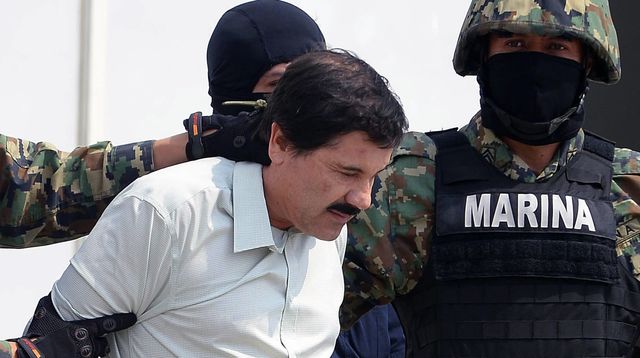
 Escaped cartel boss El Chapo was ‘cornered in rugged mountains in Mexico by soldiers’ after US drug agents located his cell phone… but he managed to get away again
 Alfredo Estrella/AFP/Getty Images


 Journaliste et écrivain colombien, vivant en France, collaborateur du Monde Diplomatique. En avril 2009, il a appris, de façon directe, que le gouvernement étasunien ne lui permettait même pas d’aborder son espace aérien, pour des motifs de « sécurité nationale » : Lire :
 Parmi les 13 nouvelles arrestations liées à l’évasion du baron de la drogue Joaquin «El Chapo» Guzman figurent l’ancienne responsable des prisons fédérales et un ex-directeur de la prison.
 Redacción
 La droga fue incautada gracias a una operación conjunta en la que participaron funcionarios de la Policía Federal y de la Procuraduría General de México.
 Noticias |
  La lancha rápida de la frustrada operación tenía tres motores fuera de borda, embarcación en que cargaban 18 garrafones llenos de gasolina, una parte con capacidad para 55 galones y la otra para 10.


 Chuck Rosenberg (



 Le Monde.fr avec AFP, AP et Reuters
 Joaquin Guzman, surnommé « El Chapo » (« le trapu », de par sa petite taille, 1,60 m), s’est évadé de la prison de haute sécurité dans laquelle il était détenu dans le centre du Mexique, a annoncé dimanche 12 juillet la Commission nationale de sécurité (CNS). Une vaste chasse à l’homme était en cours dans la région de l’établissement pénitentiaire d’Altiplano à 90 kilomètres de la capitale, où il était incarcéré, et l’aéroport de Toluca, le plus proche, a été fermé.
 AVISEUR INTERNATIONAL