Aviseur International renseigne, sans complaisance, sur la problématique de la drogue, du narcotrafic, de la corruption et sur les politiques mises en œuvre par les différents Etats et les dérives que s'autorisent les fonctionnaires des administrations — aviseurinternational@proton.me — 33 (0) 6 84 30 31 81
Au procès pour trafic de drogue, à Ho Chi Minh-Ville, le 24 décembre 2024. – / AFP
Vingt-sept personnes ont été condamnées à mort par un tribunal vietnamien pour le trafic de plus de 600 kilos de stupéfiants, dont de l’héroïne, de la kétamine et de la méthamphétamine, a rapporté vendredi 27 décembre un média officiel. Le gang, composé de trente-cinq personnes, a introduit clandestinement au Vietnam 626 kilos de drogue à partir du Cambodge entre mars 2018 et novembre 2022, selon le journal Tuoi Tre.
La plongée dans les notes, analyses et rapports des services de lutte contre les trafics de stupéfiants retrace l’édifiante histoire d’une progression continue de cette criminalité face à un pouvoir politique et policier incapable de l’enrayer.
En octobre 2004, Dominique Barella, le président de l’USM réélu à ce poste pour deux ans écrivait sur les hiérarques: « Incapables de conduire une pédagogie publique, incapables d’assumer la responsabilité d’actes pris sous leur autorité, ne rendent service ni à nos concitoyens ni aux magistrats ?
Leur activité serait-elle seulement d’éditer des camemberts sur la productivité ?
Lorsque le chef des rebelles syriens, Ahmed al-Sharaa, est arrivé à Damas et a prononcé un discours de victoire à l’issue d’une campagne militaire éclair qui a balayé le pays et renversé le régime de Bachar al-Assad, une remarque est passée largement inaperçue. Il s’agit de sa référence à un stupéfiant illégal qui a inondé le Moyen-Orient au cours des dix dernières années.
« La Syrie est devenue le plus grand producteur de Captagon au monde », a-t-il déclaré. « Aujourd’hui, la Syrie va être purifiée par la grâce de Dieu. »
Pratiquement inconnu en dehors du Moyen-Orient, le Captagon est une pilule addictive de type amphétamine, parfois appelée « la cocaïne du pauvre ».
Les dérives aux USA de l’ICE, ce service hybride de 20 000 employés qui se mêle de drogue autant que d’immigration, et dont certains souhaitent là-bas la disparition.
On l’a vu, l’ICE a amorcé en 2007-2008 un flux de cocaïne vers l’Afrique de l’Ouest, au prétexte d’ainsi capter des trafiquants haut-placés ou mêlés de près à des chefs d’Etat (on pense à la Guinée-Bissau, à la Sierra Leone, mais aussi au Mali bien sûr).
Or ces derniers temps, les mêmes avions – de vieux coucous déclassés bien connus de cette série, des Grumman Gulfstream II ou IV – qu’elle avait utilisés pour transporter des volumes importants de cocaïne sont réapparus… aux mêmes endroits, visiblement en train de refaire la même chose ou de tenter de le faire.
Simple coïncidence ou…
Ces étranges réapparitions successives ne peuvent que nous inquiéter… d’autant plus que l’un des derniers avions découvert nous a ramené à un fournisseur d’avions aux trafiquants bien connu ici… au point d’être devenu un habitué, comme l’a été en son temps Joao Malago !
Il vient même tout juste de récidiver, le jour même de Noël !
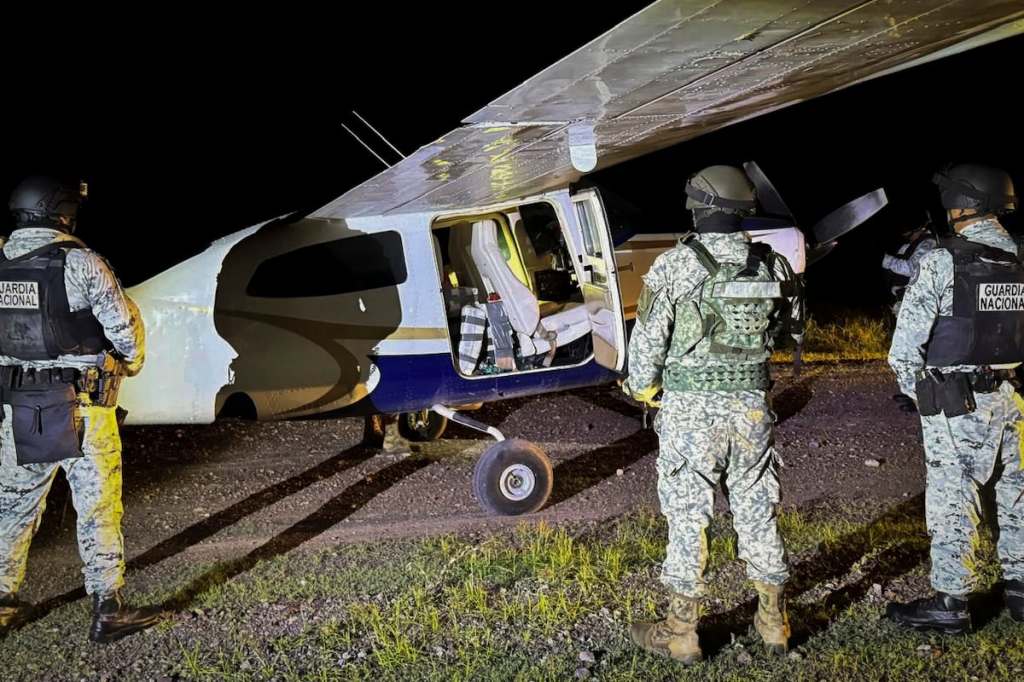
Media reports said that the plane, believed to be engaged in illegal drug trafficking, landed on a makeshift runway and was set on fire after its cargo was unloaded.
36 personas han sido detenidas y 15 plantaciones de droga han sido desmanteladas a una red que obligaba a trabajar como jardineros a personas sin recursos procedentes de América Latina
Les douaniers de Narbonne ont encore tappé juste avant Noël.
Cest dans un véhicule immatriculé en Espagne, qu’après avoir pris du plaisir à l’intercepter sur l’autoroute A9, qu’ils ont trouvé 21,2 kilos de haschich.
C’est lors de la fouille d’un véhicule embarqué, à l’arrivée du ferry faisant la liaison Fortune-Saint-Pierre ce lundi 23 décembre en début d’après-midi que les douaniers français ont fait la découverte d’un peu plus d’un kilo de cocaïne.
A police officer dressed as the Grinch has gone « unnoticed » while leading a drug bust in Lima.
The Grinch initiated the operation by breaking the access door, and searched the house for money and drugs.
An undercover Peruvian officer dressed as the famous Dr. Seuss character has led a police operation in Lima to dismantle a drug trafficking gang.
An agent in the Green Squadron, a specialised unit of the Special Operations Division in Peru, went « unnoticed » before he busted open the home of suspected drug traffickers in San Bartolo, southern Lima.
A video released by police shows the Grinch in a Santa suit, searching the house and finding money and drugs.
Depuis ce lundi 23 décembre, la maire d’Avallon, Jamilah Habsaoui, n’est plus mise en examen et passe désormais sous le statut de témoin assisté, dans l’affaire de trafic de drogue révélée en avril 2024.
Quand une politique ne produit que les effets contraires à ceux recherchés, le narco-business sauvage gangrène la vie des habitants
Mardi 17 décembre, un jeune de 20 ans a été abattu à Aix-en-Provence, sur fond de trafic de drogue. Dans cette ville des Bouches-du-Rhône, le narcotrafic prend de plus en plus d’importance et nuit au bon vivre des habitants.
Dans la nuit de samedi, des soldats ont intercepté 300 000 pilules de méthamphétamine abandonnées par des trafiquants en fuite après un échange de tirs dans le district de Fang, situé dans cette province du nord de la Thaïlande.
Deux patrouilles militaires de l’unité spéciale Chaiyanuparb ont repéré, aux alentours de 3 heures du matin, un groupe de trois à quatre individus portant des sacs à dos près d’une orangeraie à Tambon Monpin. Lorsque les soldats ont tenté de les interpeller pour une fouille, les hommes ont ouvert le feu, obligeant les militaires à riposter.
A senior member of an organised crime group (OCG) that ran an amphetamine lab in Scotland, and trafficked heroin and cocaine, has been sentenced following a National Crime Agency investigation.
Colin Wright, 38, from Torre Pacheco in Murcia, and formerly of Motherwell, was arrested by the Spanish National Police in March this year at the request of the National Crime Agency, and extradited to the UK on 4 October. A number of high value items were seized from his Spanish address.
Wright had travelled abroad in August 2020, and remained in Spain to avoid capture after NCA officers apprehended fellow OCG members in March 2021.
He was the head of the OCG’s Scottish arm, and was actively involved in the supply of cocaine and heroin in both Scotland and England. He is the final member of the OCG to be sentenced, with six others now serving jail terms.
Wright worked alongside Terence Earle, 50, who was jailed for 16-and-a-half years in April 2023, and Terence’s cousin Stephen Earle, 52, who was jailed for 11 years and four months in August this year.
Wright used the EncroChat handle ‘Jack-Nicklaus’ to communicate with Terence. He also sourced drugs, assessed supply routes and found customers.
He created the amphetamine lab in Motherwell. In March 2020, as the nation entered its first Covid 19 lockdown, a criminal associate delivered boxes of alpha-phenylacetoacetamide (APAA), part of the amphetamine production process, to Wright.
Over the next few days the OCG began preparing the lab, but despite messages between them saying the ‘farm’ (or lab) was ready, they struggled to obtain the necessary solvents for the production process.
Terence and Wright also exchanged photos of the liquid being treated, to check what colour it should be.
Wright helped ship at least 20 kilos of cocaine and 10 kilos of heroin, with the former moved from Merseyside to Motherwell and the latter in the opposite direction. The lab was also capable of producing 1,000 kilos of amphetamine.
He pleaded guilty to five drugs charges at Liverpool Crown Court on 1 November and was sentenced to 13 years and four months imprisonment at the same court today (16 December).
The NCA’s investigation formed part of Operation Venetic, the UK NCA-led law enforcement response to the takedown of the EncroChat service in July 2020.
NCA Branch Commander Cat McHugh said:
« Wright’s case shows that criminals who seek refuge abroad are never immune from law enforcement’s reach as the NCA has the international scope to find them, bring them back to the UK and put them before the courts.
« His sentencing means that we have completely dismantled this organised crime group, who posed a grave danger to communities in Scotland and Merseyside, with the drugs they trafficked helping to fuel violence and exploitation in these areas. »
Three men have today been jailed for their roles in an organised crime group that smuggled several billion pounds worth of heroin, cocaine and cannabis into the UK.
The OCG included offenders from across the UK and criminals from the Netherlands who were brought to justice following a long-running National Crime Agency investigation.
From south east England to Scotland, the OCG supplied other crime groups drugs from its importations – which are believed to have contained more than 50 tonnes of drugs – the weight of around 30 family sized cars.
The group was led by Paul Green, 59, of Widnes, Cheshire, who was known as ‘the big fella’.
He was jailed for 32 years earlier this year and today Sohail Qureshi, 64, one of his key accomplices was sentenced to 25 years behind bars at Manchester Crown Court.
Qureshi, of Wood Crescent, White City, London, but originally from Glasgow, was convicted of plotting to import heroin, cocaine and cannabis. He was crucial to the OCG because he helped them join forces with a team of offenders from the Netherlands, which generated new smuggling routes to the UK.
Sohail Qureshi, Khaleed Vazeer and Ghazanfar Mahmood
Qureshi worked closely with Khaleed Vazeer, 58, of Timperley, and Ghazanfar Mahmood, 53, of Bolton, both Greater Manchester.
Mahmood, who was born in Pakistan but holds Danish nationality, was convicted of being involved in an OCG. The former taxi driver took his orders from Qureshi and travelled to Spain and the Netherlands to develop the operation, and he became a director of a front company in the Netherlands.
He was sentenced to three years and nine months.
Vazeer was convicted of the same charges as Qureshi.
He helped set up a front company in the UK and helped Dutch crime boss Barbara Rijnbout – jailed for 18 years earlier this year – open personal and business bank accounts in the UK by using forged documents.
Dutch wiretap evidence showed Vazeer supported and encouraged Rijnbout, 53, of Utrecht, to run the Dutch OCG side.
Vazeer was sentenced to 20 years.
The offences were committed between August 2015 and September 2018 during which the OCG smuggled at least 240 consignments of drugs.
The group set up front companies and rented warehouses in the Netherlands and UK to move drugs hidden in deliveries of strong-smelling foodstuff such as onions, garlic and ginger.
As well as the warehouses in Sheffield and Preston, the OCG also rented premises in Leeds, Warrington, Bolton, Wigan and Ormskirk.
In total, more than 246 years of jail time has been given to 12 members of the OCG. Two men who cannot be named for legal reasons await sentencing for their roles along with Ashley Jones, 34, of St Helens, Merseyside. He admitted conspiring to import Class A drugs and will be sentenced at a date to be confirmed.
Two offenders were given suspended sentences and one died before he could be sentenced.
The OCG members were convicted over two trials: one lasting 23 months – a record in England and Wales – and the second lasting nine months.
Richard Harrison, regional head of investigations at the National Crime Agency, said:
“These criminals supplied unprecedented amounts of drugs right across the UK.
“And along with that, an incalculable amount of damage to society with the violence, addiction, exploitation and misery that are inseparable from supplying drugs.
“Offenders like these only care about the money to be made.
“They don’t care that they fuel horrendous problems such as children being sucked into dealing drugs through County Lines or innocent members of the public being hurt or even killed in the crossfire of turf wars.
“I commend my officers for the years of dedicated and tenacious work that went into bringing this OCG to justice.”
Un homme a été blessé par balle jeudi matin à Échirolles, dans la banlieue de Grenoble, et son pronostic vital est engagé, a indiqué le parquet à l’AFP.
Mort d’un jeune de 20 ans tué par balle sur fond de trafic de drogue à Aix-en-Provence
Un jeune homme tué par balle sur un point de deal à Vaulx-en-Velin.
C’est le Parisien qui rapporte ce probable « règlement de comptes de bandes rivales sur fond de narcotrafic ».
« Le R », un rappeur local de Valence, âgé d’une trentaine d’années, a été tué par balle dans un hall d’immeuble, jeudi 19 décembre dans la soirée dans cette ville de la Drôme.
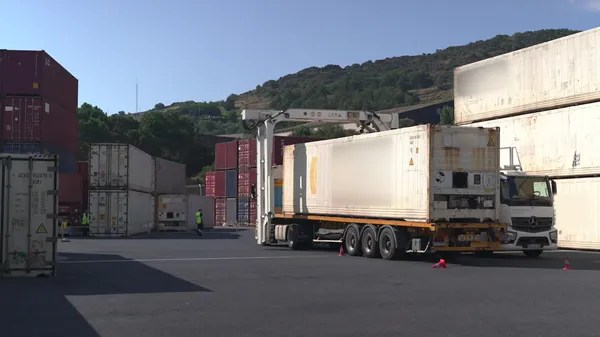
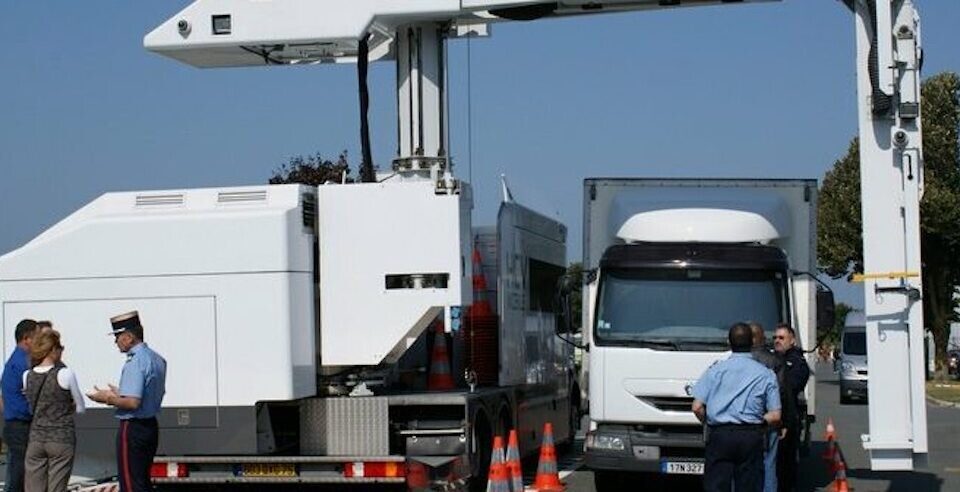
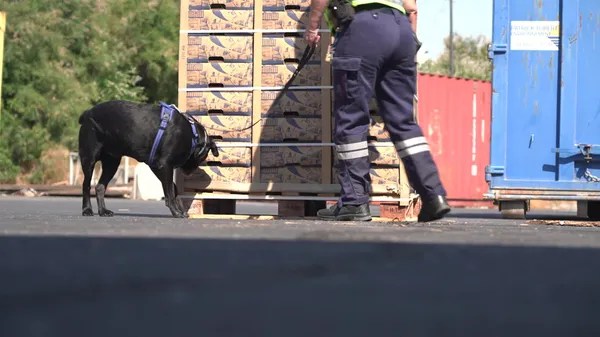
Le petit camion immatriculé en Slovaquie ne pouvait qu’ attirer le regard des gabelous, toujours aux aguets et souvent bien rencardés.
De sortie, entre Narbonne et Perpignan, le 17 décembre 2024 dans la soirée, les douaniers ont donc contrôlé ce véhicule et saisi 10,5 kilos de cocaïne et 63 kilos d’herbe de cannabis.
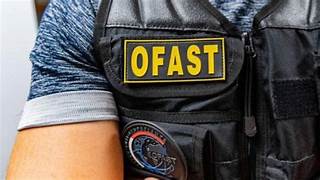
Le conducteur qui s’était sauvé a été retrouvé et embarqué pour une retenue administrative avant d’être refilé aux agents de l’Ofast.
Pourquoi faire simple quand on peut faire compliqué !
Il est vrai que les douaniers ne sont habilités que pour intercepter les mules, narcos et autres passeurs et les refiler aux policiers.
En observant la carte du monde, on comprend tout de suite pourquoi les îles du Pacifique sont un itinéraire prisé des narcotrafiquants. Elles se trouvent à mi-chemin des routes océaniques reliant l’Amérique à l’Asie. La drogue est donc acheminée depuis les États-Unis, le Mexique, la Colombie, l’Équateur ou le Panama, via ces archipels isolés pour approvisionner les marchés australiens et néozélandais. Il s’agit surtout de cocaïne. Dans l’autre sens, d’Est en Ouest, c’est de la méthamphétamine ou des opioïdes produits dans les laboratoires d’Asie du Sud-Est qui sont acheminés via les îles Palaos ou la Papouasie-Nouvelle-Guinée pour le marché américain. Concernant les trafiquants, on retrouve évidemment les cartels d’Amérique latine, comme Sinaloa au Mexique, ou les triades asiatiques comme le 14K, l’une des plus puissantes mafias de Hong Kong et bien sûr des milliers d’autres gangs et de petites mains qui font fructifier ce trafic estimé à un milliard de dollars.