 How Myanmar’s illicit opium economy benefits the military
By Patrick Meehan | Tuesday, 12 July 2016
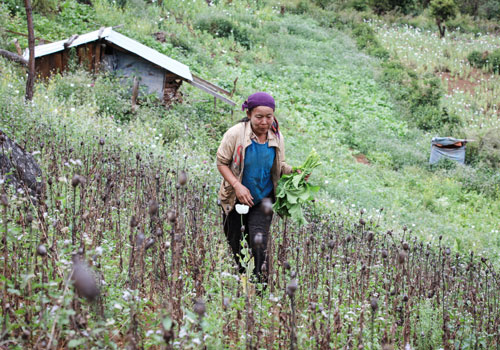
For the past 10 years drug production in Myanmar has been on the rise. The amount of land used to grow poppy – from which the opium sap used to make heroin is derived – has more than doubled since 2006. According to the UN, Myanmar now accounts for more than 25 percent of the global area under illegal poppy cultivation, making the country the second-largest producer of illegal opium in the world after Afghanistan.
The vast majority of Myanmar opium is produced by poor farmers in highland areas of Shan State close to the borders with China, Thailand and Laos, which have been affected by decades of conflict between ethnic armed groups and the central government. In 2012, studies conducted by local researchers recorded opium cultivation in 49 out of Shan State’s 55 townships, involving more than 200,000 households.
Myanmar’s military government has, since the late 1980s, used the drug economy as a means to finance its own state-building objectives, rather than launch sustained efforts to dismantle it. Taxing farmers, traders and traffickers became a means through which army units stationed across Shan State financed themselves in accordance with demands from central command that they “live off the land”, rather than rely on the central supply system.
read more:
0000000000000000000000000000000000000000
 AVISEUR INTERNATIONAL