This clever ruse serves multiple purposes simultaneously for the elite: • the manufacture of fear, leading citizens to forfeit their civil rights to “protect their children” • the criminalization and narco-demotivation of the most potentially revolutionary element of society ‒ the youth • the creation of, and ongoing funding for, localized and global criminal networks that work in tandem with the elites • the source of funding for covert action where governmentally-approved public funding might be difficult to obtain • the generation of massive liquidity/cash to pump into banks, stocks, bonds, and commodity markets • the control of foreign leaders who can be demonized at any time should they get out of line with the elite’s agenda (e.g., Manuel Noriega of Panama) Here is a relatively concise historical overview of drug dealing by the elites… The British East India Company (BEIC), the world’s first transnational corporation, bought tea and other goods to sell in Europe and sold English goods overseas. One of the nations with whom they traded, China, was self-sufficient, which was a serious problem for the elites, as they had to pay in silver for their goods. As a general rule, the elites prefer that all nations are dependent on others, so that they can be kept under control. We see this today with the substitution of cash crops for food crops in so-called “developing” nations to pay back debts lent with interest by the banks that are owned by the same elites. As serial war criminal Henry Kissinger once put it: “Control oil and you control the nations; control food and you control the people.” Although the BEIC were making plenty of money from their trade with the Chinese, they wanted more. So they began to move opium, from their fields in British-controlled India (and later, Turkey) to China, sold that for silver, then traded a bit of that silver for tea and other Chinese goods. This allowed them to make a sizable mark-up in both directions. The Chinese were none too thrilled with the changes in the mercantilistic game rules. In response, they banned the importation of opium into China. The British responded with two separate “Opium Wars” to restore their drug dealing privileges to the Chinese people. Because dealing was a dirty business, the British began to use a third-party to deliver their opium ‒ kingpin dealers sailing “Yankee clippers” (fast sailing ships) which could make the trip from India to China and back three times per year. Those running this trade for the BEIC became a large part of what we know today as the “eastern aristocracy” of the United States. Many of the “old money” families came from, or are interbred with, these lineages. The Russell Trust Association, one of the largest of the opium traffickers (more so after buying out Perkins) flew a skull and crossbones on its ships. Its director during this period was Franklin D. Roosevelt’s grandfather, Warren Delano, Jr. The Skull and Bones fraternity at Yale University was borne of the Russell Trust, which endowed it with Deer Island (one of the American Thousand Islands in Lake Ontario), and a hefty financial contribution. President George H.W. Bush, formerly head of the CIA, and his son, George W. Bush, as well as John Kerry, were/remain members of this opium-enriched “Order of Death”. The CIA’s first priority is to protect the primary rackets of the elites ‒ drugs, guns, and oil ‒ though any interest of Wall Street is also generally within the CIA’s sphere of protection. Drug trafficking is, after all, a major source of liquidity for stock and commodity exchanges, as well as for banking. Killing thousands, or even millions, of people to carry out this mission has not been an inhibiting factor, except from the perspective of public relations, which is handled by marketing companies and the transnational corporate-owned media machine. At one point, large-scale heroin production was moved from Turkey to the Golden Triangle, which was an important factor in the Vietnam War, when the CIA was very active in trafficking heroin out of Burma, as popularized in the film “Air America” which was, to a large extent, based on a true story. One of the methods of trafficking employed was to stuff the heroin into the body cavities of dead soldiers. Think of this practice the next time you hear government propaganda personnel speaking of “respect for our military men and women”. A massive increase in cocaine traffic in the 1980s coincided with a memorandum of understanding between the CIA and the Department of Justice, which gave the green light for CIA-connected drug dealing. Former CIA assets and DEA personnel report of George H.W. Bush’s involvement or cover-up of cocaine trafficking by the CIA “family business” in Central and South America. Not surprisingly, many of the same criminal government personnel involved in the CIA’s heroin trade in Southeast Asia were later caught up in the Iran-Contra affair in Central America in the 1980s. Post-Vietnam, a major opium production center for the elites was in Afghanistan, where it remained until the Taliban eradicated production, which posed a serious problem. Drug money is a major source of liquidity for their banks and investment houses, as well as for covert operations. In response, aid to the Taliban was cut in June 2001. A few months later, using the 9/11 attacks as an excuse, the invasion of Afghanistan commenced (though none of the named attackers were Afghans). The opium crop was resurrected within a year of the invasion and is now producing at unprecedented levels. It is no surprise to learn that Hamud Karzi (a Unocal Oil asset), the former U.S.-backed puppet President of Afghanistan, had a brother who was a major opium dealer, though he has since been eliminated following the revelation of this fact within the public domain. Other developments have linked the AIG insurance cartel with the drug game. The wife of a convicted cocaine drug lord even served as their legal counsel for awhile. AIG’s ties to the CIA go back to the agency’s OSS days (the previous name for what would eventually be known as the CIA). These partners in crime even shared offices for awhile when AIG had to move out of China during Japanese occupation. Given these connections, it is not surprising that AIG received billions in government bailout money on command. In recent years, the foreboding presence of the Zetas drug gang has grown by leaps and bounds in México. This is a group of former Mexican Special Forces who were “…trained in the early 1990s by America’s 7th Special Forces Group, or ‘snake eaters’, at Ft. Bragg, North Carolina”, to murder “insolent” indigenous people in the Chiapas region, who were seeking freedom from the white, Spanish descendant government of México. After this “work”, many took “jobs” as providers of security to the Gulf (cocaine) Cartel. Realizing they were the backbone of the operation, they split and formed their own independent cartel. Ironically, this mirrors the creation of the state of Texas, when the mercenaries and “settlers” welcomed into the Mexican state of Texas to help steal this territory from the indigenous (who had been living there for thousands of years) turned on the Mexican government and formed their own. The Zetas have now moved beyond drug dealing, engaging in immigrant smuggling, for example, and murdering immigrants who are found being smuggled by non-affiliated “coyotes” (smugglers). The “War on Drugs” funded the switch from cocaine to heroin as the “cash crop” for Colombia, what is referred to as the “Mexican Drug War” is really the strategic elimination of the U.S. government’s competition, and it was the CIA who was responsible for the crack cocaine epidemic that first surfaced in the United States in the mid-1980s. At root, our healthy appetite for narcotics helps fund a long list of black ops for the various alphabet soup agencies of the American government, as well as comfy retirements for generals, agency heads, and other higher-ups involved in the game. The “War on Drugs”, just like the “War on Terror”, is a perpetual motion device which can never be won, because WE are both sides. It is the ultimate con-game… inShare Share on Tumblr OTHERS ARE READING…READ MORE…
http://thearcanefront.com/great-fake-drug-war/

 Le secrétaire d’Etat chargé du Budget, Christian ECKERT, a présenté ce matin depuis la plateforme aéroportuaire de Roissy, lieu emblématique de l’activité douanière, les résultats 2014 de la douane française. Il a qualifié ces résultats d’excellents dans toutes les missions confiées à l’administration des douanes, que ce soit la protection du territoire ou l’accompagnement des entreprises à l’international. Ces résultats marquent notamment un record absolu en matière de volume des stupéfiants saisis, près de 200 tonnes.
 Christian ECKERT a salué tout particulièrement la mobilisation des agents des douanes dans leur mission de lutte contre la fraude : 2014 marque un record en matière de cannabis, avec 157 tonnes interceptées (86 t en 2013), d’excellents résultats pour l’héroïne avec 546 kg (273 kg en 2013) et d’ecstasy avec 1,4 millions de cachets (360 000 cachets en 2013).
 Saisie de 14 kg de résine de cannabis à Lyon | © Douane



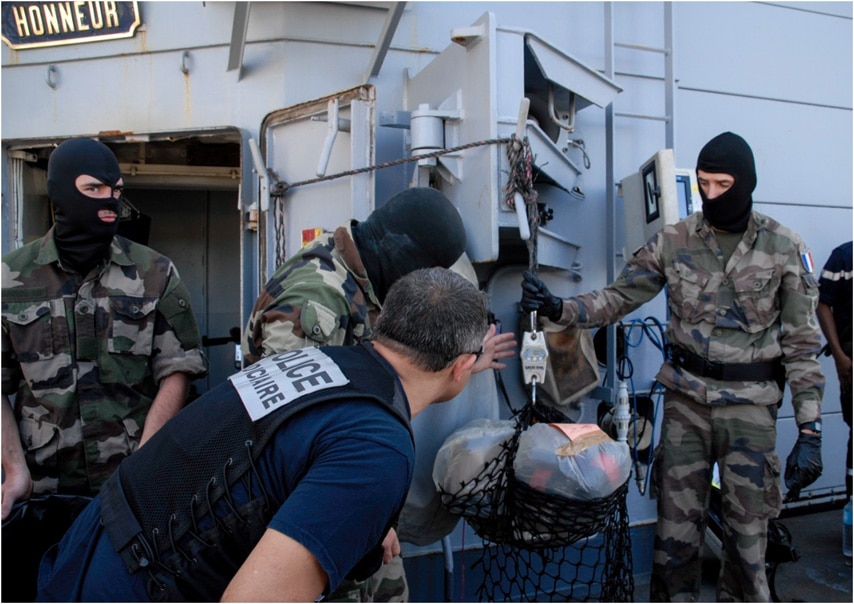
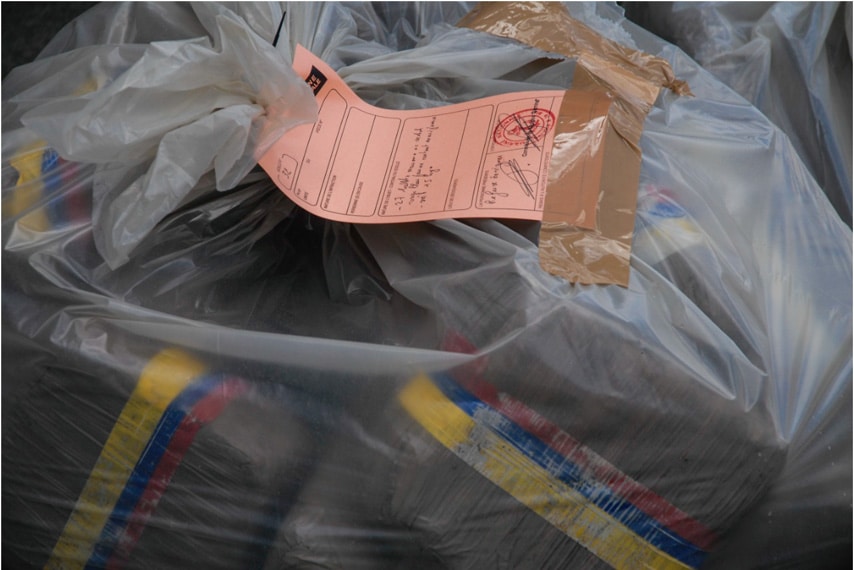
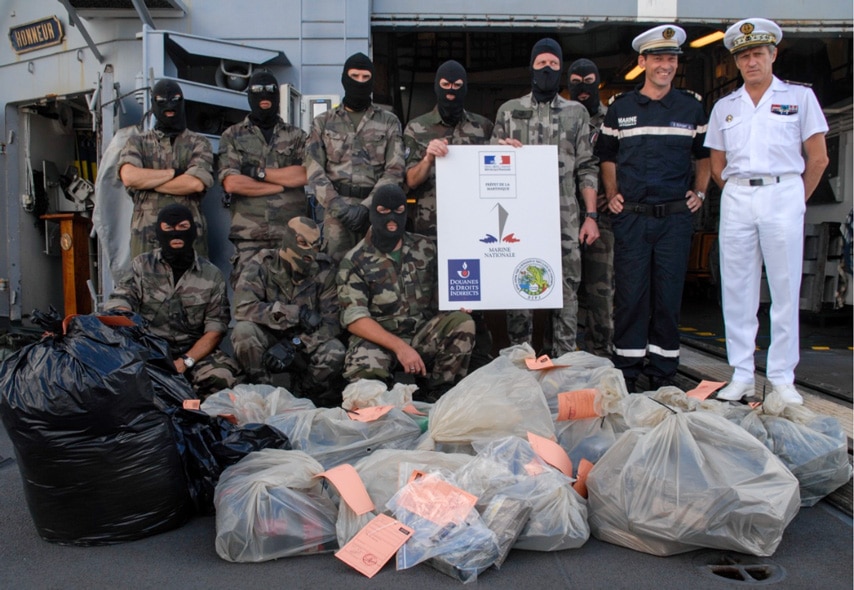
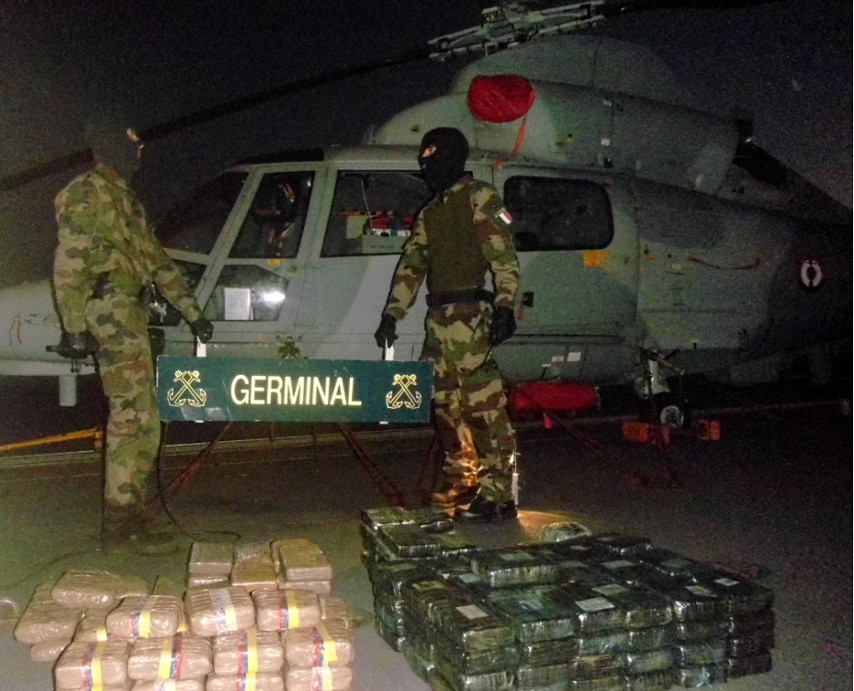
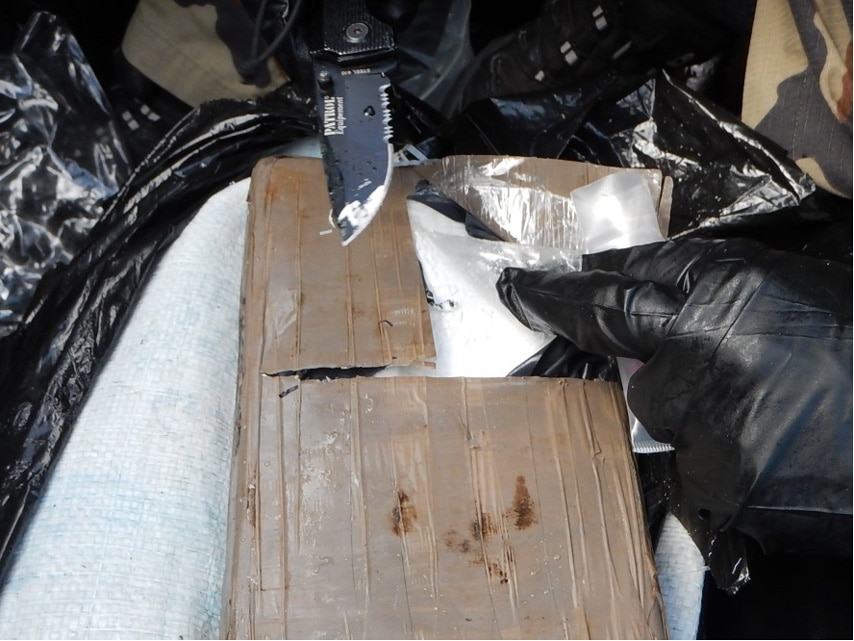
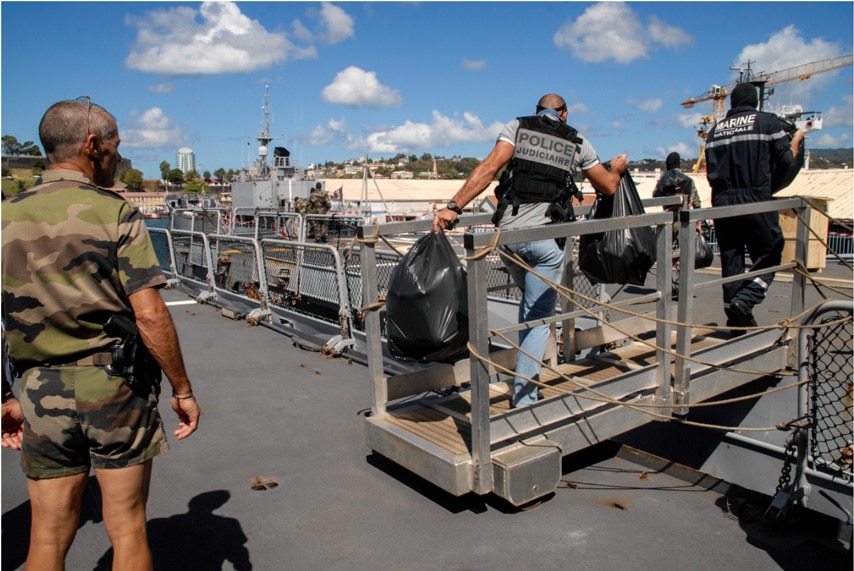

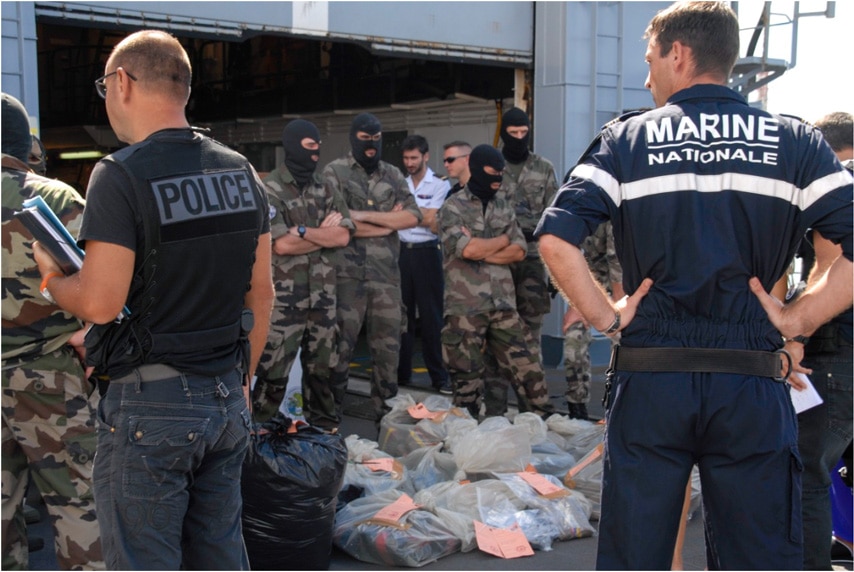
 Miami – Une tonne de cocaïne a été saisie à bord d’un bateau au large des côtes panaméennes et quelques 360 kilos de cocaïne dans un cargo-citerne sur le fleuve Miami River en Floride, ont annoncé mardi les Douanes américaines.
 AVISEUR INTERNATIONAL