Las autoridades intervinieron un atunero que salió de Manta y transportaba 2.500 kilos de cocaína en 71 fardos controlados por un mejicano que no figuraba entre los tripulantes declarados
0000
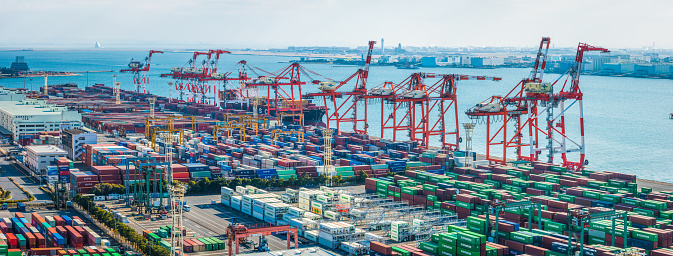
Las autoridades intervinieron un atunero que salió de Manta y transportaba 2.500 kilos de cocaína en 71 fardos controlados por un mejicano que no figuraba entre los tripulantes declarados
0000
La Policía de Ecuador detiene a los dos responsables de una empresa que enviaban un cargamento de piñas cuyas cajas estaban contaminadas con cocaína
0000
Ce texte est un tissu de mensonges et d’approximations. Bien tricoté par des fonctionnaires de justice!
Les magouilleurs de la GRC-RCMP ont contraint un juge d’accepter ces poursuites.
Triste bande de tartuffes!
J’avais signalé ces participants à la DNRED…
Christian Gatard de la DGDDI Paris et Bernard ROUX, attaché DGDDI à Washington D.C se sont précipités au pénitencier de Renous pour me faire plaider coupable, devant Olivier ARRIBE, le Consul de France de Moncton.
°•••°
CaseID:
CMI889
Summary:
This decision followed a voir dire held to determine the admissibility of evidence seized on board the Cypriot vessel MV Pacifico. The accused was a Spanish national on trial for conspiracy to import cocaine into Canada. The Crown moved to introduce in evidence certain items found on board the Pacifico after it was arrested 100 nautical miles from the coast in international waters and brought to the port in Halifax, Nova Scotia.
The Royal Canadian Mounted Police (RCMP) had been conducting an investigation (code-named Operation Jules) from the early 1990s to February 1994 which gathered information providing reasonable and probable grounds to believe that the accused and co-conspirators were about to import a large quantity of drugs into Canada. On 21 and 22 February 1994 it became obvious that the conspirators were looking for a vessel to meet a larger vessel somewhere at sea in order to receive a shipment of drugs. The Lady Teri-Anne was secured for that purpose. The Canadian authorities also believed that Raymond LeBlanc, a Canadian citizen, was on board the vessel meeting the Lady Teri-Anne and that his task was to ensure the orderly transfer of drugs onto the Lady Teri-Anne. The RCMP obtained the necessary consent from the Attorney-General of Canada to exercise the power of arrest, entry, search and seizure outside Canada’s territory and in relation to Raymond LeBlanc on board a foreign vessel and in international waters.
At 19h27 on 21 February 1994, the Lady Teri-Anne left the Shelburne wharf and remained under continuous surveillance via eye witnesses, mobile radar systems and a navigational tracking system. In addition, several conversations were being intercepted between Raymond LeBlanc and the crew of the Lady Teri-Anne. The analysis of the conversations made it clear that Raymond LeBlanc was on board the other vessel and that he and the crew of the Lady Teri-Anne were exchanging information on co-ordinates in order to meet at a pre-arranged place at sea. There was no doubt that they were working as a team to ensure the meeting of the two vessels in order to transfer drugs from the one to the other. At 02h06 the Lady Teri-Anne stopped within 160 feet of another vessel and remained ‘dead in the water’ for approximately 25 minutes. At 02h22, the Lady Teri-Anne broke from the other vessel and proceeded in the direction of Shelburne wharf, while the other vessel turned south-east in the direction of the open sea. The other vessel turned out to be the Pacifico, a large vessel registered in Cyprus, whose captain was Jürgen Kirchhoff. The Pacifico was followed or tracked by radar from the time it left the meeting place with the Lady Teri-Anne until it was arrested and boarded in international waters.
Meanwhile, the Lady Teri-Anne docked at the Shelburne wharf at 07h52. For tactical reasons it was boarded at 11h10 and 170 bales of cocaine weighing 5,419 kg were removed. It became clear that Raymond LeBlanc had made his way from the Pacifico onto the Lady Teri-Anne to be brought back to shore. He was arrested at the Wildwood Motel in Shelburne.
At 11h59 the HMCS Terra Nova (the Canadian military vessel) was given instructions to arrest the Pacifico. At that time the two vessels were 18 miles apart. The commanding officer of the Terra Nova called the Pacifico and informed it that RCMP officers were on board and that they suspected that the captain of the Pacifico had a Canadian citizen on board which the Canadian authorities thought to be involved in a conspiracy to import narcotics. The Crown conceded that this was incorrect as Raymond LeBlanc had in fact been arrested in Shelburne. It was further conceded by the Crown that the only reason which in fact brought about the pursuit and the subsequent arrest of the Pacifico was the rendezvous between the two vessels and the reasonable belief by the Canadian authorities that the Lady Teri-Anne had obtained a cargo of illicit drugs transferred from the Pacifico onto the Lady Teri-Anne for importation into Canada. The commanding officer of the Terra Nova ordered the Pacifico to alter course and prepare for an RCMP boarding, with the threat that if it did not comply he would be compelled to fire across the bow. The Pacifico complied and allowed the boarding. While the Pacifico was escorted back to the shore of Nova Scotia, the Canadian authorities requested authorisation pursuant to the UN Convention against Illicit Traffic in Narcotics, Drugs and Psychotropic Substances 1988 (Vienna Convention) from the Director of the Cypriot Department of Merchant Shipping to board, search and take appropriate action if evidence of illicit traffic was found. The Cypriot government gave consent on 23 February 1994 and on the same day, arrest and search warrants were obtained from Canadian courts for the arrest of the captain of the Pacifico and the search of his vessel.
The accused argued that hot pursuit was not allowed by, and was contrary to, art 17 of the Vienna Convention and not justified under customary international law as the Pacifico, or one of its boats, never entered Canadian territorial waters. He further contended that such unlawful arrest, accompanied by threats of the use of force, was so reprehensible in terms of breach of international law that to allow the items seized as a result of such actions to be received as evidence against the accused would amount to an abuse of process.
Held: The items seized on the Pacifico shall be admitted in evidence.
The main argument of the accused is that, in accordance with art 17.3 of the Vienna Convention, Canada had no right whatsoever to order the Pacifico to stop nor to board until it had obtained authorisation from the Cypriot government. Assuming that art 17 of the Vienna Convention represents the domestic law of Canada, it does not have any applicability under the circumstances, nor do the words of art 17 allow the type of interpretation the accused seeks to place upon it. Prior to boarding, the Canadian authorities did not know which flag the vessel was flying, although they believed that the vessel had been engaged in illicit trafficking. Under such circumstances the Terra Nova could not request confirmation of registry or authorisation from the flag State to take appropriate measures. Those steps were taken after the boarding of the vessel while it was escorted to the Nova Scotia shore. The Vienna Convention in general and art 17 do not and did not prevent Canadian authorities from entering into hot pursuit of the Pacifico in accordance with the international law of the sea. Article 17.11 expressly provides that ‘any action taken in accordance with this article shall take due account of the need not to interfere with or affect the rights and obligations and the exercise of jurisdiction of coastal states in accordance with the international law of the sea’.
As to the contention that the customary international law of the sea did not authorise any of the actions taken by the Canadian authorities in this case and the items seized should be excluded from evidence, the Crown submits that the arrest and subsequent boarding of the Pacifico in international waters was fully justified by customary international law of the sea reflected by art 23 of the Geneva Convention on the High Seas 1958 (Geneva Convention) on the basis of the doctrine of ‘extended or extensive constructive presence’, a doctrine carried forward into the United Nations Convention on the Law of the Sea 1982 (UNCLOS), in particular art 111.
Neither the Geneva Convention nor UNCLOS has been ratified by the Canadian Parliament. However, the Court agrees with Devonshire J in R v Mills (unreported decision of the English Circuit Court, 10 March 1995), McIntyre J in R v Kirchhoff (1996) 172 NBR (2d) 257 and R v Sunila and Soleyman (1986) 28 DLR (4th) 450, that art 23 of the Geneva Convention and art 111 of UNCLOS as they relate to the issues of extensive constructive presence are declaratory of existing customary international law and that such law is part of the Canadian domestic law. The fact that art 23 of the Geneva Convention was carried forward verbatim on the issue of extensive constructed presence into UNCLOS is of significance. The acceptance of the concept by the hundreds of nations who have recognised UNCLOS is an indication of widespread acceptance by nations of the concept of extensive constructive presence and provides evidence of state practice.
Looking at art 111’s requirements as they relate to this case, the Court concludes that the hot pursuit was exercised by a military vessel (Terra Nova) authorised to that effect. The hot pursuit was undertaken by the Terra Nova only after the Terra Nova had good reason to believe, after the arrest and boarding of the Lady Teri-Anne at the Shelburne wharf by the RCMP, that the Pacifico had violated the laws of Canada by working as a team with the Lady Teri-Anne, which was then in Canadian territorial waters with five tons of cocaine which had been unloaded from the Pacifico onto the Lady Teri-Anne, albeit outside of Canada’s territorial waters. Under such circumstances, the Pacifico had not only worked as a team with the Lady Teri-Anne but had also been used as a mother ship by the Lady Teri-Anne. The pursuit of the Pacifico was never interrupted and at no time did the Pacifico enter the territorial sea of any other State. The arrest of the Pacifico was only effected after an auditory signal to stop had been given and had been heard. The pursuit, arrest, boarding and subsequent seizure of the items on board the Pacifico were performed in accordance with the established law of the sea and Canada’s domestic laws. The allegations by the accused that the process of the Court is being abused by receiving the items seized on board the Pacifico are without merit.
Parties:
The Crown, Carlos Miguel Hernandez Rumbaut, Pierino Divioto, Mike Divito, Roberto Sorenti, Eusèbe Gauvin, François Gauvin, Alfredo Chierchia, Raymond LeBlanc, Pierre Duguay, the Lady Teri-Anne, the Pacifico
Other Reference:
R v Rumbaut (1998) CanLII 9798 (NB QB); (1998) 202 NBR (2d) 87; (1998) 516 APR 87; (1998) 127 CCC (3d) 138
Date:
02/07/1998
Tribunal:
Queen’s Bench of New Brunswick
Judges:
Deschênes J
Keywords:
International law of the sea, customary international law, transnational crime, territorial sea, doctrine of hot pursuit
Web URL:
http://canlii.org/en/nb/nbqb/doc/1998/1998canlii9798/1998canlii9798.html
Year:
Jurisdiction:
Article:
Convention:
An organised crime group used a cover load of foie gras and duck breast to smuggle nearly 100kg of cocaine into the UK.
Four members of the group were sentenced today following a National Crime Agency investigation which began after colleagues from Border Force became suspicious about the expensive delicacy which was placed on top of the Class A drug in the back of a transit van.
Officers stopped the vehicle in November 2019 as it entered Newhaven from Dieppe.
Once the foie gras and duck breast were removed, officers discovered the van had a false floor and the crime group had placed 97kg of cocaine under it. The drugs had a street value of about £8m.
The NCA investigation proved the driver was innocent but that the van owners Jean-Pierre Labelle, 48, and Tanvir Hussain, 46, were behind the failed importation along with Michael Keating, 56, and his brother Matthew Keating, 49.
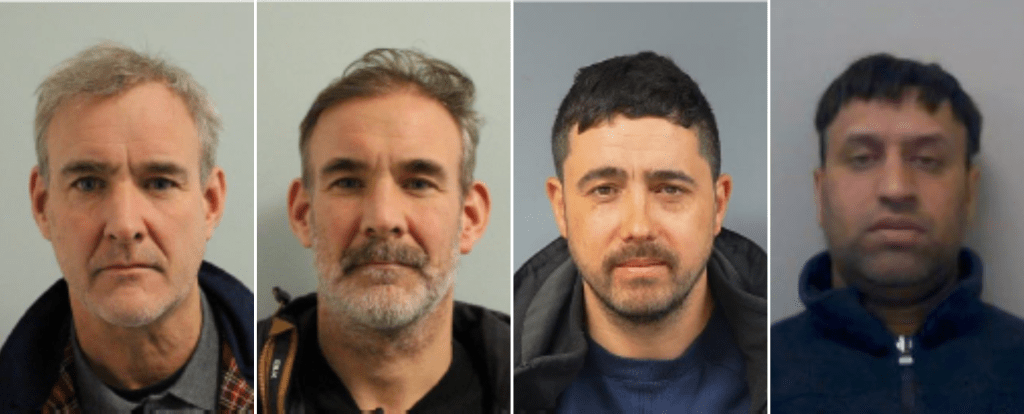
Pictured: Michael Keating, Matthew Keating, Jean Piere Labelle and Tnavir Hussain
Kingpin Michael Keating, of Uxbridge, Middlesex, organised the plot and sourced the drugs through international connections.
Hussain, of High Wycombe, Buckinghamshire, bought the van along with Labelle, who is from the Isle of Wight.
Crime group member Matthew Keating, of Rickmansworth, Hertfordshire, admitted a previous ketamine importation committee with his older brother.
Michael Keeting used the encrypted communications platform EncroChat to plan his drugs runs.
0000
Two men involved in a plot to bring over £1.5 million of cannabis to Scotland hidden in a load of watermelons have been jailed.
Officers from the Organised Crime Partnership Scotland (OCP), made up of officers from the National Crime Agency and Police Scotland, started an investigation after intelligence indicated a Scottish organised crime group were planning to import drugs into the UK using HGVs in 2020.
Officers identified Scott McSeveney, 37, from Shotts, who was using EncroChat to discuss the group’s plans. Operation Venetic, the NCA’s response to the takedown of EncroChat, saw officers receive access to the messages in June 2020.
McSeveney used the handle ‘frank.n.furter’ and exchanged messages with a number of individuals about importing cocaine and cannabis, quantities involved, test runs and how the drugs should be concealed, and terms of payment.
In one message, he talks about ‘getting a man to the flat [Netherlands]’ and how much illegal activity he can hide through his legitimate company before his ‘books get done’. In another they discuss whether the drugs should be hidden in the cab or the back of the lorry.
Chats showed McSeveney had enlisted the help of an HGV driver, Steven Lawson, 48, from Motherwell, who would collect their illegal haul and deliver it back to the UK.
On 24 June 2020, officers from Border Force, working on a request from OCP Scotland, stopped a lorry at Coquelles port which Lawson had driven from Spain.
Lawson told officers he had picked up a load of watermelons from a company in Spain.
When the lorry was scanned and searched, 159 bags of cannabis were found concealed within the load of watermelons. Each bag weighed around one kilo and had a street value of more than £1.5 million.
Lawson was arrested at the port and McSeveney was arrested at his home later that day by OCP officers. Lawson denied all knowledge of the drugs.
McSeveney admitted the charge of being concerned in the supply of a class B drug at Glasgow High Court on 20 March 2025. At trial, Lawson was convicted of a charge of being involved in serious and organised crime.
Both were sentenced at the same court today. Lawson received a sentence of five years in prison and McSeveney received a sentence of eight years and two months in prison.
Donald Lawrie, NCA Operations Manager, said: « McSeveney and Lawson were working in partnership for an organised crime group determined to smuggle a large quantity of illicit drugs into Scotland, where they were destined for our streets.
« McSeveney sent thousands of messages in an attempt to get his criminal venture off the ground, and he was well versed in what he thought were the best ways to evade law enforcement.
« The NCA’s work in the Organised Crime Partnership, and with our partners in Border Force, has seen two criminals brought to justice. »
Detective Superintendent Steven Elliot, Police Scotland, said: « Drugs cause misery in our communities and we will use all resources at our disposal to disrupt this illegal trade coming into Scotland.
« This significant recovery underlines our commitment to the Serious Organised Crime Taskforce and the country’s Serious and Organised Crime Strategy as well as working with our partners.
« The public continues to play a vital role in assisting our investigations and helping us continue to bring those responsible for this type of crime to justice. We urge anyone with information or concerns about drugs activity in their area to contact Police Scotland on 101 or Crimestoppers anonymously on 0800 555 111. »
Sineidin Corrins, Depute Procurator Fiscal for Serious Casework at the Crown Office and Procurator Fiscal Service (COPFS), said: « These two men were integral to an attempt import large quantities of Class B drugs into Scotland.
« But they failed thanks to partnership working between COPFS and the National Crime Agency, Border Force and Police Scotland to disrupt a network of drugs supply.
« These drugs would have caused immense harm. But with these convictions, we have removed them from the streets and made communities safer.
« We will continue to collaborate with our partners as a member of Scotland’s Serious and Organised Crime Taskforce to tackle serious organised crime and this kind of case highlights the extensive work that has been ongoing against these groups. »
0000
The Drug Enforcement Administration says a raid carried out with other law enforcement agencies in Colorado Springs on Sunday led to the capture of more than 100 immigrants who are in the U.S. illegally.
The DEA’s Rocky Mountain Division said in a post on X that 114 immigrants were arrested and placed « on buses for processing and likely eventual deportation. »
0000
Publié le 29/04/2025

Elle fut la première femme nommée à la tête du parquet de Marseille et, à ce titre, confrontée dès 2020 à l’expansion du trafic de stupéfiants et aux « narchomicides », néologisme qu’elle a imposé, engendrés par la guerre de territoires. Elle y dirigeait une équipe de 56 magistrats et a mesuré la difficulté d’exercer face à la sauvagerie des narcos. Dominique Laurens, procureure générale près la cour d’appel de Reims (première femme, là encore) depuis 19 mois dans la ville où elle est née, reste préoccupée par l’ampleur d’un marché tentaculaire qui génère 3,5 à 6 milliards de chiffre d’affaires (notre article du 22 mai 2024 ici). Elle nous explique quand et pourquoi tout a changé, comment les caïds ont développé la doctrine du taylorisme, chargeant des nuées de jeunes tueurs « de rafaler les points de deal ». Elle regrette que l’exécutif ait désarmé des services d’enquête au profit du maintien de l’ordre dans la rue, plus visible. Dominique Laurens, Procureur général de Reims (Pgoto : ©DR)
Dominique Laurens : Je le situe au moment du confinement [ordonné en France le 17 mars 2020]. On remarque vite qu’il n’y a aucune rupture de la chaîne d’approvisionnement, les trafiquants se réorganisent parfaitement. Là où l’on constatait un émiettement, ils se regroupent, se structurent, se concentrent sur la distribution. Cela s’accompagne d’affrontements durs : il faut capturer les parts de marché. Ils sont dans une logique commerciale, en utilisent ses codes, dont ceux des réseaux sociaux. Ils ont compris, probablement même avant nous, comment cela fonctionne. Ils créent “un Amazon de la drogue”. On l’a vécu de plein fouet à Marseille, précurseur de tout ce qu’il se passe sur le territoire national.
D.L : Oui. Les affrontements armés, la liquidation de concurrents, de leurs points de vente, ont essaimé partout. Les Marseillais se sont répandus, d’abord sur l’arc méditerranéen ; ils y ont éprouvé leurs méthodes. Et, dès 2023, celles-ci sont adoptées sur l’ensemble du territoire parce qu’il y a des enjeux financiers considérables. Parallèlement, on a des jeunes désœuvrés, prêts à tout pour entrer dans ces réseaux, qui deviennent des tueurs. Il n’y a qu’à voir la fusillade à Rennes le 17 avril : ceux qui sont suspectés d’avoir rafalé les habitations [au quartier Villejean, sur fond de trafic et guerre de territoires] sont presque des gamins. Ce sont les méthodes des Marseillais.
D.L. : Ce n’était pas pareil. À l’époque, on liquidait le gros concurrent à la tête d’un réseau très structuré. À Marseille, on savait qui était susceptible d’être visé et sur quel secteur. Puis, tout a changé : maintenant, ils ne s’ennuient plus à monter des opérations de long terme, autant rafaler les points de vente. Ils chargent un adolescent de flinguer, et advienne que pourra ! C’est la raison pour laquelle on a tant de victimes collatérales, une maman, une adolescente de 15 ans, un petit bonhomme comme à Nîmes, peu importe ! L’essentiel est d’impressionner et de faire en sorte que les acheteurs ne s’y ravitaillent plus. Ils sont réorientés vers des endroits présentés comme plus sûrs ou se tournent vers les livraisons “Uber shit”, “Uber coke”, qui fonctionnent jour et nuit grâce à une main-d’œuvre pas chère, sans charges à payer. Les trafiquants s’adaptent mieux et bien plus rapidement que la police ou la gendarmerie.
D.L. : Oui, et cela nous inquiète beaucoup. La corruption se répand au sein de la Pénitentiaire parmi les surveillants, mais aussi au sein même de notre institution avec des greffiers mis en cause [une fonctionnaire du tribunal de Marseille a été écrouée le 4 avril à Marseille].
D.L. : Oui, et j’avoue que cela m’a stupéfiée car c’est un très beau service. Mais il y a de telles sommes d’argent en jeu…
D.L. : Cela reste globalement assez bas de gamme. Les gardiens de prison, par exemple, sont dans des situations financières compliquées. Ils ne sont pas très bien payés, font souvent du célibat géographique qui les oblige à louer un deuxième logement, le métier est difficile avec une forte pression pesant sur eux dans leur quotidien, et tant d’argent en face…
D.L. : En 2021 et 2022. Les trafiquants de drogue ont appliqué la doctrine du taylorisme. Plutôt que de saisir des missions les tueurs répertoriés qui demandaient beaucoup d’argent car ils se chargeaient de tout – filature, surveillance, recrutement de seconds, sécurité de l’environnement –, ils se sont dits “allons plus vite à bas prix”. Aujourd’hui, le tueur n’a plus besoin de trouver une voiture, des armes, le lieu d’exécution : tout lui est fourni. Il est appelé à 20 heures, on lui dit : “Tu trouveras le chauffeur et l’arme à telle adresse ; tu tires sur les individus à tel endroit, ils y sont.” Le gars s’y rend, rapporte les clichés ou la vidéo prouvant que le boulot a été exécuté, terminé ! C’est cloisonné, ils ne se connaissent pas, le véhicule est cramé, le gamin doit juste, si j’ose dire, être disponible 24 heures sur 24 pour d’un coup bouger, tuer, rentrer. Cette stratégie de cloisonnement permet aux donneurs d’ordre d’être très difficilement identifiables et leur assure que le job sera fait en une heure.
D.L. : Je ne dirai pas cela. Mais notre pays s’est tiré plusieurs balles dans le pied quand, dans l’organisation des services de police, il a été décidé de tout miser sur l’ordre public, c’est-à-dire sur la présence de forces de police et de gendarmerie dans “la rue”, sur le terrain. On a désarmé des services d’enquête.
D.L. : On a complètement sabordé l’investigation, de manière lourde. On a mis du bleu dans la rue et les stocks d’enquête sont malheureusement là pour démontrer que ceux qui traitent les plaintes, et qui font tout ce qu’ils peuvent, ne sont plus assez nombreux. Autre problème, le recrutement par à-coups : on a engagé des policiers insuffisamment formés, pour les placer dans les situations les plus compliquées, sur les territoires les plus atteints. Faute d’effectifs de fonctionnaires dans certaines administrations, on fait désormais appel à des contractuels qui n’ont pas de carrière à préserver. Dernière balle dans le pied : avoir principalement misé sur les amendes forfaitaires délictuelles pour lutter contre la consommation de stupéfiants, démontrer ainsi qu’on lutte contre le trafic de drogue. Mais nous sommes à présent confrontés à un vrai problème de santé publique : on ne sait pas quoi faire des gens addicts au cannabis, à la coke, au crack et bientôt, j’en ai peur, au fentanyl.
D.L. : C’est le type même de la fausse bonne idée. Le trafiquant se mettra à vendre de nouveaux produits comme le fentanyl ou des produits encore plus dosés, donc procurant un effet plus immédiat, plus fort, et toujours plus dangereux pour la santé physique et psychique.
D.L : Les Français ont le sentiment que l’on ne fait rien parce que la plainte de M. Dupont qui a été frappé par son voisin dort dans un service, parfois quatre à cinq ans, jusqu’à ce qu’on efface les stocks, seul moyen de rendre un peu d’espoir aux policiers. Judiciairement, en matière de stupéfiants, il nous est demandé de condamner rapidement, fermement. Nous sommes conscients des enjeux et c’est le sens de nos réquisitions des parquets. Les magistrats jugent sévèrement ces agissements, d’autant plus après le travail phénoménal des juges d’instruction. Moyennant quoi, le quantum des peines de prison a fortement augmenté, aboutissant à l’encombrement des établissements pénitentiaires.
D.L. : Si le Pnaco obtient des résultats que la Junalco [Juridiction nationale de lutte contre la criminalité organisée] n’arrivait pas encore à produire – redonner du sens à toutes ces informations qui se croisent entre Marseille, Lille, Rennes, etc., à toutes ces affaires susceptibles d’être liées –, alors cela aura des effets positifs. Typiquement, dans l’affaire Mohamed Amra (2), le Pnaco aurait pu faire travailler, ensemble, les Juridictions interrégionales de Lille et Marseille. En France, il n’existe pas 112 têtes de pont de la criminalité organisée, donc le Pnaco se concentrera sur les principales et centralisera les investigations, à condition que celles-ci soient menées par une police judiciaire aux effectifs renforcés. Sinon, c’est mort.
D.L : Je ne dispose pas d’éléments sur l’enquête en cours. Mais, pour avoir vu les vidéos diffusées sur Telegram, j’ai retrouvé les mêmes images que celles qu’adressent les narcos aux familles pour les intimider ou annoncer un meurtre. C’est leur marque de fabrique, les caractéristiques des narcos, y compris en termes de publicité et de visibilité données à leurs actions qui se propagent sur les réseaux cryptés avant que la police soit informée. Leur but : obtenir un effet de sidération, terroriser. Et déstabiliser l’Etat.
(1) En commission mixte, les députés et sénateurs ont trouvé un accord sur la version finale de la proposition de loi qui sera normalement adoptée par les deux chambres au cours de ces prochains jours.
(2) Le criminel Mohamed Amra s’est évadé le 14 mai 2024 à hauteur du péage d’Incarville (Eure). Les gardiens pénitentiaires Fabrice Moello et Arnaud Garcia ont été tués.Amra a été arrêté le 22 février 2025 en Roumanie.
0000
Au cours de la nuit, sur les deux départements visés, 7,4 kg de cannabis, 5,6 kg de cocaïne, 1,6 tonne de tabac et 1.033 litres d’alcool fort de contrebande ont été saisis. Le tout réparti en huit constatations douanières et 33 infractions relevées par la gendarmerie.
0000
 AVISEUR INTERNATIONAL