Avatar de Inconnu

A propos Marc Fievet

https://fr.wikipedia.org/wiki/Marc_Fievet

DNRED 🇫🇷 (opérations anti-stups internationales 🇪🇺 🇬🇮 🇪🇸 🇹🇷 🇮🇹 🇬🇹 🇧🇪🇨🇭🇩🇯 🇬🇧 🇨🇦 🇨🇴🇱🇮 🇳🇱 🇵🇹 🇻🇪 🇺🇸 🇪🇬): le regard de Jean-Henri Hoguet, ancien patron de la DNRED (1987-1991), qui a « recruté » Marc Fiévet.

Sans fioritures: Pour Rue89, Jean Henri Hoguet ancien patron de la DNRED (1987-1991) a accepté de répondre, par mail, à quelques questions. Comment expliquez-vous l’absence de soutien des responsables politiques vis-à-vis de Fiévet ? Les dits « responsables » se sentent éventuellement concernés par les actions qu’ils ont conduites ou autorisées ou qui sont intervenues […]

DNRED 🇫🇷 (opérations anti-stups internationales 🇪🇺 🇬🇮 🇪🇸 🇹🇷 🇮🇹 🇬🇹 🇧🇪🇨🇭🇩🇯 🇬🇧 🇨🇦 🇨🇴🇱🇮 🇳🇱 🇵🇹 🇻🇪 🇺🇸 🇪🇬): le regard de Jean-Henri Hoguet, ancien patron de la DNRED (1987-1991), qui a « recruté » Marc Fiévet.

FRANCE 🇨🇵 (Vitry-sur-Seine) : saisie de 160 kilos de cocaïne en provenance de Guadeloupe

Les policiers du groupe d’appui opérationnel (GAO) de l’Office antistupéfiants (OFAST) central à Nanterre sont intervenus mardi 29 avril au cœur de la cité Balzac à Vitry-Sur-Seine.

Cinq suspects, tous âgés d’une vingtaine d’années, ont été interpellés alors qu’ils déchargeaient 160 kilos de cocaïne, dissimulés parmi les meubles dans un camion de déménagement.

Source

0000

BELGIQUE 🇧🇪 (Port d’Anvers) : saisie de 57,46 kilos de cocaïne dans un container de bananes

Les douaniers ont saisi 57,46 kg de cocaïne au port d’Anvers, indique le parquet.

Source et plus

ILES CANARIES 🇪🇦 (Santa Cruz de Tenerife) : en liberté provisoire,  six (Que du beau linge!) des huit détenus ce mercredi pour narcotrafic

C’est Europa press qui nous précise que parmi les six personnes mises en liberté provisoire figurent un chef de brigade à la retraite de la ‘Policía Nacional’, un sous-inspecteur en activité de cette même force et un avocat.

L’opération a permis d’arrêter huit personnes au total, parmi lesquelles le policier qui avait initialement dirigé l’enquête sur « Tito Berni ».


Le Tribunal d’Instruction n° 3 d’Arona a décrété l’incarcération, sans caution, de l’homme d’affaires d’origine libanaise, basé à Tenerife, qui a été arrêté ce mercredi avec sept autres personnes, faisant l’objet d’une enquête pour des délits présumés d’appartenance à une organisation criminelle, trafic de drogue, corruption ou blanchiment d’argent, entre autres accusations.

0000

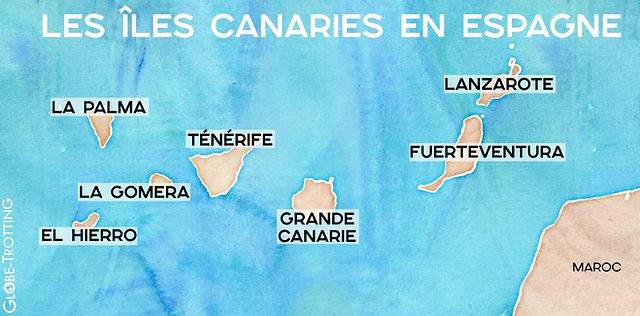
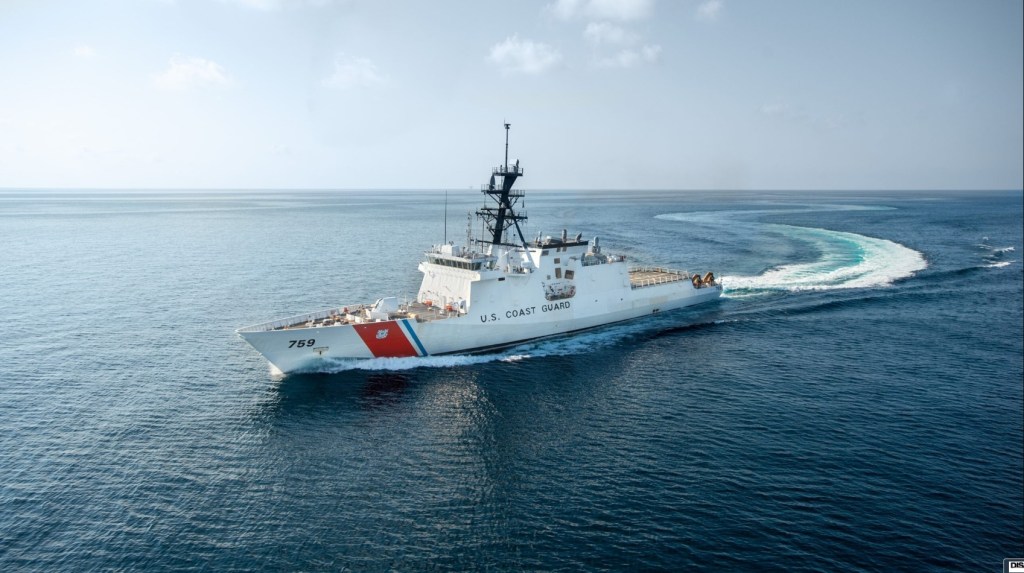
OCÉAN ATLANTIQUE (à l’ouest de Las Palmas, dans les îles Canaries) : l’équipage du garde-côte américain Calhoun (WMSL 759) a saisi environ 4 tonnes 500 de cocaïne

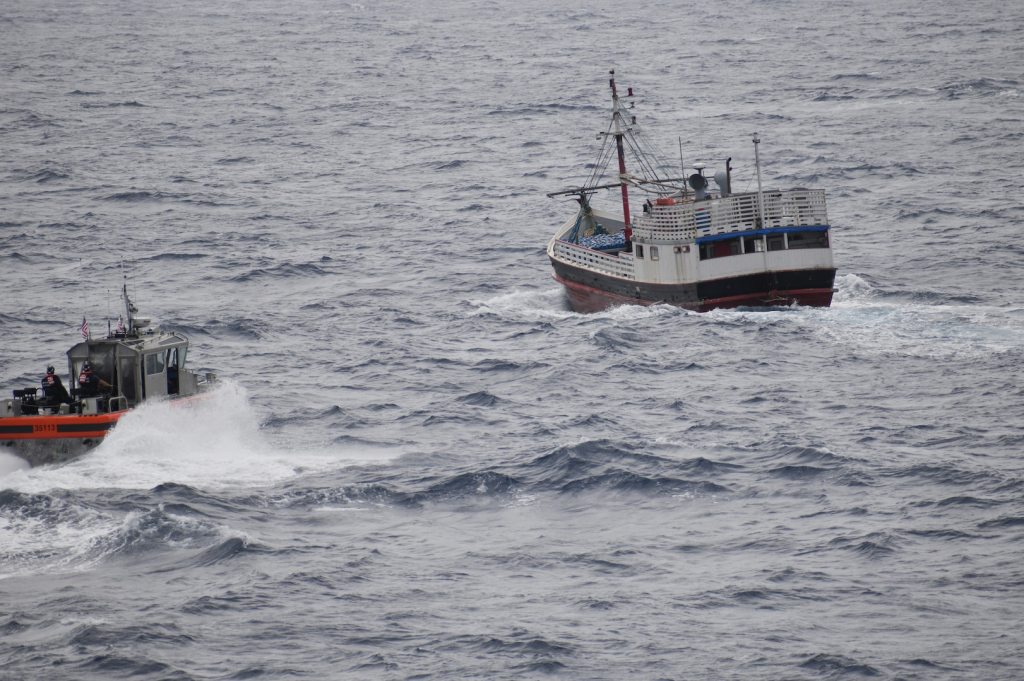
C’est le 12 avril que le « Calhoun », sous contrôle en zone atlantique de la US Coast Guard a détecté un navire de pêche suspect dans les eaux internationales présentant un comportement compatible avec le trafic de stupéfiants à environ 1 265 milles à l’ouest de Las Palmas, dans les îles Canaries.

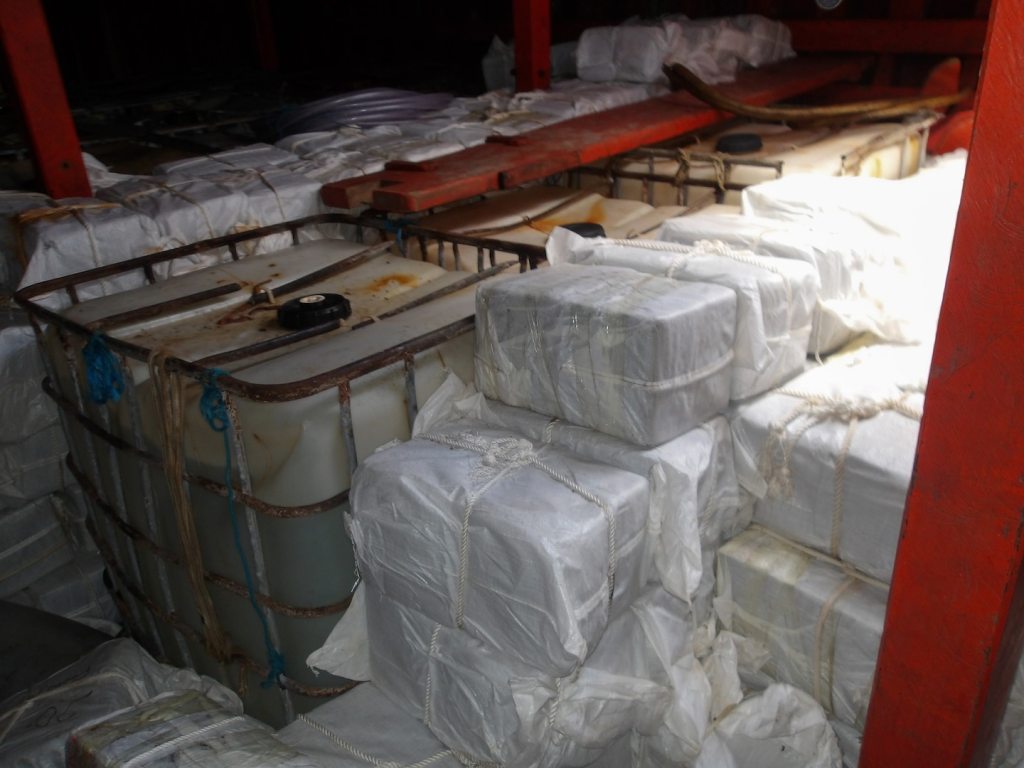
L’équipage du Calhoun a intercepté le navire suspect, appréhendant les cinq membres d’équipage et saisissant environ 4 tonnes 500 (10 000 livres) de cocaïne.

Source 

0000

FRANCE 🇨🇵 (Hautes-Alpes) : un homme connu pour trafic de drogue retrouvé mort, une enquête ouverte pour meurtre

La victime devait être jugée en juin

Ce mercredi 30 avril, les premières recherches ont établi que la victime aurait reçu plusieurs coups portés avec un «objet contondant». Originaire de Gap, l’homme était connu pour trafic de drogue. Il avait déjà été condamné pour des délits routiers et devait être jugé pour une affaire de trafic de stupéfiants en juin 2025, selon la procureure de Gap, Marion Lozac’hmeur.

Source

0000

THAILAND 🇹🇭  (Songkhla) : Office of the Narcotics Control Board (ONCB) has dismantled a Thai-Malaysian transnational drug network

Thailand’s Office of the Narcotics Control Board (ONCB) has dismantled a Thai-Malaysian transnational drug network following the arrest of two Thai suspects and the seizure of 261 kilograms of crystal methamphetamine (ice) in Songkhla, a southern province of the Kingdom.

Read more

0000

USA 🇺🇲 (U.S. Customs and Border Protection) : nearly 200 pounds of cocaine seized at Canada-U.S. border in latest bust

For the third time since March, U.S. customs officers have seized more than 100 lbs. of cocaine at the Detroit-Windsor border that was en route to Canada, according U.S. authorities.

The most recent incident occurred on April 20, according to a release from U.S. Customs and Border Protection, which says that officers pulled over a transport truck that was empty, aside from two duffle bags carrying 193 pounds (87.55 kilograms) of cocaine.

Source and more

0000

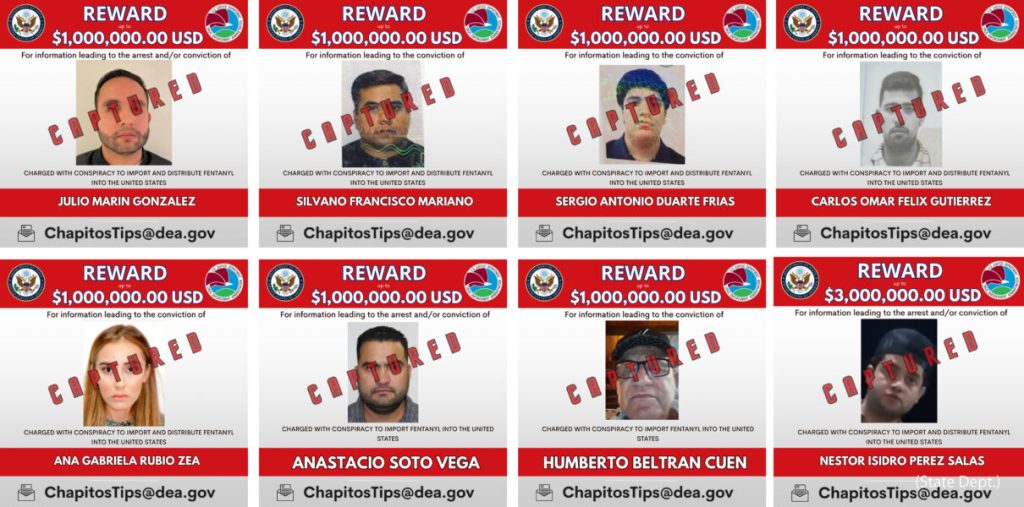
ÉTATS-UNIS 🇺🇲 : le Narcotics Rewards Program (NRP) contribue au démantèlement des réseaux internationaux de stups

Anastacio Soto Vega, Humberto Beltran Cuen, Sergio Antonio Duarte Frias, Julio Marin Gonzalez, Silvano Francisco Mariano, Carlos Omar Felix Gutierrez, Néstor Isidro Pérez Salas et Ana Gabriela Rubio Zea

Sept membres du cartel de Sinaloa ont été arrêtés dans le cadre d’une opération visant à perturber le flux de fentanyl, un opioïde de synthèse mortel, à destination des États-Unis. Ils ont été appréhendés à Bogota (Colombie), à ​​New York, à Guatemala et à Athènes (Grèce).

Ces individus vendaient du fentanyl au kilo, échangeaient de la drogue contre des armes automatiques, exploitaient des laboratoires clandestins et organisaient la livraison de précurseurs chimiques ou blanchissaient de l’argent, est-il détaillé dans les chefs d’accusation. Ils font partie des 27 personnes impliquées dans le trafic de fentanyl et faisant l’objet d’une demande d’informations de nature à conduire à une condamnation, conformément au programme de récompenses du département d’État lié à la répression du trafic de stupéfiants.

Géré par le Bureau des Affaires internationales de stupéfiants et de répression, le Narcotics Rewards Program (NRP) contribue au démantèlement des réseaux transnationaux de trafic de drogue depuis 39 ans. Il a versé 170 millions de dollars de récompenses et facilité l’arrestation ou la condamnation de plus de 90 gros trafiquants de drogue transnationaux.

Aujourd’hui, le programme de récompenses offre 1 million de dollars pour toute information menant à la condamnation de chacun des sept membres du cartel de Sinaloa arrêtés précédemment : Anastacio Soto Vega, Humberto Beltran Cuen, Sergio Antonio Duarte Frias, Julio Marin Gonzalez, Silvano Francisco Mariano, Carlos Omar Felix Gutierrez et Ana Gabriela Rubio Zea.

Un huitième membre du cartel de Sinaloa, Néstor Isidro Pérez Salas, a été arrêté au Mexique lors d’une autre opération policière. Pérez Salas avait participé à la direction des opérations de sécurité du cartel, l’organisation de trafic de fentanyl la plus vaste et la plus violente au monde. Au moment de son arrestation, la récompense offerte pour son arrestation et sa condamnation s’élevait à 3 millions de dollars. (Il a été extradé aux États-Unis il y a environ un an.)

Source

0000

FRANCE 🇨🇵 (Haute Garonne) :  détournements de scellés de drogue pour redistribution

Un gendarme de Haute-Garonne est soupçonné d’avoir détourné, pendant quatre ans, des stupéfiants saisis lors de patrouilles. Une affaire explosive pour la gendarmerie, que la section de recherches de Toulouse a menée à son terme. Cet homme et son frère ont été mis en examen.

Lire

0000

ALLEMAGNE 🇩🇪 (Hambourg) : le port rongé par le trafic de cocaïne et corruption en prime

Entre 2018 et 2023, les saisies de cocaïne ont augmenté de 750 % ce qui fait de l’Allemagne l’une des plaques tournantes européennes majeures de la drogue. Cet afflux ne fait pas qu’augmenter la dépendance mais également la corruption dans le pays qui était pourtant l’une des nations les moins corrompues au monde.

« Nous assistons à une infiltration des infrastructures portuaires de Hambourg, à la corruption de policiers en échange d’informations et, dernièrement, à un procureur en attente de jugement pour avoir divulgué des informations à un réseau de trafic de cocaïne. » a déclaré Daniel Brombacher, qui dirige le bureau Europe de l’Initiative mondiale contre la criminalité transnationale organisée.

Source

0000

FRANCE 🇨🇵 (DGDDI) : pendant qu’a la DG, le service d’auto-promotion veut faire croire à l’efficacité de la Douane sur le terrain, l’UNSA Guadeloupe dénonce une toute autre réalité

Les narcos ont encore de beaux jours devant eux!

Que va répondre Florian Colas?

Il y a urgence en Guadeloupe ! On le sait désormais : l’archipel est un spot prisé des trafiquants de drogue ; leurs marchandises y transitent vers l’Europe et, parfois, y reste au profit de réseaux locaux. Pour faire face à l’ampleur grandissante du phénomène, la Douane est en première ligne. D’où la nécessité d’en renforcer les moyens, jugés désuets par le syndicat UNSA, et de renforcer la coopération interservices.

Nous avons des brigades sur le territoire, notamment à Marie-Galante. Là-bas, les agents en uniforme et en arme ne sont que trois ! J’aime à rappeler que, pour les go-fasts (les bateaux rapides) qui transportent des produits stupéfiants, la Dominique n’est qu’à 20 minutes de Marie-Galante ! Trouvez-vous ça normal qu’il n’y ait que trois douaniers à Marie-Galante ? Le schéma est le même à peu près partout sur le territoire : nous avons des services en souffrance, des services qui ont besoin d’avoir du renfort, y compris sur le port et l’aéroport.

Dauniphane Caraïbe, secrétaire régional UNSA Douanes Guadeloupe

Les saisies records, poudre aux yeux ?

En l’état actuel du fonctionnement des services, l’UNSA Douanes estime les réponses apportées aux trafiquants inefficaces. D’où l’alerte adressée aux autorités compétentes.

Avec le recul que j’ai sur la situation, je vois que les quantités de drogue saisies augmentent, mais il ne faut pas se tromper. Ça, c’est une vue en trompe-l’œil. Le niveau des saisies qui augmente, ça veut juste dire que la quantité de marchandises en circulation a augmenté. Donc ça ne veut pas dire qu’on est plus efficace !

Dauniphane Caraïbe, secrétaire régional UNSA Douanes Guadeloupe

Source et plus

0000

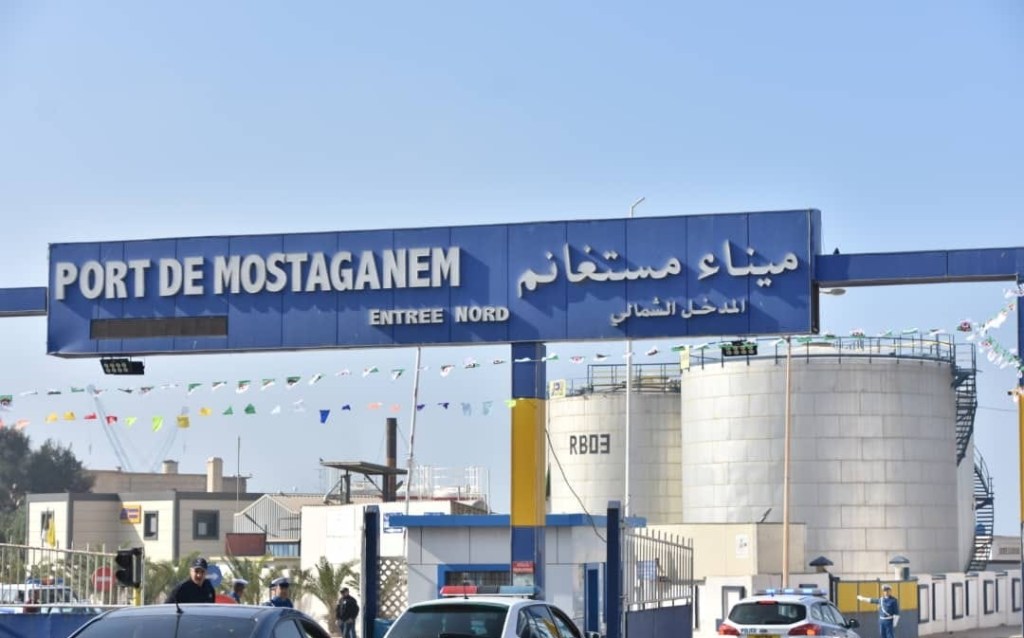
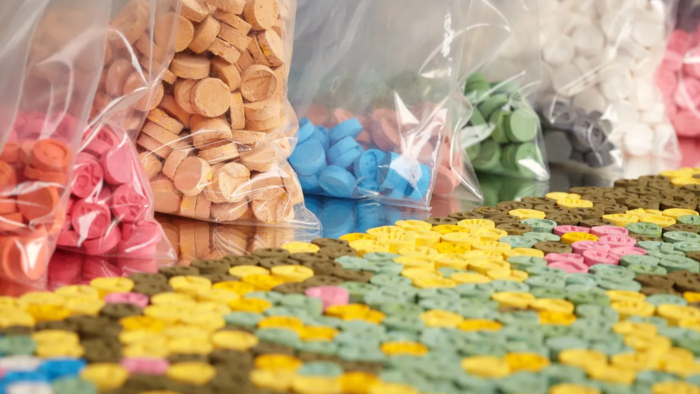
ALGÉRIE 🇩🇿 (port de Mostaganem) : saisie de 1.650.000 comprimés d’ecstasy

L’Algérie a annoncé lundi la saisie de 1,65 million de comprimés d’ecstasy en provenance de Marseille. « La plus grosse saisie d’ecstasy « jamais réalisée en Afrique » vient d’être effectuée par la police algérienne au port de Mostaganem« , affirme le site algérien d’information francophone TSA,, ajoutant : « après une fouille aux rayons X, les services de sécurité ont découvert les comprimés de drogue dissimulés dans des compartiments aménagés dans la structure du véhicule.« 

9 suspects arrêtés

Les autorités ont en même temps annoncé l’arrestation de neuf suspects liés à un « réseau criminel international opérant entre le Maroc et la France.« 
Dans un communiqué diffusé par la télévision nationale, la police a estimé la valeur de cette saisie à environ 4 milliards de dinars (près de 26 millions d’euros), la qualifiant de « plus grande quantité de ce type de drogue jamais saisie en Afrique« . 
Les autorités algériennes n’ont pas dévoilé l’identité des personnes interpellées. 
Les suspects ont été présentés au procureur et doivent répondre d’accusations de « trafic de drogue international au sein d’un groupe criminel transfrontalier » et de « blanchiment d’argent », selon le communiqué. 

D’autres saisies

La police a affirmé que la cargaison était dissimulée dans un camion arrivé par bateau depuis le port de Marseille où vit une importante communauté algérienne. D’autres véhicules et d’importantes sommes d’argent, supposées provenir d' »activités illicites », ont également été saisies, ont précisé les forces de l’ordre.

Source

L’Algérie proclame une saisie record d’ecstasy et met en cause un prétendu réseau transnational entre le Maroc et la France, une annonce fallacieuse…

Source

0000

FRANCE 🇨🇵 (Beauvau) : communiqué via X

La proposition de loi visant à sortir la France du piège du narcotrafic a été définitivement adoptée, au Sénat puis à l’Assemblée nationale ce jour. Ce texte marque une étape décisive dans la lutte contre le narcotrafic et les organisations criminelles. Je pense aux hommes et aux femmes du ministère de l’Intérieur, ainsi qu’aux élus locaux, qui pourront désormais agir à armes égales contre ceux qui empoisonnent la vie de nos concitoyens.

0000

ECUADOR 🇪🇨 : un mexicano tomó un atunero para transportar 2.500 kilos de coca

Las autoridades intervinieron un atunero que salió de Manta y transportaba 2.500 kilos de cocaína en 71 fardos controlados por un mejicano que no figuraba entre los tripulantes declarados

0000

ECUADOR 🇪🇨 : incautan 2.800 cartones impregnados en cocaína para un laboratorio de España

La Policía de Ecuador detiene a los dos responsables de una empresa que enviaban un cargamento de piñas cuyas cajas estaban contaminadas con cocaína

0000

CANADA 🇨🇦 (New Brunswick) : R v Rumbaut | CML CMI Database

Ce texte est un tissu de mensonges et d’approximations. Bien tricoté par des fonctionnaires de justice!

Les magouilleurs de la GRC-RCMP ont contraint un juge d’accepter ces poursuites.

Triste bande de tartuffes!

J’avais signalé ces participants à  la DNRED…

Christian Gatard de la DGDDI Paris et Bernard ROUX, attaché DGDDI à Washington D.C se sont précipités au pénitencier de Renous pour me faire plaider coupable,  devant Olivier ARRIBE,  le Consul de France de Moncton.

Plus

°•••°

CaseID: 

CMI889

Summary: 

This decision followed a voir dire held to determine the admissibility of evidence seized on board the Cypriot vessel MV Pacifico. The accused was a Spanish national on trial for conspiracy to import cocaine into Canada. The Crown moved to introduce in evidence certain items found on board the Pacifico after it was arrested 100 nautical miles from the coast in international waters and brought to the port in Halifax, Nova Scotia.

The Royal Canadian Mounted Police (RCMP) had been conducting an investigation (code-named Operation Jules) from the early 1990s to February 1994 which gathered information providing reasonable and probable grounds to believe that the accused and co-conspirators were about to import a large quantity of drugs into Canada. On 21 and 22 February 1994 it became obvious that the conspirators were looking for a vessel to meet a larger vessel somewhere at sea in order to receive a shipment of drugs. The Lady Teri-Anne was secured for that purpose. The Canadian authorities also believed that Raymond LeBlanc, a Canadian citizen, was on board the vessel meeting the Lady Teri-Anne and that his task was to ensure the orderly transfer of drugs onto the Lady Teri-Anne. The RCMP obtained the necessary consent from the Attorney-General of Canada to exercise the power of arrest, entry, search and seizure outside Canada’s territory and in relation to Raymond LeBlanc on board a foreign vessel and in international waters.

At 19h27 on 21 February 1994, the Lady Teri-Anne left the Shelburne wharf and remained under continuous surveillance via eye witnesses, mobile radar systems and a navigational tracking system. In addition, several conversations were being intercepted between Raymond LeBlanc and the crew of the Lady Teri-Anne. The analysis of the conversations made it clear that Raymond LeBlanc was on board the other vessel and that he and the crew of the Lady Teri-Anne were exchanging information on co-ordinates in order to meet at a pre-arranged place at sea. There was no doubt that they were working as a team to ensure the meeting of the two vessels in order to transfer drugs from the one to the other. At 02h06 the Lady Teri-Anne stopped within 160 feet of another vessel and remained ‘dead in the water’ for approximately 25 minutes. At 02h22, the Lady Teri-Anne broke from the other vessel and proceeded in the direction of Shelburne wharf, while the other vessel turned south-east in the direction of the open sea. The other vessel turned out to be the Pacifico, a large vessel registered in Cyprus, whose captain was Jürgen Kirchhoff. The Pacifico was followed or tracked by radar from the time it left the meeting place with the Lady Teri-Anne until it was arrested and boarded in international waters.

Meanwhile, the Lady Teri-Anne docked at the Shelburne wharf at 07h52. For tactical reasons it was boarded at 11h10 and 170 bales of cocaine weighing 5,419 kg were removed. It became clear that Raymond LeBlanc had made his way from the Pacifico onto the Lady Teri-Anne to be brought back to shore. He was arrested at the Wildwood Motel in Shelburne.

At 11h59 the HMCS Terra Nova (the Canadian military vessel) was given instructions to arrest the Pacifico. At that time the two vessels were 18 miles apart. The commanding officer of the Terra Nova called the Pacifico and informed it that RCMP officers were on board and that they suspected that the captain of the Pacifico had a Canadian citizen on board which the Canadian authorities thought to be involved in a conspiracy to import narcotics. The Crown conceded that this was incorrect as Raymond LeBlanc had in fact been arrested in Shelburne. It was further conceded by the Crown that the only reason which in fact brought about the pursuit and the subsequent arrest of the Pacifico was the rendezvous between the two vessels and the reasonable belief by the Canadian authorities that the Lady Teri-Anne had obtained a cargo of illicit drugs transferred from the Pacifico onto the Lady Teri-Anne for importation into Canada. The commanding officer of the Terra Nova ordered the Pacifico to alter course and prepare for an RCMP boarding, with the threat that if it did not comply he would be compelled to fire across the bow. The Pacifico complied and allowed the boarding. While the Pacifico was escorted back to the shore of Nova Scotia, the Canadian authorities requested authorisation pursuant to the UN Convention against Illicit Traffic in Narcotics, Drugs and Psychotropic Substances 1988 (Vienna Convention) from the Director of the Cypriot Department of Merchant Shipping to board, search and take appropriate action if evidence of illicit traffic was found. The Cypriot government gave consent on 23 February 1994 and on the same day, arrest and search warrants were obtained from Canadian courts for the arrest of the captain of the Pacifico and the search of his vessel.

The accused argued that hot pursuit was not allowed by, and was contrary to, art 17 of the Vienna Convention and not justified under customary international law as the Pacifico, or one of its boats, never entered Canadian territorial waters. He further contended that such unlawful arrest, accompanied by threats of the use of force, was so reprehensible in terms of breach of international law that to allow the items seized as a result of such actions to be received as evidence against the accused would amount to an abuse of process.

Held: The items seized on the Pacifico shall be admitted in evidence.

The main argument of the accused is that, in accordance with art 17.3 of the Vienna Convention, Canada had no right whatsoever to order the Pacifico to stop nor to board until it had obtained authorisation from the Cypriot government. Assuming that art 17 of the Vienna Convention represents the domestic law of Canada, it does not have any applicability under the circumstances, nor do the words of art 17 allow the type of interpretation the accused seeks to place upon it. Prior to boarding, the Canadian authorities did not know which flag the vessel was flying, although they believed that the vessel had been engaged in illicit trafficking. Under such circumstances the Terra Nova could not request confirmation of registry or authorisation from the flag State to take appropriate measures. Those steps were taken after the boarding of the vessel while it was escorted to the Nova Scotia shore. The Vienna Convention in general and art 17 do not and did not prevent Canadian authorities from entering into hot pursuit of the Pacifico in accordance with the international law of the sea. Article 17.11 expressly provides that ‘any action taken in accordance with this article shall take due account of the need not to interfere with or affect the rights and obligations and the exercise of jurisdiction of coastal states in accordance with the international law of the sea’.

As to the contention that the customary international law of the sea did not authorise any of the actions taken by the Canadian authorities in this case and the items seized should be excluded from evidence, the Crown submits that the arrest and subsequent boarding of the Pacifico in international waters was fully justified by customary international law of the sea reflected by art 23 of the Geneva Convention on the High Seas 1958 (Geneva Convention) on the basis of the doctrine of ‘extended or extensive constructive presence’, a doctrine carried forward into the United Nations Convention on the Law of the Sea 1982 (UNCLOS), in particular art 111.

Neither the Geneva Convention nor UNCLOS has been ratified by the Canadian Parliament. However, the Court agrees with Devonshire J in R v Mills (unreported decision of the English Circuit Court, 10 March 1995), McIntyre J in R v Kirchhoff (1996) 172 NBR (2d) 257 and R v Sunila and Soleyman (1986) 28 DLR (4th) 450, that art 23 of the Geneva Convention and art 111 of UNCLOS as they relate to the issues of extensive constructive presence are declaratory of existing customary international law and that such law is part of the Canadian domestic law. The fact that art 23 of the Geneva Convention was carried forward verbatim on the issue of extensive constructed presence into UNCLOS is of significance. The acceptance of the concept by the hundreds of nations who have recognised UNCLOS is an indication of widespread acceptance by nations of the concept of extensive constructive presence and provides evidence of state practice.

Looking at art 111’s requirements as they relate to this case, the Court concludes that the hot pursuit was exercised by a military vessel (Terra Nova) authorised to that effect. The hot pursuit was undertaken by the Terra Nova only after the Terra Nova had good reason to believe, after the arrest and boarding of the Lady Teri-Anne at the Shelburne wharf by the RCMP, that the Pacifico had violated the laws of Canada by working as a team with the Lady Teri-Anne, which was then in Canadian territorial waters with five tons of cocaine which had been unloaded from the Pacifico onto the Lady Teri-Anne, albeit outside of Canada’s territorial waters. Under such circumstances, the Pacifico had not only worked as a team with the Lady Teri-Anne but had also been used as a mother ship by the Lady Teri-Anne. The pursuit of the Pacifico was never interrupted and at no time did the Pacifico enter the territorial sea of any other State. The arrest of the Pacifico was only effected after an auditory signal to stop had been given and had been heard. The pursuit, arrest, boarding and subsequent seizure of the items on board the Pacifico were performed in accordance with the established law of the sea and Canada’s domestic laws. The allegations by the accused that the process of the Court is being abused by receiving the items seized on board the Pacifico are without merit.

Parties: 

The Crown, Carlos Miguel Hernandez Rumbaut, Pierino Divioto, Mike Divito, Roberto Sorenti, Eusèbe Gauvin, François Gauvin, Alfredo Chierchia, Raymond LeBlanc, Pierre Duguay, the Lady Teri-Anne, the Pacifico

Other Reference: 

R v Rumbaut (1998) CanLII 9798 (NB QB); (1998) 202 NBR (2d) 87; (1998) 516 APR 87; (1998) 127 CCC (3d) 138

Date: 

02/07/1998

Tribunal: 

Queen’s Bench of New Brunswick

Judges: 

Deschênes J

Keywords: 

International law of the sea, customary international law, transnational crime, territorial sea, doctrine of hot pursuit

Web URL: 

http://canlii.org/en/nb/nbqb/doc/1998/1998canlii9798/1998canlii9798.html

Year:

Jurisdiction:

Article:

Convention:

https://cmlcmidatabase.org/r-v-rumbaut
UNITED KINGDOM 🇬🇧 (NCA) : Crime group used foie gras and duck breast to disguise cocaine importation

An organised crime group used a cover load of foie gras and duck breast to smuggle nearly 100kg of cocaine into the UK.

Four members of the group were sentenced today following a National Crime Agency investigation which began after colleagues from Border Force became suspicious about the expensive delicacy which was placed on top of the Class A drug in the back of a transit van.

Officers stopped the vehicle in November 2019 as it entered Newhaven from Dieppe.

Once the foie gras and duck breast were removed, officers discovered the van had a false floor and the crime group had placed 97kg of cocaine under it. The drugs had a street value of about £8m.

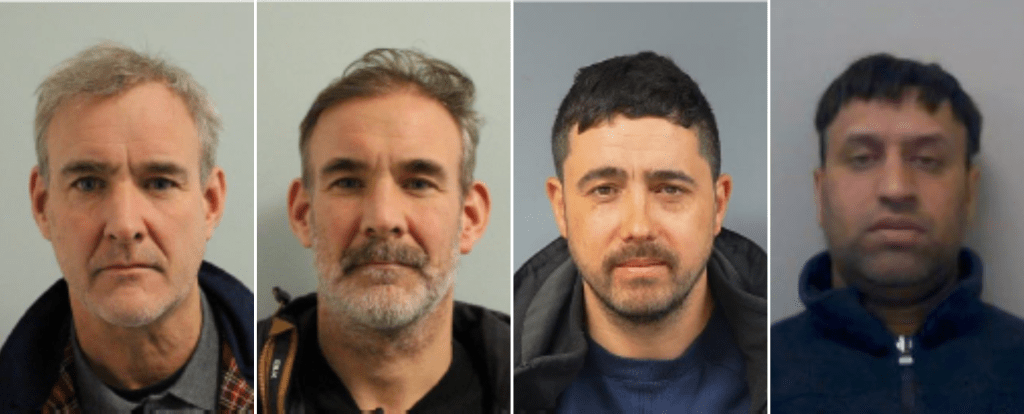
The NCA investigation proved the driver was innocent but that the van owners Jean-Pierre Labelle, 48, and Tanvir Hussain, 46, were behind the failed importation along with Michael Keating, 56, and his brother Matthew Keating, 49.

Pictured: Michael Keating, Matthew Keating, Jean Piere Labelle and Tnavir Hussain

Kingpin Michael Keating, of Uxbridge, Middlesex, organised the plot and sourced the drugs through international connections.

Hussain, of High Wycombe, Buckinghamshire, bought the van along with Labelle, who is from the Isle of Wight.

Crime group member Matthew Keating, of Rickmansworth, Hertfordshire, admitted a previous ketamine importation committee with his older brother.

Michael Keeting used the encrypted communications platform EncroChat to plan his drugs runs.

Read more

0000

UNITED KINGDOM 🇬🇧 : two Men jailed for cannabis haul hidden in watermelons from Spain

Two men involved in a plot to bring over £1.5 million of cannabis to Scotland hidden in a load of watermelons have been jailed.

Officers from the Organised Crime Partnership Scotland (OCP), made up of officers from the National Crime Agency and Police Scotland, started an investigation after intelligence indicated a Scottish organised crime group were planning to import drugs into the UK using HGVs in 2020.

Officers identified Scott McSeveney, 37, from Shotts, who was using EncroChat to discuss the group’s plans. Operation Venetic, the NCA’s response to the takedown of EncroChat, saw officers receive access to the messages in June 2020.

McSeveney used the handle ‘frank.n.furter’ and exchanged messages with a number of individuals about importing cocaine and cannabis, quantities involved, test runs and how the drugs should be concealed, and terms of payment.

In one message, he talks about ‘getting a man to the flat [Netherlands]’ and how much illegal activity he can hide through his legitimate company before his ‘books get done’. In another they discuss whether the drugs should be hidden in the cab or the back of the lorry.

Chats showed McSeveney had enlisted the help of an HGV driver, Steven Lawson, 48, from Motherwell, who would collect their illegal haul and deliver it back to the UK.

On 24 June 2020, officers from Border Force, working on a request from OCP Scotland, stopped a lorry at Coquelles port which Lawson had driven from Spain.

Lawson told officers he had picked up a load of watermelons from a company in Spain.

When the lorry was scanned and searched, 159 bags of cannabis were found concealed within the load of watermelons. Each bag weighed around one kilo and had a street value of more than £1.5 million.

Lawson was arrested at the port and McSeveney was arrested at his home later that day by OCP officers. Lawson denied all knowledge of the drugs.

McSeveney admitted the charge of being concerned in the supply of a class B drug at Glasgow High Court on 20 March 2025. At trial, Lawson was convicted of a charge of being involved in serious and organised crime.

Both were sentenced at the same court today. Lawson received a sentence of five years in prison and McSeveney received a sentence of eight years and two months in prison.  

Donald Lawrie, NCA Operations Manager, said: « McSeveney and Lawson were working in partnership for an organised crime group determined to smuggle a large quantity of illicit drugs into Scotland, where they were destined for our streets.

« McSeveney sent thousands of messages in an attempt to get his criminal venture off the ground, and he was well versed in what he thought were the best ways to evade law enforcement.

« The NCA’s work in the Organised Crime Partnership, and with our partners in Border Force, has seen two criminals brought to justice. »

Detective Superintendent Steven Elliot, Police Scotland, said: « Drugs cause misery in our communities and we will use all resources at our disposal to disrupt this illegal trade coming into Scotland.

« This significant recovery underlines our commitment to the Serious Organised Crime Taskforce and the country’s Serious and Organised Crime Strategy as well as working with our partners.

« The public continues to play a vital role in assisting our investigations and helping us continue to bring those responsible for this type of crime to justice. We urge anyone with information or concerns about drugs activity in their area to contact Police Scotland on 101 or Crimestoppers anonymously on 0800 555 111. »

Sineidin Corrins, Depute Procurator Fiscal for Serious Casework at the Crown Office and Procurator Fiscal Service (COPFS), said: « These two men were integral to an attempt import large quantities of Class B drugs into Scotland.  

« But they failed thanks to partnership working between COPFS and the National Crime Agency, Border Force and Police Scotland to disrupt a network of drugs supply.  

« These drugs would have caused immense harm. But with these convictions, we have removed them from the streets and made communities safer.  

« We will continue to collaborate with our partners as a member of Scotland’s Serious and Organised Crime Taskforce to tackle serious organised crime and this kind of case highlights the extensive work that has been ongoing against these groups. »    

Source NCA

0000