FRANCE 🇫🇷 : ce que vous n’apprendrez pas en allant au musée de la Douane française à Bordeaux
1
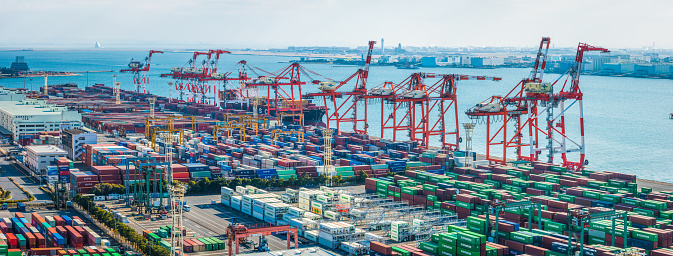
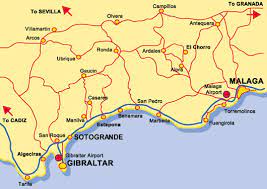
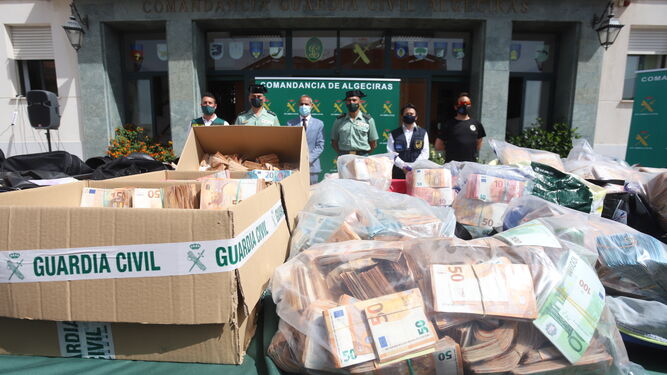 Los 16,5 millones intervenidos durante los 40 registros domiciliarios realizados en las localidades de Algeciras, San Roque, Marbella, Málaga, Ayamonte y Getxo, eran solo el dinero que esta organización utilizaba para seguir funcionando. Para pagar a sus informantes, por ejemplo, repartidos por muchos rincones del Puerto.
Entre los arrestados figura un funcionario de Aduanas de Algeciras, un veterinario del Puesto de Inspección Fronteriza (PIF) del puerto y un ex responsable del movimiento de contenedores en la terminal de APM, además de otros trabajadores portuarios, transitarios y camioneros, sin descartar que el entramado se sirviese de « la colaboración » más o menos activa de miembros de las Fuerzas y Cuerpos de Seguridad del Estado.
 Robert Mark Benson, ex-British Navy submariner, was alleged to have links with criminal gangs in Ukraine and the UK
Spanish police have arrested a British former Navy sailor on suspicion of running a « highly professional » drugs trafficking operation with links across Europe. …
 000000
 NARCOTRAFIC : le trombinoscope des années 90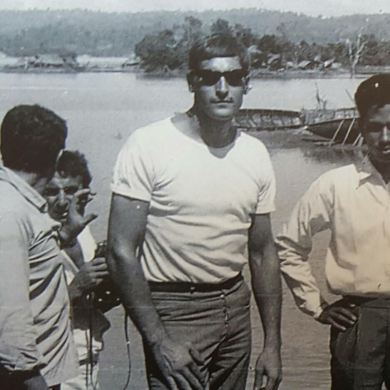
Carlos Gaston Ferran, dit « Le Grand »
ICI lors d’un séjour en Algérie dans sa jeunesse.
 Jean Gilbert Para, un proche collaborateur de Charles Ferran, disparu le 11 mai 2002, dans la région de Ronda en Andalousie. (Son 4X4 a été retrouvé criblé de balles!)
Il était copropriétaire avec Carlos Ferran, Edouard ´Doudou´ Mari-Chica et Abdel Omar (Adiel OUANOUGLU) »Le Chacal » du ´My Lady Palace´ y ´Play Boy´ de Marbella et d’autres établissements similaires à Torremolinos et Benalmádena. Il gérait aussi un restaurant Plaza del Socorro à Ronda.
Adiel OUANOUGLU ou Abdel OMAR, dit « Le Chacal ».
enregistré par les autorités françaises de la DNRED et de l’OCRTIS
« C’est un personnage qui a fait bénéficier la DNRED (Direction nationale du renseignement et des enquêtes douanières, NDLR) comme d’autres services français d’un carnet d’adresses très étoffé« , expliquait Jean-Michel Pillon, chef de bureau au sein de la direction des douanes lors d’une audition devant la brigade financière en mars 2016
°°°°°°°°°°°°°°°°°°°°°°°°°°°°
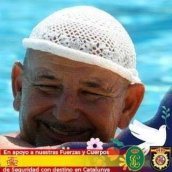 Alain David Benhamou dit ´Doudou´ Mari-Chica
Le beau-frère de Carlos Ferran
ici à Marbella
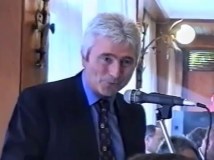 Ricardo RUIZ COOL, commissaire de Police à Estepona (Andalousie) dans les années 90, chargé de la sécurité des GAL sur la Costa del Sol, était un contact très proche de Carlos Ferran. Il mettait à sa disposition le fichier de la Police Nationale espagnole et sécurisait les rendez-vous de Carlos Ferran avec Rafael Vera, le ministre espagnol de la sécurité.
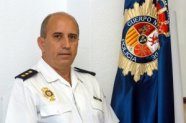 Son adjoint à Estepona, Florentino Villabona Madera pourrait, j’en suis certain nous parler de cette grande époque, s’il n’est pas frappé d’amnésie sélective. Aujourd’hui, il est « Director Adjunto Operativo (DAO) de la Policía »!
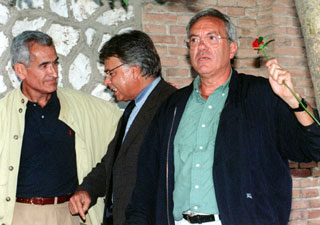
Felipe Gonzalez (au centre), le fondateurs du GAL et ses meilleurs collaborateurs Rafael Vera (à gauche) et José Barrionuevo.
°°°°
LIRE: NARCO-TERRORISMO (G.A.L.): los mercenarios de la OAS en España.
ET aussi: l’histoire du GAL
°°°°°°°°°°°°°°°°°°°°
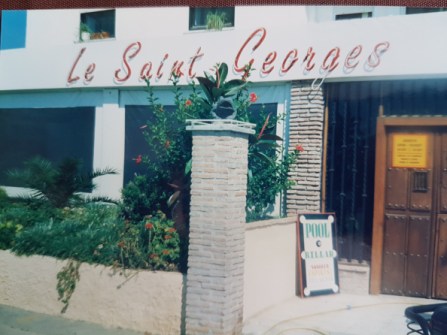
La DNRED était copropriétaire de ce restaurant en bordure de mer à Estepona avec Marc Fievet
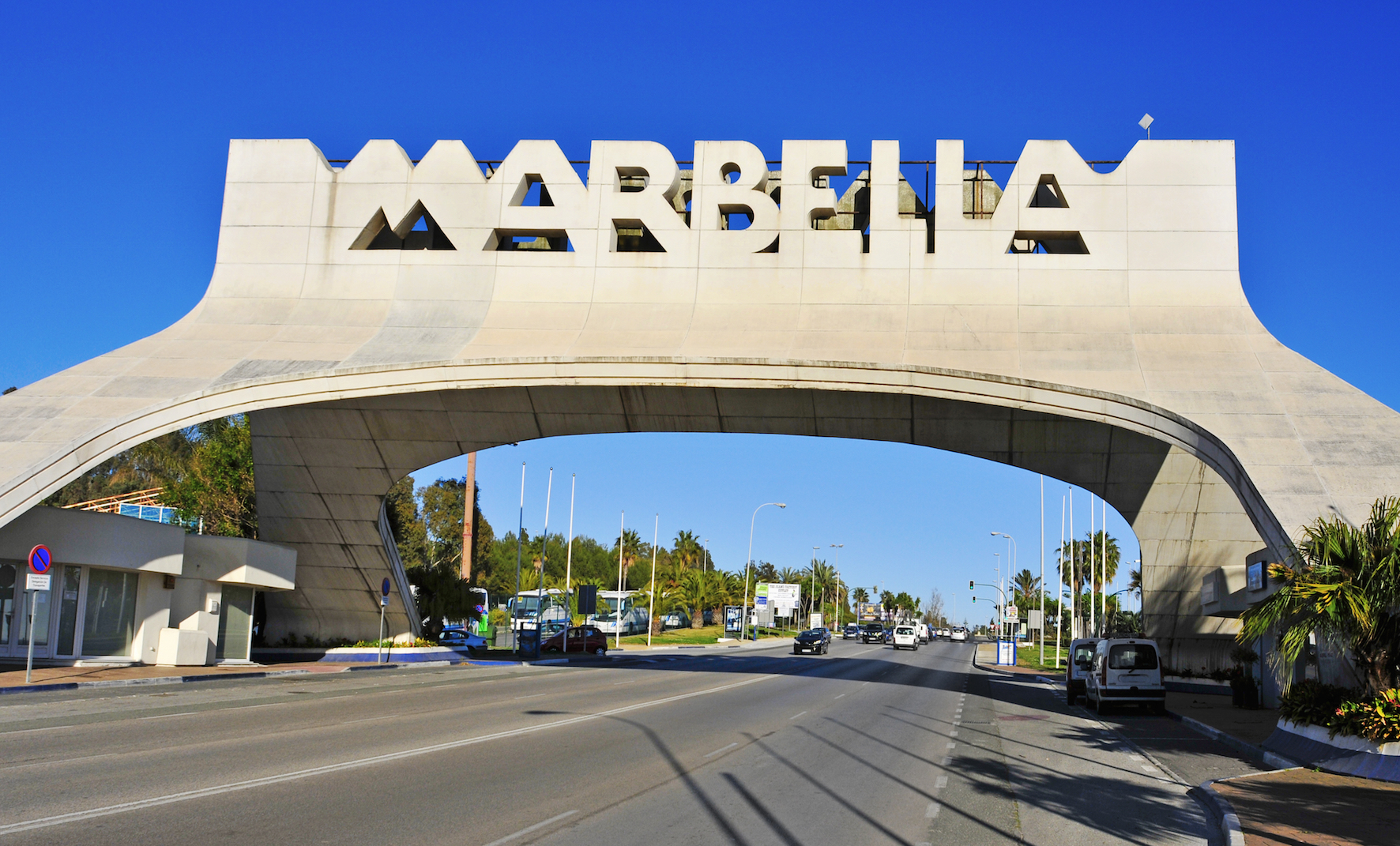 They range from extremely powerful, tightly structured mafias, like the Serbian, Morrocan and Dutch groups, to gangs of small-time burglars. Most groups specialise in one or more of the various activities that revolve around trafficking drugs: buying merchandise, protection and security, transportation, distribution, money laundering. Almost none of these groups can manage the whole process by themselves, which makes collaboration essential.
A prosecutor in the region put it like this: “Anyone who thinks that the criminal organisations are the same as they were before – structured like a pyramid, managing every aspect of the business – well, they’re wrong. It’s not like that any more. It’s a lot more like in the TV series ZeroZeroZero, where everyone has to form alliances and each group takes on certain things. They’re not cartels, they’re service providers: it’s the Uberisation of organised crime.” Because of this, there’s also no division of territory. “It’s not possible to make a map, like they’ve done, for example, with Mexico,” he says. “Instead, you’d have to make a diagram that reflects the division of labour, the different roles and activities of each organisation.”
The groups in Costa del Sol, said one Marbella-based drug trafficker, “are talking with each other all day long, asking each other questions”. Everyone knows everything, he said, “and almost everyone knows each other”. Meetings take place in discreet locations: shopping centres, fast-food restaurants or parks, or during a stroll through a public garden in a luxury development.
While there might not be any clearly marked territories on the Costa del Sol, each group has its own stomping grounds – the businesses and other locations they frequent and control. And it’s important, the trafficker said, sipping his drink, that everyone knows the rules. “If a Brit walks into an Albanian gym, for example, he’s gonna have a problem.” The Irish have their own pubs in Puerto Banús; the Moroccans have their own bars, where there’s no (public) alcohol consumption but they smoke shisha; the Colombians hang out at the shopping centres; the Camorra have their pizzerias, and there are specific hotels for English gangsters. The police know a lot of these places by name.
Beyond its own frontiers, Marbella is inextricably linked to Dubai by crime.
Most of the area’s criminal groups live between these two cities. “Dubai is like Marbella but with no rules and no law,” said one high-level Costa del Sol criminal. “It’s extremely rare for them to arrest anyone there. It’s only happened a few times, and always for some underlying political reason. Most of the top bosses live there, and then they spend the summer in Marbella. The soldados go to Dubai when they feel like they’re under surveillance. We’re protected there. There’s no extradition.”
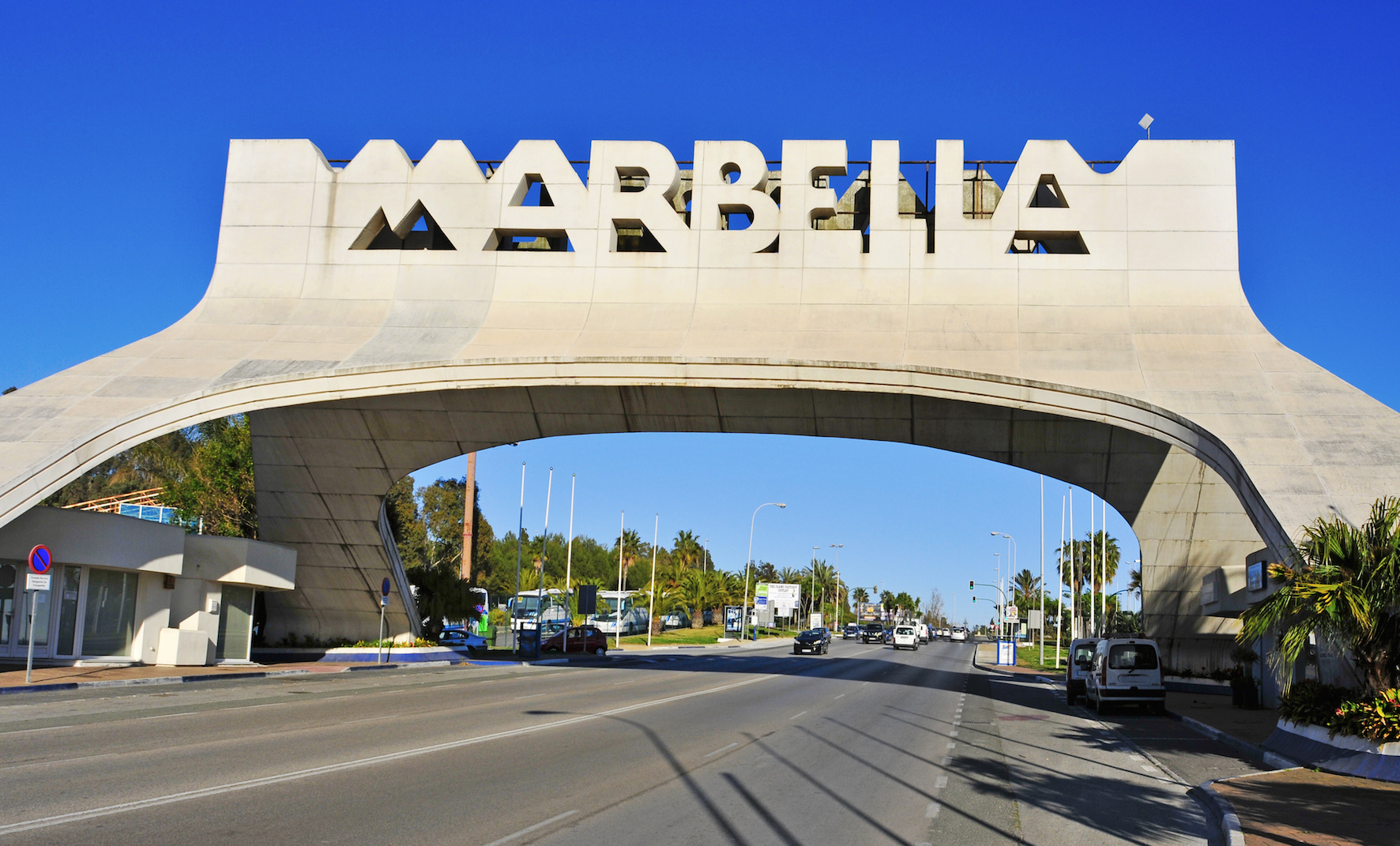 And as violence rises, the police lag far behind
That afternoon, in Puerto Banús, the wealthiest and most extravagant area of the city, a young British man with ties to organised crime walked out of a Louis Vuitton store and found himself surrounded by a crew of young Maghrebis, “soldiers” from one of the Marseille clans. “They didn’t want anything specific,” he said. “They just stared me down and said: ‘What’s up?’ They were looking for trouble. Things like this have been happening for a while now. It’s getting really dangerous here,” he said, with no apparent sense of the irony of a criminal complaining about criminality.
On the same day, in New Andalucía, one of the luxury housing developments on the outskirts of the city, next to the scorched shell of the Sisú Hotel, which was set on fire in what seemed to be a settling of scores, a Rolls-Royce sped through an intersection and smashed into an oncoming car. The driver, a young man in a tracksuit and tattoos, got out and inspected the damage, clutching three mobile phones and glaring defiantly at passersby.
It was in the 60s, during Spain’s economic “miracle” and development boom, that the Costa del Sol was transformed into the tourist hotspot of southern Europe. First, working-class holidaymakers thronged the public beaches. Then an emerging class of jet-setters found their piece of paradise in Marbella. The plan to develop the region succeeded, but success came with its own baggage. “This was the Francoist agreement,” said Antonio Romero, an author and former politician who is one of the most outspoken voices against organised crime in the region. “You, the criminals, come here to relax, don’t commit any crimes, and bring your money.” And so, as the authorities turned a blind eye, Marbella became a premier destination for the global criminal elite.
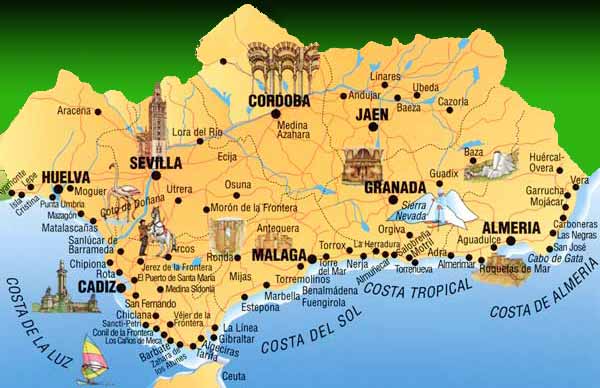
The Costa del Sol is organised crime’s southern frontier – a stretch of urban sprawl extending from Málaga to Estepona, with Marbella, a city of 147,633 people, as its capital. According to the Spanish Intelligence Centre for Counter-Terrorism and Organised Crime, there are at least 113 criminal groups representing 59 different nationalities operating out of the area.
There is nowhere quite like the Costa del Sol – a long tongue of land stretching 55 miles between the mountains and the sea. To the south, less than 10 miles of open water separates the region from Morocco – the world’s largest producer of hashish – and from the autonomous Spanish outposts of Ceuta and Melilla. Less than an hour’s drive away is one of Europe’s main entry points for cocaine, the port of Algeciras. Across the bay from Algeciras is the British overseas territory of Gibraltar, a tax haven separated from Spain by a fence. To the north rise the Málaga and Granada mountains, Europe’s main region for marijuana cultivation.
La Guardia Civil ha intervenido casi cinco toneladas de hachís y detenido a ocho miembros de una de las redes criminales más activas dedicadas a introducir grandes cantidades de droga desde Marruecos a España, donde la almacenaban en las provincias de Málaga, Cádiz y Almería para distribuirla por Europa.
La lutte anti-drogues cible principalement les consommateurs et tend à automatiser la sanction avec des amendes, « au détriment des mesures sanitaires », selon une note publiée mardi par l’Observatoire français des drogues et toxicomanies.
« En Allemagne, on consacre plus de fonds à lutter contre le trafic qu’à interpeller des usagers »
000000
Malgré le témoignage de Jean Paul Garcia, attaché douanier en poste à Madrid, devant les magistrats espagnols, précisant que l’agent infiltré Marc Fievet serait plus utile dehors qu’incarcéré…Les autorités douanières françaises, au manque d’honneur avéré, l’ont laissé partir pour un périple carcéral de 3888 jours à travers l’ Espagne, l’Angleterre, le Canada et la France.
Explications avec
International informant: Quand, en septembre 2007, un avion appartenant à la CIA s’est écrasé au Mexique et l’on a découvert qu’il transportait plus de 4 tonnes de cocaïne, qu’avez-vous pensé ?
Marc Fievet :
Lorsque j’ai lu cette news, j’ai immédiatement pensé que malgré les années qui passent, les gouvernements et les dirigeants des grands services de renseignements utilisaient toujours les mêmes méthodes pour trouver des fonds.
Comment ne pas se souvenir d’Oliver North du temps de Bush père et d’Air America au Vietnam, pour ne citer que ces deux exemples qui sont tombés dans le domaine public.
Ayant travaillé pour la DEA et ayant pu constaté le manque total d’éthique morale des fonctionnaires que j’ai rencontrés, je ne suis pas étonné de ce type de transport par ces avions occupés à plein temps pour « faciliter » le « travail » de la CIA ou…
Voir l’article original 2 380 mots de plus
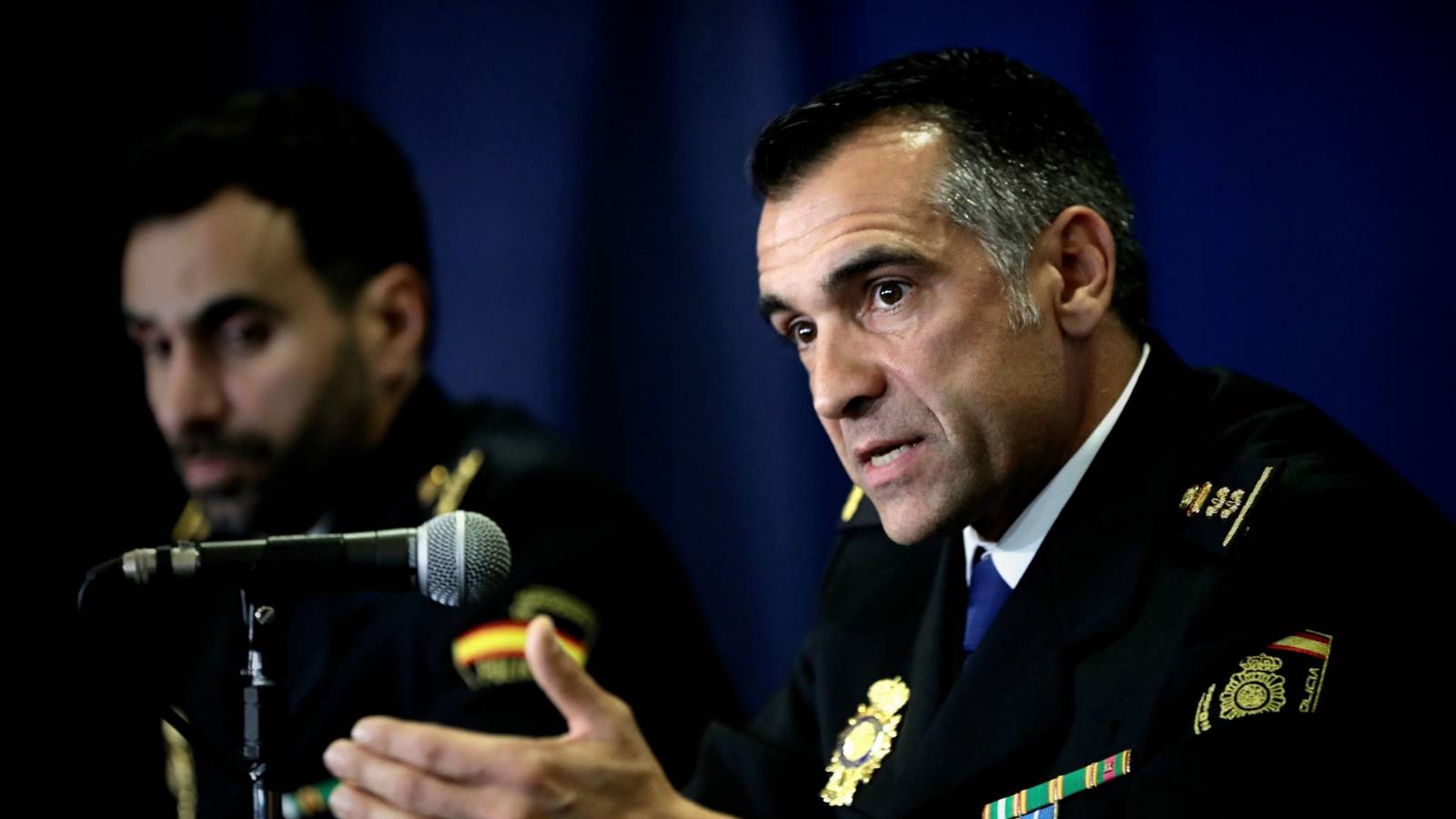
 La ‘Guardia civil’, dans le cadre de l’opération Teether, a démantelé dans les provinces de Malaga et de Cordoba une organisation criminelle dédiée principalement au trafic de cocaïne. 20 personnes ont été arrêtées .
21 kilos de cocaïne, 30 kilos de haschisch et 1 029 000 euros en espèces ont été saisis dans cette opération ainsi que 23 logements, deux parkings, deux débarras, une ferme et quinze véhicules (dont deux à double fonds) .

 AVISEUR INTERNATIONAL