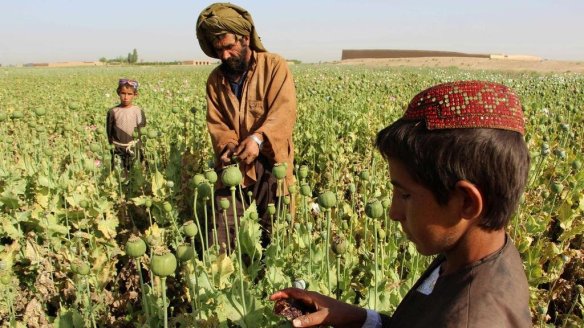
Afghan farmers harvest opium sap from a poppy field in the Gereshk district of Helmand on April 11, 2017. The UN drugs agency said 2017 was a record year for opium production in the country. Noor Mohammad / AFP
Rozi Qul, a farmer from north Afghanistan’s Kunduz province, has a lot on his mind these days.
His yields from this year’s harvest has been bountiful, but Mr Qul is worried about the renewed interest in his crops from the Afghan government and the Nato forces in Kabul, and their attempts to destroy it. Mr Qul is an opium farmer.
“I have been growing opium since 2010, for almost seven years now,” he told The National. “I don’t care if it’s illegal; the government doesn’t feed me, but opium production provides for my family.”
Opium is used to produce heroin, one of the most harmful narcotics, and Mr Qul is one of thousands of farmers in Afghanistan who have switched to opium cultivation in the last decade. This year the country produced the highest amount of opium since 1994, according to the United Nations Office on Drugs and Crime.
While Afghanistan has been the world’s largest opium-producing nation for decades, the UN agency reported that a staggering 328,000 hectares of land was under opium production this year, 127,000 hectares more than last year. A total of 9,000 tonnes of opium was produced, an 87 per cent increase on 2016.
The main reason for this unprecedented increase is economic. “If I were to grow wheat instead, one sear [seven kilograms] of wheat will only fetch me Afs150 [Dh8 or approximately US$2.50]. On the other hand, one kilogram of opium can sell for Afs15,000 to 16,000,” Mr Qul said.
Jelena Bjelica, a researcher at the Afghanistan Analyst Network, corroborates Mr Qul’s experiences in her report A Low-Risk Crop in a High-Risk Environment.
“Even in easier times, opium does not always behave according to standard market rules of supply and demand. Like other crops, it can be sold to provide an income, but when dried, it stores for five to seven years without losing all its value, so it also functions as capital and savings,” she notes. “Even during wartime, the market for opium still functions. Farmers who grow legal crops have to get them to market, risking their year’s income travelling through front-lines and checkpoints. If they grow opium, the buyers come to them. It is a lot safer,” she adds.
The start-up investment needed to grow opium is much less. “Growing wheat in less than a hectare of land requires four to five bags of chemical fertiliser that can cost up to Afs1,500 to 2,000 per bag. How can I afford all that?” Mr Qul said. “Also, this will produce 100 sear of wheat which will earn me about Afs10,000. After all that investment and work, I can’t even make enough to feed my family.”
Opium, on the other hand, ensures a steady and sustainable income for millions of Afghans.
Read more
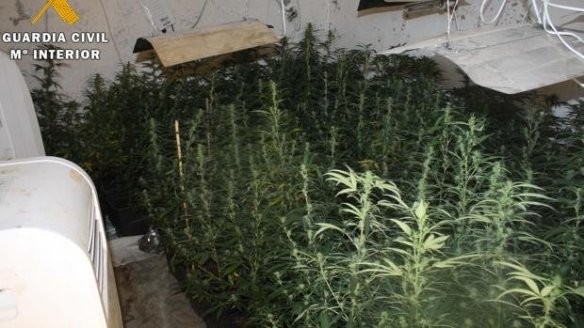 La Guardia Civil, en el marco de una operación contra el tráfico de drogas desarrollada en Córdoba y provincia, ha dado por desarticulado un grupo organizado dedicado al tráfico de cocaína, y ha detenido a cuatro personas, dos de ellas residentes en Córdoba y otras dos en Almodóvar del Río.
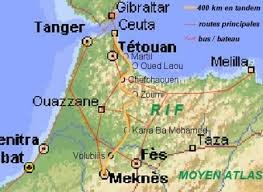
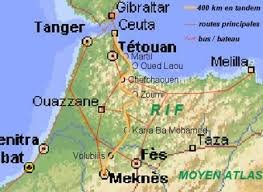 KETAMA







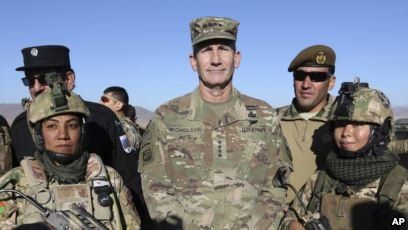 ISLAMABAD — The top U.S. general in Afghanistan said Saturday recently launched joint strikes against Taliban sources of revenue have destroyed more than $50 million worth of narcotics in southern Helmand province.
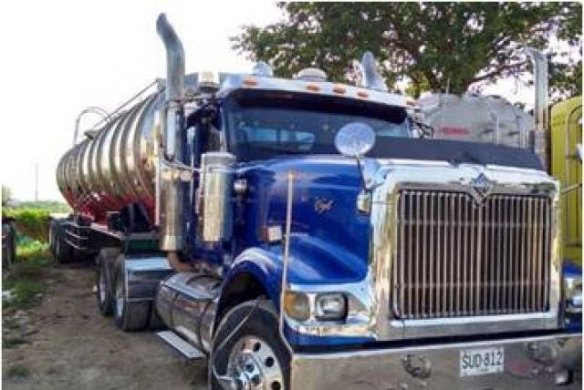
 Militares destacamentados en Sonora, al norte de México, decomisaron un camión de carga que tenía ocultos mil paquetes de droga sintética con un valor superior a los 210 millones de dólares (4.000 millones de pesos) en el mercado de los Estados Unidos, de acuerdo con las autoridades.
 Soninder Dhingra, 44 ans, est accusé de complot et d’importation de drogue.
 L’OCRTIS a tapé une Mercedes 500 lestée de 220 kilos de cannabis à la frontière espagnole du côté de Perpignan.
 KIEV .- Les autorités d’Ukraine et de Moldavie ont intercepté un réseau de narcotrafiquants qui importaient du hachis d’Espagne vers la Russie.
 Abdellah El Haj, conocido como el Messi del hachís, ha sido detenido este martes en el Campo de Gibraltar por la Guardia Civil de Algeciras. El marroquí está al frente de la mayor organización criminal de tráfico de marihuana que opera en España a través del Estrecho de Gibraltar. En mayo, El Haj logró escapar a Marruecos, mientras que 19 miembros de su banda fueron detenidos.


