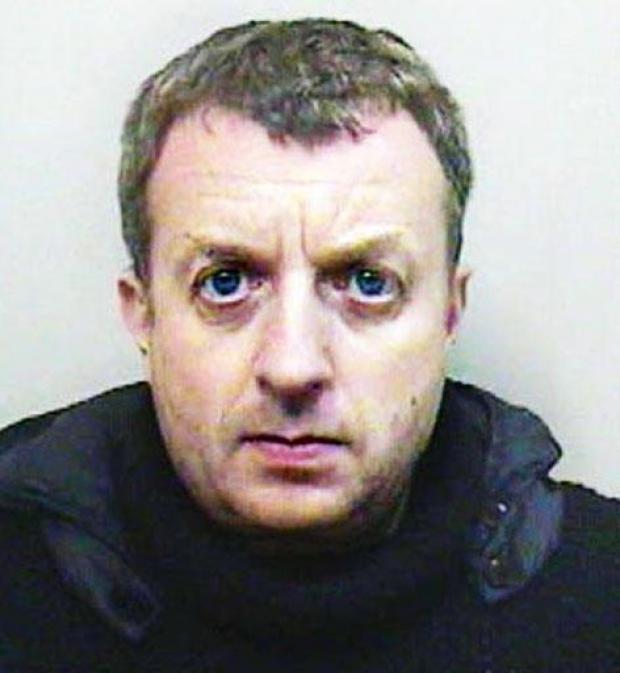
East Lancasshire (UK) – Narcobusinessman Darren Bowling involved in a conspiracy to supply class A and class B drugs and money laundering

Lancashire Telegraph: Businessman Darren BowlingA ‘NOTORIOUS’ drug dealer was living a luxury lifestyle while peddling thousands of pounds of cocaine and cannabis.

Businessman Darren Bowling was involved in a conspiracy to supply the drugs which spread across the North West and the entire country, police said.

Investigators said breaking up the gang represented a ‘massive dint’ in the importation and selling of class A and B drugs in East Lancashire.

Police said Bowling had been living in a luxury €1.5million villa in Malaga, complete with swimming pool and had properties in Bulgaria as

well as a converted barn in East Lancashire.

Lancashire Telegraph: Businessman Darren BowlingThe 48-year-old drove a Porsche Cayenne with a personal number plate 36 BOW and also had a brand new Volkswagen Golf.

He owned his own storage company in Hapton as well as a car sales business in Burnley and had a stake in a popular town centre bar.

But despite all of this, police said they had never seen him do a hard day’s work.

Officers said Bowling teamed up with Paul Bell, 49, from Cheadle, and alleged dealer Michael Donnelly, to set up an underground drugs business.

Donnelly has not been seen since he fled the United Kingdom to South Africa via Dubai in September last year.

Bowling, who admitted, conspiracy to supply class A and class B drugs and money laundering, was living the life of a millionaire while organising drug deals police said.

Speaking after the hearing Det Insp Martin Kane, who led the year-long serious and organised crime unit investigation, said: « In my experience of investigating organised crime, Darren Bowling was certainly one of those individuals that lived a fantastic luxury lifestyle from the proceeds of crime.

« From our investigation, we know that he owns property in Spain and Bulgaria and has a converted barn-style house in Barrowford. He owns the Castle Mill premises, Mojitos bar and the Castle Car Sales and he drove around in a Porshe.

« But we never saw him do a hard day’s work, despite him owning all these things.

« There is no doubt Bowling has become a very wealthy man over the years from importing and supplying cocaine into the United Kingdom and Lancashire. »

Dennis Bury, who co-owned Mojitos bar with Bowling, of Colne Road, Barrowford, said he bought his business partner’s share as soon as the allegations against him came to light.

He said: “Mojitos has nothing more to do with Bowling. That company ceased trading and Dennis Bury Ltd bought it.

“I wanted nothing to do with him and I had no idea what was going on.”

The police’s Operation Victor investigation, which saw officers seize more than 2kgs of cocaine, 15kgs of amphetamine, cannabis and £200,000 in cash, came to a head in January.

They had been monitoring Bowling’s activities, which included him frequently heading to his properties in Spain to arrange for cocaine to be imported to the UK.

He would then meet up and talk with his co-conspirators to organise deals.

Also involved in the conspiracy was Mark Waring, 39 of Peel Mount, Blackburn. He was described as a courier for Donnelly and pleaded guilty in December 2013 to possession with intent to supply 2kgs of cocaine and production of cannabis. He was sentenced to seven years imprisonment.

Shaun McDonald, 37, of Colshaw Road, Manchester, was a courier for Bell, who had only been out of prison for a short while after being sentenced to 20 years in 2003 for being part of a gang that imported drugs with a street value of £200million, when he got involved with the conspiracy.

McDonald admitted being in possession with intent to supply 15kgs of amphetamine and money laundering in October 2013 and was sentenced to three years four months behind bars.

Stephen Barton, 42, of Brandy House Brow, Blackburn, was a customer of Donnelly and was found guilty of conspiracy to supply class B drugs at Preston Crown Court. He was cleared of charges of possessing criminal property.

Barton stood trial alongside Melvin Harrison, 52, of Causey Foot, Nelson, who faced two charges of concealing criminal property. He was an employee of Bowling who had worked for the family company for 27 years.

The court heart how he admitted creating a hide from a cardboard box with a metal container inside for his boss at Castle Storage, Hapton but denied he knew or suspected the cash inside to be ‘dirty’ drugs money. He was found not guilty on both charges.

Det Insp Kane said: « This investigation is another example of Lancashire’s serious and organised crime unit’s relentless effort to combat the supply of controlled drugs.

« Drugs like cocaine cause misery to communities. The amount of cocaine and the scale of the supply of it on the streets of Lancashire can never be underestimated.

« We are now continuing to investigate the properties and wealth Bowling has amassed over the years to support proceeds of crime proceedings later this year. »

The gang will be sentenced on October 10.

source:http://www.lancashiretelegraph.co.uk/news/11428803._Notorious__East_Lancs_cocaine_kingpin_s_life_of_luxury/?ref=var_0

000000000000000000000000000000000000000000000

MIAMI NEWS (USA): Diego Perez Henao, colombian Narcotics Kingpin, sentenced to 360 Months in Prison

http://diarioadn.co/actualidad/colombia/extradici%C3%B3n-a-ee-uu-de-alias-diego-rastrojo-1.74146

August 6, 2014
Contact: Public Information Officer
Number: 954-660-4602

AUG 06 (MIAMI) – Mark R. Trouville, Special Agent in Charge, Drug Enforcement Administration (DEA), Miami Field Division, Wifredo A. Ferrer, United States Attorney for the Southern District of Florida, and George L. Piro, Special Agent in Charge, Federal Bureau of Investigation (FBI), Miami Field Office, announce that U.S. District Judge Patricia A. Seitz sentenced Diego Perez Henao, a/k/a “Diego Rastrojo,” 43, a Colombian national, to 360 months in prison. Perez Henao was also ordered to forfeit $1,000,000 to the United States.

Perez Henao had been indicted by a federal grand jury on February 8, 2011, and previously pleaded guilty on January 24, 2014, to a single count of conspiring with others to manufacture and distribute five or more kilograms of cocaine from 1993 until February 2011, knowing that the cocaine would be imported into the United States.

Perez Henao acknowledged that he was involved in the manufacture, investment or shipment of in excess of 81,100 kilograms of cocaine during the timeframe of his conspiracy.  He further acknowledged that he controlled numerous armed workers in his organization and used both airplanes and semi-submersibles to ship the cocaine north from South America to points in Central America and Mexico – en route to its eventual destination of the United States.

Following Perez Henao’s indictment, the U.S. Department of State offered a reward of up to $5 million for information leading to his capture. Perez Henao was ultimately captured by Venezuelan authorities in Venezuela on June 3, 2012. The Venezuelan authorities sent Perez Henao to Colombia, which in turn extradited Perez Henao on August 28, 2013, to the United States to face the current charges.

DEA Special Agent in Charge Mark R. Trouville stated, “Diego Perez Henao, one of the last leaders of the North Valley Cartel, was responsible for smuggling more than 80 tons of cocaine into the United States.  He used violence and intimidation to line his greedy pockets at the expense of his own people and had no regard for those who would consume this addictive poison. Today’s sentencing is a reminder that there is no place to hide, the DEA along with our domestic and international law enforcement partners will continue to pursue and prosecute those who engage in drug trafficking into our borders.”

“For over a decade, Perez Henao – one of the most powerful and prolific drug lords in recent history – controlled dozens of heavily-armed workers in his drug trafficking organization and oversaw the manufacture and distribution of over 80 tons of cocaine into the United States,”  said U.S. Attorney Ferrer. “Perez Henao will now spend the next three decades of his life in prison.  With this sentence, one of the largest cartel heads in Colombian history was brought to justice.”

“Diego Perez-Henao was a notorious, international drug kingpin who for years profited from the shipment and sale of illegal drugs,” said Ken Sena, Acting Assistant Special Agent in Charge, FBI Miami. “His illicit career was brought to an end through close cooperation with our law enforcement partners.”

The indictment of Perez Henao is the result of an ongoing Organized Crime Drug Enforcement Task Force (OCDETF) led by DEA and FBI. The principal mission of the OCDETF program is to identify, disrupt and dismantle the most serious drug trafficking, weapons trafficking and money laundering organizations, and those primarily responsible for the nation’s illegal drug supply.
This investigation was conducted by the DEA, FBI, the DEA Andean Region and their Colombian law enforcement partners. The case was prosecuted by the U.S. Attorney’s Office for the Southern District of Florida.

SOURCE: http://www.justice.gov/dea/divisions/mia/2014/mia080714.shtml

00000000000000000000000000000000000000000000000

BROOKLYN, N.Y.(USA): Leader of Maritime International Drug Transportation Organization Arraigned in Brooklyn

August 18, 2014
Contact: Public Information Officer
Number: 212-337-2906

The defendant allegedly transported thousands of kilograms of cocaine by boat and submarine

AUG 18 (BROOKLYN, N.Y.) – Earlier today, Jair Estupinan-Montano was arraigned at the federal courthouse in Brooklyn, New York, on charges relating to international narcotics trafficking. Estupinan- Montano was arrested in Panama on October 14, 2013, on a provisional arrest warrant issued from the Eastern District of New York.

The arraignment was announced by Loretta E. Lynch, United States Attorney for the Eastern District of New York, and James J. Hunt, Acting Special Agent in Charge, Drug Enforcement Administration (DEA), New York Division.

According to court filings, prior to his arrest, Estupinan-Montano was the leader of a narcotics trafficking organization responsible for transporting shipments of cocaine from Colombia to locations in Central America and Mexico for ultimate delivery to the United States. Estupinan-Montano allegedly worked closely with the violent “Los Rastrojos” drug trafficking organization, a paramilitary organization that employed hundreds of individuals and controlled drug trafficking along the Pacific coast of Colombia.

Estupinan-Montano was responsible for arranging boats and submarines that transported the cocaine from Colombia to other members of his organization in Central America, who then transported the cocaine north to be sold to Mexican cartels for eventual shipment to the United States. A detention memo filed today by the government details that, between 2010 and 2012, the United States Coast Guard seized two ships and a semi-submersible vessel that had been sent from Colombia by Estupinan-Montano. In total, those vessels contained over 7,200 kilograms of cocaine when they originally left South America.

“Evoking Jules Verne, the defendant Estupinan-Montano relied on boats and submarines to ferry his illegal cargo, and was an essential link in the flow of illegal narcotics from Colombia to the United States,” stated United States Attorney Lynch. “The illegal narcotics trade is a scourge, both in the United States and throughout the world. With the help of our international allies, we will continue to strike at those who enrich themselves off this violent industry wherever they are found.” Ms. Lynch thanked the New York Drug Enforcement Task Force, comprised of officers and agents of the DEA, New York City Police Department and the New York State Police; the DEA’s Bogota Country Office and Panama Express Task Force; the United States Coast Guard; the Department of Justice Office of International Affairs; and the Republic of Panama for their help in investigating and capturing Estupinan-Montano.

The defendant was arraigned this afternoon before United States Magistrate Judge Steven M. Gold at the federal courthouse in Brooklyn. The charges in the indictment are merely allegations, and the defendant is presumed innocent unless and until proven guilty.

The government’s case is being prosecuted by Assistant United States Attorneys Tyler Smith, Amir Toossi, Justin Lerer, and Robert Polemeni.

The Defendant:
Jair Estupinan-Montano
Age: 31
COLOMBIA

E.D.N.Y. Docket No. 12-CR-793 (SLT)

Dallas (USA): Dallas Man Sentenced to Serve 25 Years in Federal Prison on Drug Trafficking and Money Laundering Convictions

AUG 18 (DALLAS) —A Dallas man who pleaded guilty to felony offenses stemming from his role as a major participant in a marijuana distribution conspiracy operating in north Texas was sentenced this morning in federal court in Dallas, announced U.S. Attorney Sarah R. Saldaña of the Northern District of Texas.

Andres Hernandez, Jr., a/k/a “Gordo,” 34, was sentenced by U.S. District Judge Sam A. Lindsay to serve a total of 300 months in federal prison.  Hernandez pleaded guilty in September 2013 to one count of conspiracy to distribute 100 kilograms or more of marijuana and one count of money laundering.  Judge Lindsay sentenced him to 25 years on the drug conspiracy conviction and 10 years on the money laundering conviction, to run concurrently.

Hernandez and others were arrested on November 1, 2012, following a law enforcement operation led by the Drug Enforcement Administration (DEA) and the North Texas High Intensity Drug Trafficking Area (HIDTA) task force, during which federal search warrants were executed at various locations, including Hernandez’s residence on W. Colorado Blvd. in Dallas.  At his residence, law enforcement located approximately 20 pounds of marijuana, digital scales and a loaded firearm.  Hernandez has remained in custody since his arrest.
According to documents filed in the case, Hernandez admitted that on multiple occasions between January 2011 and the date of his arrest, he received multi-pound quantities of marijuana from several supply sources, including co-defendants Serviano Contreras, a/k/a “Seven” and “Junior,” 27, and Virgilio Espinosa Delacruz, a/k/a “Chaparro,” 41.  Hernandez admitted that he stored this marijuana both at his residence and at the residence of co-defendant Benicio Pena, Jr., a/k/a “Nene,” 63, on Lourdes Street in Dallas.  Contreras, Delacruz and Pena pleaded guilty to their respective roles in the conspiracy and are serving federal prison sentences of 48 months, 44 months, and 42 months, respectively.

Hernandez admitted that he routinely distributed multi-pound quantities of marijuana to co-defendants Jarvis Holmes, 43; Claudia Castillo, 21; Jerry Cardenas, 32; Lamont Morgan, 35; Roberto Lopez Delacruz, 27; and Paul Santoy, 28.  They each pleaded guilty to their roles in the conspiracy.  Holmes was sentenced to 51 months; Cardenas, 48 months; Morgan, 46 months; Roberto Delacruz, 16 months; and Santoy, 15 months.  Claudio Castillo is scheduled to be sentenced on November 17, 2014.

Hernandez further admitted that in March 2012, an individual purchased a parcel of land located in Barry, Texas, using $28,854 in cash provided by Andres Hernandez’s wife, Griselda Hernandez, 34. That same day, that individual deeded the property to Andres and Griselda Hernandez.  Andres Hernandez admitted that the cash used to purchase the property included drug proceeds.  Griselda Hernandez also pleaded guilty to her role in the conspiracy and was sentenced to 57 months in federal prison. Assistant U.S. Attorney Phelesa Guy was in charge of the prosecution.

SOURCE: http://www.justice.gov/dea/divisions/dal/2014/dal081814.shtml

000000000000000000000000000000000000000000000000000

Vermont (USA): Bunthan Sam Sentenced to 10 Years for Conspiracy to Distribute Heroin

Bunthan Sam Sentenced to 10 Years for Conspiracy to Distribute Heroin

AUG 18 (BURLINGTON, Vt.)- Michael J. Ferguson, Acting Special Agent in Charge of the Drug Enforcement Administration for New England and The Office of the United States Attorney for the District of Vermont stated that Bunthan Sam, 35, of Chicago, Illinois, was sentenced to 120 months in prison, having pleaded guilty to the charge of conspiracy to distribute at least 100 grams of heroin. United States District Judge William K. Sessions III, sitting in Burlington, also sentenced Sam to 4 years of supervised release.

Court records show that Sam, who went by the alias Adam or Taun, sold heroin in the Burlington area over a period of about two years. He obtained this heroin from suppliers in Chicago and Connecticut. Sam was arrested on the conspiracy charge in Chicago on July 24, 2013, and incarcerated thereafter.

Court records further show that Sam is a member of a larger group with ties to Chicago; Lowell, Massachusetts; and Connecticut that distributed an especially strong form of heroin in the Burlington area from about mid-2011 through the time of the arrest of Sam’s brother, codefendant Chandara Sam, on April 10, 2013. Chandara Sam, who went by the alias Po, was taken into custody in White River Junction, after selling approximately 40 grams of heroin to an individual cooperating with law enforcement. Some of the heroin sold by the conspiracy was known as Chi town or Chi, short for Chicago, and has caused several overdoses in the last several years. The Vermont State Police Drug Task Force began an investigation into Sam’s heroin ring in December 2011.

In January 2013, members of the Essex Police Department and the Drug Enforcement Administration arrested two individuals, Edward Chavin, also known as Tommy, and Christopher Nason in the Handy’s Suites in Essex. Chavin was found in possession of more than 100 grams of heroin. He and Nason were subsequently indicted for conspiracy to distribute 100 grams or more of heroin, and both have pleaded guilty. The Handy’s Suites raid occurred following a heroin overdose in a nearby room. Investigation revealed that Chavin, Nason, and the Sams were part of the same heroin ring, and that Chavin had been transporting heroin from Chicago to the Burlington area for nearly a year prior to his arrest.

In early June 2014, one of conspiracy leaders, codefendant James Nastri, of Deep River, Connecticut, was convicted of conspiracy to distribute at least 100 grams of heroin following a jury trial before Judge Sessions in Burlington.

Court records further reveal that Bunthan Sam possessed handguns at various points during the Vermont heroin trafficking conspiracy. Sam also has a criminal history that includes numerous prior felony offenses, violent offenses, and several instances of unlawful weapons and firearms activity.

For his crime, Sam faced a maximum penalty of 40 years in prison. In sentencing Sam, Judge Sessions noted the devastating impact heroin has had on Vermont communities, citing specifically the potency of the heroin Sam sold. Judge Sessions further noted that Sam had continued to sell heroin after learning that a person had overdosed on the Chi-town heroin and after Lowell, Massachusetts police pulled him over and seized a firearm from his vehicle, resulting in a felony charge.

The investigation was a collaborative effort of the Vermont State Police Drug Task Force; the Drug Enforcement Administration; the Bureau of Alcohol, Tobacco, Firearms, and Explosives; the Essex, Burlington, and South Burlington Vermont Police Departments; and the Lowell, Massachusetts Police Department.

SOURCE: http://www.justice.gov/dea/divisions/bos/2014/bos081814.shtml

000000000000000000000000000000000000000

La guerre à la drogue et la DEA : le gâchis d’argent public par excellence. Mais, si l’on cesse ces inepties gouvernementales, à quoi les occupera-t-on ces budgétivores?

DEALa guerre à la drogue et la DEA : le gâchis d’argent public par excellence

Publié le 20 août 2014 dans Amérique du Nord

Par Kevin Saab.

De nombreux éditorialistes de Contrepoints ont déjà démontré en long et en large la futilité du plan gouvernemental de Guerre à la Drogue actuellement en place aux États-Unis (cf ici, ici). J’aimerais cependant prendre le temps de démontrer encore une fois au lecteur dubitatif, en faisant appel à son bon sens de contribuable, pourquoi une telle approche prohibitive n’est qu’un gigantesque bûcher d’argent public.

Pour ce faire, plongeons sans tarder dans les dossiers de la Drug Enforcement Administration (DEA), la fameuse agence fédérale créée par Nixon en 1973 pour chapeauter le programme de Guerre à la Drogue (« War on Drugs » en version originale).

Dotée de 2,867 milliards de dollars de budget et de 11 025 employés pour 2014, la DEA pointe allègrement à 260 000 dollars de dépenses par employé. Un chiffre difficilement justifiable au vu des résultats obtenus. Ainsi de 2005 à 2013, la DEA affirme avoir saisi des actifs et des drogues ayant causé aux trafiquants des pertes de 25,7 milliards de dollars. C’était sans oublier les lois les plus basiques de l’économie et la relation entre le prix, l’offre et la demande. Pour faire simple, à chaque fois que la DEA crée 1 $ de perte marchande au gang A en saisissant sa marchandise, le gang B se frotte les mains en voyant disparaître un concurrent sans avoir à tirer un coup de feu, une fois n’est pas coutume dans ce milieu, avant de saisir la balle au bond et de venir combler le vide. Si les coups de filet se multiplient et que l’offre vient réellement à se tendre un peu plus, on peut potentiellement assister à une augmentation des prix et à une baisse des consommateurs potentiels. Sans vouloir entrer dans un débat technique d’économiste sur l’élasticité de la demande de drogue en fonction du prix, on peut aisément comprendre qu’il est naïvement simpliste d’affirmer que causer 25,7 milliards de pertes à certains trafiquants, revient à causer 25,7 milliards de pertes à tous les trafiquants, loin de là.

flic credits Elvert Barnes (licence creative commons)

Pour atteindre ce montant de saisies entre 2005 et 2013, la DEA a dépensé sur la période près de 23,2 milliards de dollars. Bref, pour chaque $1 dépensé, la DEA a à peine stoppé $1,11 de revenu aux trafiquants. Une efficacité douteuse pour une agence gouvernementale qui broie à elle-seule près de 3 milliards de dollars par an.

Enfin, selon l’inventaire du très sérieux Cato Institute, les dépenses annuelles totales, locales et fédérales, résultant de la lutte contre la drogue totalisaient pas moins de 41,3 milliards de dollars en 2010. À l’heure où les États-Unis attendent (encore) un déficit d’environ 500 milliards cette année, il est vraiment temps de tirer une croix sur cet (autre) héritage coûteux et inutile de l’ère Nixon qu’est la « Guerre à la Drogue ».

source/ https://www.contrepoints.org/2014/08/20/177593-la-guerre-a-la-drogue-et-le-dea-le-gachis-dargent-public-par-excellence

00000000000000000000000000000000000000000000

La Justice canadienne…ou les tartuffes en action!

Avatar de Marc FievetThe international informant

La demande de révision de Marc Fievet AKA NS 55 DNRED

RCMP

La réponse de Maître Eric CLEMOT, LL.D. Avocat, Ministère de la Justice du Canada, Groupe de la révision des condamnations criminelles, 284, rue Wellington (222 Queen, 11ième étage -OTTAWA, Ontario – K1A OH8) pour rejeter ma demande de révision.

Vous prétendez aujourd’hui que vous agissiez à l’époque en qualité d’informateur des Douanes dans la lutte que se livrait l’Etat français contre le trafic de stupéfiants. Vous dites que vous avez été recruté en 1988 par le D.N.R.E.D. et que vous étiez enregistré sous le N° : NS 55. Vous avez commencé à travailler pour les Douanes françaises le 5 mai 1988. Vous n’étiez pas un agent des douanes et étiez rémunéré pour toute information menant directement à une poursuite judiciaire. Vous prétendez que vous étiez à l’époque en contact avec les autorités douanières jusqu’à une date antérieure à votre…

Voir l’article original 6 571 mots de plus

Au 36, c’est l’impasse au royaume des aveugles!

36 QUAI

Quand les borgnes de l’IGPN deviennent les rois!

Ca va pas être triste! 

La vérité, toute la vérité et rien que la vérité!

Il faut que l’enquête soit publique!

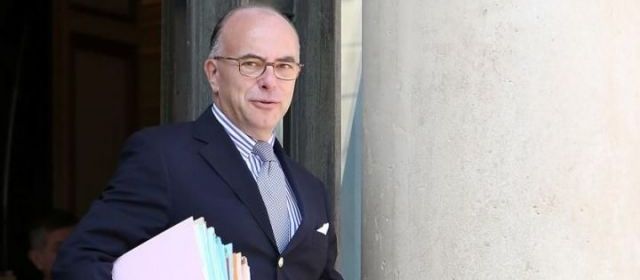
4044831_cazeneuve-goldzstejn_640x280Bernard Cazeneuve, décoré de l’Ordre royal du Cambodge, déclare qu’il a demandé à l’Inspection générale de la police nationale (IGPN) de « mener un audit rigoureux et approfondi » de la brigade des stupéfiants.« Au delà des accès, je souhaite que les méthodes, les procédures, les pratiques professionnelles soient passées au crible », ajoute le locataire de la place Beauvau.

Il ne faudra pas se limiter au 36!

L’OCTRIS doit aussi bénéficier de cet audit!

°°°°°°°°°°°°°°°°°°°°°°°°°

Plus d’infos:

http://www.leparisien.fr/faits-divers/cocaine-disparue-cazeneuve-veut-un-audit-de-la-brigade-des-stupefiants-03-08-2014-4044831.php

Cocaïne volée à la PJ : la personnalité du policier suspect intrigue TF1

Cocaïne volée au 36: un « imbécile » plus qu’un « vrai ripou » structuréBFMTV.COM

000000000000000000000000000000000000000000000000000

DNRED: retour sur l’Opération Dinero

Les Blanchisseurs de Jeffrey Robinson!Les Blanchisseurs de Jeffrey Robinson! Extrait du livre écrit en 1994, par Jeffrey Robinson, un américain vivant en Grande Bretagne, s’intitulant : « Les Blanchisseurs ».

Quelques approximations, mais globalement c’est conforme!


« Anguilla…91 kilomètres carrés de sable et d’hôtels au cœur des Antilles. La pêche et le tourisme sont les deux mamelles de l’économie. Colonie de la couronne britannique, l’île dispose d’une large autonomie. On y trouve aussi des banques. Mais jamais on n’avait vu dans les Caraïbes une banque semblable à celle qui y a été ouverte en 1994.
A la différence de la plupart des autres banques, celle-là n’était constituée que d’un ordinateur, d’un télécopieur et de sept clients. Elle ne fonctionnera que six mois. Mais pendant ce bref laps de temps, 52 millions de dollars appartenant qu cartel de Cali furent blanchis par son intermédiaire.
Si le nom de cette banque a été maintenu secret, le plan qui a abouti à sa création est connu sous le nom d’  « opération Dinero ».
Fondée et administrée par la Drug Enforcement Agency, elle instituait un précèdent de taille : pour la première fois, le gouvernement américain finançait la création d’une institution financière à seule fin de prendre des blanchisseurs au piége.
Tout avait commencé en 1991, quand des agents infiltrés de la DEA, s’étant fait passer pour des blanchisseurs, collectèrent des fonds en espèces appartenant à des trafiquants de New York, de Houston, de Los Angeles et de Miami. L’un d’eux leur suggéra en passant de fonder une banque. L’idée fit son chemin, et le procureur général des Etats-Unis conféra personnellement les autorisations nécessaires à la DEA pour que l’agence puisse blanchir des fonds issus du NARCOTRAFIC.
Les Britanniques furent informés de ce plan et acceptèrent d’y coopérer, mais le gouverneur général d’Anguilla fut la seule personnalité de l’île à être mise au fait de l’opération. La DEA estimait trop dangereux de mettre trop d’autochtones « dans le coup ».
Au débLes Blanchisseurs de Jeffrey Robinson!ut de 1992, une identité plausible fut donnée aux agents qui devaient jouer le rôle de banquiers. C’était là un point crucial, dans la mesure où les gens du cartel de Cali ne manqueraient pas d’engager des avocats et des détectives privés pour enquêter sur le passé de leurs interlocuteurs. La DEA fournit donc à ses hommes des faux noms, de fausses familles et de fausses adresses personnelles (dans un cas précis, on alla même jusqu’à faire emménager l’agent concerné à l’adresse qui lui avait été attribuée), sans compter des références professionnelles plus que suffisantes pour rassurer les trafiquants.
Ensuite, ces agents créèrent une banque à part entière au moyen d’une douzaine de sociétés écrans et ouvrirent plus de 50 comptes d’entreprise dans d’autres banques, afin que leur établissement soit en mesure de fournir à ses plus gros clients toutes sortes de facilités en matière d’opérations de change, de chaque de caisse et de virement par câble.
Le cartel mordit à l’hameçon et entra donc en relations d’affaires avec la DEA. À un moment donné, un de ses émissaires déclara même à nos faux banquiers que ses chefs appréciaient tellement la façon dont se déroulaient  les choses à Anguilla qu’ils espéraient bien pouvoir y blanchir environ 500 millions de dollars. Ils souhaitaient également que la banque émette des prêts destinés à l’achat de navires et cautionnés par des dépôts d’espèces.
Chaque dépôt, chaque transfert télégraphique permettait à la DEA – assistée par l’IRS[1] et le FBI –  de collecter des preuves et des noms. C’est ainsi que l’enquête fit surgir ceux de deux importants contacts italiens du cartel : Pasquale Locatelli et Roberto Severa.
Locatelli évadé par hélicoptère d’une prison française où il purgeait une peine de vingt ans pour commerce de drogue, avait des affaires un peu partout en Europe et au Canada. Il était spécialisé dans le transport de la cocaïne colombienne vers la France, la Roumanie, la Croatie, l’Espagne, la Grèce et le Canada. En conséquence directe de l’Opération Dinero, l’un de ses navires fut arraisonné par les forces de l’OTAN alors qu’il cherchait à contourner l’embargo sur la Croatie ; à son bord, on trouva des conteneurs remplis d’armes légères et de munitions.
Quant à Severa, un des parrains du narcotrafic romain, on découvrit qu’il blanchissait des fonds par le biais d’un réseau de supermarchés et de parcs de stationnement. Ce réseau avait des ramifications jusqu’à New York, au Canada et en Colombie.
Peu après que la DEA eut décidé d’abattre ses cartes et de fermer la banque, il fut procédé à 88 arrestations dans cinq pays. Les agents américains avaient blanchi prés de 200 millions de dollars pour le compte du cartel de Cali. L’essentiel était reparti depuis longtemps vers la Colombie et le Venezuela, où il avait aussitôt disparu. Faire une croix sur de telles sommes représentait une décision difficile à prendre pour les services américains, qui savaient toutefois qu’à la moindre tentative de confiscation ; l’entière opération aurait capoté. Or celle-ci avait pour objectif d’arrêter le plus grand nombre possible de trafiquants. Les agents de la DEA réussirent tout de même à récupérer quelques millions de dollars, 9 tonnes de cocaïne et trois tableaux de grande valeur – un Picasso, le Saint Paul de Rubens et un portrait d’homme signé Joshua Reynolds.
Sans doute plus important encore, l’analyse des comptes des sept clients qui utilisaient la banque à des fins de blanchiment donna aux services  de répression du trafic une vision claire des affaires financières internationales du cartel. Notons aussi que les généreuses commissions versées par les trafiquants à nos pseudo banquiers suffirent à amortir tous les frais de l’Opération Dinero.
A Washington aujourd’hui, vous ne trouverez personne pour vous dire si la banque de l’Opération Dinero est le seul, ou le dernier, établissement financier administré par DEA. Il y en a probablement d’autres. L’idée consiste sans doute à donner à réfléchir aux narcotrafiquants désireux de se lancer dans le blanchiment sous le soleil des Caraïbes. Vont-ils traiter avec une banque, ou avec le gouvernement américain ? Dans le second cas de figure, les termes du contrat sont limpides, ils risquent d’en prendre pour vingt ans, et sans intérêts ?

IRS : (US) Internal Revenue Service : Administration Fiscale

Les Blanchisseurs de Jeffrey Robinson!

Extrait du livre écrit en 1994, par Jeffrey Robinson, un américain vivant en Grande Bretagne, s’intitulant : « Les Blanchisseurs » et paru en septembre 1995 aux éditions  « Presses de la Cité » avec pour N° ISBN le : 2-258-04057-4 et N° code barres le : 9 782258 040571.

SOURCE: http://marcfievet55.skyrock.com/3211350207-Les-Blanchisseurs-de-Jeffrey-Robinson.html
Lorsque l’agent NS 55 de la DNRED a rencontré, puis infiltré l’organisation de Pascuale Claudio Locatelli au début de 1993, l’opération DINERO du DEA (Drug Enforcement Agency) était déjà commencée depuis plusieurs mois…

http://books.google.fr/books?id=0HDzY6YPX-MC&pg=PT133&lpg=PT133&dq=op%C3%A9ration+dinero+marc+fievet&source=bl&ots=yVcc1VcgvJ&sig=8bhh-GrTmAnFsH6p3Yot-9RC630&hl=fr&sa=X&ei=9BCYUfaaFvDb4QS63oCACw&ved=0CDEQ6AEwAQ
Drogues Store: Dictionnaire rock, historique et politique des drogues – Résultats Google Recherche de Livresbooks.google.fr/books?isbn=235949077X
Arnaud Aubron – 2012 – Reference
FIÉVET,. Marc. L’année 1994 fut délicate pour Pasquale Claudio Locatelli, un parrain … L’opération «Dinero », qui impliquait les forces de police de pas moins …
et
http://www.nytimes.com/1994/12/17/us/fake-bank-set-up-by-us-agents-snares-drug-money-launderers.html
Fake Bank Set Up by U.S. Agents Snares Drug-Money Launderers …www.nytimes.com/…/fake-bank-set-up-by-us-agents-…‎En cacheTraduire cette page
17 déc. 1994 – Mr. Locatelli, who escaped from a French jail by helicopter in a wild … Officials involved in the latest investigation, called Operation Dinero, said …U.S. Says Sting Pierced Cali Operations – Los Angeles Timesarticles.latimes.com/1994-12…/mn-9981_1_cali-carte…‎En cacheTraduire cette page
http://articles.latimes.com/1994-12-17/news/mn-9981_1_cali-cartel
17 déc. 1994 – Operation Dinero established a direct link between the Cali cartel and an Italian organized crime group headed by Pasquale C. Locatelli, which …Nation .Nil .Us Agents Nail Cali Drug Carte Fake Bank .Laundered …news.google.com/newspapers?nid=2457… – Traduire cette page
http://news.google.com/newspapers?nid=2457&dat=19941216&id=ewFgAAAAIBAJ&sjid=Tw4NAAAAIBAJ&pg=1451,375821
Begun in January 1992 opera tion Dinero » was described by a dozen US and … Administration holds a news conference Friday to discuss operation Dinero. » Photo) . Pasquale Locatelli, identified by Constantine as the head of a new Italian …
http://books.google.fr/books?id=syvKmh-ld7EC&pg=PA261&lpg=PA261&dq=op%C3%A9ration+dinero+Locatelli&source=bl&ots=-kRPJv4qm-&sig=-9EvkzMXmuZZ_ExJAGQEktRwANc&hl=fr&sa=X&ei=8AyYUfCcH-mF4AS_mIGQDQ&ved=0CEIQ6AEwAw#v=onepage&q=op%C3%A9ration%20dinero%20Locatelli&f=false
L’argent sale: dans les réseaux du blanchiment – Page 261 – Résultats Google Recherche de Livresbooks.google.fr/books?isbn=2738499988
Philippe Broyer – 2000 – Money laundering
L’opération « Dinero » a été conduite par différents services américains … mis fin aux activités de l’organisation dirigée par Pasquale Locatelli ; ce puissant clan …DEA – Publications – Briefing Book – Operation Dinerowww.druglibrary.org/schaffer/dea/pubs/…/4_5.htm‎En cache
Pages similairesTraduire cette page
http://www.druglibrary.org/schaffer/dea/pubs/briefing/4_5.htm
Operation Dinero began in the DEA Atlanta Division during 1992 when DEA Special Agents penetrated the Cali mafia and were commissioned by the …International Narcotics Control Strategy Report (1995) – Page 47 – Résultats Google Recherche de Livresbooks.google.fr/books?isbn=0788120573 – Traduire cette page
DIANE Publishing Company – 1995 – Political Science

0000000000000000000000000000000000

Quand on constate la lâcheté de deux directeurs généraux de la douane française, les dénommés Pierre Mathieu Duhamel et François Auvigne

°°°°°°°°°°°°°°°°°°°

secret-defense

Avis n° 2005-03 du 27 janvier 2005


NOR : CSDX0508078V


Vu la loi no 98-567 du 8 juillet 1998, et en particulier ses articles 4 (2e alinéa), 7 et 8 ;

Vu la lettre de saisine du ministre de l’économie, des finances et de l’industrie en date du 16 décembre 2004 et la demande présentée le 17 novembre 2004 par Mme Sophie Clement, vice-présidente chargée de l’instruction au tribunal de grande instance de Paris, dans le cadre de l’instruction ouverte à son cabinet sur plainte de M. Marc Fievet concernant ses relations avec les douanes françaises ;

La Commission consultative du secret de la défense nationale, régulièrement convoquée et constituée, ayant examiné l’ensemble des documents classifiés qu’elle a recueillis au terme des investigations conduites par son président en vertu des pouvoirs que lui confèrent les articles 5 et 6 de la loi susvisée,

Emet un avis défavorable à la déclassification des pièces contenues dans le dossier établi au nom de M. Fievet, en sa qualité d’aviseur de la direction générale des douanes et droits indirects.

Fait à Paris, le 27 janvier 2005.

Pour la Commission consultative

du secret de la défense nationale :

Le président,

P. Lelong

SOURCE: http://www.admi.net/jo/20050211/CSDX0508078V.html

°°°°°°°°°°°°°°°°°°°°°°°°°°°°°°°°

Le héros de "Gibraltar" attaque l'Etat

Reportage : C.Le Goff/F.Le Moal/O.Lecointe/S.Malin

via : api.dmcloud.net

°°°°°°°°°°°°°°°°°

A lire:

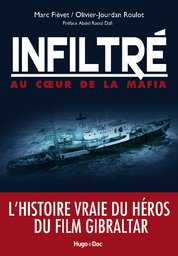
infiltre2

Préfacé par Jean Henri Hoguet – ex DI-DNRED

Postfacé par Yves Bonnet – ex Directeur de la DST

°°°°°°°°°°°°°°°°°°°°°°°°°°°°°°

Plus d’infos aves le témoignage de Jean Henri Hoguet et Yves Bonnet.

00000000000000000000000000000000000

DNRED, un service de renseignement français.

dnred_photo

2, mail Monique-Maunoury
TSA 90313
94853 Ivry-Sur-Seine Cedex

Téléphone : +33 9 70 28 10 00

°°°°°°°°°°°°°

La DNRED s’appelait à l’origine la Direction nationale des enquêtes douanières (DNED). Elle lutte contre l’importation illégale de produits sensibles comme les stupéfiants et les armes ou ceux qui sont l’objet d’une contrebande importante (tabac, contrefaçons). C’est en 1988 qu’a été adjointe une direction du renseignement.

La direction nationale du renseignement et des enquêtes douanières (DNRED), rattachée à la direction générale des douanes et droits indirects (DGDDI), est chargée de mettre en œuvre la politique du renseignement, des contrôles et de lutte contre la fraude de cette dernière.

dnred%20enqu%EAte

La DNRED compterait environ 740 agents. Elle comprend notamment trois directions fonctionnelles :

  • la direction du renseignement douanier (DRD – environ 120 agents), chargée de gérer et d’animer la collecte, le traitement et la diffusion du renseignement au sein de l’ensemble des services douaniers ;
  • la direction des enquêtes douanières (DED – environ 200 agents), chargée de procéder aux enquêtes antifraude d’importance nationale et internationale ou présentant une sensibilité particulière ;
  • la direction des opérations douanières (DOD – environ 400 agents), chargée de la lutte contre la grande fraude douanière et plus particulièrement en matière de contrebande, de la recherche de renseignements opérationnels, de la mise en œuvre de techniques d’investigation spécialisées et de l’assistance aux autres services douaniers.


.GARCIA

Jean Paul Garcia est le « Boss » de cette « Agence ».

000000000000000000000000