AVISEUR INTERNATIONAL

Aviseur International renseigne, sans complaisance, sur la problématique de la drogue, du narcotrafic, de la corruption et sur les politiques mises en œuvre par les différents Etats et les dérives que s'autorisent les fonctionnaires des administrations — aviseurinternational@proton.me — 33 (0) 6 84 30 31 81

AVISEUR INTERNATIONAL

COLOMBIA: Policía colombiana decomisa 1,7 toneladas de cocaína y captura 5 ecuatorianos

La Policía colombiana, en una operación conjunta con autoridades de Ecuador, se incautó de 1,7 toneladas de cocaína y capturó a cinco ciudadanos de ese país que al parecer se dirigían con la droga a México para ser entregada al cartel de Sinaloa, informó hoy la institución.

La « Operación Altamar », que contó también con el apoyo de la agencia antidrogas de Estados Unidos (DEA), se hizo en aguas internacionales en el océano Pacífico y permitió el decomiso de 1.711 kilos de cocaína y dos lanchas.

LEER: http://noticias.terra.com.co/colombia/policia-colombiana-decomisa-17-toneladas-de-cocaina-y-captura-5-ecuatorianos,22fe23def12ec410VgnCLD200000b2bf46d0RCRD.html

0000000000000000000000000000000000000000000000000000

DNRED (Douane française): la DED permet la saisie de 2,25 tonnes de cocaïne

***

Selon Europe 1, qui révèle l’information, parmi les trois hommes interpellés figure un Espagnol d’une cinquantaine d’années, ancien membre d’ETA. Les deux autres sont un Espagnol et un Vénézuélien. La radio précise que les enquêteurs des renseignements douaniers (DNRED)* ont commencé à enquêter dès 2012 sur un possible trafic international de stupéfiants transitant par la mer des Caraïbes, entamant «en collaboration avec les services espagnols et britanniques» une surveillance des embarcations suspectes. Constituée de cocaïne pure, la cargaison aurait une valeur de 100 millions d’euros. La douane française avait saisi un total de 6,6 tonnes de cocaïne sur toute l’année 2014. La saisie de cocaïne cette semaine compte parmi les plus importantes jamais réalisées. Le record date de novembre 2006, avec une prise de 4,3 tonnes réalisée par la Marine nationale sur un cargo panaméen au large de la Martinique. L’opération de mercredi dernier est le fruit d’une enquête de deux ans menée par la DNRED, en lien avec des services espagnols et britanniques.

Dans leur communiqué, Michel Sapin et Christian Eckert «se réjouissent du succès de cette opération témoignant à la fois de la qualité de la coopération internationale en matière de lutte contre les narcotrafics et de la qualité du travail de renseignement effectué par la douane».Ils «saluent l’engagement des unités aéromaritimes douanières dans cette opération difficile et risquée».

***

La région des Caraïbes est une plaque tournante du trafic de drogue, proche des trois principaux pays producteurs (le Pérou, la Colombie et la Bolivie), qui produisent à eux seuls environ 1.000 tonnes de cocaïne par an, dont près du quart est destiné à l’Europe. La saisie de cette semaine « illustre la stratégie du bouclier qui consiste à protéger l’Europe en agissant au plus près des zones de production de la cocaïne », s’est félicité Simon Riondet.

– ‘De nuit, par une mer déchaînée’ –

Cette opération est le fruit d’une enquête de deux ans menée par le renseignement douanier français, en lien avec des services espagnols et britanniques.

Elle a mobilisé un avion et deux vedettes garde-côtes des douanes mercredi vers 21H00 (heure locale), à quelque 200-220 kilomètres au large de la Martinique. « Les trois suspects, qui se trouvaient à bord d’un voilier de 20 mètres, ont refusé de se soumettre au contrôle. Nous avons dû faire stopper le bateau de nuit, par une mer déchaînée », a raconté à l’AFP Michaël Lachaux, de la DNRED.(DNRED, un service de renseignement français..)

silandra-

Dans le bateau, le « Silandra », qui voyageait sous un faux pavillon américain, les forces de sécurité ont trouvé pas moins de 80 ballots dans lesquels la cocaïne était conditionnée. « Il y en avait partout », a-t-on commenté aux douanes.

Les deux Espagnols interpellés étaient « défavorablement connus » des services de douanes et de police pour des affaires de trafic de stupéfiants, selon Michaël Lachaux. Le nom de l’un d’eux est lié à des « faits de terrorisme dans les années 80 », a-t-il ajouté, évoquant l’organisation séparatiste basque ETA. « C’est un profil que l’on retrouve de temps en temps, d’anciens terroristes qui se recyclent dans des activités de contrebande », a-t-il commenté.

Les trois hommes étaient samedi en garde à vue – mesure qui peut durer 96 heures dans les affaires de drogue – à Fort-de-France. Ils devraient être présentés à un juge en début de semaine.

http://actu.orange.fr/faits-divers/saisie-historique-de-cocaine-au-large-des-antilles-afp_CNT0000009c5FK.html

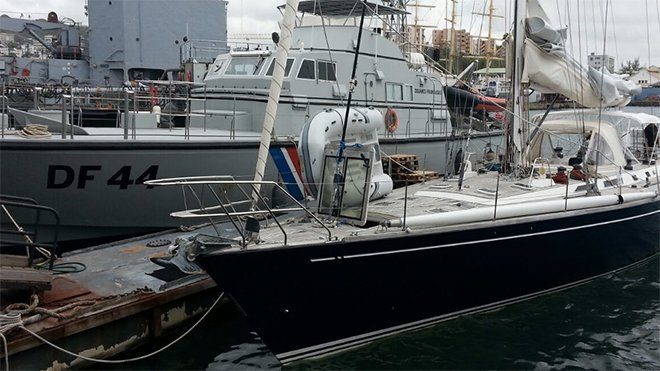
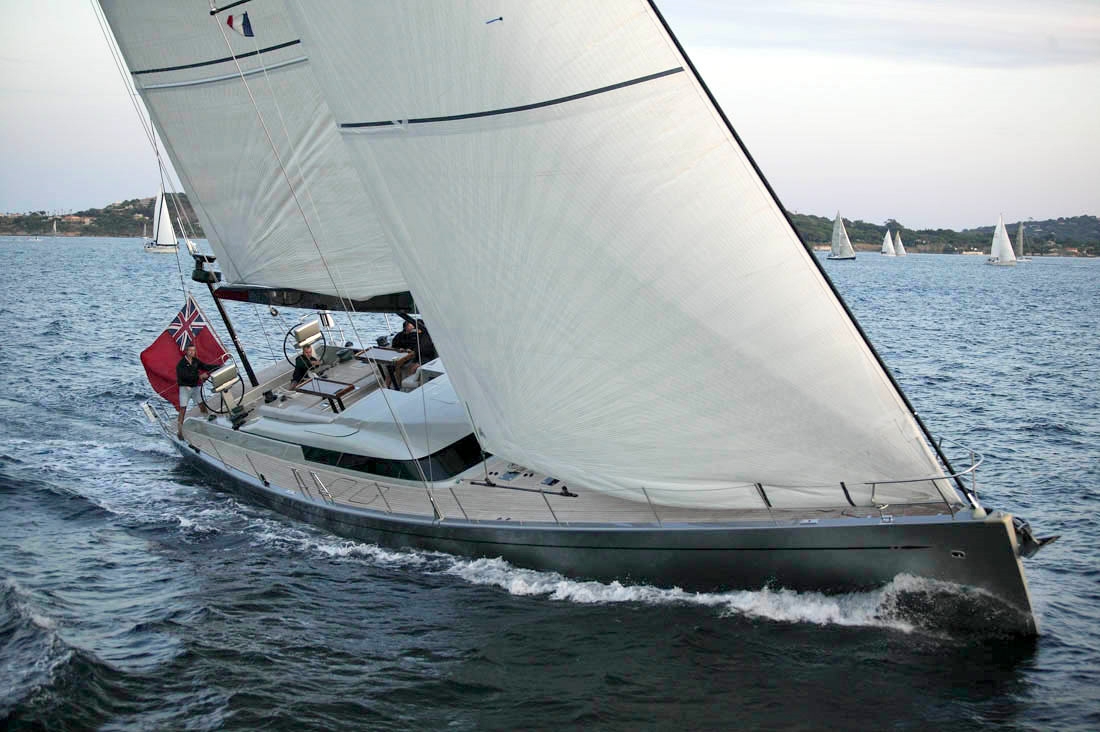
La cargaison était dissimulée dans le voilier <i>Silandra</i> battant faux pavillon américain.
Le Silandra, le voilier convoyant la drogue,
———————
Saisie record de 2 tonnes de cocaïne au large de la Martinique
La drogue était partout dans le bateau.

EN IMAGES/VIDÉO – Les autorités françaises ont mis la main mercredi sur 2,2 tonnes de drogue dans un voilier au large de l’île antillaise, au terme d’une opération internationale préparée depuis deux ans.

C’est une saisie record et spectaculaire pour les douanes françaises: 2,2 tonnes de cocaïne ont été retrouvées mercredi sur un voilier au large de la Martinique. Une cargaison estimée à 70 millions d’euros. Samedi, les douanes françaises se félicitaient de la réussite d’une opération préparée depuis deux ans.

Cette prise représente un tiers du total (6,6 tonnes) des saisies de cocaïne effectuées par les douanes françaises au cours de l’ensemble de l’année 2014. «Il s’agit d’un record pour la douane et la police», selon un responsable de la Direction nationale du renseignement et des enquêtes douanières. La plus importante prise de «blanche» par les autorités françaises (4,3 tonnes) avait été réalisée en novembre 2006 sur un cargo panaméen par la Marine nationale, déjà au large de la Martinique.

Cette opération est le fruit d’une enquête de deux ans menée par le renseignement douanier français, en lien avec des services espagnols et britanniques.

L'interception du <i>Silandra</i>.

Elle a mobilisé un avion et deux vedettes garde-côtes des douanes mercredi vers 21 heures (heure locale), à environ 200 kilomètres au large de la Martinique. «Les trois suspects, qui se trouvaient à bord d’un voilier de 20 mètres, ont refusé de se soumettre au contrôle. Nous avons dû faire stopper le bateau de nuit, par une mer déchaînée», a raconté Michaël Lachaux de la DNRED.

Dans le bateau, le Silandra, qui voyageait sous un faux pavillon américain, les forces de sécurité ont trouvé pas moins de 80 ballots dans lesquels la cocaïne était conditionnée. «Il y en avait partout», a-t-on dit aux douanes.

La cargaison aurait une valeur marchande de 70 millions d'euros.

Les deux Espagnols interpellés étaient «défavorablement connus» des services de douanes et de police pour des affaires de trafic de stupéfiants, selon Michaël Lachaux. Le nom de l’un d’eux est lié à des «faits de terrorisme dans les années 1980», a-t-il ajouté, évoquant l’organisation séparatiste basque ETA. «C’est un profil que l’on retrouve de temps en temps, d’anciens terroristes qui se recyclent dans des activités de contrebande», a-t-il commenté.

Les trois hommes étaient samedi en garde à vue – mesure qui peut durer 96 heures dans les affaires de drogue – à Fort-de-France. Ils devraient être présentés à un juge en début de semaine.

http://www.lefigaro.fr/actualite-france/2015/04/19/01016-20150419ARTFIG00019-saisie-record-de-2-tonnes-de-cocaine-au-large-de-la-martinique.php

Se souvenir: GIBRALTAR…Souviens-toi Jean Paul Garcia de la DNRED!.

 0000000000000000000000000000000000000000

COLOMBIA: capturan a capo de narcotráfico requerido por Estados Unidos

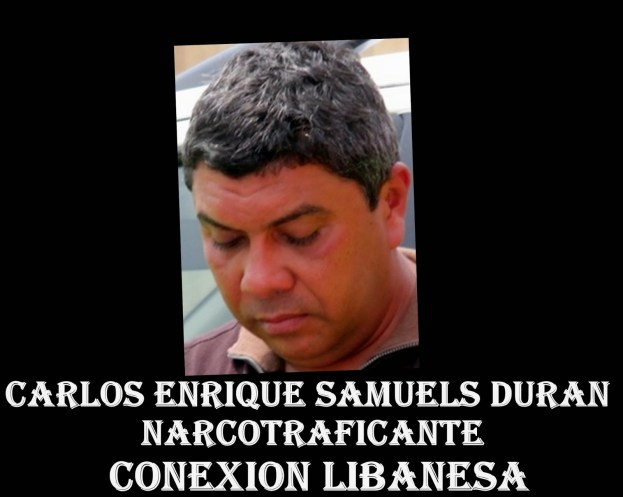
Bogotá, Colombia.- La policía de Colombia capturó a Carlos Enrique Samuels, alias “Samy”, acusado de encabezar una organización dedicada al narcotráfico y solicitado en extradición por la Corte del Distrito Sur de Nueva York, informó este sábado la institución.

Samuels es acusado en Estados Unidos “del delito federal de narcóticos”, indicó la Policía en un comunicado, añadiendo que Samuels “es el cabecilla de una estructura de crimen organizado con asentamiento en la costa norte colombiana, la frontera colombo–venezolana, así como con alianzas criminales en Centro América, Europa, África y el Medio Oriente”.

Samuels, quien posee nacionalidad alemana, “tenía vinculación con células criminales del Líbano (Beirut)”, agregó.

Según la policía, el detenido “se abastecía de varias organizaciones criminales de narcotraficantes” y utilizaba rutas entre Colombia y países de Centroamérica, con Estados Unidos como destino final.

“Durante la investigación se ha podido establecer que esta organización criminal comercializaba entre 1 y 2 toneladas de cocaína mensuales, así como aproximadamente 100 millones de dólares al año mediante el lavado de dinero”, dijo el comunicado.

Colombia es el mayor productor mundial de cocaína junto a Perú, con unas 290 toneladas producidas en 2013, según Naciones Unidas (ONU).

FUENTE: http://www.periodicodigital.mx/2015/04/11/capturan-en-colombia-a-capo-de-narcotrafico-requerido-por-estados-unidos/

0000000000000000000000000000000000000


COLOMBIA: decomisan 1,4 toneladas de cocaína y detienen a 8 personas

http://www.businesscol.com/comunidad/colombia/departamentos_de_colombia/antioquia.htm

Los operativos se realizaron en varias zonas del país.

Los detenidos de distintas nacionalidades pertenecen al Clan Úsuga.

Autoridades colombianas decomisaron cerca de 1,4 toneladas de cocaína en varias zonas del país, pertenecientes a la banda narcotraficante Clan Úsuga, y capturaron a ocho personas de distintas nacionalidades, encargadas de comercializarla, informó este sábado la policía.

La operación, realizada simultáneamente en los departamentos de Antioquia (noroeste), Nariño (suroeste) y Cauca (oeste), « permitió la incautación en las últimas horas de 1,4 toneladas de cocaína y la captura de ocho de sus integrantes que pretendían enviar los alijos a Estados Unidos y Europa para su comercialización », dijo esa entidad en un comunicado.

La organización utilizaba lanchas rápidas para el transporte del estupefaciente hasta puertos del norte y sur de Colombia, con el fin de empacarlo en contenedores, agregó el texto basado en la investigación que realizó la entidad en conjunto con la agencia antidrogas estadounidense, DEA.

Según el comunicado, los detenidos vinculados al envío de la cocaína fueron « un panameño, un dominicano, dos nicaragüenses, dos ecuatorianos y dos colombianos ».

La incautación se produjo « en las últimas horas » en Antioquia, con 607 kilos que iban a ser enviados por la costa Atlántica, y en Nariño y Cauca, con 857 kilos, cuyo transporte sería por la costa Pacífica.

El Clan Úsuga, también conocido como Los Urabeños o Autodefensas Gaitanistas de Colombia, surgió tras la desmovilización de unos 32.000 paramilitares de extrema derecha durante el primer gobierno de Álvaro Uribe (2002-2006).

Además del Clan Úsuga, la principal banda criminal del país -o « bacrim », como el gobierno denomina a estos grupos-, existen otras como Los Rastrojos, Los Paisas y La Empresa.

Según afirmó el presidente Juan Manuel Santos el año pasado, estos grupos armados ilegales cuentan con unos 3.500 integrantes.
Colombia es el mayor productor mundial de cocaína junto a Perú, con unas 290 toneladas producidas en 2013, según Naciones Unidas (ONU).

http://www.losandes.com.ar/article/decomisan-1-4-toneladas-de-cocaina-y-detienen-a-8-personas-en-colombia

00000000000000000000000000000000000

COLOMBIE: plus de 5 tonnes de cocaïne saisies sur un bateau au large du Nicaragua

En el procedimiento fueron capturados 14 tripulantes, entre ellos ocho de nacionalidad colombiana.

La droga decomisada era procedente del puerto Buenaventura en Colombia, la embarcación llevaba bandera panameña.

Este contenido ha sido publicado originalmente por teleSUR bajo la siguiente dirección:
http://www.telesurtv.net/news/Incautan-mas-de-5-toneladas-de-cocaina-procedente-de-Colombia-20150321-0034.html.

Si piensa hacer uso del mismo, por favor, cite la fuente y coloque un enlace hacia la nota original de donde usted ha tomado este contenido. http://www.teleSURtv.net
°°°°°°°°°°°°°

Le navire transportait exactement 5.284 kilos de chlorydrate de cocaïne.-AFP

Plus de cinq tonnes de cocaïne ont été saisies au large du Nicaragua et du Costa Rica sur un navire qui se rendait aux États-Unis, a annoncé ce samedi le parquet de Colombie.

«Au terme d’une enquête menée conjointement par l’Agence anti-drogue américaine (DEA)» et les autorités colombiennes, «un navire transportant de la cocaïne a été repéré à Buenaventura (principal port colombien sur la côte pacifique, NDLR) et intercepté entre le Nicaragua et le Costa Rica», a déclaré la directrice nationale de la police judiciaire, Alexandra Ladino.

Le navire transportait exactement 5.284 kilos de chlorydrate de cocaïne.

Le navire, qui battait pavillon panaméen, transportait exactement 5.284 kilos de chlorydrate de cocaïne.

«On sait que ce bateau se rendait directement aux États-Unis» et les 14 personnes qui se trouvaient à bord seront prises en charge par la justice de ce pays, a précisé Mme Ladino.

Parmi eux figurent huit Colombiens, trois Panaméens, un Péruvien, un Equatorien et le capitaine du bateau de nationalité cubaine.

source: http://www.lavenir.net/cnt/DMF20150321_00621357

°°°°°°°°°°°

US authorities confiscated a $180 million shipment of cocaine from Colombian drug traffickers aboard a boat on the Pacific Ocean bound for the United States, the Colombian attorney general’s office said on Saturday.

http://www.dnaindia.com/world/report-us-authorities-seize-180-million-colombian-cocaine-shipment-2070958

000000000000000000000000000000000000000000000

COLOMBIE: saisie de plus de trois tonnes de cocaïne en route vers le Mexique

Colombihttps://i0.wp.com/www.diplomatie.gouv.fr/fr/IMG/gif/COLOMBIE.gifa confisca cocaína que tenía como destino México

En una ofensiva contra la banda criminal colombiana más importante, la policía confiscó el cargamento de más de tres toneladas de droga, valorado en más de 90 millones de dólares.
24/02/2015 05:17 PM

Necoclí, Colombia

La policía de Colombia confiscó 3.3 toneladas de cocaína en medio de una ofensiva por aire, mar y tierra contra la principal banda criminal del país que pretendía export

arla a los cárteles mexicanos desde una zona selvática fronteriza con Panamá, informó el martes un alto oficial.

La droga, valorada en más de 90 millones de dólares en el m

ercado de Estados Unidos, fue descubierta el lunes en una región selvática, oculta en unas construcciones rústicas de madera levantadas sobre un terreno fangoso.

« En medio de la ofensiva contra el Clan Úsuga, se han confiscado 3 mil 300 kilos de cocaína listos para ser exportados », dijo a periodistas el general Rodolfo Palomino, director de la Policía Nacional de Colombia.

LEER mas: http://www.milenio.com/internacional/droga_cocaina_Colombia-cartel_mexicano_droga-Usuga_Colombia-narco_Mexico_Colombia_0_470353234.html

———————————-

Les autorités colombiennes ont mis la main sur trois tonnes de cocaïne dans le nord du pays.

Les paquets étaient conditionnés, et prêts à rejoindre le Mexique. Les autorités colombiennes ont découvert 3,3 tonnes de cocaïne pure près de la frontière avec le Panama.

La planque appartenait vraisemblablement au clan Usuga, une bande organisée. Qui perd la une marchandise qui valait environ 80 millions d’euros en gros, et plus de 230 millions d’euros à la revente au détail…

source: http://www.ouest-france.fr/drogue-saisie-de-plus-de-trois-tonnes-de-cocaine-en-colombie-3209282

00000000000000000000000000000000000000000000

ECUADOR: authorities seized about a ton of cocaine en route to Galapagos Islands

Ecuador authorities seized about a ton of cocaine en route to Galapagos Islands. The country has become a transit territory for drug trafficking because of its location between Colombia and Peru, two major cocaine-producing countries.The country has become a transit territory for drug trafficking because of its location between Colombia and Peru, two major cocaine-producing countries.

 MOSCOW (Sputnik) — Ecuador army and police seized about a ton of cocaine en route to Galapagos Islands, the country’s Minister of the Interior Jose Serrano said.

Theministercommendedthe National Policeof Ecuador performance on his officialTwitter page on Saturday.Galapagos Islands are located in about 603 miles from the mainland.

Ecuador has become a transit territory for drug trafficking because of its location between two major countries-producers of cocaine, Colombia and Peru. Drugs from those countries are generally headed to north, mostly to the United States.

Since the beginning of the year the country of Ecuador has already apprehended 1.3 tons of drugs, mostly cocaine, according to Serrano. Almost 45 tons of drugs were seized in 2014 and over 56 tons in 2013.

COLOMBIA: incautan 428 kilos de cocaína entre Colombia y Panamá

Bogotá – La Armada de Colombia y guardacostas estadounidenses incautaron en una operación conjunta 428 kilos de cocaína que eran transportados en una lancha rápida en aguas internacionales cerca de la frontera marítima con Panamá, informó hoy la institución colombiana.

El operativo se realizó en el marco del acuerdo marítimo internacional entre Colombia y Estados Unidos y gracias al aviso del buque patrullero naval norteamericano USCGC « Alert », según un comunicado de la Armada.

La embarcación, en la que viajaban tres colombianos y que se desplazaba a alta velocidad por el océano Pacífico, fue detectada inicialmente por una Unidad del Grupo Aeronaval del Pacífico y, al parecer, tenía como destino Centroamérica.

Al ser sorprendidos por las autoridades, los ocupantes de la lancha intentaron regresar a aguas colombianas, no sin antes arrojar al mar los paquetes con el cargamento de droga.

El buque estadounidense, en coordinación con las Unidades de Reacción Rápida de Guardacostas de Colombia, realizaron la interdicción de la motonave y recuperaron del agua la cocaína.

Los tres sujetos fueron trasladados hasta la Estación de Guardacostas de Bahía Solano junto con la embarcación, en donde fueron puestos a disposición de las autoridades competentes.

En el último año la Armada colombiana decomisó cerca de 35 toneladas de cocaína que los grupos al servicio del narcotráfico pretendían sacar vía marítima.

fuente: http://www.elnuevodia.com/noticias/internacionales/nota/incautan428kilosdecocainaentrecolombiaypanama-2008839/

0000000000000000000000000000000000000000000

COLOMBIA: Policía Antinarcóticos de Colombia incauta 710 kilos de cocaína camuflada entre bananos

Puerto de Santa Marta y Cartagena protagonistas del comercio exterior colombiano
AFP
Bogotá

Un cargamento de 710 kilos de cocaína, que iba a ser enviado a Honduras por vía marítima camuflado en una carga de bananos, fue detectado por la Policía Antinarcóticos de Colombia en el puerto de Santa Marta (norte), informó este sábado la institución.

« Fueron hallados 700 paquetes, que fueron sometidos a la Prueba de Identificación Preliminar Homologada (PIPH), dando positivo para clorhidrato de cocaína, con un peso neto de 710 kilos », dijo la Policía Antinarcóticos en un comunicado.

Los paquetes con la droga estaban repartidos en un cargamento de bananos de exportación, que tenía como destino el puerto de Castilla, en Honduras.

El valor del cargamento incautado fue estimado por las autoridades en más de ocho millones de dólares.

En lo que va de 2015, la Policía de Colombia se ha incautado de 13,1 toneladas de cocaína y 2,2 toneladas de base de coca, según se informó en el texto.

Colombia es, junto a Perú, el principal productor mundial de cocaína, con unas 290 toneladas producidas en 2013, según cifras de la Organización de las Naciones Unidas (ONU). (I)

COLOMBIA: cayó Blanca Senobia Madrid Benjumea, esposa de líder del Clan Úsuga

Blanca Senobia Madrid fue capturada ayer junto con 12 colaboradores de la banda criminal. La mujer está acusada de comprar propiedades con dinero del narco

Blanca Senobia Madrid, considerada la compañera sentimental de Darío Antonio Úsuga, alias « Otoniel », jefe del Clan Úsuga, fue capturada el miércoles en una operación en el noroeste de Colombia en la que también se detuvo a otros 12 colaboradores de esa banda narcotraficante.

Madrid, conocida como « La Flaca », es acusada de comprar propiedades con dinero del narcotráfico siguiendo órdenes de su pareja y de coordinar « un nutrido pool de abogados que se encargaba de la defensa de los integrantes del Clan Úsuga capturados ».

Según informó la Policía en un comunicado, 12 personas más fueron detenidas en un operativo conjunto entre la policía y la fiscalía en los municipios de Turbo, Apartadó y Necoclí, en Sincelejo y Montería, todas ciudades del norte de Colombia.

Entre los otros capturados está Hárlinson Úsuga, apodado « Orejas », uno de los más cercanos colaboradores de « Otoniel » y quien controlaba las rutas para sacar la cocaína de Colombia, con rumbo a Norteamérica y Centroamérica, de acuerdo con el texto.

« El capturado acopiaba los estupefacientes en el golfo de Urabá, los trasladaba a Triganá o Acandí (departamento del Chocó), y desde ahí, los enviaba en lanchas rápidas en cargamentos que oscilaban entre los 2.000 y 2.500 kilos, que eran esperados en Panamá, Costa Rica, Nicaragua, Honduras y México », añadió la Policía.

Entre los capturados también están familiares de Madrid, abogados y otros integrantes del Clan Úsuga, conformado por ex miembros de Los Urabeños, que surgió tras la desmovilización de unos 30.000 paramilitares de extrema derecha en el primer gobierno de Álvaro Uribe.

Además del Clan Úsuga, la principal banda criminal en el país, existen otras como Los Rastrojos, Los Paisas y La Empresa. Según afirmó recientemente el presidente Juan Manuel Santos, estos grupos armados ilegales cuentan con unos 3.500 integrantes.

Colombia vive un conflicto armado desde hace más de medio siglo, en el que han participado guerrillas de izquierda, paramilitares de derecha, fuerzas militares y bandas narcotraficantes, que ha dejado más de 220.000 muertos y 5,3 millones de desplazados, según cifras oficiales.

El país es además el mayor productor de cocaína mundial, junto a Perú, con unas 290 toneladas producidas en 2013, según la Organización de las Naciones Unidas.

FUENTE: http://www.infobae.com/2015/02/05/1625093-cayo-la-esposa-lider-del-clan-usuga-colombia

MAS:

Capturan a pareja sentimental de Darío Úsuga, alias ‘Otoniel’, cabecilla del ‘Clan Úsuga’
En el operativo, además de Blanca Senobia Madrid Benjumea, alias ‘la Flaca’, también detuvieron a Hárlinson Úsuga, alias ‘Orejas’.
000000000000000000000000000000

DRUG WAR and U.S. Drug Enforcement Administration!

DEA

In the trenches with a DEA Agent; 13 questions for retired drug fighter turned author

|

Michael Vigil spent 31 years as a U.S. Drug Enforcement Administration agent. He was in Mexico and Colombia much of that time, going after major Latin American drug traffickers. On occasions, he sat just feet from the biggest drug boss of them all, Colombia’s Pablo Escobar.

DEAL, by retired Drug Enforcement  Administration agent Michael VigilVigil recently published his memoirs in a book titled “Deal,” which is available here  on amazon.com. His story in many reveals aspects of the  U.S. fight to take on drug cartels. He did so from the jungles of Colombia to the streets of the United States, and takes readers along the way.

Vigil retired from the DEA a decade ago as the chief of international operations and still keeps his hand in matters as an international consultant. He is regularly consulted and quoted by news media as an expert.

He discusses his book below by answering 13 questions on a range of topics, from his book, to what should be done better to take on drug cartels to his thoughts on pot legalization.

1. What is the greatest thing you hope to offer with this book? What do you want people to understand now that they might not have understood before?

I wrote the book to leave a legacy behind to those silent warriors who have operated in the shadows at great risk to their lives and secondly to educate U.S. citizens as to the insidious nature of these transnational drug organizations that generate so much violence not only in their countries but here in the United States.

2. What was the toughest aspect of writing this?

The most difficult thing about writing the book was just getting started. Once I did that, the pages continued to pile up and before I knew it, I had about 200 type-written pages. I would only work on the book on the weekend because I have a full-time job.

3. I am sure you have gotten some thank yous for what you have written and a few people who were less than happy. What has been the reaction? Any surprises?

The feedback on the book has all been positive.  Everyone who has read the book has stated that they could not put it down because it was so interesting. I received a lot of phone calls from old friends that I had not seen in maybe 20 or 30 years who purchased the book and said they were fascinated.  They had no idea of the magnitude of global drug trafficking and the ramifications it has in the United States. There were a lot of DEA agents who called me and they were ecstatic I had written the book and talked about the exploits of DEA agents working not only here in the United States, but abroad. I got a call from General Leonardo Gallego, who was a general with the Colombian National Police. He said (the book) needed to be done given my extensive experience in combating international drug trafficking.

4. The biggest and certainly most famous drug lord of all time was Colombia’s Pablo  Escobar. What do you personally recall of him?

 Pablo Escobar was a psychopathic killer who had absolutely no regard for human life.  It was his mission to eliminate anyone who stood in his way.  I sat very close to him at soccer matches and he and his hit men looked like a regular street gang.  He always wore blue jeans, immaculate white tennis shoes and cheap shirts.  He was a horrific scourge to his country and also to the U.S. He left a legacy of horrific violence in Colombia becasue he actually paid the now defunct subversive organization known as the M-19 to attack the Palace of Justice where they ended up killing most of the supreme court judges. He is also the one who paid to have Carlos Galan killed. He was going to be the next president of Colombia . He also had Rodrigo Lara Bonilla killed. He was a minister of justice, equivalent to our attorney general. He had  him killed because Lara Bonilla denounced him during a parliament meeting and said he was  drug trafficker. He also put a bounty of $700 for each police officer killed in Medellin. He played the Robin Hood, but the fact of the matter is that he was probably the most violent and treacherous drug lord that the world has ever seen. This guy took it took to a higher level than any other trafficker around the globe.

5.  You have put a lot of people in prison. Who is one that you will never forget? What became of him?

That trafficker had to be Juan Ramon Matta Ballesteros, the Honduran source of supply to the infamous Guadalajara Cartel.  He was involved in the killing of DEA Special Agent Enrique “Kiki” Camarena.  I captured him in Cartagena, Colombia.  He is in a maximum security prison in the U.S.  He actually congratulated me for capturing him. That evening we put him on an Avianca flight from Cartagena to Bogota. I was sitting across the aisle from him on the plane. He reached over to shake my hand and said, I want to congratulate you, you are the only one who was able to capture me and they have been after me for 20 years.

6. Who is the biggest drug trafficker in the world right now?

One of the biggest drug traffickers in the world has to be Ismael “Mayo” Zambada who assumed command of the Sinaloa Cartel after the capture of (Joaquin) Guzman.  He is the sole remaining old guard capo in Mexico. Most of the major capos in Mexico have either been imprisoned or killed, so Mayo Zambada is the only major drug trafficker who remains at large. I would say he is probably up in the mountains in Sinaloa. Chapo Guzman would still be free if he has stayed up in the mountains. It is very hard to launch an operation out there because they give money to the local towns people in the area, so they get protection from them. Anybody who comes in and is not from there, they pass the word. If you do a helicopter assault, they will have at least 15 minutes to get away because they will hear the choppers. I would say 95 percent of the most significant drug traffickers Mexico has spawned have come from Sinaloa.

7. Among the most famous DEA agents is Enrique “Kiki” Camarena? What do you see as his legacy? How did his death change everything? Some say that is when the U.S. decided to take the gloves off?

Kiki Camarena left a legacy of commitment, courage and sacrifice.  After he was kidnapped and killed, the DEA began a worldwide manhunt and all of those responsible were arrested and sent to prison. Basically we put a lot of pressure on Mexico and we received a lot of assistance from the head of customs.  What he did was basically close down the border and forced the Mexican government to move forward diligently in terms of trying to capture the people who were responsible and recovering the body of Kiki Camarena. It got very nasty because there were some Mexican federal police that were involved. The found out Rafael Caro Quintero was going to leave from the Guadalajara airport in a Lear jet. Some of the DEA agents went there with the federal police. They observed Rafael Caro Quintero speaking with a Mexican police comandante. Some phone calls were made and he was released. We found out later that he wrote a check for quite a lot of money to the federal police and was allowed to escape. He fled Mexico and went to Costa Rica, but we captured him. It was very difficult because Camarena was one of our own. We will hunt criminals who kill our agents. We will chase them through heaven and hell.

8. What simple advice would you have for whoever next takes over as the head of the DEA? I assume there will be a new one with the coming change at 1600 Pennsylvania Avenue?

I would tell the new administrator to be decisive and promote the” best of the best” to command positions.  We cannot be risk averse and be unwilling to wade into controversy.  It is pure unadulterated leadership. Apart from that, we need to expand our working relationships with foreign governments and share information so that we can have a broader and more significant impact on these international drug cartels. In my day, you developed personal relationships with foreign security forces. This resulted them giving you a lot more resources and work with you much closer. I think that for some agents it is an 8 to 5 job. It can’t be that way.

We need to continue to work closely with our Latin American partners in the exchange of information.  Intelligence driven operations are critical.  We also need to provide them with training, equipment, and ensure that they have adequate laws to address transnational criminals.

9. With the latest national elections, recreational marijuana will be legal in four states and Washington, D.C. How does that impact you? What do you think of this? You have spent a lot of time in the nation’s capital. 

The legalization of marijuana is a tragic decision for the U.S.  It is not a harmless drug and is highly addictive.  Legalization of drugs in other countries has had a very negative impact. The legalization taking place across the United States is a very well funded endeavor. They take advantage of the  people who don’t that understand marijuana is a potent drug.  When I came on with the DEA in the early 1970s the THC levels were like .08 to 1.3 at that time. Now the marijuana is being genetically engineered so those THC levels now exceed 30 percent. The thing is that marijuana is a hallucinogenic drug. A marijuana cigarette has four times the carcinogens of a regular tobacco cigarette. It has proven to be a gateway drug for use of other harder drugs such as cocaine, methamphetamine and heroin.

10. What do you expect it will feel like the first time you cross paths with someone legally smoking a joint?

I would be disgusted because we are setting a poor example to our youth.  We also send a conflicting message to our international partners who lose hundreds of security personnel to eliminate drugs and we in turn are legalizing them.

11. What role do you see the U.S. drug user as having in the narco chaos in Mexico? Many people consider swaths of country to have no rule of law. Do you agree?

Money used to purchase drugs fund the violence in Mexico and the U.S. Drug profits are used to purchase weapons and corrupt the very fabric of the country.  There are large areas in Mexico that are under the control of cartel leaders.  The rule of law has eroded in those geographic areas. When you take a look at some of the areas there, the only authorities that exist are the state and local police which are highly corrupt and work closely with the drug traffickers. I think it is driven by greed. They are paying them much more money than state governments. They are easily corrupted and take the money.

12. We have all heard many horrifying stories out of Mexico in the last several years. Perhaps none is as brutal as the 43 missing students? What do you think happened to them?

Unfortunately, I am of the opinion that the 43 students were killed by drug traffickers and corrupt police in the area of Iguala, Guerrero.  This is a major black eye to the government of Mexico.  As a as a result of the disappearance of those 43 students, they have dug up mass graves in the area, but DNA analysis indicates these were other individuals who were killed and not the students. They are still not able to locate the bodies of the 43 students. I think eventually they will find them in another mass grave. These criminals are very brutal.

13. What is it going to take for Mexico to return to the times of old, when things were generally peaceful and the drug traffickers kept a lower profile?

Mexico needs to do a top to bottom dismantling of the cartels operating on their soil.  They also need to extradite the leaders to the U.S., which effectively removes them from their criminal infrastructure. They have to do a better job of ensuring those operations are (intelligence) driven rather than haphazard. They have to expand the sharing of information with federal Mexican authorities. Obviously that would be with individuals who are vetted, that can be trusted. You don’t want it to be done with everybody. You don’t want them to compromise the investigations.

source: http://blog.chron.com/narcoconfidential/2014/11/in-the-trenches-with-a-dea-agent-13-questions-for-retired-drug-fighter-turned-author/#28230101=0

00000000000000000000000000000000000000000

Millions Missing From DEA Money-Laundering Operation

DEA

But No One With the Power to Investigate Seems to Care

At least $20 million went missing from money seizures by law enforcers, critical evidence was destroyed by a federal agency, a key informant was outed by a US prosecutor — contributing to her being kidnapped and nearly killed — and at the end of the day not a single narco-trafficker was prosecuted in this four-year-long DEA undercover operation gone awry.

Those revelations surfaced in a recently decided court case filed in the US Court of Federal Claims in Washington, DC.

“Throughout this protracted litigation, the agency [DEA] delayed producing documents until the 11th hour and destroyed potentially relevant evidence,“ states Judge Mary Ellen Coster Williams in an Aug. 30 ruling awarding the informant in the case, with the code name “Princes,” more than $1.1 million. “…The conclusion that there were missing trafficker funds is supported by … DEA documents, including a statement by [a] DEA confidential informant.”

The Princess, a former airline stewardess and mother of two, lived in the US but hailed from an upper-crust Colombian family. Though her two former husbands had ties to the drug trade, she had a clean record and was essentially “scammed” into working as an informant by the threat of prosecution, court records reveal. Consequently, she was completely out of her league in taking on an extremely dangerous undercover role in the world of transnational crime, where she was charged with posing as a money launder to rope in high-level Colombian narco-traffickers for the DEA.

During the course of her undercover assignment, which played out in the early to mid-1990s, she was the target of death threats and even a foiled plot on her life after her cover was compromised. It was blown both by DEA negligence in money-seizing operations and as a result of an Assistant United States Attorney in Chicago disclosing her “status as a confidential informant to a criminal defendant whom the Princess had lured to the United States to be arrested,” the judge’s ruling reveals.

Even after all that, her DEA handlers still sent the Princess back into Colombia to meet with narco-traffickers, with her cover blown, leading to her being kidnapped and held for ransom for some three months “in a windowless, dirt-floor room where she slept on a straw mattress,” court records indicate.

She narrowly averted death due to the intervention of a “criminal associate of many high-level Cali mafia members” who also was a DEA cooperating source in Colombia. The source negotiated her release with a payment of $350,000 from his own funds, because DEA refused to negotiate officially with “terrorists.”

But the subtext to this story goes far deeper than a tale of a botched DEA operation — one that allegedly laundered in excess of $60 million for the narco-traffickers, with more than $20 million still missing, and which, in the end, produced no prosecutions (other than that of a Florida DEA agent, who was convicted of skimming some $700,000 from a money pick-up location in Houston and received a two-year sentence.)

Mike Levine, a former deep undercover DEA agent and supervisor who examined copious DEA documents related to this case as an expert witness for Princess’ lawyers, goes as far as to say in his report to the court that the law enforcers involved with the operation were likely stealing millions from the narco-trafficker funds seized in the operation and may well have been complicit in Princess’ kidnapping.

Princess’ [the informant’s] undercover role posing as a money launderer made her the responsible party for money shortages, of which a large number were noted in reporting, including the 
theft of … trafficker funds by a corrupt DEA agent, Rene De La Cova, and likely
 other corrupt agents whom, due to an absence of DEA oversight, have managed to thus far elude identification. Each of these [money] shortages placed Princess, the one whom the traffickers would blame for the missing money, in clear and present danger of homicide and/or kidnapping, unless resolved.

… The Princess Operation, as a result of lax and/or non-existent oversight by DEA Headquarters, was utilized by corrupt [US law] officers to steal trafficker funds, pad expense accounts, indulge in heavy drinking and the taking of high-expense boondoggle trips, while the safety and security of Princess went entirely ignored, resulting with her predictable kidnapping.

Levine, when asked about the case by Narco News, also provided the following details concerning his testimony before the court:

At one point, the prosecutor cross-examined me by asking if I thought the agents handling Princess were plotting to kill Princess by exposing her to one deadly situation after the other until she was killed. I testified (paraphrased according to my memory) that with more than $20 million missing and unaccounted for, and in consideration of the way they were handling her, it was a reasonable possibility.

The judge later that day ordered that the case be investigated by the US Attorney General’s office. …As you can see, the secrecy surrounding this thing is astonishing. I mean it is certainly not to protect Princess.

Fox Guarding the Chicken Coop

The so-called Operation Princess was overseen by the assistant special agent in charge of DEA’s Fort Lauderdale, Fla., office and was a US Attorney General-sanctioned money-laundering sting. The DEA agents, operating in conjunction with local law enforcers via a task force, used Princess to convince Colombian narco-traffickers to provide her money to launder through her accounts. Princess would charge a fee (a percentage) for the service, and after taking that cut would deliver the laundered cash to accounts controlled by the narco-traffickers.

That was the pretense. In reality, the cash was being picked up at numerous points in the US by the DEA task-force agents and deposited in undercover bank accounts controlled by DEA and then sent to the narco-traffickers after extracting the fees, which were used to fund the DEA operation. Essentially, DEA was in the money-laundering business. The ostensible goal was to follow the money and build evidence to prosecute key figures in the narco-trafficking network.

The way it played out, though, according to Levine and court records, is despite the four years that the money-laundering operation was in play, from late 1991 to 1995, no prosecutions resulted and at least $20 million went missing, unaccounted for in DEA documents — which were either destroyed or nonexistent. Yet only one DEA agent was prosecuted — allegedly for skimming a tiny fraction of the missing cash, $700,000.

To date, DEA has failed to account for that missing money, Levine stresses, hence the judge’s request for an inquiry by the US Attorney General’s office, which oversees the Department of Justice under which DEA operates.

Princess’ lawsuit sought damages from DEA for the long-term serious consequences that her kidnapping had on her health. She claims the ordeal sparked a serious nervous-system disorder that has left her debilitated. The judge’s August ruling found in her favor, ordering DEA to pay out in excess of $1.1 million to cover the cost of the now-former informant’s future health-care costs.

One former federal agent explains that money-laundering operations, such as Operation Princess, are supposed to be under strict controls to prevent skimming. He says absent those controls, which include auditing the books regularly and assuring money from pick-ups or seizures is counted promptly and accurately, it’s not difficult for a greedy agent to skim money off the top.

“When you’re chasing people who are moving cash, and there’s two or three bags of money [at a pick-up location], it’s real easy to stick a bundle of cash in a brief case,” the federal agent explains.

And no one is the wiser — other than the narco-traffickers who provided the money in the first place. Once they check their accounts, after the money is laundered (by DEA), and see the amount is light by $1 million or $2 million, who are they going to blame? In this case, Levine says, they blamed the Princess, figuring she was either a thief or a DEA informant, or both.

It’s the perfect crime, so long as DEA brass decides to look the other way, for fear of embarrassing the agency or undermining a big-budget operation.

The Kent Memo

This isn’t the first time that alleged corruption within DEA has surfaced in relation to Colombian narco-traffickers, informants and money laundering. Similar allegations of DEA corruption were alleged in what is now known as the Kent Memo.

Narco News broke that story in 2006, based on a leaked memo drafted by Department of Justice attorney Thomas M. Kent that referred to DEA operations carried out in Colombia and the US in the late 1990s and early 2000s. In the memo, written in December 2004, Kent alleges that DEA agents in Bogotá, Colombia, assisted narco-traffickers, engaged in money laundering for Colombia’s right-wing paramilitary groups, and conspired to murder informants.

Kent’s memo also alleges that investigations into the alleged corruption carried out by the Justice Department’s Office of Inspector General (OIG) and DEA’s Office of Professional Responsibility (OPR) were derailed and whitewashed by officials within those watchdog agencies.

A CIA “foreign-intelligence source” named Baruch Vega, key to DEA operations at the center of the Kent Memo, also says some of his informants, were, in fact, murdered due to leaks inside DEA and the US Embassy in Bogotá.

Vega claims he was used by multiple US law enforcement agencies simultaneously in the late 1990s and early 2000s to infiltrate and flip key narco-trafficking figures in Colombia — by convincing them to negotiate favorable plea deals with the US government. Some of those narco-traffickers went on to serve as assets for US agencies.

“I know exactly her [the Princess’] whole case.,” Vega claimed, in an interview with Narco News. “It’s exactly the same group [of allegedly corrupt US law enforcers involved]. Nothing changed at all. That was beginning of the North Valley Cartel [in Colombia]. The North Valley Cartel became very powerful immediately after the Cali Cartel was jeopardized by the same group [of US agents].”

Vega contends that the North Valley Cartel was a union of corrupt US law enforcers, including DEA agents; corrupt Colombian National Police; paramilitaries known as the AUC; and Colombian narco-traffickers. The NVC rose to dominance in Colombia in the late1990s and beyond with the demise of the Cali Cartel and traces its roots back to Los Pepes.

Colombia’s ruthless, right-wing paramilitary force, known as the Autodefensas Unidas de Colombia (AUC) [United Self-Defense Forces of Colombia], grew out of a smaller vigilante death squad called Los Pepes, which was established in the early 1990s with US backing to battle the notorious Colombian narco-baron Pablo Escobar. The AUC death squads were aligned against Colombia’s leftist FARC guerillas and also served as tools of oppression against social movements deemed threats to the Colombian power structure.

In yet another twist, DEA documents dug up by Narco News while pursuing its Bogotá Connection series indicate that the CIA was keeping a close eye on the DEA whistleblowers who were the source of the information in the Kent Memo because those agents were “somehow interfering with CIA operations.” That prompted speculation that the CIA may have had an interest in shielding the AUC, which was benefiting from the alleged DEA corruption revealed in the Kent Memo.

Interestingly, the chief suspect in the kidnapping of the Princess is a former Colombian National Police subcommander, court records indicate.

Levine is not willing to speculate on any possible connection between the Princess case and the Kent Memo, however.

In an email to Narco News, he states:

I’m not sure whether or not Mr. Vega has specific evidence, which is basically what I am all about, or his knowledge is general or hearsay. The thing about the Princess case is that I was furnished, via discovery, all the actual reports, depositions and statements, which I spent a considerable amount of time studying….

[Princess] would go to Colombia, with no cover or direction, make the deal, and the dopers would deliver large amounts of cash to people (undercover DEA agents) whom they believed were her « people. »

Each delivery was in a different US location. My study indicated that more than $20 million of the money furnished her « people » [DEA agents] in her name was missing and unaccounted for. The names of the people involved, what they said they did and what reports were never filed [by the law enforcers] are now a matter of record. The data is sufficient probable cause to open a major criminal investigation.

But it doesn’t appear that the DEA or the Department of Justice are onboard with that idea.

Department of Justice Public Affairs Specialist Nicole Navias, when contacted by Narco News for comment on the Princess case, said the DOJ’s Civil Division is still “evaluating the decision to determine the next steps.”

However, those next steps, according to a DEA spokesman, “will probably involve an appeal” of the federal judge’s decision awarding the Princess $1.1 million— as opposed to undertaking an investigation into the still-missing $20 million.

Levine says the bottom line is “that while Princess got upwards of $60 million in narco-trafficker funds, of which more than $20 million is missing, not a single case involving said money was ever brought to prosecution.”

“It appears crime does pay,” he concludes.

SOURCE: http://narcosphere.narconews.com/notebook/bill-conroy/2014/10/millions-missing-dea-money-laundering-operation

0000000000000
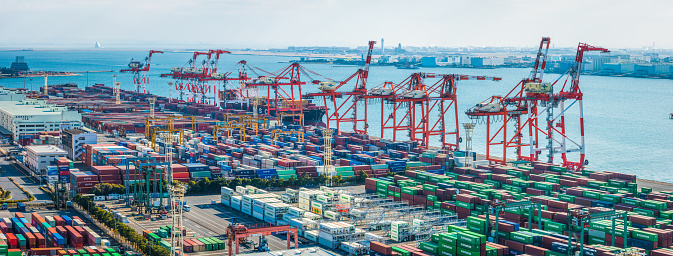
La blacklist du narcotrafic dans le monde

Liste de pays concernés en 2014

Afghanistan, the Bahamas, Belize, Bolivia, Burma, Colombia, Costa Rica, the Dominican Republic, Ecuador, El Salvador, Guatemala, India, Haiti, Honduras, Jamaica, Laos, Mexico, Nicaragua, Pakistan, Panama, Peru, and Venezuela.

Haïti a été placé sur la blacklist du narcotrafic établie chaque année par les Etats-Unis. Le Gouvernement Américain rappelle que le Président des États-Unis notifie chaque année les pays qu’il considère comme de grands producteurs de drogue ou comme des pays de transit de la drogue dans le monde. Dans un mémorandum envoyé lundi au Secrétaire d’État John Kerry, Barack Obama mentionne une vingtaine de pays, dont 13 pays latino-américains incluant Haïti.

Dans ce mémorandum, le Président Barack Obama souligne que la Birmanie et le Venezuela sont deux pays qui ne respectent pas leurs engagements de lutte contre le trafic de la drogue, bien qu’ils continuent à bénéficier de programmes d’aide.

Le Président précise également que la présence d’un pays sur cette liste n’est pas forcément le reflet des efforts fait par ce pays dans la lutte anti-drogue ou son niveau de collaboration avec les Etats-Unis.


Frantz Alcéma

Frantz.a@hpnhaiti.com

SOURCE: http://www.hpnhaiti.com/site/index.php?option=com_content&view=article&id=13921:haiti-sur-la-lblack-list-2014r-du-narcotrafic&catid=38:justice-a-securite&Itemid=9

00000000000000000000000000000000000

SPAIN: DEA, Spanish Police Bust Colombian Cocaine-Smuggling Gang

Spanish police working in cooperation with the U.S. Drug Enforcement Agency say they have arrested six members of a Colombian-based drug-trafficking gang and seized 240 kilograms (530 pounds) of cocaine that had been hidden inside a yacht.

According to Saturday’s police statement, their investigation  opened in April after police learned that a Spanish citizen based in Colombia was smuggling cocaine into Europe by sea.

Police say they raided three premises after the gang leader, his wife and four gang members from Colombia traveled to Spain as part of their latest cocaine-smuggling operation. The gang leader and his wife were arrested in Madrid, the four henchmen in the southwest province of Huelva.

The drugs were found concealed within the hull of the yacht at the Huelva port of A

SOURCE: http://latino.foxnews.com/latino/news/2014/08/24/dea-spanish-police-bust-colombian-cocaine-smuggling-gang/

0000000000000000000000000000000000000000000000

BROOKLYN, N.Y.(USA): Leader of Maritime International Drug Transportation Organization Arraigned in Brooklyn

August 18, 2014
Contact: Public Information Officer
Number: 212-337-2906

The defendant allegedly transported thousands of kilograms of cocaine by boat and submarine

AUG 18 (BROOKLYN, N.Y.) – Earlier today, Jair Estupinan-Montano was arraigned at the federal courthouse in Brooklyn, New York, on charges relating to international narcotics trafficking. Estupinan- Montano was arrested in Panama on October 14, 2013, on a provisional arrest warrant issued from the Eastern District of New York.

The arraignment was announced by Loretta E. Lynch, United States Attorney for the Eastern District of New York, and James J. Hunt, Acting Special Agent in Charge, Drug Enforcement Administration (DEA), New York Division.

According to court filings, prior to his arrest, Estupinan-Montano was the leader of a narcotics trafficking organization responsible for transporting shipments of cocaine from Colombia to locations in Central America and Mexico for ultimate delivery to the United States. Estupinan-Montano allegedly worked closely with the violent “Los Rastrojos” drug trafficking organization, a paramilitary organization that employed hundreds of individuals and controlled drug trafficking along the Pacific coast of Colombia.

Estupinan-Montano was responsible for arranging boats and submarines that transported the cocaine from Colombia to other members of his organization in Central America, who then transported the cocaine north to be sold to Mexican cartels for eventual shipment to the United States. A detention memo filed today by the government details that, between 2010 and 2012, the United States Coast Guard seized two ships and a semi-submersible vessel that had been sent from Colombia by Estupinan-Montano. In total, those vessels contained over 7,200 kilograms of cocaine when they originally left South America.

“Evoking Jules Verne, the defendant Estupinan-Montano relied on boats and submarines to ferry his illegal cargo, and was an essential link in the flow of illegal narcotics from Colombia to the United States,” stated United States Attorney Lynch. “The illegal narcotics trade is a scourge, both in the United States and throughout the world. With the help of our international allies, we will continue to strike at those who enrich themselves off this violent industry wherever they are found.” Ms. Lynch thanked the New York Drug Enforcement Task Force, comprised of officers and agents of the DEA, New York City Police Department and the New York State Police; the DEA’s Bogota Country Office and Panama Express Task Force; the United States Coast Guard; the Department of Justice Office of International Affairs; and the Republic of Panama for their help in investigating and capturing Estupinan-Montano.

The defendant was arraigned this afternoon before United States Magistrate Judge Steven M. Gold at the federal courthouse in Brooklyn. The charges in the indictment are merely allegations, and the defendant is presumed innocent unless and until proven guilty.

The government’s case is being prosecuted by Assistant United States Attorneys Tyler Smith, Amir Toossi, Justin Lerer, and Robert Polemeni.

The Defendant:
Jair Estupinan-Montano
Age: 31
COLOMBIA

E.D.N.Y. Docket No. 12-CR-793 (SLT)