Vermont (USA): Bunthan Sam Sentenced to 10 Years for Conspiracy to Distribute Heroin

Bunthan Sam Sentenced to 10 Years for Conspiracy to Distribute Heroin

AUG 18 (BURLINGTON, Vt.)- Michael J. Ferguson, Acting Special Agent in Charge of the Drug Enforcement Administration for New England and The Office of the United States Attorney for the District of Vermont stated that Bunthan Sam, 35, of Chicago, Illinois, was sentenced to 120 months in prison, having pleaded guilty to the charge of conspiracy to distribute at least 100 grams of heroin. United States District Judge William K. Sessions III, sitting in Burlington, also sentenced Sam to 4 years of supervised release.

Court records show that Sam, who went by the alias Adam or Taun, sold heroin in the Burlington area over a period of about two years. He obtained this heroin from suppliers in Chicago and Connecticut. Sam was arrested on the conspiracy charge in Chicago on July 24, 2013, and incarcerated thereafter.

Court records further show that Sam is a member of a larger group with ties to Chicago; Lowell, Massachusetts; and Connecticut that distributed an especially strong form of heroin in the Burlington area from about mid-2011 through the time of the arrest of Sam’s brother, codefendant Chandara Sam, on April 10, 2013. Chandara Sam, who went by the alias Po, was taken into custody in White River Junction, after selling approximately 40 grams of heroin to an individual cooperating with law enforcement. Some of the heroin sold by the conspiracy was known as Chi town or Chi, short for Chicago, and has caused several overdoses in the last several years. The Vermont State Police Drug Task Force began an investigation into Sam’s heroin ring in December 2011.

In January 2013, members of the Essex Police Department and the Drug Enforcement Administration arrested two individuals, Edward Chavin, also known as Tommy, and Christopher Nason in the Handy’s Suites in Essex. Chavin was found in possession of more than 100 grams of heroin. He and Nason were subsequently indicted for conspiracy to distribute 100 grams or more of heroin, and both have pleaded guilty. The Handy’s Suites raid occurred following a heroin overdose in a nearby room. Investigation revealed that Chavin, Nason, and the Sams were part of the same heroin ring, and that Chavin had been transporting heroin from Chicago to the Burlington area for nearly a year prior to his arrest.

In early June 2014, one of conspiracy leaders, codefendant James Nastri, of Deep River, Connecticut, was convicted of conspiracy to distribute at least 100 grams of heroin following a jury trial before Judge Sessions in Burlington.

Court records further reveal that Bunthan Sam possessed handguns at various points during the Vermont heroin trafficking conspiracy. Sam also has a criminal history that includes numerous prior felony offenses, violent offenses, and several instances of unlawful weapons and firearms activity.

For his crime, Sam faced a maximum penalty of 40 years in prison. In sentencing Sam, Judge Sessions noted the devastating impact heroin has had on Vermont communities, citing specifically the potency of the heroin Sam sold. Judge Sessions further noted that Sam had continued to sell heroin after learning that a person had overdosed on the Chi-town heroin and after Lowell, Massachusetts police pulled him over and seized a firearm from his vehicle, resulting in a felony charge.

The investigation was a collaborative effort of the Vermont State Police Drug Task Force; the Drug Enforcement Administration; the Bureau of Alcohol, Tobacco, Firearms, and Explosives; the Essex, Burlington, and South Burlington Vermont Police Departments; and the Lowell, Massachusetts Police Department.

SOURCE: http://www.justice.gov/dea/divisions/bos/2014/bos081814.shtml

000000000000000000000000000000000000000

La guerre à la drogue et la DEA : le gâchis d’argent public par excellence. Mais, si l’on cesse ces inepties gouvernementales, à quoi les occupera-t-on ces budgétivores?

DEALa guerre à la drogue et la DEA : le gâchis d’argent public par excellence

Publié le 20 août 2014 dans Amérique du Nord

Par Kevin Saab.

De nombreux éditorialistes de Contrepoints ont déjà démontré en long et en large la futilité du plan gouvernemental de Guerre à la Drogue actuellement en place aux États-Unis (cf ici, ici). J’aimerais cependant prendre le temps de démontrer encore une fois au lecteur dubitatif, en faisant appel à son bon sens de contribuable, pourquoi une telle approche prohibitive n’est qu’un gigantesque bûcher d’argent public.

Pour ce faire, plongeons sans tarder dans les dossiers de la Drug Enforcement Administration (DEA), la fameuse agence fédérale créée par Nixon en 1973 pour chapeauter le programme de Guerre à la Drogue (« War on Drugs » en version originale).

Dotée de 2,867 milliards de dollars de budget et de 11 025 employés pour 2014, la DEA pointe allègrement à 260 000 dollars de dépenses par employé. Un chiffre difficilement justifiable au vu des résultats obtenus. Ainsi de 2005 à 2013, la DEA affirme avoir saisi des actifs et des drogues ayant causé aux trafiquants des pertes de 25,7 milliards de dollars. C’était sans oublier les lois les plus basiques de l’économie et la relation entre le prix, l’offre et la demande. Pour faire simple, à chaque fois que la DEA crée 1 $ de perte marchande au gang A en saisissant sa marchandise, le gang B se frotte les mains en voyant disparaître un concurrent sans avoir à tirer un coup de feu, une fois n’est pas coutume dans ce milieu, avant de saisir la balle au bond et de venir combler le vide. Si les coups de filet se multiplient et que l’offre vient réellement à se tendre un peu plus, on peut potentiellement assister à une augmentation des prix et à une baisse des consommateurs potentiels. Sans vouloir entrer dans un débat technique d’économiste sur l’élasticité de la demande de drogue en fonction du prix, on peut aisément comprendre qu’il est naïvement simpliste d’affirmer que causer 25,7 milliards de pertes à certains trafiquants, revient à causer 25,7 milliards de pertes à tous les trafiquants, loin de là.

flic credits Elvert Barnes (licence creative commons)

Pour atteindre ce montant de saisies entre 2005 et 2013, la DEA a dépensé sur la période près de 23,2 milliards de dollars. Bref, pour chaque $1 dépensé, la DEA a à peine stoppé $1,11 de revenu aux trafiquants. Une efficacité douteuse pour une agence gouvernementale qui broie à elle-seule près de 3 milliards de dollars par an.

Enfin, selon l’inventaire du très sérieux Cato Institute, les dépenses annuelles totales, locales et fédérales, résultant de la lutte contre la drogue totalisaient pas moins de 41,3 milliards de dollars en 2010. À l’heure où les États-Unis attendent (encore) un déficit d’environ 500 milliards cette année, il est vraiment temps de tirer une croix sur cet (autre) héritage coûteux et inutile de l’ère Nixon qu’est la « Guerre à la Drogue ».

source/ https://www.contrepoints.org/2014/08/20/177593-la-guerre-a-la-drogue-et-le-dea-le-gachis-dargent-public-par-excellence

00000000000000000000000000000000000000000000
DEA: Major Heroin Distribution Ring Dismantled in Onondaga County, NY

DEAAugust 13, 2014
Contact: Public Information Officer
Number: 212-337-2906

AUG 13 (SYRACUSE, N.Y.) – Onondaga County District Attorney William J. Fitzpatrick and DEA Resident Agent in Charge, Ed Duffy announced today the conclusion of a major heroin investigation.  The investigation was conducted by the DEA High Intensity Drug Trafficking Area of Central New York (HIDTA).   HIDTA Force members include the DEA, the Onondaga County District Attorney’s Office, the Onondaga County Sheriff’s Office, the U.S. Marshals Service, the NY National Guard Counter Drug Program and the Syracuse Police Department.  The HIDTA Task Force is currently designated the “CNY HIDTA Heroin Strike Force.” Its main focus is to stop the influx of heroin into the region.

This was a yearlong investigation of a heroin trafficking organization centered in Syracuse, NY.  The main target was Calvin Marshall, who along with several other co-conspirators, were trafficking large quantities of heroin from New Jersey into Central New York.  Thus far this investigation has resulted in 19 arrests with estimated seizures of $100,000 in currency and property, 10,000 packets of heroin totaling approximately 13 ounces, and a handgun.

The defendants were arrested pursuant to warrants issued out of Onondaga County Court and will be prosecuted by the Onondaga County District Attorney’s Office.  The following individuals were arrested yesterday, Tuesday August 12, 2014, in a coordinated raid by members of the HIDTA Task Force

– Marshall, Calvin of 207 Hier Ave. Syracuse, NY
-Operating as a Major Trafficker
-Conspiracy 2nd degree
-Conspiracy 4th degree
-Criminal Possession of a Controlled Substance in the 2nd degree
-Criminal Possession of a Controlled Substance in the 3rd degree

– Stone, Robert A. of 2941 Rt. 41 Cincinnatus, NY
-Conspiracy 4th degree
-Criminal Possession of a Controlled Substance in the 3rd degree

– Rodriguez, Samuel H., of 1656 State Street (Left) Watertown, NY
-Criminal Possession of a Controlled Substance in the 3rd degree
-Conspiracy in the 4th degree

– Todd, Jeremy R. of 310 Idlewood Blvd. Baldwinsville, NY arrested at 555 S. State St. Syracuse, NY
-Criminal possession of a Controlled Substance in the 3rd degree
-Conspiracy 4th degree

– Carducci, Douglas T. of 2007 W. Genesee St. #1 Camillus, NY
-Conspiracy in the 4th degree

– Townsend, Anthony F. of 127 Green St. #1 Syracuse, NY
-Conspiracy in the 4th degree

Five defendants remain at large and arrest warrants for these five individuals have been issued.

Eight defendants have already pleaded guilty in Onondaga County Court. They are:

Eric Williams– pleaded to Criminal Possession of a Controlled Substance in the Third Degree (2 counts) and Criminal Possession of a Controlled Substance in the Seventh Degree (2 counts). He was sentenced to four year determinate State Prison sentence-he also pleaded to a second indictment for Criminal Sale of a Controlled Substance in the Third Degree, Criminal Possession of a Controlled Substance in the Third Degree and was sentenced to an eight year determinate State Prison sentence to run concurrently with the first sentence imposed.

Bennie Smith– pleaded to Criminal Possession of a Controlled Substance in the Third Degree and was sentenced to an eight year determinate State Prison sentence

Walter Brown– pleaded to Criminal Possession of a Weapon in the Second Degree and he received an eight year determinate State Prison sentence

Shawn Dunnell- pleaded to Criminal Possession of a Controlled Substance in the Third Degree and Criminal Possession of a Controlled Substance in the Fourth Degree. He was sentenced to a three year determinate State Prison sentence.

Joseph Rolfe pleaded guilty to Criminal Possession of a Controlled Substance in the Third Degree (intent to sell), Criminal Possession of a Controlled Substance in the Third Degree (weight over one-half ounce), and Criminal Possession of a Controlled Substance in the Seventh Degree.  He received a three year determinate State Prison sentence.

Vanessa Santiago pleaded guilty to Criminal Possession of a Controlled Substance in the Third Degree and was sentenced to a two year determinate State Prison sentence.

Shawn Cox entered a guilty plea to Criminal Sale of a Controlled Substance in the Third Degree and received a two year determinate State Prison sentence.

Joseph Teta– entered a guilty plea to Criminal Sale of a Controlled Substance in the Third Degree (three counts), Criminal Possession of a Controlled Substance in the Third Degree (three counts) and Criminal Possession of a Controlled Substance in the Seventh Degree (three counts). His case is still pending.

“This investigation and the arrests announced today will not end our efforts to stop the influx of heroin in the Syracuse area,” District Attorney Fitzpatrick said.  “The HIDTA task force is an outstanding example of how collaboration and coordination by federal, state and local law enforcement can put a serious dent in narcotics trafficking. We will continue to work together with our partners to end the proliferation of heroin into this community,” Fitzpatrick added.

« These arrests signal a united effort by law enforcement to deny sanctuary to those who sell drugs or guns, » said DEA Acting Special Agent in Charge James J. Hunt. « Residents of the Onondaga County deserve a safe, drug-free place to live and play, and today they are closer to that reality. »

SOURCE: http://www.justice.gov/dea/divisions/nyc/2014/nyc081314.shtml

000000000000000000000000000000000000000000000000

La Justice canadienne…ou les tartuffes en action!

Avatar de Marc FievetThe international informant

La demande de révision de Marc Fievet AKA NS 55 DNRED

RCMP

La réponse de Maître Eric CLEMOT, LL.D. Avocat, Ministère de la Justice du Canada, Groupe de la révision des condamnations criminelles, 284, rue Wellington (222 Queen, 11ième étage -OTTAWA, Ontario – K1A OH8) pour rejeter ma demande de révision.

Vous prétendez aujourd’hui que vous agissiez à l’époque en qualité d’informateur des Douanes dans la lutte que se livrait l’Etat français contre le trafic de stupéfiants. Vous dites que vous avez été recruté en 1988 par le D.N.R.E.D. et que vous étiez enregistré sous le N° : NS 55. Vous avez commencé à travailler pour les Douanes françaises le 5 mai 1988. Vous n’étiez pas un agent des douanes et étiez rémunéré pour toute information menant directement à une poursuite judiciaire. Vous prétendez que vous étiez à l’époque en contact avec les autorités douanières jusqu’à une date antérieure à votre…

Voir l’article original 6 571 mots de plus

DEA offers 5 Million reward for Mexican Drug Lord Rafael Caro Quintero

DEABillboards offer a $5 million reward for Rafael Caro Quintero, who has been spotted, according to counter-narcotic sources, on various highways in Los Angeles.

Publicity on Highway 5, 91 and 60 has been paid for by the United States Drug Enforcement Agency (DEA). The ads display three photographs of the Mexican drug commander, and the announcement of a $5 million award to anyone who provides information for his capture.

On Aug. 4, a commercial billboard was placed on Highway 5 near Slauson Avenue, in the city of Montebello, one of the main routes heading to the Mexican border. The billboard will remain there until the end of September.

“We place these rotating ads in areas with high vehicle influx so that thousands of people will see them,” said Vijay Rathi, DEA spokesman in Los Angeles.


A new billboard has gone up next to I-5 near Commerce. This one offers a reward for information leading to the arrest of Mexican drug lord Rafael Caro Quintero (Photo: ALMA FAUSTO, STAFF)

Similar posters have been installed by the DEA in San Diego, Phoenix, and El Paso. An email address and two phone numbers appear on the posters to help provide information for Caro Quintero’s capture.

Caro Quintero, who led the defunct Guadalajara Cartel in the 1970s, had served 28 years of a 40 year sentence at a federal prison in Mexico when a court ordered his release.

He is considered a fugitive by the federal court at the central district of California, where he is accused of the kidnapping, torture and murder of DEA agent Enrique “Kiki” Camarena in 1985.

The $5 million reward is being offered by the DEA under the Narcotics Reward Program, which was created by Congress to find violators who transport drugs into the United States.

People with information about Caro Quintero can call 866-629-6036 or email caroquinterotips@usdoj.gov

Source: http://www.ocregister.com/

0000000000000000000000000000000000000000000000

Les 850 000 dollars de l’agence anti-drogue américaine pour des informations gratuites

Les 850 000 dollars de l’agence anti-drogue américaine pour des informations gratuites

Si les plaintes contre les tarifs prohibitifs de la SNCF sont récurrentes, l’entreprise ferroviaire française a encore beaucoup à apprendre de son homologue américaine, l’Amtrak.

Selon un rapport d’inspection de la société publié lundi 11 août et détaillé par l’agence de presse AP, un salarié de l’Amtrak a touché plus de 854 000 dollars (639 000 euros) de la part du service anti-drogue de la police fédérale américaine, la Drug Enforcement Administration (DEA), en échange de l’accès à des données confidentielles sur ses passagers. Pourtant, selon ce même rapport, la DEA pouvait avoir accès gratuitement à ces données, dans le cadre d’une brigade de lutte contre le trafic de drogue menée en partenariat avec le société ferroviaire.Amtrak Drug Enforcement

Selon AP, la DEA versait en effet depuis plus de vingt ans des sommes variables à un « informateur » anonyme, simplement désigné comme travaillant « pour une équipe liée au secteur ferroviaire ». Selon le rapport, l’employé en question a été mis à la retraite, et ne devrait pas faire l’objet d’une sanction disciplinaire. Il avait pourtant « régulièrement » vendu à la police fédérale des données sur les passagers de la société – numéro de passeport, détails d’itinéraire, personnes à contacter en urgence, etc. – sans l’accord de quiconque au sein de l’entreprise.

Le rapport souligne cependant qu’Amtrak permet explicitement de vendre ou partager les données personnelles de ses passagers avec certaines entreprises, ou des « partenaires commerciaux dignes de confiance ».

Le sénateur Chuck Grassley a critiqué l’annonce de cette « dépense inutile », et appelé à une réflexion « sur les pratiques de la DEA », rapporte mardi le site américain The Verge. L’agence, elle, n’a pas commenté la publication du rapport.

SOURCE:http://bigbrowser.blog.lemonde.fr/2014/08/12/les-850-000-dollars-de-lagence-anti-drogue-americaine-pour-des-informations-gratuites/

000000000000000000000000000000000000
Drug Enforcement Administration paid Amtrak secretary $854,460 for confidential passenger lists

DEAThe DEA could have lawfully obtained the information for free through a law enforcement network but instead paid the secretary for nearly 20 years, it’s been revealed. The secretary was allowed to retire rather than face administrative discipline.
NEW YORK DAILY NEWS
Monday, August 11, 2014, 2:23 PM
 Rob Carr/AP
The Drug Enforcement Administration paid an Amtrak secretary $854,460 over nearly 20 years to obtain confidential information about train passengers, which the DEA could have lawfully obtained for free.

WASHINGTON — The Associated Press has learned that the Drug Enforcement Administration paid an Amtrak secretary $854,460 over nearly 20 years to obtain confidential information about train passengers. The DEA could have lawfully obtained for free through a law enforcement network.

The Drug Enforcement Administration paid an Amtrak secretary $854,460 over nearly 20 years to obtain confidential information about train passengers, which the DEA could have lawfully obtained for free.The employee was not publicly identified except as a « secretary to a train and engine crew » in a one-paragraph summary of the incident by Amtrak’s inspector general. The secretary was allowed to retire, rather than face administrative discipline, after the discovery that the employee « regularly » sold private passenger information since 1995 without Amtrak’s approval.

On Monday, the office of Amtrak Inspector General Tom Howard declined to identify the secretary or say why it took so long to uncover the payments.

Sen. Chuck Grassley, the senior Republican on the Senate Judiciary Committee, called the $854,460 an unnecessary expense and asked for further information about the incident in a letter to the DEA. J. Scott Applewhite/AP Sen. Chuck Grassley, the senior Republican on the Senate Judiciary Committee, called the $854,460 an unnecessary expense and asked for further information about the incident in a letter to the DEA.

SOURCE: http://www.nydailynews.com/news/national/dea-improperly-paid-854-460-amtrak-passenger-lists-article-1.1899555

00000000000000000000000000000000000

Au 36, c’est l’impasse au royaume des aveugles!

36 QUAI

Quand les borgnes de l’IGPN deviennent les rois!

Ca va pas être triste! 

La vérité, toute la vérité et rien que la vérité!

Il faut que l’enquête soit publique!

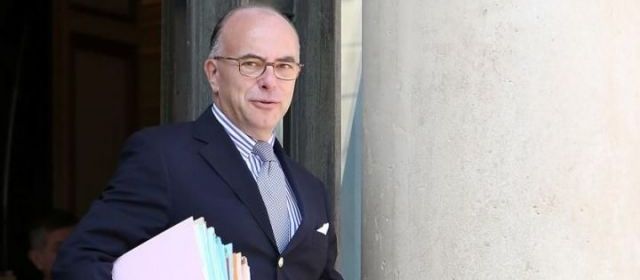
4044831_cazeneuve-goldzstejn_640x280Bernard Cazeneuve, décoré de l’Ordre royal du Cambodge, déclare qu’il a demandé à l’Inspection générale de la police nationale (IGPN) de « mener un audit rigoureux et approfondi » de la brigade des stupéfiants.« Au delà des accès, je souhaite que les méthodes, les procédures, les pratiques professionnelles soient passées au crible », ajoute le locataire de la place Beauvau.

Il ne faudra pas se limiter au 36!

L’OCTRIS doit aussi bénéficier de cet audit!

°°°°°°°°°°°°°°°°°°°°°°°°°

Plus d’infos:

http://www.leparisien.fr/faits-divers/cocaine-disparue-cazeneuve-veut-un-audit-de-la-brigade-des-stupefiants-03-08-2014-4044831.php

Cocaïne volée à la PJ : la personnalité du policier suspect intrigue …TF1

Cocaïne volée au 36: un « imbécile » plus qu’un « vrai ripou » structuréBFMTV.COM

000000000000000000000000000000000000000000000000000
DEA may be losing the war on marijuana politics

DEAFor narcotics agents, who often confront hostile situations, Capitol Hill has been a refuge where lawmakers stand ready to salute efforts in the nation’s war on drugs.

Lately, however, the Drug Enforcement Administration has found itself under attack in Congress as it holds its ground against marijuana legalization while the resolve of longtime political allies — and the White House and Justice Department to which it reports — rapidly fades.

« For 13 of the 14 years I have worked on this issue, when the DEA came to a hearing, committee members jumped over themselves to cheerlead, » said Bill Piper, a lobbyist with the Drug Policy Alliance, a pro-legalization group. « Now the lawmakers are not just asking tough questions, but also getting aggressive with their arguments. »


To read:http://www.latimes.com/nation/la-na-0713-dea-20140712-story.html#page=2
00000000000000000000000

NARCOTRAFIC: Turbulences pour Air Cocaïne et infiltration à la méthode DEA

DEAEn attendant le procès prévu en septembre en République dominicaine, l’enquête française sur les 700 kg de coke saisis l’an dernier dans le jet d’Alain Afflelou est confiée aux gendarmes.

Le volet français de l’enquête Air Cocaïne change de mains. La juge Christine Saunier-Ruellan, de la Jirs (Juridiction interrégionale spécialisée)de Marseille, vient en effet de dessaisir les policiers de l’Office des stups au profit des gendarmes de la section de recherches de Paris. Pourquoi? « Je ne suis pas habilitée à vous répondre et Mme Saunier-Ruellan n’est pas disponible », répond sa greffière au JDD.

LIRE: http://www.lejdd.fr/Societe/Faits-divers/Air-Cocaine-les-gendarmes-francais-enquetent-sur-les-700-kg-de-coke-saisis-dans-le-jet-d-Alain-Afflelou-677744

°°°°°°°°°°°°°°°°°°°°°°°°°°°°°°°°°°°°°°°°°°°°°

Rappel des faits. Le 20 mars 2013, un Falcon 50 appartenant à Alain Afflelou est intercepté alors qu’il s’apprêtait à décoller de l’aéroport de Punta Cana, en République dominicaine. À son bord, quatre Français et 680 kg de cocaïne répartis dans 26 valises.

Dans la foulée, une quarantaine de fonctionnaires locaux sont arrêtés pour complicité.

Il est question d’agents infiltrés. La DEA (Drug Enforcement Administration, le service antidrogue américain) est d’ailleurs dans le coup.

La cocaïne voyageait dans le jet d’Alain Afflelou

Quatre Français avaient été arrêtés à bord d’un Falcon qui s’apprêtait à quitter la République dominicaine. À son bord, 680 kg de cocaïne.

La saisie, à Punta Cana (République dominicaine), du Falcon 50 immatriculé F-GXMC bourré de cocaïne n’a pas fait rire Alain Afflelou. « Cet avion nous appartient en leasing, reconnaît-on dans l’entourage du grand patron français. Nous en avons confié la gestion à une société lyonnaise, la SN Trans Hélicoptère Services, qui vend des heures de vol à des gens qu’on ne connaît pas quand nous ne l’utilisons pas. Nous leur avons demandé des explications, en vain pour l’instant. Et nous avons mandaté notre avocat Me Temine pour nous porter partie civile dans cette affaire… »

000000000000000000000000000000000000000000