Le dossier du septuagénaire a connu des rebondissements dignes d’un vaudeville, vendredi. À la suite d’une démarche en Cour supérieure de son avocat, Me Clemente Monterosso, les Services correctionnels canadiens auraient accepté de libérer le trafiquant le jour même, mais auraient voulu l’envoyer en maison de transition en raison de conditions qui lui sont toujours imposées.
«Mon client veut habiter chez un membre de sa famille. Il a refusé de signer le formulaire de libération. Il a dit à la directrice: Cela fait 20 ans que je suis en prison. Vous n’allez pas me causer des problèmes pour 20 jours», a raconté à La Presse Me Monterosso, selon qui la sentence de son client prendra fin le 27 mars.
Selon l’avocat, les responsables des Services correctionnels doivent se réunir d’urgence aujourd’hui pour discuter de la situation. «Nous ne pouvons commenter le dossier en raison de la réglementation sur la protection des renseignements personnels», nous a laconiquement répondu leur porte-parole Serge Abergel. Parallèlement à tout ça, Me Monterosso doit de nouveau se présenter devant le juge André Vincent de la Cour supérieure, aujourd’hui.
Le litige provient du fait qu’entre 2005 et 2012, Divito a été emprisonné aux États-Unis pour une autre affaire d’importation de cocaïne en Floride; les autorités carcérales considèrent que ces sept ans ne doivent pas être pris en considération dans sa sentence canadienne de 18 ans.
Pierino Divito a été arrêté en 1994 au Nouveau-Brunswick, en compagnie de son fils Michael, pour avoir tenté d’importer de Colombie, par bateau, 5420 kg de cocaïne évalués à 500 millions de dollars.
00000000000000000000000
REMEMBER
La Justice canadienne…ou les tartuffes en action!

lire: http://marcfievet55.skyrock.com/3180527447-La-JUSTICE-canadienne.html
R. v. Rumbaut, 1998 9816 (NB QB)
1998-10-05
IN THE COURT OF QUEEN’S BENCH OF NEW BRUNSWICK
TRIAL DIVISION
JUDICIAL DISTRICT OF BATHURST
Date: 19981005
Docket: B/M/118/97
BETWEEN:
HER MAJESTY THE QUEEN
-and-.
CARLOS MIGUEL HERNANDEZ RUMBAUT
BEFORE: The Honorable Mr. Justice Alexandre Deschênes
HELD AT: Bathurst, N.B.
DATE OF TRIAL: January 26, 27, March 2, 3, 4, 9, 10, 11, 12, 13, May 1, June 2, 3, 4, 5, 8, 10, 15, 16, 17, 18, 19, 22, 23, 24, August 21, 24, 25, 26, 27, 28, 31, September 1, 3,8, 10, 11, 1998.
DATE OF DECISION October 5, 1998
APPEARANCES:
Michel J. Bertrand, Esq., and G. Scott Ellsworth, Esq., for the Crown
Scott F. Fowler, Esq., for the accused
[Page 2]
Deschênes, J.:
The accused Carlos Miguel Hernandez Rumbaut is charged as follows:
CARLOS MIGUEL HERNANDEZ RUMBAUT, stands charged that between the 20th day of December, A.D., 1990, and the 22nd day of February, A.D., 1994, both dates inclusive, at or near Shippagan and Lameque, in the County of Gloucester and the Province of New Brunswick, at or near Bouctouche and St-Edouard, in the County of Kent and the Province of New Brunswick, at or near Plaster Rock, in the County of Victoria and the Province of New Brunswick, at or near the City of Moncton, in the County of Westmorland and the Province of New Brunswick, at or near the City of Montreal, in the District of Montreal and Province of Quebec, at or near Shelburne and Province of Nova Scotia, and elsewhere within Canada, he did unlawfully conspire with Pierino DIVITO, Mike DIVITO, Eusébe GAUVIN, Raymond LEBLANC, Roberto SORENTI, Pierre DUGUAY, Jürgen KIRCHHOFF, Marc FIEVET, Claudio LOCATELLI and Alfredo CHIERCHIA, or some one or more of them, and with persons unknown, to import a narcotic into Canada, to wit: Cocaine, contrary to and in violation of Section 5(1) of the Narcotic Control Act, thereby committing an indictable offence contrary to and in violation of Section 465(1)(c) of the Criminal Code of Canada and amendments thereto.
For the purposes of this trial, the accused has made several admissions, the most important being related to the tape recordings containing intercepted private communications and their authorizations.
Exhibit 173 is a large box containing 223 cassettes of intercepted private communications while exhibit 174 contains several binders of the transcription of those intercepted conversations.
[Page 3]
Apart from a few authorizations which were contested but were declared valid, the validity of the authorizations to intercept the private communications was not in issue nor was the fact that the interceptions were carried out in accordance with the authorizations. It was also agreed that the statutory requirements as to notice of intention to produce were met.
With respect to the taped conversations, the accused did not take issue with the integrity, authenticity or accuracy of the tapes, nor their continuity; in fact, the only issue raised by the accused related to the voice identification of one Claudio Pasqual Locatelli (known as Mario), one Marc Fievet and the accused, which, the Crown alleges, is the person identified as Jose Luis on some of the taped conversations.
The Crown produced evidence which clearly identified the voices of Mr. Locatelli and Mr. Fievet on those taped conversations so that the only remaining issue on voice identification was whether or not the voice of Mr. Jose Luis is in fact the voice of the accused. It was also specifically admitted by the accused that all persons shown to be speaking on such transcripts as their names appear are in fact the persons as identified in the transcripts and that the Crown would not have to produce evidence of voice identification.
With respect to the transcripts, the accused agreed that they should be considered as evidence and not simply as an aid to the taped conversations and that all translations from any language to the English language was in fact a correct translation.
[Page 4]
It should also be noted at this time that although the accused did not formally admit that there was a conspiracy to commit an indictable offence as described in the indictment, the accused did concede on several occasions throughout the trial that the admissible evidence to support such a conclusion was overwhelming. In order to reach the only real issue in this case, namely, the identity of the accused Carlos Rumbaut as an offender, I intend to briefly discuss the question relating to the existence of the conspiracy to import cocaine in Canada but, before doing so, it would be wise to outline generally the legal principles I intend to follow in reaching my decision.
THE LAW
- a) The indictment
The indictment filed against the accused has already been recited.
The relevant parts of s. 465 of the Criminal Code read as follows:
« 465(1) Except where otherwise expressly provided by law, the following provisions apply in respect of conspiracy:
(c) Everyone who conspires with anyone to commit an indictable offence … is guilty of an indictable offence and liable to the same punishment as that to which an accused who is guilty of that offence would, on conviction, be liable; »
The indictment alleges that the accused conspired to commit the indictable offence of importing into Canada a narcotic, namely cocaine, contrary to s. 5(1) of the
[Page 5]
Narcotics Control Act which prohibits the importation of cocaine into Canada except as authorized by the Act or its regulations.
- b) Elements of the offence
Because there is no definition of conspiracy in the Criminal Code, a common law definition must be used. In R. v Hillier, reflex, (1993) 109 Nfld. & P.E.I.R. 92, Green J. provides a useful summary of the essential elements of the offence of conspiracy:
I take the law to be that a conspiracy, for the purposes of the criminal law, consists of an agreement between or among two or more persons to do an unlawful act or to effect a legal object by unlawful means. It is often said that it is the agreement that is the « gist » of the offence »: Paradis v. R 1933 75 (SCC), [1934] S.C.R. 165 at 168. To establish the actus reus of the offence, therefore, the Crown must prove an agreement as well as the fact that the specific accused is a party to that agreement. The agreement need not be a contract in the commercial sense with proof of offer acceptance and consideration: R. v. Ryan reflex, (1986), 61 Nfld. & P.E.I.R. 338 (NF S.C., T.D.). Accordingly, it is not necessary to show that any particular party benefitted [sic] as a result of, or furnished anything in return for, the assent of the others.
Inasmuch as the act of agreeing involves mental assent there is therefore a mental element inherent in proof of the actus reus. It is the act of agreeing which constitutes the actus reus. It is not therefore sufficient to prove that more than one person had the same or similar intention to commit an unlawful act. There must be an agreement to commit the unlawful act in concert in pursuit of a common goal; « conscious parallelism » is not enough. See R. v. Cotroni; Papalia v. The Queen (1979), 45 C.C.C. (2d) 1 (S.C.C.).
I adopt the following general propositions with respect to the requirements for an agreement in the law of conspiracy, which are set out in Goode, Criminal Conspiracy in Canada (1975) at p. 13:
« First, the mere fact that two persons pursue the same illegal end does not render them conspirators…. Second, there is no requirement that there be any formal agreement, by word
[Page 6]
or deed. Third, the « agreement » may be express or it may be tacit. Fourth, mere knowledge or discussion of, or acquiescence in a plan of criminal conduct is not, of itself, sufficient. Last, there is no requirement that the parties actually physically meet, or perhaps, even know of each others existence. »
The mental element inherent in proof of the actus reus is different from the mental element necessary to establish the mens rea. In R. v. Carrier (1977) 12 Nfld. & P.E.I.R. 189 Gushue, J.A. of the Newfoundland Court of Appeal stated at 191:
« To establish the criminal offence of conspiracy, it must be proved that there were two or more participating parties with a common design to effect the commission of an unlawful act …Intention is also significant, but it must be not merely an intention to agree, but one to put the common design into effect. »
In R. v. O’Brien 1954 42 (SCC), [1954] S.C.R. 666, Rand, J. described the position as follows at 672:
« …in conspiracy, there is not only agreement to do the act proposed signified by words or other means of communication, but also the coexistent intent in each to do it.
Thus, it is possible that a person could voluntarily agree with another to do an act (the intention to agree being essential to establishing the fact of agreement and hence the actus reus) but have no intention to actually carry it out (thereby lacking the mens rea for the offence). There is nothing on the facts of this case to indicate that any of the accused, if they apparently agreed, nevertheless in fact had no intention to carry out the purpose of the conspiracy. Accordingly, in this case, a conclusion that a particular accused in fact agreed to do the illegal acts alleged will carry with it a conclusion that he intended to do those things. The presumption that a person intends the natural consequences of his acts will apply. (End of quotation)
- c) Proof of the conspiracy
- v Carter, (1982) 67 C.C.C. 2d 568 provides a three-stage process in the proof of a conspiracy:
[Page 7]
The trial judge must bear in mind that in order to convict an accused upon a charge of conspiracy the jury, or other trier of fact, must be satisfied beyond a reasonable doubt that the conspiracy alleged in the indictment existed, and that the accused was a member of it. In deciding the issue of membership for the purpose of determining guilt or innocence on the charge contained in the indictment, the hearsay exception may be brought into effect, but only where there is some evidence of the accused’s membership in the conspiracy directly admissible against him without reliance upon the hearsay exception raising the probability of his membership. It is not necessary that the directly admissible evidence be adduced first before any evidence of the acts and declarations of other conspirators may be received. The exigencies of the trial would make a chronological separation of the evidence impossible. At the end of the day, however, before the hearsay exception may apply, such evidence on the threshold issue of membership of the accused in the conspiracy must be present. In charging the jury on this question, the trial judge should instruct them to consider whether on all the evidence they are satisfied beyond a reasonable doubt that the conspiracy charged in the indictment existed. If they are not satisfied, then the accused charged with participation in the conspiracy must be acquitted. If, however, they conclude that a conspiracy as alleged did exist, they must then review the evidence and decide whether, on the basis of the evidence directly receivable against the accused, a probability is raised that he was a member of the conspiracy. If this conclusion is reached, they then become entitled to apply the hearsay exception and consider evidence of the acts and declarations performed and made by the co-conspirators in furtherance of the objects of the conspiracy as evidence against the accused on the issue of his guilt. This evidence, taken with the other evidence, may be sufficient to satisfy the jury beyond a reasonable doubt that the accused was a member of the conspiracy and that he is accordingly guilty. They should be told, however, That this ultimate determination is for them alone and that the mere fact that they have found sufficient evidence directly admissible against the accused to enable them to consider his participation in the conspiracy probable, and to apply the hearsay exception, does not make a conviction automatic. They should be clearly told that it is only after they have become satisfied beyond a reasonable doubt on the whole of the evidence on both issues, that is, the existence of the conspiracy and the accused’s membership in it, that they may convict, and that it is open to them, if they think it right or if they are not satisfied, to acquit the accused, even after reaching their initial determination of probable membership in the conspiracy which enabled the application of the hearsay exception. (pp. 575-576)
[Page 8]
In R. v. Viandante, reflex, (1995) 40 C.R. (4th) 353 at 359, the three-step process is summarized as follows:
1) The jury must be satisfied beyond a reasonable doubt « on all evidence » that the conspiracy charged in the indictment existed.
2) They must then review the evidence and decide « on the basis of the evidence directly receivable against the accused » whether the accused was probably a member of the conspiracy.
3) Finally, the jury can apply the hearsay exception and consider evidence of acts and declarations performed and made by co-conspirators, in furtherance of the conspiracy, to determine, along with other evidence, that the accused was, beyond a reasonable doubt, a member of the conspiracy. (See also comments of McIntyre, J. in R. v Kirchhoff, (1995) 172 N.B.R. 2d 193 at p. 215-216 and of Landry, J. in R. v Shalala, Q.L. Ref.: 1998 N.B.J. # 78 delivered January 28, 1998)
ANALYSIS
The first question to be determined is whether I am satisfied beyond a reasonable doubt « on all the evidence » that the conspiracy charge in the indictment existed. As Green, J. put it in Hillier (supra): « At this stage, I am entitled to examine all relevant admissible evidence, including acts and declarations of alleged co-conspirators, whether or not in furtherance of the alleged conspiracy, to determine, without reference to the identify of the parties involved, whether a conspiracy, in the sense of a combination of two or more persons to do an unlawful act, existed. » To put it differently, at this point, the identity of the conspirators is of no moment and I must consider whether the evidence presented establishes that a conspiracy existed amongst some faceless persons to import cocaine into Canada.
[Page 9]
As mentioned previously, the accused conceded that the evidence establishing the existence of a conspiracy to import cocaine in Canada was overwhelming and it is. Little time will be spent on this aspect of the case for reasons which will become readily apparent.
Although direct evidence of an agreement to commit an unlawful act is rarely available in conspiracy cases, this case is as close as one can get.
Although the perpetration of the substantive offence does not necessarily provide evidence of an alleged conspiracy, I feel the discussion on this issue should start with the seizure made by the R.C.M.P. in Shelburne, Nova Scotia, on February 22, 1994. On that day, the Lady Teri-Anne met with a large vessel of Cypriot registry some 12 miles near the coast of Nova Scotia at 2:00 o’clock in the morning to take possession of some six tons of cocaine valued at more than one billion dollars. Upon its arrival at the Shelburne harbor, the Lady Teri-Anne and its crew were arrested and the cocaine seized.
The conversations between the crew of the Lady Teri-Anne and certain crew members of the Pacifico made it quite clear that the two vessels were meeting at a pre-arranged destination for an unlawful purpose. Surveillance evidence (exhibit 209) and the subsequent seizure of the cocaine and other items, as well as the items seized on board the Pacifico, established that the unlawful purpose was the importation of a large amount of cocaine originating from South America. The intercepted communications between François Gauvin, Eusèbe Gauvin, Raymond LeBlanc, Pierino Divito, Mike
[Page 10]
Divito, Roberto Sorenti, and Alfredo Chierchia reveal that the New Brunswick group was recruited by a Montreal group to do the legwork in retrieving the large amount of cocaine. The New Brunswick group was responsible for the rental of the equipment and required vessel to make the rendezvous possible, a rendezvous which was being organized by a Montreal group headed by one Pierino Divito who, in turn, was dealing with a group from overseas headed by one Claudio Locatelli and Marc Fievet. In fact, a consideration of conversations contained in tapes # 169 to 218 alone casts the net of conspiracy on all the speakers thereon.
As early as May 1993, taped conversations between the Montreal group themselves as well as the New Brunswick group, coupled with the surveillance being effected by the R.C.M.P. made it abundantly clear to the authorities that the Montreal group, with the concert of a group from overseas were arranging to import cocaine in Canada and that the targeted area for the importation was the north shore of New Brunswick, a task to be made possible with the help of several residents of the Acadian Peninsula.
In order to bring this agreement to import cocaine to fruition, one Kirchhoff purchased a large vessel for a sum exceeding two million dollars; all indications are that it was financed, it appears, by one Marc Fievet.
Raymond LeBlanc, who was working with the New Brunswick group, flew overseas in November 1993 and boarded the Pacifico, whose captain was Kirchhoff,
[Page 11]
obviously to ensure the orderly transshipment of drugs from the Pacifico onto the Lady Teri-Anne and on to the shore of a location free of ice, namely Shelburne, Nova Scotia.
While overseas accompanying Mr. Kirchhoff and the Pacifico, Raymond LeBlanc made telephone contacts with Mr. Pierino Divito and Mr. Claudio Locatelli on February 8, 1994. There is almost nothing concealed in that conversation in the sense that the speakers are exchanging information on an area in international waters where the narcotics are going to be picked up by the Pacifico. In fact, some four or five days later, the narcotics were dropped into the sea near the Pacifico and intercepts of private conversations between Locatelli and Marc Fievet are revealing as to some of the problems encountered by the Pacifico in retrieving the narcotics because of bad weather. In any event, the Pacifico made it to its rendezvous with the Lady Teri-Anne and the unloading took place.
In considering the evidence as a whole, I am satisfied beyond a reasonable doubt that a conspiracy as charged in the indictment did take place.
I base my conclusion here on the insurmountable inferences which must be drawn from the hundreds of telephone conversations between members of several groups from May 1993 up to February 22, 1994 which, when considered together along with the surveillance evidence introduced by consent, clearly indicate that an agreement existed between more than two people to engage in the importation of cocaine in Canada. The nature and tenor of most, if not all, of those conversations involving all these persons show that their activities were undertaken in ways to avoid detection by the authorities.
[Page 12]
Viewed in their totality and taking into account the relationship between certain persons in terms of time and reasons for the contacts, the evidence as a whole does not admit of any other rational conclusion but that a conspiracy existed amongst a large group of persons to import cocaine in Canada. Different persons and different groups played different roles but, as Green J. put it in Hillier (supra), « what is clear is that all were knowledgeable of the intentions and general roles of the others and provided assistance to each other to further the common understood purpose ».
During the trial, the accused agreed to the identity of the unindicted co-conspirators (except for Fievet and Locatelli) named in the indictment so as to eliminate the necessity for the Crown to call voice identification evidence. Fievet and Locatelli were clearly and unequivocally identified on the taped conversations by police officers who had developed a familiarity with their voices through extensive personal contact with both of them. In terms of membership of such unindicted co-conspirators in this conspiracy, the Court is quite satisfied that all of them were in fact probable members of this conspiracy to import cocaine in Canada. Fievet and Locatelli had important roles to play in terms of financing the huge operation and in the overall planning internationally while Kirchhoff was the captain of the Pacifico who agreed to transport the drugs. The Divitos appeared to head the Canadian/Montreal group responsible to organize the manpower to put the plan in operation with the help of Sorenti and Chierchia while the Gauvins, Raymond LeBlanc and Pierre Duguay formed the New Brunswick group who agreed to do the legwork necessary to assure the pickup at sea and delivery of the drugs on Canadian soil.
[Page 13]
There were other participants such as one unknown called « Pipe », another « Mario » (not Locatelli) and one Jose Luis whom the Crown alleges is the accused.
It should be noted here that if this Court should be called upon to consider the acts and declarations of any co-conspirators as evidence to convict the accused, the Court would only do so after connecting the co-conspirators with the conspiracy on the basis of evidence directly admissible against the unindicted co-conspirators in question.
- c) Probable membership in this conspiracy
As mentioned previously, this Court is satisfied that all named unindicted co-conspirators referred to in the indictment were in fact members of the conspiracy as alleged.
The accused, however, takes issue with the Crown’s allegation that he was a member of that conspiracy and has put the Crown to the task of proving his identity as an offender. In essence, that is probably the most important issue to be resolved here because, as should be readily apparent, if the Court is not satisfied by a preponderance of evidence that the accused was probably a member of this conspiracy to import cocaine in Canada, the Court is not entitled to consider any other evidence that might be otherwise admissible under the co-conspirator’s exception to the hearsay rule. If the Court should arrive at that conclusion (i.e. that the evidence on voice identification falls short of proving that the voice of Jose Luis is that of the accused), the Court could not make any
[Page 14]
use of declarations of the speaker referred to as Jose Luis in the taped conversations nor of the acts or declarations of the other co-conspirators.
At the second stage, I must consider the issue of the accused Rumbaut’s probable membership in this conspiracy on an individual basis without reliance on or reference to any evidence that might otherwise be receivable pursuant to the co-conspirator’s exception to the hearsay rule. I can only rely upon acts or declarations or statements directly admissible against the accused. In doing so, however, I am entitled « to view that conduct or those statements in the context in which they occurred, including the actions of the other alleged co-conspirators: R. v Filiault & Kane reflex, (1981) 63 C.C.C. (2d) 321 (Ont. C.A.), affirmed reflex, (1984), 15 C.C.C. (3d) 352 (S.C.C.) »… so that the actions and declarations of the other alleged co-conspirators, while not admissible directly against a particular accused, can be relied upon as providing a context or background against which the acts and declarations of the accused himself can be interpreted. » (See Hillier (supra), p. 116)
At this point in time, it would be wise to recall that I must consider the acts and declarations directly admissible against the accused on the issue of his probable membership in this conspiracy. Of course, I am not allowed to consider any of the declarations of Jose Luis until such time as I am satisfied that Jose Luis is in fact the accused.
What then are the acts, taken in their proper context, directly admissible against the accused on the issue of probable membership?
[Page 15]
On this issue, the Crown has produced considerable evidence of surveillance done in the Montreal area from at least nine R.C.M.P. officers such as Martel, Côté, Hamelin, Benoit, Monfette, Laporte, Lapointe, Raté and O’Bertin. One after the other, they established that the accused was in Montreal between February 7, 1994 up to February 18, 1994 and that during that time, he was seen on numerous occasions in the company of other co-conspirators such as Locatelli, the Devitos and Roberto Sorenti. He was seen with them driving around Montreal, in the lobby of the Sheraton, the Four Seasons and the Meridien hotels, in several restaurants and at a cardiology centre where, presumably, Pierino Divito was confined with a heart problem. The accused was even seen entering a hotel room occupied by Locatelli once or twice, a room where the phone had been wiretapped.
The evidence also suggests that the accused entered and left Venezuela in late January 1994 when the Pacifico, Mr. Kirchhoff and Mr. LeBlanc were presumably there, although there is no evidence that a meeting took place between the individuals concerned.
The Crown also produced evidence that upon his arrest in Switzerland in the fall of 1996, the accused had in his possession a passport (exhibit # 226) and another document (exhibit # 225) which confirm his National Identification Number, his address, his place of birth, and the particulars of his vehicle. This evidence, as will be seen later, relate much more to the issue of voice identification or the identity of the accused as the
[Page 16]
offender, and it is only in that context that it has relevance to the issue of the accused’s probable membership in this conspiracy.
The Crown’s main contention with respect to the evidence of acts directly admissible against the accused in its proper context is that the accused was probably a member of this conspiracy by reason of his association with the co-conspirators who were, during that time, putting everything in motion to ensure that this importation scheme was brought to a successful conclusion. The co-conspirators were meeting and they were on the phone, and the accused was with them or in close proximity to them.
This was a clear invitation by the Crown to have the Court decide the accused’s probable membership in this conspiracy on the basis of his presence or association with several co-conspirators at a time and under circumstances when the co-conspirators were probably very busy putting everything in motion for the importation of this large amount of cocaine which was about to take place very shortly. The Court was, in essence, being asked to infer that, by reason of his association with co-conspirators, the accused was probably acting in concert with the others in the agreement or conspiracy to import cocaine in Canada.
With respect, I cannot make such inferences.
There is no evidence whatsoever here, at this point, that the accused became a party to this conspiracy nor any evidence that he, by word or deed, acting alone or in association with others, participated in or assisted the objects of the conspiracy. Other
[Page 17]
than the fact of his association with some of the co-conspirators in Montreal, there is no evidence whatsoever that the accused was, in any way, in any of the affairs of the conspiracy or that, while in Montreal or in Venezuela, he did any act or said anything in relation to the matters with which he is charged.
In my view, there is nothing in the evidence being considered up to this point to support the inference that the accused was concerned in the affairs of a conspiracy to import cocaine in Canada.
It is trite law that a person’s mere association with conspirators during the currency of a conspiracy does not raise a prima facie case that the person was himself a party to the conspiracy. (R. v Harris, (1947) 89 C.C.C. 231 (Ont. C.A.)).
The evidence produced here simply does not support the inference sought by the Crown, namely that the accused was aware of the planned importation and that he agreed to assist it.
The circumstances surrounding the association of Mr. Rumbaut with Locatelli, Sorenti and the Divitos may be highly suspicious but fall woefully short of proof of involvement even on a balance of probabilities.
But what about the words or utterances or declarations of the accused as evidence directly admissible against him on the issue of probable membership? As mentioned previously, I cannot at this stage consider the declarations of one Jose Luis on several
[Page 18]
taped conversations as evidence of declarations of the accused until I am satisfied that Jose Luis is in fact the accused. I must now deal with the issue of voice identification.
VOICE IDENTIFICATION ISSUE
As a start, one should note that the Crown must prove the identity of the accused as the offender beyond a reasonable doubt; considering my ruling with respect to acts of the accused directly admissible against him, it is obvious that if the Crown is not successful in convincing this Court that the voice of Jose Luis is the voice of the accused, it will undoubtedly suffer a serious blow in proving its case against the accused. That is not to say, however, that the Crown must convince me beyond a reasonable doubt that the voice of Jose Luis is the voice of the accused. As any other individual item of evidence which goes to the identity of the accused and which constitutes the Crown’s case, the standard of proof on voice identification is proof by a preponderance of evidence. At the end of the day, however, it will be incumbent upon the Court, when considering the evidence on voice identification along with the evidence as a whole, to find guilt only if it is satisfied beyond a reasonable doubt of the identity of the accused as the offender. For example, in some cases, the voice identification evidence may not carry much weight for many reasons but other circumstantial evidence may well be sufficient to convince the Court beyond a reasonable doubt that the voice on a taped conversation is indeed that of the accused and that the identity of the accused as the offender has been proven. On the other hand, it is also conceivable that in an appropriate case, a court could be satisfied on a balance of probabilities that a voice on a taped conversation is that
[Page 19]
of the accused but not so convinced beyond a reasonable doubt on the issue of the identity of the accused as the offender upon considering the evidence in its entirety.
- i) The law
The general principles which govern the law on voice identification are relatively simple and are summarized in MacFarlane, Frater and Proulx’s Drug Offences in Canada (3d Ed.) ch. 21, par. 21.1620 as follows: (I will leave out references to case law and textbooks)
21.1620 There are a number of methods by which the parties to a private communication may be identified. They include the following:
(a) A lay witness who is familiar with the voice of the accused is entitled to express an opinion as to the identity of the parties to a private communication: … even where the witness heard the tapes before listening to the person.
(b) Evidence arising from the tapes themselves (such as the use of names, addresses, events, etc. which tend to identify the speaker).
(c) Physical surveillance which was simultaneous to the interception of the private communications (for instance, where the evidence establishes that there was only one person in the residence being « tapped »).
(d) Direct evidence, i.e., someone who can testify that he or she was personally with and observed the accused at the time that the accused was engaged in the private communication.
(e) Voice prints (more properly called spectrographic analysis).
It is important to note at the outset that this is not the usual case of voice identification where a lay witness, albeit a police officer, identifies a voice on a tape
[Page 20]
recording as being the voice of the accused on the basis of the witness’ familiarity with the voice of the accused through personal contacts with the accused. On the contrary, police officer Llamas, the main Crown witness on the issue of voice identification, never spoke to the accused prior to giving his evidence at this trial. He did, however, listen in on numerous live telephone conversations of a person he believed was the accused, conversations which were being wiretapped in Spain in 1994 and conversations of the same person which he has since then listened to on numerous occasions as reproduced on the Spanish tapes.
In effect, Cst. Llamas « familiarized » himself with a voice which he believes is the voice of the accused but he has never spoken with the accused. He then listened in open court to the voice of one Jose Luis reproduced on tape recordings which were obtained in Canada through wiretaps in the Montreal area. His evidence was that the voice of Jose Luis on the Canadian tapes was the same voice which he believes is the voice of the accused with which he became familiar by the methods already described.
Llamas’ belief that the voice he familiarized himself with was the voice of the accused Rumbaut, not being based upon personal familiarity with the accused’s voice, was grounded entirely upon circumstantial evidence. It is therefore necessary for the Court to take a close look, from an objective standpoint, at the admissible circumstantial evidence to determine if such evidence is sufficient to allow this Court to reasonably infer that the voice with which Mr. Llamas familiarized himself is in fact the voice of the accused. Of course, if the Court is not satisfied that the voice with which Mr. Llamas familiarized himself in Spain is in fact the voice of the accused, the evidence of Mr.
[Page 21]
Llamas that the voice of Jose Luis is the same voice with which he is so familiar is of no moment and of no relevance.
The circumstantial evidence adduced by the Crown upon which the Crown relies to convince the Court that the voice which Officer Llamas is « familiar » with is the voice of the accused can be summarized as follows:
- In the context of an international drug investigation, the Spanish authorities were asked by the English authorities to investigate a certain telephone number which the latter believed had some connection with one Carlos Miguel Hernandez Rumbaut. The phone number was provided to the Spanish National Telephone Company in order to obtain the name and address of the person to whom the number « belonged ». Llamas testified that he was informed by the phone company that the phone number was registered to a female named Romanillos who resided at 40 Sextante Street, Aravaca, Madrid. (Aravaca address)
- With that information, the Spanish authorities commenced surveillance around the Aravaca residence and wiretapped its phone in July 1994. It became obvious after a while that the person they thought would be residing there did not live there at all. In fact, the accused was never seen around the place. Before the wiretaps were ended however, Llamas testified that the person he believed was the accused’s son made a call to a particular number and talked to a person he believed was the accused. Llamas testified that he determined that he was « intercepting one Carlos Hernandez Rumbaut by hearing conversation of one Mrs. Paloma Osona and some children as well as Mr.
[Page 22]
Rumbaut and family members who called periodically » at the Aravaca address and that « he identified Mr. Rumbaut’s voice for the first time in a conversation he had with his son and after that as a result of the characteristic tones of his voice » (those are the exact words used by Officer Llamas at the trial of this action). Llamas also testified that he concluded that the son was talking to his father Mr. Rumbaut because the son referred to him as « Papa » and further testified that the son was residing at the Aravaca address but not Mr. Rumbaut.
- Llamas then used the number the « son » had been calling and went to the phone company again. They informed him that the phone was registered in the name of a person who was not Carlos Rumbaut and that the phone number related to an address known as Donoso Cortes, number 45, apartment 301 in Madrid (the Cortes address). After receiving that information, the surveillance team set out to determine if that was where the accused resided and obtained a wiretap order.
- Llamas testified that he recognized the same voice which he had intercepted at the Aravaca address, namely a voice which he believed was that of Carlos Hernandez Rumbaut. He said he listened to as much as 200 conversations emanating from that phone at the Cortes address and specifically remembered that on one of them one of the speakers was identified as Carlos.
He also testified that on October 17, 1994 and November 22, 1994, while he was listening to live conversations of Mr. Rumbaut, he was in contact with his surveillance team around the Cortes address and advised them to keep a lookout as he believed Mr.
[Page 23]
Rumbaut would be exiting the building. As it turns out, Officer Aranda, who was a member of that surveillance team, testified that on those same dates, he had in fact observed the accused come out of the front door at 45 Cortes.
- Llamas also testified that he had consulted data banks over which the Spanish police have control as well as municipal records which confirmed the same national identification number (D.N.I.) for the accused as the one referred to on a document found in the accused’s possession when he was arrested in Switzerland in September 1996 as well as on the accused’s passport. He also confirmed (along with Officer Aranda) that the accused’s reference to a particular license plate of a Mercedes Benz on a document found in his possession coincided with the license plate number of a Mercedes Benz parked in parking place number 301 at the Cortes address.
Before commenting on Officer Llamas’ evidence in which he compared Jose Luis’ voice with the « familiar » voice he heard and taped in Spain, I wish to comment on the quality and admissibility of the circumstantial evidence adduced by the Crown in light of the hearsay rule of evidence and lack of evidence on certain aspects of the case.
With respect to the quality of the circumstantial evidence adduced, it is my view that generally speaking it was unreliable and untrustworthy. Both Officers Llamas and Aranda took the witness stand without a single note to backup any of their testimony and without any portions of the Spanish tapes upon which Officer Llamas had relied, in some measure, to become familiar with the voice he contends is the voice of the accused. Most of the evidence consisted of assertions made by Mr. Llamas which could not effectively
[Page 24]
be challenged by the accused because no factual background upon which the witness relied was produced. As an example, Llamas testified that his conviction that the voice he was familiarizing himself with was the accused’s voice was grounded, in large measure, on discussions between the accused and members of the accused’s family on taped conversations. There was not a piece of evidence to prove that the accused even had a family nor a single tape produced to allow the accused to challenge the facts which apparently allowed Llamas to conclude that he was in fact familiarizing himself with the accused’s voice. Because of the absence of taped conversations from Spain, it was also impossible for the accused and indeed the fact finder to verify if, in fact, one of the speakers on a particular tape had mentioned the word « Carlos » or if indeed the speaker which owned the « familiar » voice had a strong South American accent or used the same expressions as Jose Luis consistently did. None of this could be challenged nor verified as to its accuracy. The same comments apply with respect to Llamas’ evidence with respect to his actions and those of Officer Aranda on October 17 and November 22, 1994. The scenario depicted appeared to be embellished to establish a connection between the person Llamas was listening to and the person Officer Aranda saw coming out of the Cortes apartment building on the same dates. None of this factual background could effectively be verified and one must wonder why, in a period of over six months of surveillance, no one ever saw the accused either entering apartment 301 and coming out of apartment 301. After all, 45 Cortes was a large apartment building which housed between 50 to 100 apartments.
A considerable amount of the evidence adduced was hearsay evidence and inadmissible to prove the truth of the contents thereof:
[Page 25]
- The evidence that the English authorities believe that the telephone number they were providing to the Spanish authorities was somehow related to the accused is hearsay evidence and not admissible to prove that such number was in fact related to the accused.
- The information provided to Llamas by the phone company to the effect that the phone number was registered in the name of a specified person living at the Aravaca address is hearsay evidence and cannot be used as presented to prove its contents.
- Officer Llamas’ evidence that he believed that the accused was in fact speaking with his son at one point and that such conversations were basically the starting point of his belief that the person was in fact the accused is a groundless statement as there is no admissible evidence before this Court that Mr. Rumbaut had a son or a wife or a daughter.
- The information provided to Llamas that the phone number dialed by the accused’s son was registered in the name of a specific person and was related to the 45 Cortes address is hearsay evidence and inadmissible when presented with a view to proving the truth of the information provided by the phone company.
This is also an appropriate time to briefly discuss some weaknesses with respect to the evidence found in the possession of the accused in Switzerland to establish a connection between the accused and the person Officer Llamas believed to be the accused. The weakness of that circumstantial evidence (i.e. for example the address in
[Page 26]
the passport referring to the Aravaca address) becomes obvious when one considers that because of the hearsay rule, there is no admissible evidence before this Court that the wiretapped phone number was in fact a phone located at the Aravaca address, nor is there, for that matter, any admissible evidence before this Court to establish that the phone number presumably dialed by the « son » of the accused was in fact the number of a phone located at the Cortes apartment building, apartment 301, where presumably the accused resided and, as alleged, was using the wiretapped phone located therein consistently.
If one eliminates the inadmissible hearsay evidence and the unreliable evidence from the evidence to be considered on the issue of whether or not sufficient evidence was produced on a balance of probabilities to establish that the voice with which Officer Llamas familiarized himself with was in fact the voice of the accused, it is this Court’s view that the Crown has failed at the task. Briefly put, this Court is of the view that Officer Llamas’ assertions that the voice he intercepted and familiarized himself with at the Aravaca address and the Cortes address are simply not grounded upon sufficient reliable, verifiable or admissible evidence and are therefore deprived of the degree of trustworthiness necessary for this Court to accept such assertions. In the Court’s view, the admissible and reliable evidence left to be considered on this issue falls short of establishing that which the Crown sought to establish.
Apart from the difficulties just identified, there are other major difficulties with the Crown’s evidence on voice identification even assuming for the purposes of this
[Page 27]
discussion that I accept that the voice which Officer Llamas familiarized himself with in Spain was in fact the voice of the accused.
Llamas testified that he gained familiarity with the accused’s voice by listening to numerous live conversations and their reproduction on numerous tape recordings. He referred to some characteristics or peculiarities with respect to that voice. In particular, he said that the person speaking had a strong or heavy South American accent and not the typical Spanish accent and that he would very often end his sentences by the expression « O.K. » or « Okay » and used expressions habitually used by South Americans. The taped conversations resulting from the Canadian wiretaps on which Jose Luis is speaking were all played for him in court and, at every occasion, he identified the voice of Jose Luis as the same voice with which he was familiar, namely the voice contained on the Spanish tapes. Yet, as mentioned before, Mr. Llamas did not have with him any of the tapes or copies thereof as they related specifically to that voice so as to allow the fact finder or indeed the accused to verify for themselves Mr. Llamas’ assertions that the voice of Jose Luis was the same voice as the one heard and recorded in Spain or at least contained some of the characteristics on which Mr. Llamas was relying to make his assertions. Mr. Llamas tried to justify the absence of any background material or tapes as a backup for his assertions on the ground that the Spanish authorities were still involved in an investigation and that to produce such material could jeopardize an ongoing investigation. The Court does not accept that evidence as it fails to see the logic of it. Surely, some of the tapes involving the familiar voice could have been produced without jeopardizing anyone or anything.
[Page 28]
The facts are, in addition, that Canadian authorities never took any measures whatsoever, at any time, to obtain such material (i.e. documentary evidence with respect to plate number, D.N.I. numbers or the taped conversations which contained excerpts of this « familiar » voice). On the whole, the evidence did not really establish that the bringing into Canada of such material could in any way jeopardize an ongoing investigation in Spain.
The frailty of the voice identification evidence was also exposed to a certain degree while Mr. Llamas was listening to the Canadian interceptions with a view to establishing that the voice of one Jose Luis was the same voice with which he was « familiar », namely that of the accused.
Mr. Llamas had just been asked to advise the Court when he felt he heard a voice he could identify. When tape # 138 (Exhibit # 173) was played (See Volume 13, tab 138 in Exhibit # 174), Mr. Llamas listened very carefully to the speakers. He was not following a transcribed version of the conversations which was between four persons, namely two identified males, one Mario (identified clearly as Claudio Locatelli by another witness during the trial) and Jose Luis. After listening to the conversation for a short while, Mr. Llamas recognized a voice with which he was familiar when the speaker said, « Si, si, si, muy temprano ». The speaker’s voice, as it turns out, was not that of Jose Luis at all but that of one Claudio Locatelli (Mario). The error, although isolated and not fatal per say, clearly illustrates the dangers associated with identifying a person by identifying a voice.
[Page 29]
For all those reasons, the Court is of the view that there is insufficient reliable and admissible evidence from which a trier of facts can reasonably find that the voice of Jose Luis is the voice of the accused. This, of course, means that the Court cannot consider the declarations of Jose Luis as the declarations of the accused directly admissible against the accused on a question of the probable membership of the accused in the conspiracy alleged in the indictment.
Considering my ruling on the voice identification issue, what then are the acts and declarations directly admissible against the accused on the issue of his probable membership in this conspiracy? As mentioned previously and for the reasons elaborated, I cannot take into account any of the declarations, utterances or statements of one Jose Luis on any of the tape recordings entered as evidence in this case. In addition, I have already commented on the weaknesses of the circumstantial evidence related to the acts or conduct of the accused which were directly admissible against him on the issue of probable membership. In essence, I came to the conclusion that taken in their proper context, the accused’s acts or conduct may certainly raise suspicions but were not sufficiently probative to convince this Court, on a balance of probabilities, that the accused was a probable member of this conspiracy. The Crown has failed to prove probable membership of the accused in the alleged conspiracy.
My conclusion that the Crown has failed to prove probable membership of the accused is, of course, fatal to the Crown’s case and means that the accused must be acquitted of the charge laid against him; a verdict of acquittal is hereby entered.
[Page 30]
In closing, however, I wish to add that even if I had concluded that the accused was a probable member of this conspiracy, I am far from being convinced that the Crown would have succeeded in establishing the identity of the accused as the offender beyond a reasonable doubt. At the end of the day, looking at the evidence in its entirety, the Court would still have to be convinced beyond a reasonable doubt that the accused’s identity as a conspirator was proven by the Crown. In this Court’s view, the admissible evidence adduced by the Crown on the issue of the accused’s identity alone would have fallen woefully short of establishing identity beyond a reasonable doubt.
[S]
Alexandre Deschênes, J.C.Q.B.
Bathurst, N.B.
October 5, 1998
SOURCE:http://caselaw.canada.globe24h.com/0/0/new-brunswick/court-of-queen-s-bench-of-new-brunswick/1998/10/05/r-v-rumbaut-1998-9816-nb-qb.shtml
0000000000000000000000000
 Lu dans « Le Parisien » du 23 mai 2006
LES FAITS DIVERS
Drogue
Marc Fievet contre-attaque
LA SITUATION est ubuesque, condamné au Canada à la prison à perpétuité pour trafic de drogue avant d être transféré en France, où sa peine a été « réduite » en 1999 à vingt ans de prison, Marc Fiévet, aviseur des douanes (NDLR indicateur) vient d’être « blanchi » par la justice française. l’agent NS55, soupçonné d’avoir importé plusieurs tonnes de cocaïne en Grande-Bretagne et au Canada, avait déposé plainte contre son administration pour « complicité de trafic de stupéfiants » et « subornation de témoin». Considéré comme l’un des meilleurs aviseurs de toute sa génération, adoubé par Michel Charasse, alors ministre du Budget, il assure avoir été « lâché » par l’Etat français.
La justice en désaccord avec l’administration
La juge d’instruction parisienne, Sophie Clément a rendu le 16 mai un non-lieu explosif: elle assure qu’il n’y a pas lieu de poursuivre quiconque pour complicité de trafic de drogue car « les investigations entreprises, les auditions réalisées,. l’étude des documents figurant en procédure, ne permettent pas de caractériser à l’encontre de Marc Fiévet les faits de trafic de stupéfiants ». Elle estime, par ailleurs,, qu’il n’y a pas lieu non plus de poursuivre pour « subornation de témoins » le personnel des douanes, qui avait convaincu l’agent de plaider coupable dans le but d’obtenir une libération rapide après son transfert en France, car il ne pouvait imaginer que cet engagement ne serait pas suivi d’effet après l’arrivée- du nouveau directeur des douanes ».
Marc Fiévet qui’ a passé douze ans en prison, dont huit en France, estime que les douanes ne l’ont pas « couvert » lors de son arrestation. L’administration assure, elle, que l’agent NS55 aurait caché des opérations « intermédiaires ». Une version démentie par l’instruction. L’ancien directeur de la Direction nationale du renseignement et des enquêtes douanières (DNRED), Jean Hoquet, a affirmé à la juge qu’il n’avait «jamais entendu la DNRED dire que ce dernier avait tenté de faire du trafic pour son propre compte ». Il confirme que plusieurs responsables des douanes sont allés rendre visite à Marc Fiévet en Espagne, puis en-Angleterre et au Canada : « On lui a dit de plaider coupable et qu’ensuite on le ferait rapatrier en France pour arranger les affaires », assure le haut fonctionnaire.
Cependant, M. Hoquet assure qu’il s’est passé ensuite « quelque chose de tout à fait inhabituel » : le nouveau directeur général des douanes, qui ne connaissait pas l’affaire, devait intervenir auprès du ministre des Finances, qui devait lui même avertir le ministère de la Justice pour tenter d’obtenir – via le parquet – sa remise en liberté. « Une peine symbolique, comme par exemple cinq ans avec sursis », précise l’ex patron de la DNRED. Une promesse faite à l’agent infiltré qui n’a jamais été tenue.
La situation a scandalisé M. Hoguet : « Si je suis sorti de ma réserve, ç’est que je trouve inadmissible ce qui s’est passé (…). Cest la première fois que je rencontre un tel comportement qui fait que la continuité de l’Etat n’est pas assurée ou assumée ». L’avocat de l’aviseur, Me Christophe Pech de Laclause, entend bien s’appuyer sur cette ordonnance pour relancer la procédure de révision du procès au Canada et engager la responsabilité de l’Etat français. Pendant ce temps, les tracas se poursuivent pour Fiévet libéré- le 26 mai 2005, il est « conditionnable » jusqu’en 2013: Le parquet vient de lui interdire de rendre visite à sa famille à Malaga. Il considère en effet que le sud de l’Espagne est une région où prospèrent les trafiquants de drogue…
CHRISTOPHE DUBOIS
0000000000000000000000000000000000000000000



 France
  Maroc
Maroc 


 qui a vite fait place à l’opium des voisins (Thaïlande, Birmanie, Laos). A la fin des années 70, déjà, avec de biens curieux DC-3 (de chez MacDougall Airways, d’Afrique du Sud) survolant le nord, dans la région de Marreba ; région dans laquelle on surprendra des policiers faisant partie du trafic. « En Janvier 1978, un avion léger a été repéré sur le radar entrer dans les Territoires du Nord à l’ouest de Darwin. Par coïncidence, un C-130 Hercules (A97-168) de l’escadron n ° 37 revenait d’un voyage à Butterworth et était sur le point de rentrer en Darwin en même temps. En l’absence d’opposants à combattre, le capitaine d’un avion de transport de la RAAF a été invité à suivre l’avion de mystère alors qu’il parcourait les terres intérieures. Finalement, le C-130 a rattrapé ce qui se révéla être un bimoteur Aero Commander 680E. Le pilote de l’avion léger s’est écrasé dans un enclos boueux à 14 kilomètres au nord-ouest de Katherine, puis mis le feu à l’appareil dans une tentative de dissimuler ce qu’il y
  avait à bord, à savoir 270 000 « bâtons de bouddha thaïlandais »( une haute qualité de cannabis) vqui aut près de 4 millions de dollars. Après s’être caché dans la brousse pendant 40 heures, le pilote – plus tard identifié comme étant le trafiquant de drogue, Donald Tait – a été découvert par la police et arrêté. Tait a ensuite été emprisonné pendant sept ans. » Anecdotiquement, un C-47 B de la RNZAF (d’avril 1945 à mai 1947) utilisé par Pukeko vendu aux Polynesian Airlines en 1972 et revenu en Nouvelle Zélande pour entraîner des pilotes australiens et reparti aux USA a fini comme avion transporteur de drogue dans le Caraïbes. Il est tombé à Aruba dans les antilles néerlandaises !
 l’homme à la tête du cartel mexicain de Sinaloa avait décidé de faire du continent australien un de ses nouveaux objectifs et nouveau marchés de cocaïne. Les navires semblaient avoir sa préférence, avec la découverte de 50 kilos de cocaïne cachés dans une cargaison de caisses de bière mexicaine. En 2013, c’était un chargement de « crystal meth » qui était saisi venant de Chine via un cargo. Il y en avait pour 448 millions de dollars. Un yacht , le Raj, était saisi en août 2013 au Vanuatu, avec 370 millions de dollars de coke à bord : sa destination était encore l’Australie. Lors de l’atterrissage du fameux Swearingen, certains se sont souvenus des épidodes antérieurs du trafic d’héroïne, de cocaïne et de marijuana dans les années 80 : « la ville du Nord Quensland loin de Mareeba a déjà été liée à des cartels internationaux de la drogue appartenant à la CIA L’ aéroport de Mareeba, juste à un jet de pierre de Cairns aéroport international, a été construit par les États-Unis pendant la guerre mondiale. Au cours de ces cinq dernières années, des avions étranges, atterrissant souvent dans le milieu de la nuit, dont certains, selon les experts des compagnies aériennes, appartiennent à Air America, une compagnie aérienne de la CIA en propriété exclusive, sont utilisés expressément pour le convoyage de drogues et d’armes dans le monde entier ».
 « high rollers », à savoir de grands rapporteurs d’argent (« roll » étant un rouleau de billets) car ils emportent des VIP en priorité, ont volé surtout vers le Cambodge et la Thaïlande ou la Malaisie entre 2010 et 2012. Des vols (5 au total) ont eu lieu aussi vers la Polynésie Française. Certains observateurs de Flight Radar les ont suivis, en Australie même vers d’étranges destinations dans le pays même. Crown qui détient 3 Gulfstream (le VH-CCC Gulfstream G-V (ici à gauche), MSN 581 construit en 1999 celui des rendition flights), le VH-CGF Glufstream G-IV, MSN 1083 construit en 1988 et le VH-CRQ Gulfstream G-V, MSN 603 de 2000 a annoncé récemment vouloir les remplacer par trois modèles Global Express XRS plus performants. Ou comment on passe des activités de casinos à la CIA… serait-on tenté de dire…
 Car, à l’évidence, les hôtels-Casino Crown jouent un drôle de jeu, à bien y regarder (pas celui-ci, en fait). C’est dans celui de Melbourne, en effet, que s’est tenue en janvier 2013 une bien étrange réunion. Une conférence sur la paix qui a faili tourner au punching ball entre participants. Celle de généraux de haut rang chinois, venus faire une conférence à laquelle assistait aussi le japonais Yoshiaki Nakagawa, lieutenant général de l’armée japonaise. Ce dernier s’était fait littéralement oralement agresser par le représentant chinois, le lieutenant-général Ren Haiquan, très agressif en effet ce jour-là. Pas une surprise, en fait. Les chinois agissent toujours ainsi, pour arriver à leurs fins, déclarant par exemple
  pendant des années qu’un bout d’île est à eux (Diaoyu pour les chinois) et Senkaku (chez les japonais), le martelant, ou menaçant (là cette fois du début d’une troisième guerre mondiale, car le discours d’Haiquan évoquait le début de la seconde). Le Casino Crown de Melbourne servirait-il de lieu d’écoutes discrètes, plusieurs s’en doutent. La revue DSI N°107 d’octobre 2014 de ne laisse pas entendre autre chose, à propos de la technique de « persuasion » chinoise, dans un article sous la plume du connaisseur Romain Mielcareck (page 54), évoquant l’intense guerre psychologique menée par les chinois. Lors de la réunion le colonel Dai Xu de l’aviation chinoise (en pleine modernisation) en avait rajouté une couche ajoutant que « le Vietnam, les Philippines et le Japon n’étaient que les chiens de garde des USA ». Le propos date et surprend, car il rappelle fortement la période tendue de la guerre du Viet-Nam !
 L’empire Crown a deux facettes à vrai dire : un côté « entertainment » (les casinos) et un côté immobilier, celui des complexe de loisirs dotés d’un ensemble hôtelier (on dit « resorts », en anglo-saxon). Son dirigeant, James Douglas Packer (ici à gauche) la troisième fortune australienne, héritier des médias australiens (son grand père Franck, anobli par la reine, avait fondé l’Australian Consolidated Press et Nine Network) lorgne aujourd’hui vers le marché chinois des loisirs, et s’est associé récemment à Greeland, qui comme son nom ne l’indique pas est une société chinoise , pour construire ensemble un gigantesque casino et des appartements à Brisbane. Son concurrent direct Echo Entertainment Group annonçant au même moment une association avec le groupe Chow Tai Fook Enterprises et Far East Consortium (FEC Australia). L’empire Parker est installé aussi à Macao (avec « City of Dreams » et « Altira Macau », et les cubs « Mocha »). En 2002, Packer s’était rapproché de Tom Cruise, et de l’Eglise de Scientologie australienne, pour l’abandonner ensuite. Quels sont les liens exact du groupe avec la CIA, à ce jour, on l’ignore encore. Pour l’instant, il défraie régulièrement la chronique people, plutôt (voire ses ex aussi). Entre son Boeing 737 Business Jet personnel (dont on fait ici la visite), son yacht Z Ellerston (un Mangusta 165 acheté en France 50 millions de dollars) ou son autre yacht fabriqué à partir d’un brise-glace, l’Artic P, l’homme à de quoi sillonner le monde.
 inculte, devenu magnat de la presse (une sucess story à l’australienne ;, qui s’était terminée dans les griffes de Rupert Murdoch), persuadé qu’on pouvait acheter tout le monde sur terre, capable de saillies odieuses comme celle-ci sur les émeutes raciales aux USA : « l’éditeur était célèbre pour l’utilisation de ses intérêts dans les médias pour diffuser ses idées réactionnaires. « Dans un éditorial infâme du Telegraph, Frank Packer (ici à droite) ruminait sur la violence urbaine 1967 aux États-Unis. « Si à chaque fois que des révolutionnaires noirs décidaient de brûler et tuer, ceux qui maintiennent la loi tuaient 500 Noirs, les noirs pourraient décider de cesser de brûler et de tuer, » avait-il écrit. Kerry fonctionnait de la même façon à vue, comme son père : en octobre 1990, atteint d’une crise cardiaque à l’Australian Open Polo Championship de Sydney, il reste six minutes sans vie mais il est ressuscité par des infirmiers dans l’ambulance , une des rares à disposer à bord d’un défibrillateur. Dans les jours qui suivent, toutes les ambulances de la région reçurent des défibrillateurs semblables, qui devinrent vite des « Packerwhackers » pour les australiens. Une forme d’humanité tardive issue d’un égoïsme fondamental, venant d’un véritable tyran (au travail et domestique,) confronté à un cas auquel il n’avait jamais pensé auparavant. Kerry et sa femme méprisaient également leur propre fils (le fameux James, le futur héritier de l’empire, alors un enfant dyslexique) en l’appelant par exemple “Boofhead” (issu d’une vieille BD pour le père, signifiant attardé) et “Dummy » (crétin) pour la mère…
 australienne, a été un temps suivi de près par le FBI. « Quand on a questionné Packer sur les 225 000 dollars qu’il avait reçu en 1980 de la faillite de l’investisseur du Queensland Brian Ray, qui a ensuite été accusé et acquitté de l’évasion fiscale, le magnat de la presse a déclaré que Ray lui avait prêté de l’argent après une mauvaise journée aux courses. « Je voulais qu’il paie en espèces parce que j’aime les espèces – je dois avoir une mentalité d’écureuil », avait-il dit en parlant du prêt de son partenaire d’affaires occasionnel. Les documents du FBI montrent que la commission royale était également intéressée par une transaction beaucoup plus importante – impliquant plus de 800 000 dollars apparemment envoyés de Hong Kong à la banque centrale nationale de Cleveland, Ohio ». On évoquait alors à demi mot du blanchiment d’argent sale : l’affaire se révélait pouvoir devenir un énorme scandale. Cela n’avait pas plu dans la famille, comme déballage, on s’en doute, même le personnage décrit dans la presse concurrente, fort peu reluisant, avait vu son identité réelle masquée : « Packer avait réservé une de ses colères mémorables pour le chef de la commission royale Frank Costigan (mort en 2005) , car très amer sur la compilation des résumés vagues et ouvertes cas qui lui avaient valu ensuite le surnom « d’écureuil » lorsqu’ils avaient été finalement divulgués à Fairfax. Le journal national The Times avait changé « Squirrel » (l’écureuil) en « Goanna » lors de la publication des événements, qui accusaient le suspect de crimes graves allant de la pornographie au trafic de drogue, et peut-être même à des assassinats. « Le style de vie Goanna est flamboyant et très coûteux », avait conclu le National Times ». La commission avait démontré en prime que le propre frère de Kerry, appelé Clyde, faisait partie du trafic, lui aussi. Les preuves réunies « détaillaient comment Clyde Packer, l’ancien politicien à la tête de NSW News devenu homme d’affaires expatrié, avait attiré l’attention de la Drug Enforcement Agency aux États-Unis, en 1977, lorsque son numéro de téléphone a été lié à une « grande organisation de distribution d’héroïne entre Los Angeles et Detroit ». Au final, ni l’un ni l’autre n’avaient pourtant été inculpés : pourquoi et comment donc la famille Packer avait-elle réussi à passer au travers du filet ? L’un des proches de Clyde, Ian Percival Coote, cité lui aussi dans le réseau par la DEA, avait été retrouvé mort dans d’étranges circonstances : on concluera à un suicide bien pratique. Packer ne sera même pas accusé d’évasion fiscale, aux Etats-Unis ! Un site effectue ici le recensement des côtés sombres de Kerry Packer. Il y a de quoi
  s’inquiéter en effet, de l’héritage laissé aujourd’hui à son fils… car il n’y pas que les souvenirs des alcoves d’Heidi Feiss de concernés. L’histoire des lingots d’or volés (pour 5,4 millions de dolars) révélée bien plus tard en dit long aussi sur ses méthodes… et ceux de sa propre secrétaire, Pat Wheatley, qui l’avait visiblement trahi. Au décès de cette dernière en 2008, la presse aura une phrase significative : « elle savait beaucoup sur les liens entre politiques et entreprises où des squelettes ont été enterrés, mais elle a gardé le silence ». Surnommée « Miss Moneypenny », elle avait quand même avoué se balader régulièrement avec 100 000 dollars en liquide dans son sac, au cas où… Kerry Packer aurait été inquiété à l’aéroport. Personne ne s’est jamais inquiété des sommes considérables en cash que trimballait partout le magnat australien ! Comprenez alors que de revoir autant de liasses au pays des kangourous ravivait le souvenir de l’ère Packer père !
 Un autre aspect douteux du personnage, encore, étaient ses liens avec la Banque Nugent-Hand de Sydney, que la CIA utilisait pour blanchir de l’argent. Son fondateur n’était autre que Michael John Hand, un ancien pilote de la CIA, un ancien « green beret » qui avait volé avec Air America (on y revient !), le service aérien immortalisé dans le film avec Mel Gibson, fournisseur secret d’armes au Laos et à la Birmanie, avec au retour l’opium du Triangle d’Or pour financer ses activités là-bas. Michael Hand, après Air America, avait fondé sa propre banque avec Bernie Houghton et un avocat australien (on y revient aussi), Francis John Nugan. Et quelle banque ! « La Banque a également participé à des activités telles que ; le trafic de drogue, d’armes internationales, les liens avec le crime organisé (Hand avait enrôlé « Murray » Riley, un ancien policier devenu chef de gang !), dont le rôle était d’activer « le blanchiment d’argent pour le président Suharto, de fournir des services non spécifiés pour des Marcos, d’aider le Shah pour faire sortir l’argent de l’Iran, de canaliser l’argent de la CIA vers des partis politiques pro-américains et des opérations secrètes en Europe (on pense à Gladio), en essayant au passage le chantage sur un ministre de l’Etat australien qui enquêtait sur le crime organisé, d’effectuer le transfert de 2,4 millions de dollars au Parti libéral australien, et encore d’autres services « d’utilité sociale. » Il faut dire que la création même de la banque avait été rocambolesque : « la banque avait été créée avec une prétention frauduleuse de 1 million de dollars en capital : « Avec seulement 80 dollars dans le compte bancaire de l’entreprise et seulement 5 dollars dans le capital versé, Frank Nugan avait signé à sa propre entreprise un chèque personnel de 980 000 dollars pour acheter 490 000 parts de sa société. Il avait ensuite couvert son découvert massif lui-même, en signant un chèque de société pour le même montant « . Cela reposait sur une belle entourloupe ! Elle attirera des investisseurs pourtant, en leur promettant des rendements de 16% minimum (l’argent sale étant lessivé contre une taxe de 22% !). Comme façade sérieuse, la banque recrutera le vice Admiral Earl P. « Buddy » Yates comme président et surtout l’ex-responsable de la CIA, William Colby en personne comme conseiller ! Des précurseurs de Madoff, à coup sûr, tant la cavalerie interne servait à construire un système de type pyramidal, juteux on le sait que pour celui se tenant au sommet de la pyramide !
 Laos en 1969 sous la direction du directeur de la CIA en personne, Theodore Shackley et son adjoint Thomas Cline, Secord étant le coordinateur des vols. L’un des clients de la banque Nugan étant Edwin Wilson, ancien agent de la CIA travaillant pour un programme secret de la Navy appelé « Task Force 157 » en fait le Naval Field Operations Support Group (le NFOSG, qui deviendra CENTRA SPIKE en 1993, et jouera un rôle important pour arrêter Pablo Escobar en Colombie). Une banque dont les liens avec l’armée ou les représentants de la loi US étaient évidents : ses bureaux utilisaient en Thaïlande le même immeuble que le bureau des narcotiques US, la DEA ! Parmi les personnes de haut rang citées comme responsables de l’opération, on trouvait Richard Armitage (ici à gauche), ancien baroudeur devenu l’assistant au secrétaire de la Défense sous Reagan (il sera mêlé plus tard à l’affaire Plame) : il était le « bursar » de l’équipe, autrement dit servait de porteur de valises de l’argent blanchi !!! On le soupçonnera d’avoir fait partie de l’infâmant programme Phoenix (lors de la défaite vietnamienne, il conduira les réfugiés… à Subic Bay !)… D’autres militaires ou anciens militaires complétaient le tableau : à la tête de la banque, lors de son effondrement, on trouvait ainsi le vice-amiral Earl F.Yates, qui avait été commandant du porte-avions John F.Kennedy. A la tête de la branche Philippines, on
  trouvait le général trois étoiles LeRoy Manor, et l’ancien Assistant Army Chief of Staff pour le Pacifique, le général Edwin Black. Complétait l’équipe l’ancien responsable de l’American Legion, Walter Mc Donald. L’ancien directeur de la CIA, William Colby étant « conseiller » de la banque. Un adjoint de Wislon, Frank Terpiil, avouera que le réseau existait depuis 1960, et qu’il avait comme point de départ… Miami, en Floride nous apprend le magazine « Agenda » d’octobre 1987, sous la signature de Henry E.Hardy (voir document PDF à la fin de cet article). En photo, Paul Helliwell de l’OSS, ancêtre de la CIA, celui qui avait financé l’armée de Chaing Kai-shek rencontrant Michael Hand et Frank Nugan. Heliwell avait financé en 1960 JM/WAVE, l’organisation derrière l’invasion de la Baie des Cochons. Au décès de JFK, il avait fondé aux Bahamas la « Mercantile Bankand Trust Company, » puis la « Castle Bank and Trust Company », les deux paravents bancaires de la CIA. Une enquête de Internal Revenue Service en 1973 l’avait obligé à les fermer, laissant le champ libre à Nugan.
 législation féroce contre les trafiquants, c’est difficile à imaginer (la production afghane et thaïlandaise jouent les vases communiquants comme le dit Koutouzi dans son ouvrage : quand l’une est haute, l’autre descend. En ce moment, l’Afghanistan produit 90% de l’opium mondial et la Thaïlande plus que 10%. En revanche, le marché afghan pléthorique depuis la présence américaine (encore un autre hasard ?) est à écouler, et l’Australie est une des pistes possible comme consommatrice fort demandeuse. Et là, on retombe sur un autre problème connu : la circulation et le trafic d’opium au sein même de l’armée US, chose dont on peut apercevoir l’ampleur lors de faits divers sagement rangés dans la catégorie des événements à ne pas suivre, chez les journalistes. Ainsi pour la mort d’une gestionnaire de base militaire, retrouvée morte et un peu vote
  déclarée « suicidée » (une de plus ?). « Comme indiqué dans un précédent post, Ciara Durkin était un agent financier faisant partie base aérienne de Bagram en Afghanistan. Il n’y a pas longtemps, elle est morte mystérieusement. Avant son assassinat apparent, elle avait dit à sa sœur : « J’ai découvert certaines choses qui ne me plaisent pas et je me suis fait des ennemis à cause de cela. » Un autre soldat a dit à la famille que la drogue étaient endémique à Bagram, et qu’elle-même avait consommé de la drogue là-bas. Selon le soldat Santiago, elle avait vu les ventes de drogue qui se déroulaient dans une salle à la base, avec de grandes quantités d’argent comptant sur une table. Le soldat a dit qu’elle croyait qu’elle a dû voir quelque chose qu’elle n’a pas approuvé, et elle l’a payé de sa vie .. Comme le chroniqueur de Kos, MichiganGirl, nous le rappelle, Seymour Hersh a fait un important exposé sur le commerce de ladrogue à Bagram .. (*) » Même chose pour le sergent Juan Torres, retrouvé mort de la même façon.
 Un trajet assez étonnant
 Stevermuer (ici à droite se rendant au tribunal), avait pourtant laissé cela comme adresse, dans sa fiche de pilote. L’homme, instructeur de parachutisme de 43 ans aurait acheté 400 000 dollars australiens l’appareil et l’aurait rapatrié lui-même de Floride( du moins c’est ce qu’on pensait). Il existe bien un Oregon Flying Club, mais il ne connaît pas l’appareil : les rédacteurs du journal australien l’ont contacté et on leur a répondu par la négative ! Tout cela en affichant pourtant une adresse, une simple boîte postale fictive, à l’évidence, située à Wilmington, dans le Delaware ! Un avion inscrit de nul part qui aurait fait un périple pareil (durant deux mois de vols en sauts de puce, sauf vers le centre du Pacifique !), mais pour quelle raison précise ? Le pilote, en tout cas, avait de l’argent sur lui (beaucoup d’argent) : « il souhaitait en effet démarrer une activité sur l’aéroport », en allongeant d’emblée 1,5 million avait-il dit à la police, étonnée de la somme, dont il aurait réglé la première traite avec 300 000 dollars en liquide. D’autres billets auraient été découverts dans sa voiture. Selon la police australienne, deux sociétés avaient financé son avion : Mortgage Kingdom et Five Dock. Inconnues au bataillon, elles aussi. La seconde est le nom d’une banlieue de Sydney ! Comme complice australiens, on lui a vite trouvé un joueur de poker Darren Rispen, surnommé « Buzz », et Yousseff Sammak, dit « Joey », un artisan décorateur de magasin en avec son entreprise « JB Shopfitters »… deux trafiquants de bien faible envergure pour s’allier à un tel trafic, manipulant une telle…billetterie.
 périple annoncé, et simplement s’être rendu aux Philippines pour chercher l’avion. Selon lui, c’est David Baddams, présenté comme le pilote de la société « Snow Goose International », qui avait traversé le Pacifique jusqu’aux Philippines et non lui. à bord du Swearingen. Une série d’échanges retrouvés sur Facebook confirmait rapidement les faits. Or selon le propre site de Snow Goose, « Baddams est un ancien pilote de la Navy possédant 40 ans d’expérience, dont celle du Sea Harrier, du BAE Hawk (deux avions anglais et non américaines) et du Douglas A4 Skyhawk ». Une société jeune, très jeune, puisque créée en 2013 et dont le seul pilote était… Baddams. Etrange société ! Sur le site annonçant le convoyage du Swearingen, on pouvait lire cette phrase particulière : « from departing Seattle to Guam, the aircraft was monitored by United States Air Traffic and then by Philippines Air Traffic into Clarke Field. At all times the aircraft flights were planned and approved by the appropriate authorities. Communication was always maintained by HF radio in accordance with international requirements », pour attester du vol dans les règles de l’appareil… et en disculper complètement le convoyeur. Rien en revanche sur l’autre rôle oublié par David Baddams, en fait le directeur des ventes pour Britten Norman-Pty Ltd, installé à Daedalus Airfield, Lee-on-the-Solent, dans l’Hampshire, qui avait annoncé il y a quelque temps la vente d’Islander à turbines « pour un nouveau client situé dans la région Asie-Pacifique », avec des avions construits désormais en… Roumanie. Rien non plus sur le résultat d »une plainte déposée par David Baddams et jugée le 8 avril 2013 sur un litige concernant un équipement de surveillance à bord d’un Britten-
 Norman de surveillance aérienne équipé par Airborne Australia Pty Limited de façon inadéquate, dont Baddams avait demandé le retrait. Et rien non plus de la part de la presse si peu inquisitrice pour retrouver sur le net la mise en vente d’une tourelle MX-15 HDi, ancien appareil de démonstration de chez L3 Wescam, rédigée à son nom !!!! Car l’engin vaut une fortune (ici elle équipe un AT-6 Hawker Beechraft de l’armée américaine, vu à Farnborough…et là elle est accrochée sous le MC-27J « Gunship » Praetorian…). A peine si on avait noté encore que le site internet cité par l’auteur de l’offre présentait une adresse fort particulière : c’est « Airborne Surveillance (US) Inc », dont l’adresse est à Coral Gables, dont on sait que c’est depuis toujours le fief… de la CIA !!!
 Baddams, aujourd’hui paisible (?) retraité, n’a rien d’un dilettante : il a été en effet commandant de guerre d’une escadrille de Harrier, comme s’en souvient un de ces pilotes dans le magazine Classic Aircraft, lors du retrait de l’avion VTOL mythique (ça sert d’avoir des archives, voyez) :… « Pour un pilote, c’était presque le rêve ultime », dit Chris de sa première tournée avec l’escadrille 800, au début de ce qui était censé avoir lieu un déploiement aux Etats-Unis. « À la fin de 1998, Dave Baddams était notre commandant, lorsque nous sommes allés lors d’une soirée au restaurant avec les nouveaux pilotes. C’est quand alors l’Irak apparaissait dans les zones d’exclusion aérienne. Il nous a dit :« Hé, ne vous souciez pas de ce que vous entendez dans la presse, nous allons encore en Amérique, et puis le lendemain, il s’est avéré que le secrétaire à la Défense s’est levé au parlement et a envoyé le navire vers le sud » . Voilà un commandant qui était bien au courant de ce que les politiciens lui avaient promis de faire mais se gardait bien de le dire à ses hommes ! Histoire de les ménager ?
 « Nous souhaitions tous aller à gauche, vers l’Irak, plutôt qu’à droite, vers l’Amérique. ……. « Le navire était là pour faire un travail. Pour fournir la puissance de l’air de la mer et sur la terre, nous avons monté à bord, et pendant les deux ou trois premiers mois, nous étions a fond en train de délivrer une puissance aérienne sur place. Au cas où, nous emportions un couple de missiles air-air AMRAAM (Advanced Medium-Range Air-to-Air Missile). Nous nous sommes entraînés avec l’escadron pendant que nous nous dirigions vers l’Irak, en développant les tactiques que nous utiliserions là-bas, nous avons terminé en mars 1999, et sur le chemin du retour la guerre du Kosovo a débuté . Comme nous sommes revenus à travers le canal de Suez, nous avons tournés à droite plutôt qu’à gauche. Tout le monde dit qu’ils se souvient de leur première tournée, mais pour moi, c’était était juste une grande période de six mois, tous à bord du navire [c’était l’Invincible]. ……. « [Au Kosovo] nous devions travailler notre façon de faire, d’abord au cours de sorties de nuit en partant du navire. (…) Lorsque nous sommes finalement
  davantage sortis pendant la journée, c’était très pratique d’aller jusqu’au dessus de Skopje et de voler vers un camion-citerne de temps en temps pour obtenir le plein d’essence (…). …… Nous opérions généralement dans la zone de 30 000 à 40 000 pieds – et ça tapait quand quand on atteignait juste en dessous des 40, mais avec un couple de missiles AMRAAM emportés, on pouvait quitter le navire sans être inquiété à 35 000 pieds (…) » Une seule photo résume le personnage : elle est légendée ainsi… « le capitaine David Baddams sur le point d’être catapulté avec un chargement complet de missiles AMRAAM « live ». « Ce fut la seule fois que l’avion a été lancé avec cette charge et, malgré ce que des rumeurs avaient pu propager il n’y a pas eu de problèmes avec la capacité « bring-back » (de retourner à pleine charge) malgré des températures ambiantes élevées »… et c’est cet homme qui est venu livrer… le petit bimoteur suspect !!! Voilà un bien étrange retraité des deux Navy qui apparaît sur scène !
 notamment en Irak, à partir de l’Invincible et sur le Golfe, ainsi qu’au Kosovo… avant de former au Hawk Production Flight Test la plupart des 33 moniteurs de BAE Hawk, ou bien qu’il avait en août dernier encore servi de soutien logistique aérien au Nuship Landing Helicopter Dock (LHD) Canberra durant ses essais dans le port de Philippe Bay… Bref, un ancien militaire resté bien proche de ces derniers, aux talents multiples, taxé de « Top Gun-type fighter pilot extraordinaire » dans Prune, et encore très lié à l’armée et la marine, visiblement… Top Gun ? Oui, car c’est comme ça aussi que s’intitule l’organisation australienne regroupant des « as » pour faire découvrir le monde du jet à des civils novices, à bord d’un L-39, d’un bon vieux Jet Provost MK5 ou d’un CJ6A Nanchang, le pendant chinois du Yak 52 d’acrobatie (secousses assurées !). Avec au milieu de nos vétérans notre livreur de Swearingen, un peu plus bedonnant… pour 595 dollars, la sortie la moins chère… (en Nanchang bien sûr !). C’est un grand fan de l’aviation anglaise, en effet : il a été le premier le 23 octobre 1996, par exemple, à faire revoler pendant 58 minutes une belle restoration de British Aerospace d’un des premiers chasseurs embarqués à réaction anglais, construit en 1954, le superbe Sea Hawk WV908… avant de le voir repartir à Yeovilton. Drôle de pilote, donc, pour un drôle d’avion !!!

 Une enquête plus poussée sur le lieu d’atterrissage de l’ineffable Baddams nous donne une piste supplémentaire très intéressante. L’aéroport cité par le journal local comme étant celui « d »Angeles » aux Philippines, pose en effet, lui aussi, sacrément question, comme étant la dernière étape avant l’Australie. Car ce n’est autre en réalité que le Diosdado Macapagal International Airport, l’aéroport alternatif au Ninoy Aquino International Airport de Manille. Et c’est un aéroport civil un peu spécial, car il utilise en fait les terrains de l’anciennne Clark Airbase de l’US Airforce, hébergeant durant la guerre du Viet-Nam les Phantoms du 405th Fighter Wing, fermée en 1991, en raison de l’éruption du Mount Pinatubo (ici à droite les cendres la recouvrant), et aujourd’hui le seul aéroport philippin utilisant deux pistes parallèles. Une base militaire historique, installée pendant la seconde guerre mondiale, déjà. En 1973, la même base hébergeait deux squadrons de C-130E de les 21st Tactical Airlift Squadron et 776th Tactical Airlift Squadron (ici un énorme
  Galaxy venu se poser sur la base). La base, très peuplée (15 000 personnes !) étrangement, hébergeait aussi un club fermé de membres de la société des Chevaliers de Columbus… on ne peut plus réactionnaires. Autre particularité du site : située dans un creux, on ne distingue alentour que la queue des appareils les plus imposants s’y posant. Une discrétion à utiliser pour les modèles plus petits… comme celui venu de Floride ! (ici la visite guidée des vestiges de l’ancienne base militaire, un lieu idéal pour y dissimuler un trafic avec ces bâtisses abandonnées envahies par la jungle !). On trouve aussi sur place de vieilles bestioles volantes elles aussi abandonnées, ou en décrépitude, tels le 727-200 de Magestic (RP-C7110, ex Braniff), une firme américaine (on voit atterrir ici à Clark et ici en décoller le 21249, ex Express.net) et le 737-200 d’Air Philippines (RP-C8007). Parmi de véritables épaves, on remarquera surtout le B727-23F
  (RP-C5353) de Pacific East Asia Cargo, un Boeing sous numéro de fabrication 19131, qui présente un superbe curriculum, avec pas moins de 33 enregistrements différents depuis 1966, dont la fameuse « Wilmington Trust Company », en 1995, devenu le ZS-NPX de Phoenix Airways et Safair (toutes deux d’Afrique du Sud) la même année. Or la Wilmington Trust Company, avait justement acheté le Gulfstream V immatriculé N126CH, un avion de rendition (sous les labels N379P, N8068V et N44982), le 18 août 2006, pour le revendre sous l’immatriculation VH-CCC chez Crown, à Melbourne… la firme étant un paravent complet de la CIA !
 Mais il y avait autre chose, sur cette gigantesque base. Dans les clubs et bars autour, une prostitution tout aussi gigantesque et son corollaire habituel : le trafic de drogue, l’héroïne étant la plus répandue. La base ressemblait plus à un lupanar qu’à autre chose, au point qu’en 2010, une fois les militaires partis, il fallu songer à un programme d’aide à la reconversion des malheureuses filles qui vendaient leurs charmes (pour 200 pesos soit 26 dollars la passe), appelé Renew Foundation. Au milieu de cela, de très jeunes filles, évoquant également jusqu’à une prostitution enfantine. Deux bases US étaient atteintes par le fléau : « Clark et Subic également servi pendant de longues années un symbole de la commercialisation des femmes philippines comme « artistes » et « filles de l’accueil » – euphémismes pour la prostitution, comme beaucoup de femmes d’un certain nombre de régions défavorisées du pays qui ont été séduites, trompées ou attirées dans le glamour des villes axée sur les cultures étrangères qu’ont apportées les bases et installations américaines » note Catwap (Coalition Against Trafficking in Women). On ne saurait mieux décrire l’endroit ! Dénonçant aussi, par la même occasion la présence d’une deuxième base, sous-marine celle-là, celle de Subic, qui connaissait les mêmes turpitudes.
 Or à Subic bay, en 2006, les responsables de la ville, du Subic Bay Metropolitan Authority, avait été joint par Gary Jackson, alors le président de… Blackwater, qui désirait y installer une base pour ces mercenaires, une installation au nom de Satelles Solutions Inc, groupe philippin formé pour l’occasion par une subdivsion de Greystone, elle-même société dans le giron de Blackwater. Selon les documents d’enregistrement de Satelles, Greystone Ltd devait contrôler la société avec un total de 10,4 millions en actions souscrites. Chez le reste des actionnaires, ceux qui avaient souscrit des actions sont Mary Grace Agoncillo, Frances Yuyucheng, Clarisse Oben-Evangelista, Romeo Redelicia et Ramberto Saavedra. Un total de 294 000 dollars devaient été recueillis auprès de la société pour la location de la propriété. La société s’était engagée à investir 200 000 dollars et prévoit d’embaucher 20 employés initialement. Selon le SBMA, la société serait d’utiliser un champ de tir existant à l’intérieur du Freeport temporairement jusqu’à ce qu’elle se trouve un endroit approprié ». Mais en 2007, le Virginian Pilot indiquait que la controverse avait forcé Blackwater à abandonner ses plans pour Subic Bay : « Les plans de la société militaire privée basée à NC Moyock, pour ouvrir une branche asiatique aux Philippines ont été mis au rebut …« Nous ne poursuivons plus une installation aux Philippines, a dit Anne Tyrrell, un porte-parole de l’entreprise. Les plans de l’entreprise pour un centre de formation jungle des compétences de survie sur le site de l’ancienne base navale américaine de Subic Bay ont suscité des craintes, suite à une enquête d’un membre éminent du Sénat philippin l’été dernier ».
 des Philippines. Mais aussi Romeo Redelicia, le directeur de Yes International Resources Ltd, (à droite une annonce de Yes Cameroun) une compagnie de recrutement de travailleurs installé à Winnipeg, aux USA. Chose surprenante, on retrouve également notre homme comme « consul général » de l’étrange « dominion du Melchizedek »… « une micronation créée en 1986 par Evan David Pedley et son fils Mark Logan Pedley afin de favoriser à grande échelle le blanchiment d’argent » nous apprend Wikipedia ! Une escroquerie caractérisée, qui perdure depuis… 1995 au moins ! Le schéma de fonctionnement étant du type Ponzi, dûment démontré et dénoncé dès 1998 par la Securities and Exchange Commission américaine. Que venait faire cet investisseur dans cette galère ? Dans le groupe de partenaires de Blackwater, on trouvait pourtant une spécialiste des investissements, Frances T. Yuyucheng, de chez Romulo, une société philippine regroupant pas moins de 90 avocats d’affaires ! Que peut-il donc y avoir autant de pourri, à ce point, au royaume des Philippines, à ne pas s’apercevoir à ce point de ce qu’on préparait à Subic Bay ? Jackson sera poursuivi et condamné en 2013 à plusieurs mois de probation et une amende de 5000 dollars pour violation de la législation sur les armes, une peine bien allégée par rapport à ce qui avait été annoncé auparavant. Le cas avait été exemplaire… pour démontrer les liens étroits unissant Blacckwater à la CIA : « mais dans le cas enterré par la Cour fédérale, les avocats de la défense ont fait valoir que les accusés avaient acquis secrètement les armes au nom de la CIA, et ne devraient donc pas être poursuivis, pour avoir suivi les indications du gouvernement. La défense a présenté des témoignages d’anciens fonctionnaires de la CIA qui ont dit qu’ils savaient que Blackwater avait agi selon direction de l’agence, et ont déposé des requêtes en documents et des preuves du rôle de la CIA dans le deal d’armes effectué. Le ministère de la Justice a nié que le C.I.A. avait joué un rôle dans la direction des achats d’armes de Blackwater, et a cherché à bloquer la défense d’avoir accès aux fichiers de la CIA ».. révélait le 21 février 2013 le New-York Times. Blackwater avait agi, et agi toujours, selon les ordres de la CIA. Aux Philippines, c’était donc bien un terrain d’entraînement de la CIA qui devait être établi à Subic Bay ! Déjà, en 1989, la presse l’avait annoncé : « aux Philippines, la CIA s’est trouvée une seconde maison »… cela devait conduire à une créature voisine de celle de Ben Laden, en la personne d’Abu Sayyaf… qui a fait depuis allégeance à l’Etat Islamique !
 Le 14 mars suivant, Erik Prince, l’ancien PDG de Blackwater, plutôt amer, vidait son sac devant la presse : « le travail de Blackwater a commencé avec la CIA lorsque nous avons fourni les instructeurs et les installations spécialisées dont l’Agence manquait », a dit Prince au reporter Eli Lake. « Dans les années qui ont suivi, la société est devenue une extension virtuelle de la CIA, parce qu’on nous a demandé maintes et maintes fois d’effectuer des missions dangereuses, que l’Agence, ne pouvait ou ne voulait pas effectuer en interne. »[La] CIA a couramment utilisé Blackwater pour des missions dans le monde entier, » expliquent les avocats de l’entreprise dans des documents de la défense. « Ces efforts ont été faits en vertu des contrats écrits et non écrits et au travers de demandes occasionnelles. À de nombreuses reprises, la CIA a payé Blackwater rien que pour son assistance. Blackwater a également utilisé et recruté des officiers et agents de la CIA et fourni une couverture aux officiers et agents de la CIA opérant dans des missions secrètes et clandestines. À bien des égards, Blackwater, ou dans certaines parties de Blackwater, étaient une extension de la CIA ». Au moins, désormais c’était clair. Blackwater n’était que le bras armé de la CIA !
 Parmi les choses que ne voulait plus faire la CIA… il y avait ce qu’avait dénoncé la commission Church : des assassinats. Selon « The Terrifying Background of the Man Who Ran a CIA Assassination Unit »de Conor Friedersdorf (2012) « l’implication présumée d’un enquêteur fédéral, Enrique Prado dans sept meurtres, lorsqu’il il était en charge de meurtres secrets confiés à une société privée. C’était l’un des plus grands secrets de l’ère post-11 Septembre : peu de temps après les attentats, le président Bush a donné la permission à la CIA de créer une unité d’assassinat top secrète pour trouver et tuer des agents d’Al-Qaïda. Le programme a été maintenu par le Congrès pendant sept ans. Leon Panetta et le législateur on en a parlé en 2009, et ont révélé que la CIA a engagé la société de sécurité privée Blackwater pour aider à l’exécuter. « Le mouvement a été historique », dit Evan Wright, journaliste du National Magazine Award Qui a écrit « la série Generation Kill ». Il semble avoir marqué la première fois que le gouvernement des États-Unis a confié un service d’assassinat secret à une entreprise privée ». Sachant comment la CIA avait financé les mêmes activités en Amérique du Sud, pendant des décennies, ça devenait un peu plus clair, alors, de trouver de l’héroïne à cet endroit…
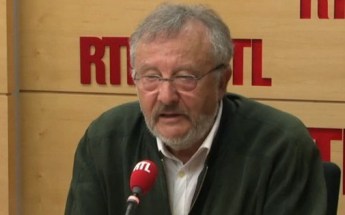


 Bonjour à tous ! A la une de L’heure du crime, l’histoire vraie d’un « infiltré », dont la mission était de faire tomber un réseau international de trafic de stupéfiants, et qui se retrouve quelques années plus tard condamné à perpétuité !
 L’uomo, la cui carriera nel narcotraffico è stata ampiamente descritta nel libro ‘ZeroZeroZero’, sarebbe dietro a un traffico internazionale di stupefacenti da Spagna e Sudamerica in cui è coinvolto un ex sottufficiale del Ros




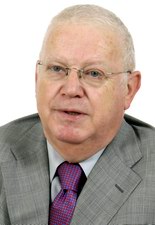




 Vu ses révélations accablantes sur les vérités de la monarchie marocaine et ses services d’espionnage dans les enlèvements, la torture et le trafic de drogue, on vous présente la traduction intégrale de l’interview de l’ex-officier marocain des services secrets comme publiées dans le journal Echourouk “Echoroque”
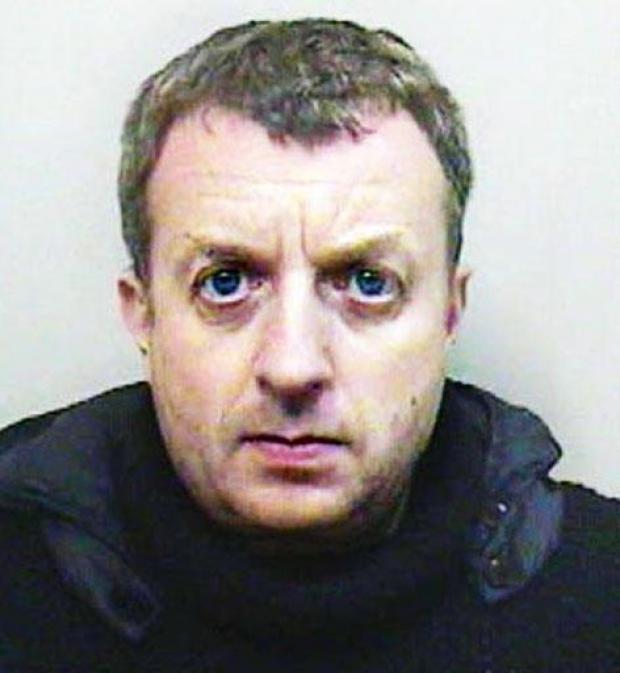 A ‘NOTORIOUS’ drug dealer was living a luxury lifestyle while peddling thousands of pounds of cocaine and cannabis.
 The 48-year-old drove a Porsche Cayenne with a personal number plate 36 BOW and also had a brand new Volkswagen Golf.
 August 18, 2014


 AVISEUR INTERNATIONAL