The wars of Africa are fueled by narcotics. That is an exaggerated over-simplification, but what is less well known than it should be is that many of the internal conflicts of today’s Africa are driven in part, sometimes a substantial part, by profits being made from the trafficking of hard drugs and precursor chemicals. The battles in Mali, in the Central African Republic, in the Democratic Republic of Congo, and Somalia are influenced by criminal drug syndicates allied to al-Qaeda-linked insurgents. The Boko Haram insurgency in Nigeria also has its narcotics component. “Follow the money” is an aphorism relevant for Africa as well as the Middle East.
It is clear to investigators that al-Qaeda in the Maghreb (AQIM), the terrorist collective that operates in Mauritania, Mali, Niger, Algeria, and Libya (and perhaps in Tunisia), finances itself by trafficking drugs across the Sahara from south to north, and from capturing and ransoming Europeans. In Somalia, al-Shabaab, another al-Qaeda terrorist affiliate, funds its operations by moving drugs into and out of East Africa, by ransoming captives, and by cutting down trees and shipping charcoal to Yemen and Saudi Arabia. Seleka, the Muslim insurgent group (possibly backed from Chad) that captured and fractured the Central African Republic before being ousted by French and other militias, also made money from transshipping drugs from south to north. Hezbollah, which has always had side operations in West Africa among the Lebanese diaspora, also profits from narcotics dealings. Criminal enterprises are joining forces with terrorists and creating new types of hybrid organizations that are drug-driven.
Indeed, in the last decade, there has been increasingly big money made from moving cocaine, heroin, methamphetamines, marijuana (hashish), and similar drugs first from Colombia and Venezuela into Africa and north to Europe and, more recently, from Pakistan and India through East Africa to Europe. Once largely confined to West Africa, both the narcotics trade and personal use of such hard drugs has spread to eastern, central, and southern Africa. Almost none of Africa’s 54 nations is without a drug problem, the crime and criminal gangs that shepherd and promote it, the vast proceeds and corruption that accompany and facilitate both trade and abuse, and the social ills that follow.
According to the United Nations Office of Drugs and Crime (UNODC), about 30 tons or $2 billion worth of cocaine passes through West Africa from Latin America to Europe every year, up from about half that amount in 2010. Those totals represent 35 percent of all cocaine smuggled into Europe. About 2000 West Africans are arrested in Europe for cocaine trafficking, about 30 percent of the total number of foreigners caught in Europe for this offence.
Bolivia, Peru, and Colombia grow coca and transform coca leaves into cocaine. Where it was once flown directly to West Africa from Colombia, now most of the Europe-bound cocaine that passes through Africa is spirited across the Atlantic Ocean from Venezuela, where crime and corruption are rampant and controls lax. A decade or so ago, ship transport was in vogue. Propeller aircraft followed. Now most of the cocaine from Venezuela to West Africa arrives by jet aircraft, sometimes even combined with otherwise legal cargo.
Lagos, Nigeria, Accra, Ghana, and Dakar, Senegal are three transshipment airports where corruption and criminal influence facilitates passage and local gangs take control. But large amounts of cocaine also enter weakly-governed and impoverished Guinea-Bissau via unmonitored private aircraft from Venezuela, Colombia, and Brazil. Guinea-Bissau is widely regarded as Africa’s first narco-state, with politics, political life, and military activity and military preferment all being enmeshed in narcotics trafficking. The several military coups that have changed Guinea-Bissau’s governments in this decade were all motivated by control of the drugs trade. After one of those coups, in 2012, 25 tons of cocaine entered Guinea-Bissau from Venezuela. Several well-connected smugglers, including a high-ranking naval officer, are awaiting trial in the United States (to which country they were extradited.)
From Guinea-Bissau, Ghana, Nigeria, and Senegal (and now Mali), a route across the Sahara in convoys guarded by AQIM has proved profitable. In part, it also led to the disturbances in Mali and the battles in Algeria. The exact linkages are known only to intelligence services, if then, but there is abundant circumstantial evidence that about 40 percent of Europe’s cocaine arrives in this manner, ultimately through Algeria and Morocco to Spain. There are reports that Colombian gangs have established themselves, as well, in Guinea (where Ebola began this year) and the Gambia, as well as in all of the other West African countries.
Between 2005 and 2011 major cocaine seizures occurred in Nigeria, Benin, Togo, Ghana,
Sierra Leone, Guinea, Guinea-Bissau, Senegal, Mauritania, Morocco and Cape Verde. The biggest hauls in those years were from Morocco, Senegal, Guinea, Guinea-Bissau, and Liberia, but since 2011 the central entrepots of the cocaine transshipment trade have shifted to Nigeria, Ghana, and Guinea-Bissau. Exactly how much still moves across the Sahara is not known.
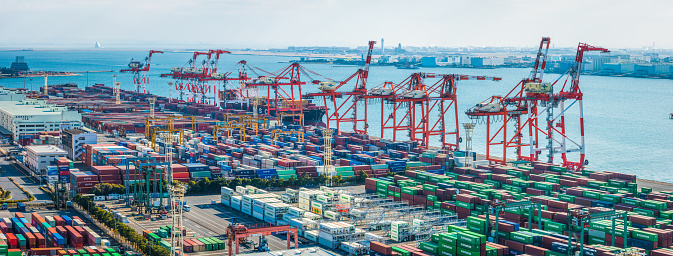
Heroin arrives in Africa, also en route to Europe, from the east, where it is produced. Although Afghanistan and Burma grow the poppies that are the ultimate source, opiate refining centers may be elsewhere in Asia, nowadays often Thailand, Pakistan, and India. Certainly, today, Kenya and Tanzania, using the Mombasa, Nairobi, and Dar-es-Salaam airports, and Addis Ababa airport in Ethiopia, are key transshipment centers. So are the ports of Djibouti, Mombasa, and Dar-es-Salaam. Dhows are employed as well as larger ships, and some element of the Somali piracy was originally intended to intercept and then control this profitable drugs trade. Most of the heroin is smuggled by courier or bundled with legal cargo, such as plantains, into Europe. A smaller proportion goes from East Africa to the United States and Canada.
In 2012 alone, authorities seized 200kg of heroin in Nigeria, five times the amount confiscated in 2011. Nearly 8000 offenders were arrested, but few of the kingpins in the trade. Nigerian gangs are widely believed to control a large, if not the largest, proportion of the heroin trade across all of Africa and on to Europe and North America. They have satellite operations in South Africa, especially in Cape Town and Johannesburg, and are assumed to be behind the spread of heroin sales to Mozambique and Malawi.
Marijuana has been grown and used in Africa for decades if not centuries. Nigerians now control a large segment of the intra-African trade, and also ship to Europe in quantity. But it is the harder drugs, with the bigger profits, that more completely fuel the coffers of terrorists and their criminal allies.
Qat or khat, the Somali mild-narcotic of choice, has also flooded Kenya in recent years and is being re-exported from East Africa to Somali communities and others in Europe. Additionally, its recreational use is becoming a persistent problem and a contributor to crime in traditional rural and in urban Kenya, not only among Somali. It is grown for the most part in the highlands of the Yemen and Saudi Arabia and then shipped across the Red Sea.
Nigeria is a major source of locally produced methamphetamines for shipment to Asia. One clandestine laboratory shut down in 2011 was capable of turning out 440 lbs. of meths per week. In Malaysia, 1 kg of meth is worth at least $40,000, in Japan and South Korea as much as $200,000. Thus a week’s production would be worth from $8 to $40 million on the street in Tokyo, Seoul, or Kuala Lumpur.
Manufacturing methamphetamines depends on supplies of ephedrine and pseudoephedrine purchased mostly in and shipped from Asia through Africa to North America. During a six month operation in 2010 by the US Drug Enforcement Administration, 35 suspicious shipments to Nigeria – a total of 53 metric tons worth approximately $80 million — was seized and confiscated. Many more shipments doubtless went undetected, and into Nigerian and then Mexican laboratories. From Mexico, the methamphetamines were destined for consumers in the US and Canada.
Stopping (an impossibility) or reducing the pernicious reach of drug trafficking across Africa depends on better policing and better security controls more generally. But improved law enforcement in turn depends on strengthened rules of law, curbs on corruption, and more transparency everywhere – in other words, better governance. But achieving better governance – governments that improve the lives of their peoples rather than enrich those who lead weak administrations — is a difficult to accomplish objective.
In Africa, the drug trade preys and depends upon government and security force connivance. Only responsible and tough minded leadership, as in Botswana, can provide incentives for honest policing and minimal corruption. Those betterments are not going to come to West Africa anytime soon, especially given rampant corruption and widespread poverty. Even Ghana, which is the best run and most prosperous West African state, has not managed to control its drug running gangs.
Former UN Secretary-General Kofi Annan and others recommend legalizing and thus, potentially, de-criminalizing cocaine, heroin, and marijuana use (but not trafficking) in Europe and Africa, thus reducing the consumer price, making the product taxable, and eliminating much of the incentive to ship narcotics clandestinely. Even with some of the American states having recently permitted the sale of marijuana openly, the Annan proposal has not and will not find favor immediately in Africa and beyond. So drug trafficking across Africa will continue, will continue to profit the smugglers and their al-Qaeda-linked associates, and will continue to corrupt and distort the priorities of susceptible African leaders and governments. Only when Africa’s emerging middle class demands reformed and more responsible governance will there be a chance to shrink the trade in drugs across Africa and their symbiotic relations with and fueling of conflict.
Robert I. Rotberg is Fellow, Woodrow Wilson International Center (Washington, D. C.), Senior Fellow, Centre for International Governance Innovation, and the Founding Director of Harvard Kennedy School’s Program on Intrastate Conflict.
source: http://robertrotberg.wordpress.com/2014/10/29/drugs-crime-and-terror-in-africa/

plus sur: http://www.lexpress.fr/actualite/monde/afrique/infographie-les-voies-du-trafic-de-cocaine-en-afrique-de-l-ouest_1233636.html
000000000000000000000000000000



 AVISEUR INTERNATIONAL