AVISEUR INTERNATIONAL

Aviseur International renseigne, sans complaisance, sur la problématique de la drogue, du narcotrafic, de la corruption et sur les politiques mises en œuvre par les différents Etats et les dérives que s'autorisent les fonctionnaires des administrations — aviseurinternational@proton.me — 33 (0) 6 84 30 31 81

AVISEUR INTERNATIONAL

NARCOTRAFIC (The Golden Age of Drug Trafficking): How Meth, Cocaine, and Heroin Move Around the World

onudc1By Keegan Hamilton

Diplomats and top officials from governments around the world gathered last week at United Nations headquarters in New York to discuss what to do about the global drug problem. Over the course of four days and multiple discussions, the assembled dignitaries vowed to take a more comprehensive approach to the issue than in years past — but they also decided to keep waging the war on drugs.

The « outcome document » adopted during the UN General Assembly’s special session (UNGASS) calls for countries to « prevent and counter » drug-related crime by disrupting the « illicit cultivation, production, manufacturing, and trafficking » of cocaine, heroin, methamphetamine, and other substances banned by international law. The document also reaffirmed the UN’s « unwavering commitment » to « supply reduction and related measures. »

Yet according to the UN’s own data, the supply-oriented approach to fighting drug trafficking has been a failure of epic proportions. Last May, the United Nations Office on Drugs and Crime (UNODC) issued its 2015 World Drug Report, which shows that — despite billions of dollars spent trying to eradicate illicit crops, seize drug loads, and arrest traffickers — more people than ever before are getting high.

READ: https://news.vice.com/article/drug-trafficking-meth-cocaine-heroin-global-drug-smuggling

READ: https://news.vice.com/article/drug-trafficking-meth-cocaine-heroin-global-drug-smuggling

READ: https://news.vice.com/article/drug-trafficking-meth-cocaine-heroin-global-drug-smuggling

READ: https://news.vice.com/article/drug-trafficking-meth-cocaine-heroin-global-drug-smuggling

000000000000000000000000000000000000

AFRICA: transshipment of narcotics Is threat to good governance

In 2013, United Nations Office on Drugs and Crime (UNDOC) conducted a West Africa Threat Assessment that estimated the yearly value of only cocaine transiting through West Africa as US$ 1.25 billion- significantly more than the annual national budgets of countries in the region.

download-13.jpgIt also revealed that the prevalence rate of cannabis use in West and Central Africa as 12.4% which higher than Africa 7.5% and the global average 3.9%.

Moreso, these development pose serious threats to good governance, peace and stability, economic growth and public health.

The use of these dangerous drugs have also triggered numerous conflicts and misunderstandings in the region.

It is obvious that, some of the drugs such marijuana have been in the region before West Africa became a major transit point. The response against this devastating menace has been the same from one government to another in West Africa.

As drug consumers being dealt with as the same as traffickers, characterised by tough punitive measures with its attendant violation of human rights.

However, menace has opened a window to corruption and also creating unnecessary burden on the overwhelmed criminal justice system.

As part of its efforts to help address this cankar, the West African Civil Society Institute(WACSI) with the support from Open Society Initiative for West Africa(OSIWA) organised a regional Consultation on Drugs Policy Reform in West Africa in Accra.

Under theme: The Road to the United Nation’s General Assembly Special Session ( UNGASS) on the World Drug Problem”.

In an interview with Nana Afadzinu, Executive Director of West African Civil Society Institute (WACSI) she noted that , West African citizens, especially the youth and children have the right to be safe from the scourge of drug trafficking.

According to her, the manner in which drug consumers are being dealt the same as traffickers, characterised by tough punitive measures violate the human rights.

This she said, it has become imperative for West African governments and civil society to engage in strategic and productive consultations on drug policy reforms.

The two day programme was aimed at providing an opportunity for government officials and national law enforcement agencies in order to discuss policy issues necessary reforms identified at the national- level meetings.

However, she cited the following key outcomes of the regional consultative meeting:
To clearly identified milestones and challenges under the current drug policy measures in the region.
To invigorate and create regional momentum for drug policy reforms in West Africa.

And to develop a West African common position towards the United Nations General Assembly Special Session (UNGASS)that calls for human rights and public health oriented drug policies with emphasis on harm reduction.

The meeting attracted 11 West African countries including Benin, Cape Verde, Côte D’Ivoire, Ghana, Guinea, Guinea Bissau, Liberia, Mali , Nigeria, Senegal and Sierra Leone.

By: Isaac Kofi Dzokpo/ NewsGhana.com.gh

http://www.newsghana.com.gh/transshipment-of-narcotics-is-threat-to-good-governance/

Posté avec WordPress pour Android

00000000000000000000000000000000

INDONÉSIE (Peine de mort): pourquoi le Français Serge Areski Atlaoui sera finalement exécuté ?

http://www.dna.fr/justice/2015/03/04/un-messin-dans-le-couloir-de-la-mort
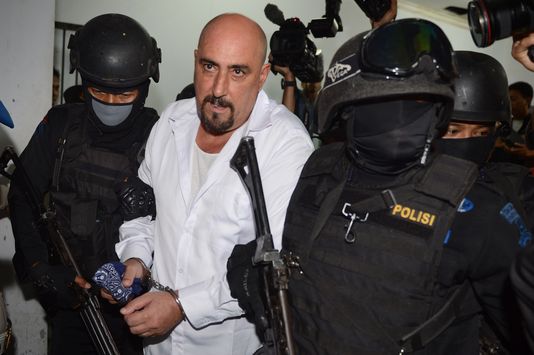
Nusa Kambangan (Indonésie)

Serge Areski AtlaouiSerge Areski Atlaoui

Posted on avr 28, 2015 @ 20:00 par Allain Jules

JAKARTA, Indonésie – Visiblement, la question ne se pose même pas. L’arrogance occidentale a encore joué. L’Union européenne, la France et l’Australie ont appelé mardi l’Indonésie à ne pas procéder aux exécutions de neuf condamnés à mort prévues dans quelques heures, estimant qu’il n’était pas trop tard pour changer d’avis, dans un communiqué commun. C’est cette pression qui est en train d’exaspérer les Indonésiens.

Les Indonésiens reprochent aux Français et aux Australiens de se réveiller simplement parce qu’il y a des ressortissants de leurs pays. « Où sont-ils quand des Indonésiens sont condamnés à mort pour fait de trafic de drogue? » se demandent-ils ? Très remontées, les autorités indonésiennes accusent donc l’Occident de s’immiscer dans leurs affaires, qui plus est, leur justice très répressive en matière de drogue. Elles ajoutent même que 33Indonésiens perdent la vie à cause de la drogue, ce qui est inacceptable, selon eux. Le Brésil, le Ghana et le Nigéria, ainsi que les Philippines ne se sont pas prononcés…

Outre Serge Areski Atlaoui, le Français, deux Australiens (Myuran Sukumaran et Andrew Chan), un Brésilien (Rodrigo Gularte), une Philippine (Mary Jane Fiesta Veloso), trois Nigérians (Raheem Agbaje Salami, Sylvester Obiekwe Nwolise, Okwudili Oyatanze), un Ghanéen (Martin Anderson) et un Indonésien (Zainal Abidin bin Mahmud Badarudin) tous condamnés pour trafic de drogue devraient être fusillés dans la nuit de mardi à mercredi, peu après minuit.

La peine de mort est mauvaise.

Nous sommes contre ça mais, pourquoi il n’y a jamais ce genre de mobilisation des Institutions et des Etats quand il s’agit des Etats-Unis ?

Poser la question c’est déjà y répondre ? Sans doute…

source:http://allainjules.com/2015/04/28/indonesie-peine-de-mort-pourquoi-le-francais-serge-areski-atlaoui-sera-finalement-execute/

0000000000000000000000000000000000000000000000