Aviseur International renseigne, sans complaisance, sur la problématique de la drogue, du narcotrafic, de la corruption et sur les politiques mises en œuvre par les différents Etats et les dérives que s'autorisent les fonctionnaires des administrations — marcfievet@live.fr — 33 (0) 6 84 30 31 81
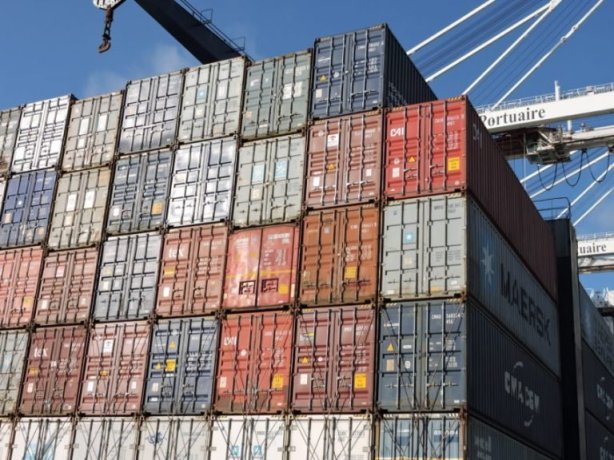
La droga fue descubierta por « inconsistencias » en los sellos del contenedor.
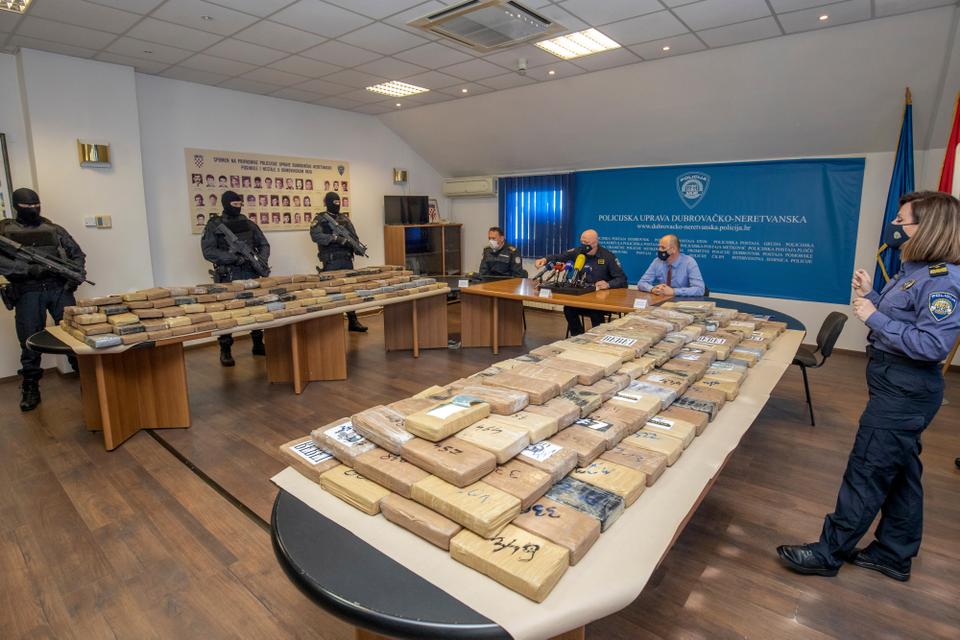
Las autoridades lograron « la incautación de una tonelada de cocaína dentro de un contenedor con pieles de bovinos tipo exportación que tenía como destino Bulgaria », dijo en un comunicado la Dirección de Antinarcóticos de la Policía de Colombia.
Con la inspección, la Policía encontró una tonelada de clorhidrato de coca, muy bien camuflada entre 25 toneladas de pieles.
La carga provenía del puerto de Guayaquil (Ecuador).
El contenedor tenía destino el puerto de Burgas, en Bulgaria, donde sería recibido por miembros del Clan de los Balcanes, quienes luego la distribuirían en Francia, Alemania e Italia.
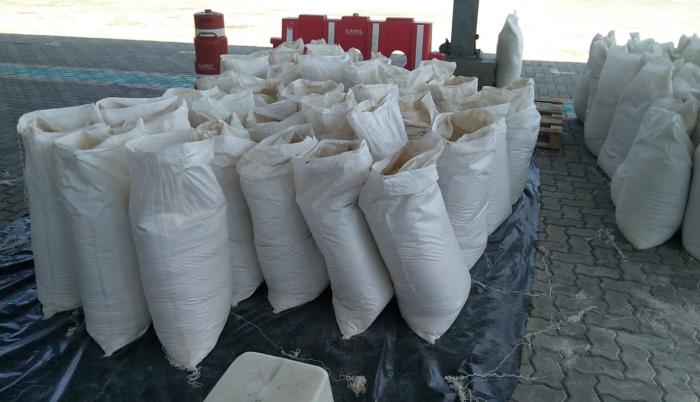
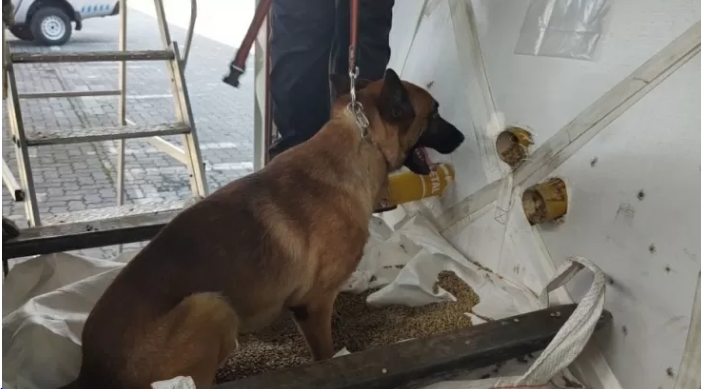
El can Ronald encontró el cargamento, que estaba entre bultos de harina de plátano
Agentes de las unidades especiales de la Policía en la detección de droga ejecutaron una operación, denominada ‘Fin de Año’, en la que decomisaron 795.100 gramos de cocaína, en los puertos marítimos de Guayaquil y Posorja.
El comandante subrogante de la Zona 8 (Guayaquil, Durán y Samborondón), Marcelo Cortez Carrión, señaló que el cargamento se detectó tras una inspección de rutina. La droga estaba en el interior de un contenedor de siglas HAMU1076197, y fue el can Ronald que alertó a los uniformados.
In mid-December, the authorities in Arizona intercepted more than 1.5 tons of methamphetamine coming from Mexico, the last in a line of record drug hauls around the world in recent months. Responding to the news, UN synthetic drugs expert Martin Raithelhuber tweeted that the size of meth seizures was “simply amazing”.
The global drugs trade is on fire, having survived the coronavirus pandemic with minimal disruption. Production is increasing in many places, fuelled by instability and economic crises in major drug-producing countries. Traffickers appear to be sending vast shipments, reflected in record-breaking drug seizures.
“There’s a boom in demand, there’s a boom in supply,” said Andrew Cunningham, head of drug markets, crime and supply reduction at the European Monitoring Centre for Drugs and Drug Addiction (EMCDDA), “It does look quite apparent.”
Nowhere is this boom more pronounced than in the Golden Triangle, where Laos, Thailand and Myanmar intersect. In October, police grabbed 55 million methamphetamine tablets in Laos, Asia’s largest ever drug bust. Regional drug production and trafficking have intensified following the February coup in Myanmar, which plunged the country into chaos.
The October meth haul was only the tip of the iceberg. Many other large shipments have been reported in recent months. Seizures of methamphetamine have been expanding steadily in the past decade to reach a record high in 2020, according to the United Nations Office on Drugs and Crime (UNODC).
“There is an expansion of the synthetic drug market,” said Martin Raithelhuber, of UNODC. Meth was becoming “cheaper” while purity remained high, he said. “It really points to a larger amount of the drug being available on the market”.
This boom has been facilitated by innovative chemistry. Drug producers have managed to create their own precursor chemicals for synthetic drugs, bypassing international controls. Last year Laotian authorities seized more than 70 tons of propionyl chloride, which can be used to make fentanyl and meth precursors.
Record hauls
Mexican cartels have reportedly used similar experimentation, and drugs are flooding into the US. In November, almost 9 tons of meth and over 175 kg of fentanyl were seized at the border, the largest amount for either drug in two years. Indeed, the DEA seized a record amount of fentanyl in 2021. Overdose deaths reached new highs from 2020 to 2021.
Mexican cartels have also penetrated the European market. Spanish police recently announced the largest ever methamphetamine bust on record, with over 2.5 tons seized in separate, coordinated raids in various cities. A Mexican cartel was allegedly piping meth into Europe through the port of Barcelona.
These seizures point to large-scale drug production, but they are also indicative of intensified law-enforcement activity, according to Andrew Cunningham. The Spanish meth haul was the result of a lengthy international investigation. Encrypted communication platforms used by traffickers have recently been cracked, leading to big seizures.
Mexican cartels have also penetrated the European market. A Mexican cartel was allegedly piping meth into Europe through the port of Barcelona. (AP)
The narcotics trade has also been helped along by political instability in major drug-producing countries, such as Myanmar and Afghanistan. The production and trafficking of narcotics tend to flourish in chaotic, conflict-ridden states with rule of law deficits.
“The places where the drug production is booming are places where the state has very little control or they’re facilitating or turning a blind eye to things that are going on in the country,” Cunningham told TRT World.
In war-ravaged Syria manufacture of the amphetamine known as Captagon has skyrocketed with the help of the government. The Assad regime, throttled by sanctions and mired in economic crisis, is relying on drugs to earn hard currency. Associates of the ruling family are allegedly involved in production and trafficking of Captagon, turning Syria into a narcostate.
Captagon seizures have reached eyewatering levels. 2021 saw the largest quantity of tablets seized on record, with 95 million pills intercepted in Malaysia in a single haul in March. In Jordan, almost twice as many Captagon tablets were grabbed in 2021 compared with the previous year. And Saudi Arabia has been severely affected, too.
Captagon has also reached Iraq, where use of synthetic drugs, including methamphetamine, has increased enormously in the past decade. The amount of Captagon and meth seized in 2021 was twenty times larger than in the previous two years combined, according to the Iraqi government.
“The Captagon trade has experienced a notable increase in both supply and number of transit and destination markets,” said Caroline Rose, Senior Analyst and Head of the Power Vacuums program in the Human Security unit at the Newlines Institute and author of an upcoming report on Captagon. “It’s very likely that this trade will continue to expand”.
Meanwhile, Afghanistan has emerged as a major meth producer. The drug can be made cheaply using a local plant, ephedra. Afghan meth now flows in copious quantities to Iran and also to Africa via Pakistan and the Indian Ocean. International maritime forces seized more drugs in the region in 2021 than in the previous four years combined – a new record.
The narcotics boom is more pronounced than anywhere else in the Golden Triangle, where Laos, Thailand and Myanmar intersect. Regional drug production and trafficking intensified following the February coup in Myanmar, which plunged the country into chaos. (AP)
According to recent research, the production of ephedra appears to be increasing in Afghanistan as the country collapses into economic crisis. Satellite imagery reveals “new shops, an extended storage area for dried & milled ephedra, and more inventory than ever before”, writes David Mansfield. The price of both meth and ephedra has fallen.
Afghanistan is also a major producer of opiates, accounting for 85 percent of the global heroin supply. Opium production increased by 8 percent in 2021, the United Nations recently assessed, and may continue to rise as farmers have reported higher levels of cultivation this planting season.
Elsewhere, the cocaine trade is booming. Production increased in Colombia in 2020, and there have been a number of massive seizures at European ports, including over 16 tons at Hamburg in February, almost 11 tons at Antwerp in April and 4 tons at Rotterdam in October. Turkey also saw the largest cocaine haul in its history this year.
What supply chain crisis?
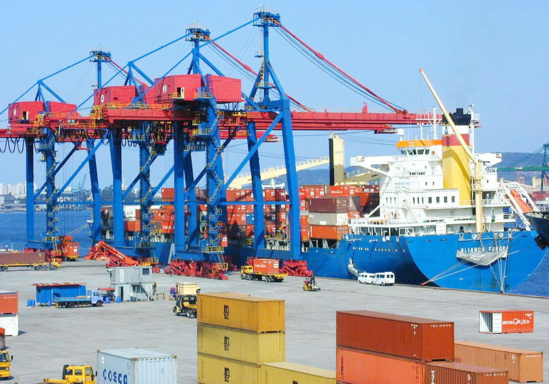
The use of container ships to smuggle cocaine concealed in perishable goods, such as fruit, predated the pandemic, but appears to have increased. Air travel was severely hit by coronavirus restrictions, limiting the ability to send drugs on commercial flights.
Maritime shipping enables smugglers to transport huge quantities of product with relatively limited risk of detection, given the size of the vessels and the time-sensitive nature of food imports, which must be checked promptly by customs officials.
The massive seizures this year also indicate that the cocaine trade has not been significantly disrupted by the covid-related supply-chain crisis. A boom in demand combined with covid problems in Asia have caused shortages of goods and shipping delays as vessels lie moored outside ports, waiting for a berth.
While South America has been affected by the crisis, import volumes from the east coast to Europe have not declined during the pandemic, according to Simon Heaney, a senior manager at maritime consultancy, Drewry. “I haven’t seen any evidence that volumes on this trade have been supressed by the supply chain issues,” Heaney told TRT World.
Food, in which cocaine is often hidden, is less vulnerable to disruption than electrical appliances. “The supply chain is much more complex with electrical goods – more intermediate components / parts that need to be shipped from various locations, increasing the risk of delays / raising costs,” Heaney said.
The pandemic forced traffickers to adapt their methods, selling drugs online and adopting novel delivery systems that reduce human contact, such as drones. (AP)
While the cost of sending freight has generally become more expensive amid the supply-chain crisis, including from South America, traffickers generally conceal their product in licit shipments, meaning they “do not pay for the cost of the shipping container”, according to Andrew Cunningham.
The trafficking of heroin along the Balkan Route through Iran and Turkey to Europe is mostly conducted in vehicles and has not been seriously affected by the shipping crisis, and the same goes for the meth trade in Southeast Asia, much of which happens overland between Lower Mekong countries.
The demand for narcotics might also have increased, Cunningham said. The use of drugs normally consumed in recreational settings, such as MDMA and cocaine, appeared to fall during the initial lockdowns in 2020, but has since bounced back, according to the EMCDDA’s 2021 drug report.
The pandemic forced traffickers to adapt their methods, selling drugs online and adopting novel delivery systems that reduce human contact, such as drones. While some of these adaptations might be temporary, others could transform the drug trade and further empower traffickers going forward.
The social and economic damage caused by Covid-19 could also drive more people into drugs. “Research findings associate inequality, poverty and lack of opportunities for socioeconomic development with increased drug use disorders and increased engagement in drug production and trafficking,” says the 2021 UN World Drug Report.
Narco-traffickers defied Covid-19 and now look set to reach new heights, as the stars are aligning for a further expansion of their trade.
Les conteneurs lestés de coke étaient en partance pour l’Espagne, la France et le Ghana.
Les cargaisons de cocaïne ont été localisées lors d’inspections aléatoires à l’aide d’un chien dressé à la lutte contre la drogue, qui a localisé 561 kilos supplémentaires lundi dans un chargement de café en partance pour Le Havre et mardi 1 240 kilos supplémentaires de cocaïne.
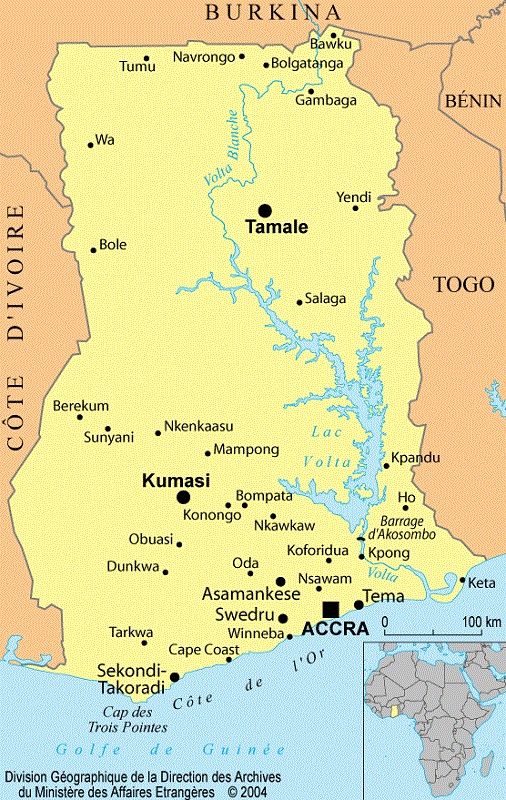
Lors d’une des inspections de mardi, plusieurs lots de cocaïne, pesant 736 kilos, ont été retrouvés cachés dans un chargement de jus d’orange qui devait partir vers le port de Valence (Espagne). Dans le second, 504 kilos de coke ont été saisis, cachés dans une cargaison de sucre raffiné qui devait être envoyée au port africain de Tema (Ghana).
Las autoridades, tras una larga investigación, lograron poner al descubierto una red narcotraficante, conocida como ‘Los Chunchun’, señalada de procesar y transportar los cargamentos de clorhidrato de cocaína que el ‘Clan del Golfo’ enviaba a estructuras criminales en Venezuela.
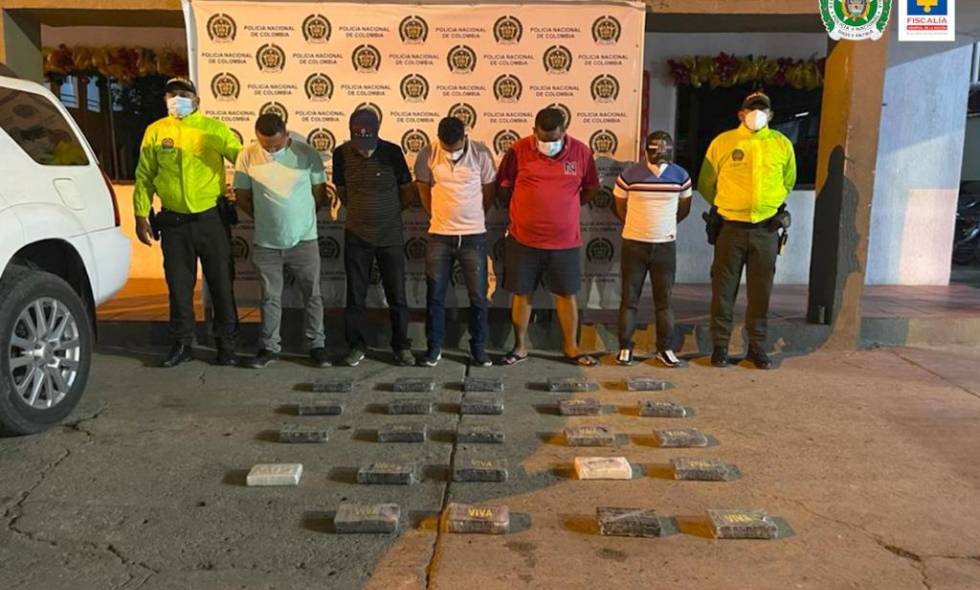
Cinco de los presuntos articuladores de esta estructura fueron capturados en diligencias realizadas de manera simultánea con la Policía Nacional en Maicao (La Guajira).
En los procedimientos se incautaron de 24 kilogramos de clorhidrato de cocaína, una camioneta y cinco celulares.
Así mismo, las autoridades informaron que entre los detenidos está uno de los supuestos máximos cabecillas de ‘Los Chunchun’, un ciudadano sirio identificado como Yazan Chorten, alias ‘Yazer’. Este hombre sería el encargado de probar y autorizar el envío de cada uno de los alijos a los enlaces ilegales en Venezuela.
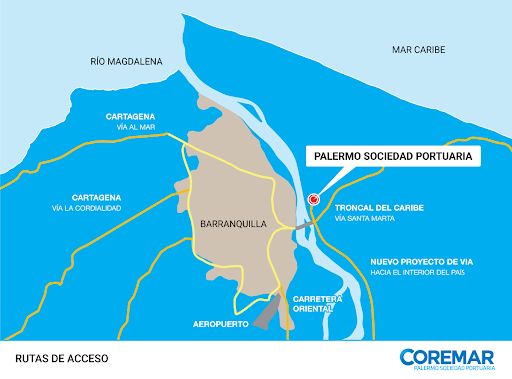
‘Medellín P-6’. Ese es el nombre de la embarcación en la que las autoridades hallaron en las últimas horas 600 kilos de clorhidrato de cocaína perteneciente al grupo criminal de ‘los Costeños’. El operativo que permitió el decomiso se ejecutó en la ribera del río Magdalena, en el corregimiento de Palermo, Magdalena.
Allí, gracias a información de fuentes humanas, unidades de la Dirección de Investigación Criminal, Dijín, en coordinación con la Armada Nacional, la Agencia Antidrogas de los Estados Unidos, DEA, y la Fiscalía General de la Nación, localizaron en una zona portuaria de dicho corregimiento la embarcación tipo bongo utilizada para el transporte de combustible.
Mon cher responsable des affaires juridiques et contentieuses
Mon cher menteur
Mon cher tartuffe
Relisant tes écrits, j’ai pu constater que tu étais particulièrement performant dans l’art de la rhétorique mensongère.
Le 10 avril 2020, je t’avais écrit une lettre ouverte, mais tes nombreuses occupations ne t’ont pas permis de trouver le temps d’y répondre.
Je te la fais à nouveau parvenir, espérant que cette fois-ci, tu n’auras pas l’attitude d’un de tes prédécesseurs Gérard Schoen qui avait préféré s’enfuir en courant lorsque j’avais cherché à le rencontrer.
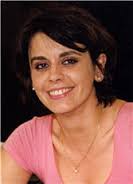
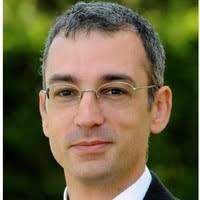
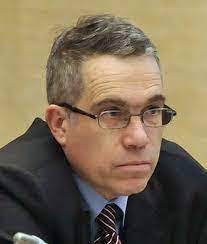
J’ai mis quelques photos pour te permettre de reconnaitre tes semblables !
°°°°°°
Ô, mon cher Michel, mon cher administrateur des douanes, mon cher responsable des affaires juridiques et contentieuses, mon cher menteur, mon cher tartuffe, constater une fois encore tes savantes manœuvres pour dégager la responsabilité de l’administration des douanes ne m’ont permis que de faire un constat, accablant pour toi, comme pour tes prédécesseurs Elizabeth Melscoet, Thomas Charvet et le gredin Erwan Guilmin : vous êtes des menteurs institutionnels !
Mon cher Michel, mon cher administrateur des douanes, mon cher responsable des affaires juridiques et contentieuses, mon cher menteur, mon cher tartuffe, sais tu que je ne peux accepter cette infamie savamment distillée par tes écris mensongers. Il m’est insupportable de constater qu’après avoir été encensé puis encouragé à infiltrer et infiltrer encore, tu ne souhaitais que flétrir tant de lauriers amassés. Mes actions qu’avec respect toute la hiérarchie de la DNRED admirait, mes informations précises qui tant de fois ont permis des saisies importantes, tant de fois valorisaient un service… aux actions que tu ne connais même pas ! Tu m’as trahi comme tu as trahi l’honneur de la douane tout entière en deformant sciemment l’action que j’ai menée suite aux volontés ministérielles de Michel Charasse.
Mon cher Michel, mon cher administrateur des douanes, mon cher responsable des affaires juridiques et contentieuses, mon cher menteur, mon cher tartuffe, toi qui occupe un haut rang d’administrateur, comment peux tu l’occuper sans honneur? Tu as préféré emprunter les affabulations de tes prédécesseurs pour m’écarter de toutes réparations. Seras-tu un sprinter comme ce faquin de Gérard Schoen si tu me rencontrais ou préférerais-tu jouer les timides méprisants et dédaigneux, comme le fit Corinne Cleostrate, et t’éloigner sans me regarder ?
Mon cher Michel, mon cher administrateur des douanes, mon cher responsable des affaires juridiques et contentieuses, mon cher menteur, mon cher tartuffe, relire encore que toutes les turpitudes subies ne seraient la résultante que d’une erreur d’appréciation de ma part sur l’engagement de la douane sur lequel j’étais persuadé pouvoir compter, me trouble. En homme d’honneur que je suis, habitué à la parole donnée, il m’était difficile d’imaginer que tant de bassesses pouvait t’habiter.
Mon cher Michel, mon cher administrateur des douanes, mon cher responsable des affaires juridiques et contentieuses, mon cher menteur, mon cher tartuffe, je te croyais honnête et factuel, n’hésitant pas à t’informer avant de m’emballer dans des écrits totalement infondés. Non, tu n’as rien demandé, te permettant alors de tordre le cou à la vérité des faits.
Mon cher Michel, mon cher administrateur des douanes, mon cher responsable des affaires juridiques et contentieuses, mon cher menteur, mon cher tartuffe, merci de transmettre mes meilleures civilités à ton entourage…douanier. »
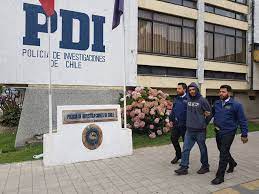
La brigade d’enquête criminelle (Bicrim) du PDI de Coronel, région de Bío Bío a démantelé trois points de vente de drogue dans la région.
Dans l’opération, une femme et un homme dédiés au micro-trafic de quartier ont été interpellés.
Il s’agit de trois bâtiments de la commune où différents types de stupéfiants ont été dosés puis commercialisés, dans le secteur Lagunillas de la commune. Lors des interventions ont été saisies 1 518 doses de cocaïne base qui étaient en préparation pour être vendues aux consommateurs réguliers du secteur. En outre, plus de 3 millions 800 mille pesos en espèces ont été saisis.
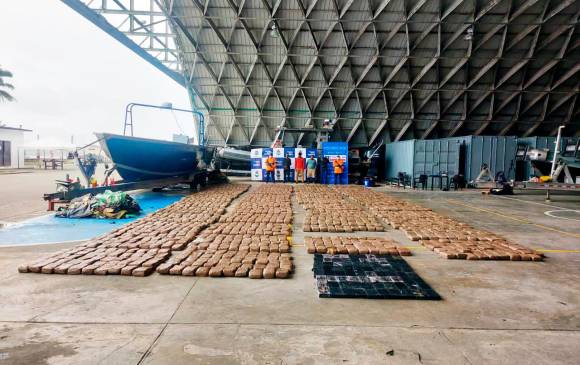
El SENAN (Servicio Nacional Aeronaval) de Panamá incautó un cargamento de 3.097 paquetes de droga dentro de un contenedor en un buque procedente de Ecuador y con destino a Reino Unido.
Sont impliqués trois ultras de l’AC Milan, appartenant au Curva Sud.
Parmi ceux-ci il y a aussi Luca Lucci, chef ultras avec quelques précédents, qui avait gagné en notoriété car il apparaissait dans certains clichés en compagnie de Matteo Salvini. Dans l’ordonnance de garde à vue signée par le juge d’instruction Fabrizio Filice, on lit que Lucci aurait été « au sommet de l’organisation » planifiant « l’activité illégale sans jamais y participer activement, donnant des instructions via le logiciel Encrochat, installé sur un mobile Bq Aquaris téléphone » en sa possession et avec un « numéro de téléphone néerlandais »
La droga se movía en una lancha rápida y una motonave por el océano Pacífico en horas de la noche.
2.248 kilos de marihuana y 628 kilos de coca que serían de alias Mayimbú, líder de la columna móvil Jaime Martínez de las disidencias de las Farc, fueron incautados en operativos de la Armada en el Pacífico.
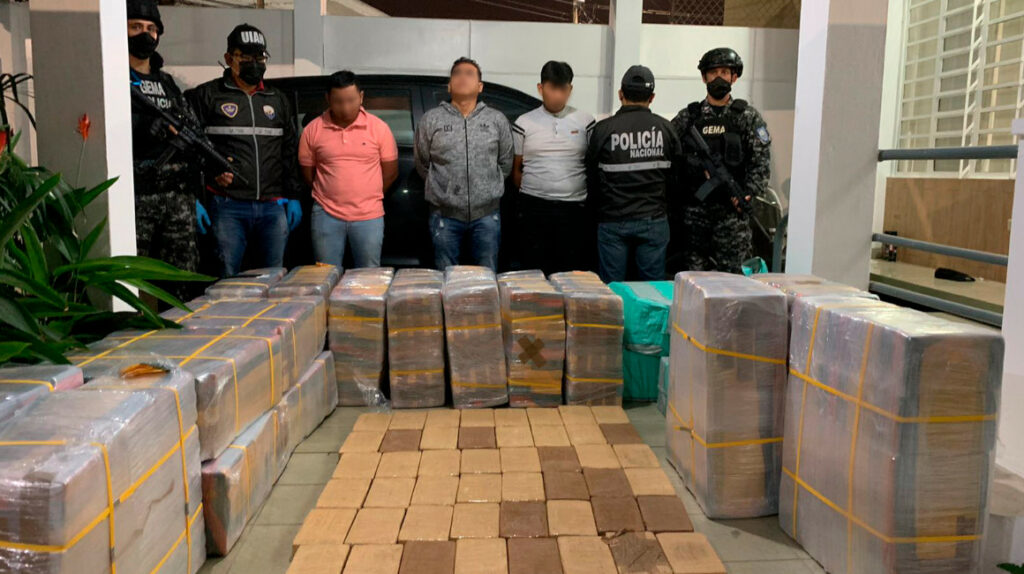
Agentes de Antinarcóticos incautaron más de 1 tonelada de cocaína en una vivienda ubicada en el sector de Urdesa, en el norte de Guayaquil, y desarticularon una estructura narcodelictiva dedicada al transporte y acopio de droga.
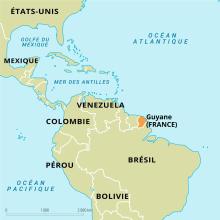
Le 1er octobre 2020, 594 kgs de poudre blanche sont saisis dans un véhicule près du port de Dégrad Des Cannes, 10 suspects sont déjà incarcérés en Martinique et en Guyane.
Mardi, 4 autres personnes sont interpellées sur l’île de Cayenne, et mises en examen vendredi pour trafic de stupéfiants en bande organisée. Cela se passe par visio-conférence, le juge d’instruction étant en Martinique, où se trouve la Juridiction Interrégionale spécialisée. Les suspects sont repartis libres, placés sous contrôle judiciaire. Il s’agit de trois ressortissants chinois, dont un restaurateur. Et un ressortissant français, Bastien Kereneur, lui aussi restaurateur à Cayenne. Selon son avocat, Maître Boris Chong Sit, il clame son innocence.
Le gang a été démantelé grâce à une opération menée dans 10 villes, dans les États de Santa Catarina, Paraná et Espíritu Santo au cours de laquelle une centaine d’agents de la Police fédérale ont exécuté 20 mandats de perquisition et 6 mandats d’arrêt, ainsi que la saisie de véhicules, propriétés et deux bateaux de pêche industrielle appartenant au groupe criminel.
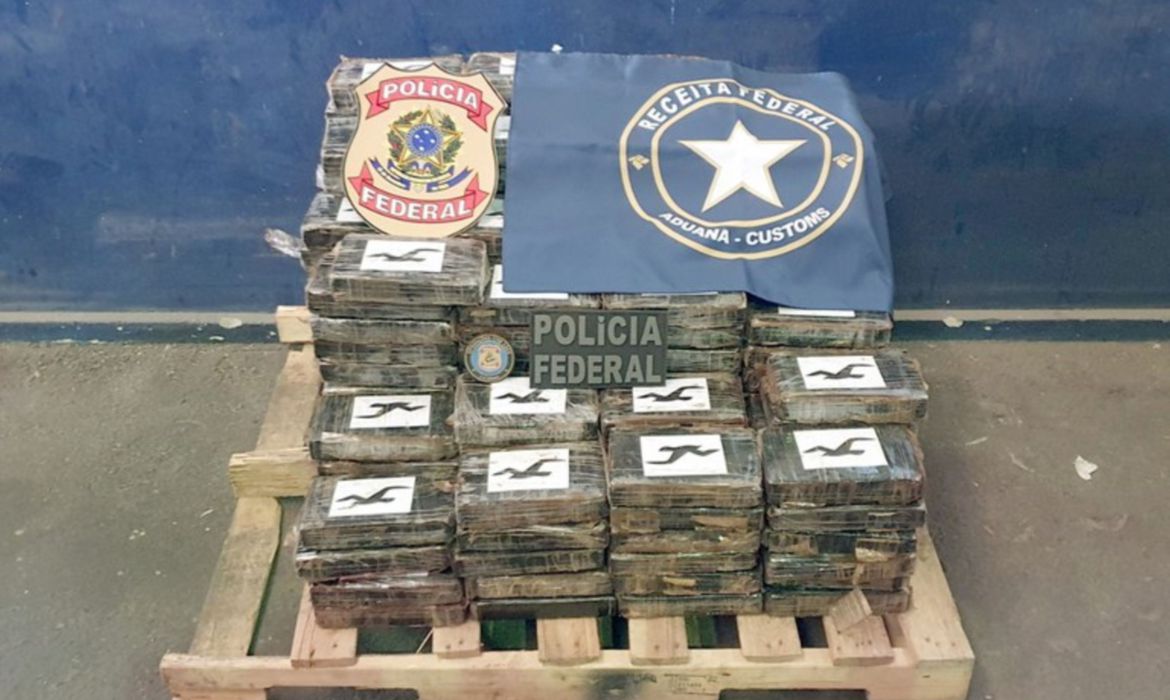
Polícia Federal/ Porto de Natal, 265 kg de cocaína
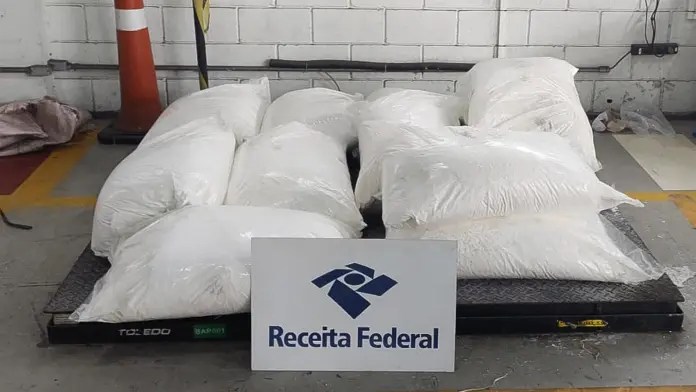
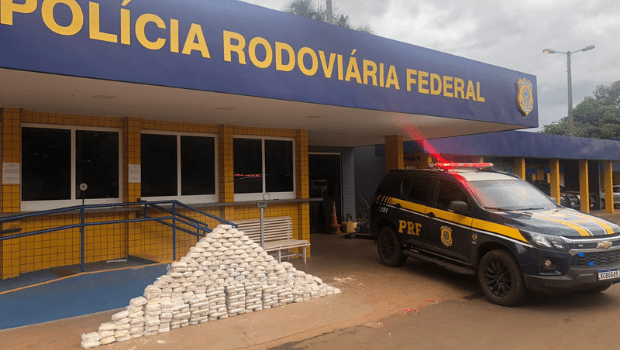
Em operação conjunta com a Receita Federal, a Polícia Federal (PF) apreendeu 265 quilos de cocaína, no Porto de Natal, no Rio Grande do Norte, na tarde desse sábado (20).
De acordo com a PF, a droga estava escondida em um carregamento de mangas e tinha como destino o Porto de Roterdã, na Holanda.