Le dossier du septuagénaire a connu des rebondissements dignes d’un vaudeville, vendredi. À la suite d’une démarche en Cour supérieure de son avocat, Me Clemente Monterosso, les Services correctionnels canadiens auraient accepté de libérer le trafiquant le jour même, mais auraient voulu l’envoyer en maison de transition en raison de conditions qui lui sont toujours imposées.
«Mon client veut habiter chez un membre de sa famille. Il a refusé de signer le formulaire de libération. Il a dit à la directrice: Cela fait 20 ans que je suis en prison. Vous n’allez pas me causer des problèmes pour 20 jours», a raconté à La Presse Me Monterosso, selon qui la sentence de son client prendra fin le 27 mars.
Selon l’avocat, les responsables des Services correctionnels doivent se réunir d’urgence aujourd’hui pour discuter de la situation. «Nous ne pouvons commenter le dossier en raison de la réglementation sur la protection des renseignements personnels», nous a laconiquement répondu leur porte-parole Serge Abergel. Parallèlement à tout ça, Me Monterosso doit de nouveau se présenter devant le juge André Vincent de la Cour supérieure, aujourd’hui.
Le litige provient du fait qu’entre 2005 et 2012, Divito a été emprisonné aux États-Unis pour une autre affaire d’importation de cocaïne en Floride; les autorités carcérales considèrent que ces sept ans ne doivent pas être pris en considération dans sa sentence canadienne de 18 ans.
Pierino Divito a été arrêté en 1994 au Nouveau-Brunswick, en compagnie de son fils Michael, pour avoir tenté d’importer de Colombie, par bateau, 5420 kg de cocaïne évalués à 500 millions de dollars.
00000000000000000000000
REMEMBER
La Justice canadienne…ou les tartuffes en action!

lire: http://marcfievet55.skyrock.com/3180527447-La-JUSTICE-canadienne.html
R. v. Rumbaut, 1998 9816 (NB QB)
1998-10-05
IN THE COURT OF QUEEN’S BENCH OF NEW BRUNSWICK
TRIAL DIVISION
JUDICIAL DISTRICT OF BATHURST
Date: 19981005
Docket: B/M/118/97
BETWEEN:
HER MAJESTY THE QUEEN
-and-.
CARLOS MIGUEL HERNANDEZ RUMBAUT
BEFORE: The Honorable Mr. Justice Alexandre Deschênes
HELD AT: Bathurst, N.B.
DATE OF TRIAL: January 26, 27, March 2, 3, 4, 9, 10, 11, 12, 13, May 1, June 2, 3, 4, 5, 8, 10, 15, 16, 17, 18, 19, 22, 23, 24, August 21, 24, 25, 26, 27, 28, 31, September 1, 3,8, 10, 11, 1998.
DATE OF DECISION October 5, 1998
APPEARANCES:
Michel J. Bertrand, Esq., and G. Scott Ellsworth, Esq., for the Crown
Scott F. Fowler, Esq., for the accused
[Page 2]
Deschênes, J.:
The accused Carlos Miguel Hernandez Rumbaut is charged as follows:
CARLOS MIGUEL HERNANDEZ RUMBAUT, stands charged that between the 20th day of December, A.D., 1990, and the 22nd day of February, A.D., 1994, both dates inclusive, at or near Shippagan and Lameque, in the County of Gloucester and the Province of New Brunswick, at or near Bouctouche and St-Edouard, in the County of Kent and the Province of New Brunswick, at or near Plaster Rock, in the County of Victoria and the Province of New Brunswick, at or near the City of Moncton, in the County of Westmorland and the Province of New Brunswick, at or near the City of Montreal, in the District of Montreal and Province of Quebec, at or near Shelburne and Province of Nova Scotia, and elsewhere within Canada, he did unlawfully conspire with Pierino DIVITO, Mike DIVITO, Eusébe GAUVIN, Raymond LEBLANC, Roberto SORENTI, Pierre DUGUAY, Jürgen KIRCHHOFF, Marc FIEVET, Claudio LOCATELLI and Alfredo CHIERCHIA, or some one or more of them, and with persons unknown, to import a narcotic into Canada, to wit: Cocaine, contrary to and in violation of Section 5(1) of the Narcotic Control Act, thereby committing an indictable offence contrary to and in violation of Section 465(1)(c) of the Criminal Code of Canada and amendments thereto.
For the purposes of this trial, the accused has made several admissions, the most important being related to the tape recordings containing intercepted private communications and their authorizations.
Exhibit 173 is a large box containing 223 cassettes of intercepted private communications while exhibit 174 contains several binders of the transcription of those intercepted conversations.
[Page 3]
Apart from a few authorizations which were contested but were declared valid, the validity of the authorizations to intercept the private communications was not in issue nor was the fact that the interceptions were carried out in accordance with the authorizations. It was also agreed that the statutory requirements as to notice of intention to produce were met.
With respect to the taped conversations, the accused did not take issue with the integrity, authenticity or accuracy of the tapes, nor their continuity; in fact, the only issue raised by the accused related to the voice identification of one Claudio Pasqual Locatelli (known as Mario), one Marc Fievet and the accused, which, the Crown alleges, is the person identified as Jose Luis on some of the taped conversations.
The Crown produced evidence which clearly identified the voices of Mr. Locatelli and Mr. Fievet on those taped conversations so that the only remaining issue on voice identification was whether or not the voice of Mr. Jose Luis is in fact the voice of the accused. It was also specifically admitted by the accused that all persons shown to be speaking on such transcripts as their names appear are in fact the persons as identified in the transcripts and that the Crown would not have to produce evidence of voice identification.
With respect to the transcripts, the accused agreed that they should be considered as evidence and not simply as an aid to the taped conversations and that all translations from any language to the English language was in fact a correct translation.
[Page 4]
It should also be noted at this time that although the accused did not formally admit that there was a conspiracy to commit an indictable offence as described in the indictment, the accused did concede on several occasions throughout the trial that the admissible evidence to support such a conclusion was overwhelming. In order to reach the only real issue in this case, namely, the identity of the accused Carlos Rumbaut as an offender, I intend to briefly discuss the question relating to the existence of the conspiracy to import cocaine in Canada but, before doing so, it would be wise to outline generally the legal principles I intend to follow in reaching my decision.
THE LAW
- a) The indictment
The indictment filed against the accused has already been recited.
The relevant parts of s. 465 of the Criminal Code read as follows:
« 465(1) Except where otherwise expressly provided by law, the following provisions apply in respect of conspiracy:
(c) Everyone who conspires with anyone to commit an indictable offence … is guilty of an indictable offence and liable to the same punishment as that to which an accused who is guilty of that offence would, on conviction, be liable; »
The indictment alleges that the accused conspired to commit the indictable offence of importing into Canada a narcotic, namely cocaine, contrary to s. 5(1) of the
[Page 5]
Narcotics Control Act which prohibits the importation of cocaine into Canada except as authorized by the Act or its regulations.
- b) Elements of the offence
Because there is no definition of conspiracy in the Criminal Code, a common law definition must be used. In R. v Hillier, reflex, (1993) 109 Nfld. & P.E.I.R. 92, Green J. provides a useful summary of the essential elements of the offence of conspiracy:
I take the law to be that a conspiracy, for the purposes of the criminal law, consists of an agreement between or among two or more persons to do an unlawful act or to effect a legal object by unlawful means. It is often said that it is the agreement that is the « gist » of the offence »: Paradis v. R 1933 75 (SCC), [1934] S.C.R. 165 at 168. To establish the actus reus of the offence, therefore, the Crown must prove an agreement as well as the fact that the specific accused is a party to that agreement. The agreement need not be a contract in the commercial sense with proof of offer acceptance and consideration: R. v. Ryan reflex, (1986), 61 Nfld. & P.E.I.R. 338 (NF S.C., T.D.). Accordingly, it is not necessary to show that any particular party benefitted [sic] as a result of, or furnished anything in return for, the assent of the others.
Inasmuch as the act of agreeing involves mental assent there is therefore a mental element inherent in proof of the actus reus. It is the act of agreeing which constitutes the actus reus. It is not therefore sufficient to prove that more than one person had the same or similar intention to commit an unlawful act. There must be an agreement to commit the unlawful act in concert in pursuit of a common goal; « conscious parallelism » is not enough. See R. v. Cotroni; Papalia v. The Queen (1979), 45 C.C.C. (2d) 1 (S.C.C.).
I adopt the following general propositions with respect to the requirements for an agreement in the law of conspiracy, which are set out in Goode, Criminal Conspiracy in Canada (1975) at p. 13:
« First, the mere fact that two persons pursue the same illegal end does not render them conspirators…. Second, there is no requirement that there be any formal agreement, by word
[Page 6]
or deed. Third, the « agreement » may be express or it may be tacit. Fourth, mere knowledge or discussion of, or acquiescence in a plan of criminal conduct is not, of itself, sufficient. Last, there is no requirement that the parties actually physically meet, or perhaps, even know of each others existence. »
The mental element inherent in proof of the actus reus is different from the mental element necessary to establish the mens rea. In R. v. Carrier (1977) 12 Nfld. & P.E.I.R. 189 Gushue, J.A. of the Newfoundland Court of Appeal stated at 191:
« To establish the criminal offence of conspiracy, it must be proved that there were two or more participating parties with a common design to effect the commission of an unlawful act …Intention is also significant, but it must be not merely an intention to agree, but one to put the common design into effect. »
In R. v. O’Brien 1954 42 (SCC), [1954] S.C.R. 666, Rand, J. described the position as follows at 672:
« …in conspiracy, there is not only agreement to do the act proposed signified by words or other means of communication, but also the coexistent intent in each to do it.
Thus, it is possible that a person could voluntarily agree with another to do an act (the intention to agree being essential to establishing the fact of agreement and hence the actus reus) but have no intention to actually carry it out (thereby lacking the mens rea for the offence). There is nothing on the facts of this case to indicate that any of the accused, if they apparently agreed, nevertheless in fact had no intention to carry out the purpose of the conspiracy. Accordingly, in this case, a conclusion that a particular accused in fact agreed to do the illegal acts alleged will carry with it a conclusion that he intended to do those things. The presumption that a person intends the natural consequences of his acts will apply. (End of quotation)
- c) Proof of the conspiracy
- v Carter, (1982) 67 C.C.C. 2d 568 provides a three-stage process in the proof of a conspiracy:
[Page 7]
The trial judge must bear in mind that in order to convict an accused upon a charge of conspiracy the jury, or other trier of fact, must be satisfied beyond a reasonable doubt that the conspiracy alleged in the indictment existed, and that the accused was a member of it. In deciding the issue of membership for the purpose of determining guilt or innocence on the charge contained in the indictment, the hearsay exception may be brought into effect, but only where there is some evidence of the accused’s membership in the conspiracy directly admissible against him without reliance upon the hearsay exception raising the probability of his membership. It is not necessary that the directly admissible evidence be adduced first before any evidence of the acts and declarations of other conspirators may be received. The exigencies of the trial would make a chronological separation of the evidence impossible. At the end of the day, however, before the hearsay exception may apply, such evidence on the threshold issue of membership of the accused in the conspiracy must be present. In charging the jury on this question, the trial judge should instruct them to consider whether on all the evidence they are satisfied beyond a reasonable doubt that the conspiracy charged in the indictment existed. If they are not satisfied, then the accused charged with participation in the conspiracy must be acquitted. If, however, they conclude that a conspiracy as alleged did exist, they must then review the evidence and decide whether, on the basis of the evidence directly receivable against the accused, a probability is raised that he was a member of the conspiracy. If this conclusion is reached, they then become entitled to apply the hearsay exception and consider evidence of the acts and declarations performed and made by the co-conspirators in furtherance of the objects of the conspiracy as evidence against the accused on the issue of his guilt. This evidence, taken with the other evidence, may be sufficient to satisfy the jury beyond a reasonable doubt that the accused was a member of the conspiracy and that he is accordingly guilty. They should be told, however, That this ultimate determination is for them alone and that the mere fact that they have found sufficient evidence directly admissible against the accused to enable them to consider his participation in the conspiracy probable, and to apply the hearsay exception, does not make a conviction automatic. They should be clearly told that it is only after they have become satisfied beyond a reasonable doubt on the whole of the evidence on both issues, that is, the existence of the conspiracy and the accused’s membership in it, that they may convict, and that it is open to them, if they think it right or if they are not satisfied, to acquit the accused, even after reaching their initial determination of probable membership in the conspiracy which enabled the application of the hearsay exception. (pp. 575-576)
[Page 8]
In R. v. Viandante, reflex, (1995) 40 C.R. (4th) 353 at 359, the three-step process is summarized as follows:
1) The jury must be satisfied beyond a reasonable doubt « on all evidence » that the conspiracy charged in the indictment existed.
2) They must then review the evidence and decide « on the basis of the evidence directly receivable against the accused » whether the accused was probably a member of the conspiracy.
3) Finally, the jury can apply the hearsay exception and consider evidence of acts and declarations performed and made by co-conspirators, in furtherance of the conspiracy, to determine, along with other evidence, that the accused was, beyond a reasonable doubt, a member of the conspiracy. (See also comments of McIntyre, J. in R. v Kirchhoff, (1995) 172 N.B.R. 2d 193 at p. 215-216 and of Landry, J. in R. v Shalala, Q.L. Ref.: 1998 N.B.J. # 78 delivered January 28, 1998)
ANALYSIS
The first question to be determined is whether I am satisfied beyond a reasonable doubt « on all the evidence » that the conspiracy charge in the indictment existed. As Green, J. put it in Hillier (supra): « At this stage, I am entitled to examine all relevant admissible evidence, including acts and declarations of alleged co-conspirators, whether or not in furtherance of the alleged conspiracy, to determine, without reference to the identify of the parties involved, whether a conspiracy, in the sense of a combination of two or more persons to do an unlawful act, existed. » To put it differently, at this point, the identity of the conspirators is of no moment and I must consider whether the evidence presented establishes that a conspiracy existed amongst some faceless persons to import cocaine into Canada.
[Page 9]
As mentioned previously, the accused conceded that the evidence establishing the existence of a conspiracy to import cocaine in Canada was overwhelming and it is. Little time will be spent on this aspect of the case for reasons which will become readily apparent.
Although direct evidence of an agreement to commit an unlawful act is rarely available in conspiracy cases, this case is as close as one can get.
Although the perpetration of the substantive offence does not necessarily provide evidence of an alleged conspiracy, I feel the discussion on this issue should start with the seizure made by the R.C.M.P. in Shelburne, Nova Scotia, on February 22, 1994. On that day, the Lady Teri-Anne met with a large vessel of Cypriot registry some 12 miles near the coast of Nova Scotia at 2:00 o’clock in the morning to take possession of some six tons of cocaine valued at more than one billion dollars. Upon its arrival at the Shelburne harbor, the Lady Teri-Anne and its crew were arrested and the cocaine seized.
The conversations between the crew of the Lady Teri-Anne and certain crew members of the Pacifico made it quite clear that the two vessels were meeting at a pre-arranged destination for an unlawful purpose. Surveillance evidence (exhibit 209) and the subsequent seizure of the cocaine and other items, as well as the items seized on board the Pacifico, established that the unlawful purpose was the importation of a large amount of cocaine originating from South America. The intercepted communications between François Gauvin, Eusèbe Gauvin, Raymond LeBlanc, Pierino Divito, Mike
[Page 10]
Divito, Roberto Sorenti, and Alfredo Chierchia reveal that the New Brunswick group was recruited by a Montreal group to do the legwork in retrieving the large amount of cocaine. The New Brunswick group was responsible for the rental of the equipment and required vessel to make the rendezvous possible, a rendezvous which was being organized by a Montreal group headed by one Pierino Divito who, in turn, was dealing with a group from overseas headed by one Claudio Locatelli and Marc Fievet. In fact, a consideration of conversations contained in tapes # 169 to 218 alone casts the net of conspiracy on all the speakers thereon.
As early as May 1993, taped conversations between the Montreal group themselves as well as the New Brunswick group, coupled with the surveillance being effected by the R.C.M.P. made it abundantly clear to the authorities that the Montreal group, with the concert of a group from overseas were arranging to import cocaine in Canada and that the targeted area for the importation was the north shore of New Brunswick, a task to be made possible with the help of several residents of the Acadian Peninsula.
In order to bring this agreement to import cocaine to fruition, one Kirchhoff purchased a large vessel for a sum exceeding two million dollars; all indications are that it was financed, it appears, by one Marc Fievet.
Raymond LeBlanc, who was working with the New Brunswick group, flew overseas in November 1993 and boarded the Pacifico, whose captain was Kirchhoff,
[Page 11]
obviously to ensure the orderly transshipment of drugs from the Pacifico onto the Lady Teri-Anne and on to the shore of a location free of ice, namely Shelburne, Nova Scotia.
While overseas accompanying Mr. Kirchhoff and the Pacifico, Raymond LeBlanc made telephone contacts with Mr. Pierino Divito and Mr. Claudio Locatelli on February 8, 1994. There is almost nothing concealed in that conversation in the sense that the speakers are exchanging information on an area in international waters where the narcotics are going to be picked up by the Pacifico. In fact, some four or five days later, the narcotics were dropped into the sea near the Pacifico and intercepts of private conversations between Locatelli and Marc Fievet are revealing as to some of the problems encountered by the Pacifico in retrieving the narcotics because of bad weather. In any event, the Pacifico made it to its rendezvous with the Lady Teri-Anne and the unloading took place.
In considering the evidence as a whole, I am satisfied beyond a reasonable doubt that a conspiracy as charged in the indictment did take place.
I base my conclusion here on the insurmountable inferences which must be drawn from the hundreds of telephone conversations between members of several groups from May 1993 up to February 22, 1994 which, when considered together along with the surveillance evidence introduced by consent, clearly indicate that an agreement existed between more than two people to engage in the importation of cocaine in Canada. The nature and tenor of most, if not all, of those conversations involving all these persons show that their activities were undertaken in ways to avoid detection by the authorities.
[Page 12]
Viewed in their totality and taking into account the relationship between certain persons in terms of time and reasons for the contacts, the evidence as a whole does not admit of any other rational conclusion but that a conspiracy existed amongst a large group of persons to import cocaine in Canada. Different persons and different groups played different roles but, as Green J. put it in Hillier (supra), « what is clear is that all were knowledgeable of the intentions and general roles of the others and provided assistance to each other to further the common understood purpose ».
During the trial, the accused agreed to the identity of the unindicted co-conspirators (except for Fievet and Locatelli) named in the indictment so as to eliminate the necessity for the Crown to call voice identification evidence. Fievet and Locatelli were clearly and unequivocally identified on the taped conversations by police officers who had developed a familiarity with their voices through extensive personal contact with both of them. In terms of membership of such unindicted co-conspirators in this conspiracy, the Court is quite satisfied that all of them were in fact probable members of this conspiracy to import cocaine in Canada. Fievet and Locatelli had important roles to play in terms of financing the huge operation and in the overall planning internationally while Kirchhoff was the captain of the Pacifico who agreed to transport the drugs. The Divitos appeared to head the Canadian/Montreal group responsible to organize the manpower to put the plan in operation with the help of Sorenti and Chierchia while the Gauvins, Raymond LeBlanc and Pierre Duguay formed the New Brunswick group who agreed to do the legwork necessary to assure the pickup at sea and delivery of the drugs on Canadian soil.
[Page 13]
There were other participants such as one unknown called « Pipe », another « Mario » (not Locatelli) and one Jose Luis whom the Crown alleges is the accused.
It should be noted here that if this Court should be called upon to consider the acts and declarations of any co-conspirators as evidence to convict the accused, the Court would only do so after connecting the co-conspirators with the conspiracy on the basis of evidence directly admissible against the unindicted co-conspirators in question.
- c) Probable membership in this conspiracy
As mentioned previously, this Court is satisfied that all named unindicted co-conspirators referred to in the indictment were in fact members of the conspiracy as alleged.
The accused, however, takes issue with the Crown’s allegation that he was a member of that conspiracy and has put the Crown to the task of proving his identity as an offender. In essence, that is probably the most important issue to be resolved here because, as should be readily apparent, if the Court is not satisfied by a preponderance of evidence that the accused was probably a member of this conspiracy to import cocaine in Canada, the Court is not entitled to consider any other evidence that might be otherwise admissible under the co-conspirator’s exception to the hearsay rule. If the Court should arrive at that conclusion (i.e. that the evidence on voice identification falls short of proving that the voice of Jose Luis is that of the accused), the Court could not make any
[Page 14]
use of declarations of the speaker referred to as Jose Luis in the taped conversations nor of the acts or declarations of the other co-conspirators.
At the second stage, I must consider the issue of the accused Rumbaut’s probable membership in this conspiracy on an individual basis without reliance on or reference to any evidence that might otherwise be receivable pursuant to the co-conspirator’s exception to the hearsay rule. I can only rely upon acts or declarations or statements directly admissible against the accused. In doing so, however, I am entitled « to view that conduct or those statements in the context in which they occurred, including the actions of the other alleged co-conspirators: R. v Filiault & Kane reflex, (1981) 63 C.C.C. (2d) 321 (Ont. C.A.), affirmed reflex, (1984), 15 C.C.C. (3d) 352 (S.C.C.) »… so that the actions and declarations of the other alleged co-conspirators, while not admissible directly against a particular accused, can be relied upon as providing a context or background against which the acts and declarations of the accused himself can be interpreted. » (See Hillier (supra), p. 116)
At this point in time, it would be wise to recall that I must consider the acts and declarations directly admissible against the accused on the issue of his probable membership in this conspiracy. Of course, I am not allowed to consider any of the declarations of Jose Luis until such time as I am satisfied that Jose Luis is in fact the accused.
What then are the acts, taken in their proper context, directly admissible against the accused on the issue of probable membership?
[Page 15]
On this issue, the Crown has produced considerable evidence of surveillance done in the Montreal area from at least nine R.C.M.P. officers such as Martel, Côté, Hamelin, Benoit, Monfette, Laporte, Lapointe, Raté and O’Bertin. One after the other, they established that the accused was in Montreal between February 7, 1994 up to February 18, 1994 and that during that time, he was seen on numerous occasions in the company of other co-conspirators such as Locatelli, the Devitos and Roberto Sorenti. He was seen with them driving around Montreal, in the lobby of the Sheraton, the Four Seasons and the Meridien hotels, in several restaurants and at a cardiology centre where, presumably, Pierino Divito was confined with a heart problem. The accused was even seen entering a hotel room occupied by Locatelli once or twice, a room where the phone had been wiretapped.
The evidence also suggests that the accused entered and left Venezuela in late January 1994 when the Pacifico, Mr. Kirchhoff and Mr. LeBlanc were presumably there, although there is no evidence that a meeting took place between the individuals concerned.
The Crown also produced evidence that upon his arrest in Switzerland in the fall of 1996, the accused had in his possession a passport (exhibit # 226) and another document (exhibit # 225) which confirm his National Identification Number, his address, his place of birth, and the particulars of his vehicle. This evidence, as will be seen later, relate much more to the issue of voice identification or the identity of the accused as the
[Page 16]
offender, and it is only in that context that it has relevance to the issue of the accused’s probable membership in this conspiracy.
The Crown’s main contention with respect to the evidence of acts directly admissible against the accused in its proper context is that the accused was probably a member of this conspiracy by reason of his association with the co-conspirators who were, during that time, putting everything in motion to ensure that this importation scheme was brought to a successful conclusion. The co-conspirators were meeting and they were on the phone, and the accused was with them or in close proximity to them.
This was a clear invitation by the Crown to have the Court decide the accused’s probable membership in this conspiracy on the basis of his presence or association with several co-conspirators at a time and under circumstances when the co-conspirators were probably very busy putting everything in motion for the importation of this large amount of cocaine which was about to take place very shortly. The Court was, in essence, being asked to infer that, by reason of his association with co-conspirators, the accused was probably acting in concert with the others in the agreement or conspiracy to import cocaine in Canada.
With respect, I cannot make such inferences.
There is no evidence whatsoever here, at this point, that the accused became a party to this conspiracy nor any evidence that he, by word or deed, acting alone or in association with others, participated in or assisted the objects of the conspiracy. Other
[Page 17]
than the fact of his association with some of the co-conspirators in Montreal, there is no evidence whatsoever that the accused was, in any way, in any of the affairs of the conspiracy or that, while in Montreal or in Venezuela, he did any act or said anything in relation to the matters with which he is charged.
In my view, there is nothing in the evidence being considered up to this point to support the inference that the accused was concerned in the affairs of a conspiracy to import cocaine in Canada.
It is trite law that a person’s mere association with conspirators during the currency of a conspiracy does not raise a prima facie case that the person was himself a party to the conspiracy. (R. v Harris, (1947) 89 C.C.C. 231 (Ont. C.A.)).
The evidence produced here simply does not support the inference sought by the Crown, namely that the accused was aware of the planned importation and that he agreed to assist it.
The circumstances surrounding the association of Mr. Rumbaut with Locatelli, Sorenti and the Divitos may be highly suspicious but fall woefully short of proof of involvement even on a balance of probabilities.
But what about the words or utterances or declarations of the accused as evidence directly admissible against him on the issue of probable membership? As mentioned previously, I cannot at this stage consider the declarations of one Jose Luis on several
[Page 18]
taped conversations as evidence of declarations of the accused until I am satisfied that Jose Luis is in fact the accused. I must now deal with the issue of voice identification.
VOICE IDENTIFICATION ISSUE
As a start, one should note that the Crown must prove the identity of the accused as the offender beyond a reasonable doubt; considering my ruling with respect to acts of the accused directly admissible against him, it is obvious that if the Crown is not successful in convincing this Court that the voice of Jose Luis is the voice of the accused, it will undoubtedly suffer a serious blow in proving its case against the accused. That is not to say, however, that the Crown must convince me beyond a reasonable doubt that the voice of Jose Luis is the voice of the accused. As any other individual item of evidence which goes to the identity of the accused and which constitutes the Crown’s case, the standard of proof on voice identification is proof by a preponderance of evidence. At the end of the day, however, it will be incumbent upon the Court, when considering the evidence on voice identification along with the evidence as a whole, to find guilt only if it is satisfied beyond a reasonable doubt of the identity of the accused as the offender. For example, in some cases, the voice identification evidence may not carry much weight for many reasons but other circumstantial evidence may well be sufficient to convince the Court beyond a reasonable doubt that the voice on a taped conversation is indeed that of the accused and that the identity of the accused as the offender has been proven. On the other hand, it is also conceivable that in an appropriate case, a court could be satisfied on a balance of probabilities that a voice on a taped conversation is that
[Page 19]
of the accused but not so convinced beyond a reasonable doubt on the issue of the identity of the accused as the offender upon considering the evidence in its entirety.
- i) The law
The general principles which govern the law on voice identification are relatively simple and are summarized in MacFarlane, Frater and Proulx’s Drug Offences in Canada (3d Ed.) ch. 21, par. 21.1620 as follows: (I will leave out references to case law and textbooks)
21.1620 There are a number of methods by which the parties to a private communication may be identified. They include the following:
(a) A lay witness who is familiar with the voice of the accused is entitled to express an opinion as to the identity of the parties to a private communication: … even where the witness heard the tapes before listening to the person.
(b) Evidence arising from the tapes themselves (such as the use of names, addresses, events, etc. which tend to identify the speaker).
(c) Physical surveillance which was simultaneous to the interception of the private communications (for instance, where the evidence establishes that there was only one person in the residence being « tapped »).
(d) Direct evidence, i.e., someone who can testify that he or she was personally with and observed the accused at the time that the accused was engaged in the private communication.
(e) Voice prints (more properly called spectrographic analysis).
It is important to note at the outset that this is not the usual case of voice identification where a lay witness, albeit a police officer, identifies a voice on a tape
[Page 20]
recording as being the voice of the accused on the basis of the witness’ familiarity with the voice of the accused through personal contacts with the accused. On the contrary, police officer Llamas, the main Crown witness on the issue of voice identification, never spoke to the accused prior to giving his evidence at this trial. He did, however, listen in on numerous live telephone conversations of a person he believed was the accused, conversations which were being wiretapped in Spain in 1994 and conversations of the same person which he has since then listened to on numerous occasions as reproduced on the Spanish tapes.
In effect, Cst. Llamas « familiarized » himself with a voice which he believes is the voice of the accused but he has never spoken with the accused. He then listened in open court to the voice of one Jose Luis reproduced on tape recordings which were obtained in Canada through wiretaps in the Montreal area. His evidence was that the voice of Jose Luis on the Canadian tapes was the same voice which he believes is the voice of the accused with which he became familiar by the methods already described.
Llamas’ belief that the voice he familiarized himself with was the voice of the accused Rumbaut, not being based upon personal familiarity with the accused’s voice, was grounded entirely upon circumstantial evidence. It is therefore necessary for the Court to take a close look, from an objective standpoint, at the admissible circumstantial evidence to determine if such evidence is sufficient to allow this Court to reasonably infer that the voice with which Mr. Llamas familiarized himself is in fact the voice of the accused. Of course, if the Court is not satisfied that the voice with which Mr. Llamas familiarized himself in Spain is in fact the voice of the accused, the evidence of Mr.
[Page 21]
Llamas that the voice of Jose Luis is the same voice with which he is so familiar is of no moment and of no relevance.
The circumstantial evidence adduced by the Crown upon which the Crown relies to convince the Court that the voice which Officer Llamas is « familiar » with is the voice of the accused can be summarized as follows:
- In the context of an international drug investigation, the Spanish authorities were asked by the English authorities to investigate a certain telephone number which the latter believed had some connection with one Carlos Miguel Hernandez Rumbaut. The phone number was provided to the Spanish National Telephone Company in order to obtain the name and address of the person to whom the number « belonged ». Llamas testified that he was informed by the phone company that the phone number was registered to a female named Romanillos who resided at 40 Sextante Street, Aravaca, Madrid. (Aravaca address)
- With that information, the Spanish authorities commenced surveillance around the Aravaca residence and wiretapped its phone in July 1994. It became obvious after a while that the person they thought would be residing there did not live there at all. In fact, the accused was never seen around the place. Before the wiretaps were ended however, Llamas testified that the person he believed was the accused’s son made a call to a particular number and talked to a person he believed was the accused. Llamas testified that he determined that he was « intercepting one Carlos Hernandez Rumbaut by hearing conversation of one Mrs. Paloma Osona and some children as well as Mr.
[Page 22]
Rumbaut and family members who called periodically » at the Aravaca address and that « he identified Mr. Rumbaut’s voice for the first time in a conversation he had with his son and after that as a result of the characteristic tones of his voice » (those are the exact words used by Officer Llamas at the trial of this action). Llamas also testified that he concluded that the son was talking to his father Mr. Rumbaut because the son referred to him as « Papa » and further testified that the son was residing at the Aravaca address but not Mr. Rumbaut.
- Llamas then used the number the « son » had been calling and went to the phone company again. They informed him that the phone was registered in the name of a person who was not Carlos Rumbaut and that the phone number related to an address known as Donoso Cortes, number 45, apartment 301 in Madrid (the Cortes address). After receiving that information, the surveillance team set out to determine if that was where the accused resided and obtained a wiretap order.
- Llamas testified that he recognized the same voice which he had intercepted at the Aravaca address, namely a voice which he believed was that of Carlos Hernandez Rumbaut. He said he listened to as much as 200 conversations emanating from that phone at the Cortes address and specifically remembered that on one of them one of the speakers was identified as Carlos.
He also testified that on October 17, 1994 and November 22, 1994, while he was listening to live conversations of Mr. Rumbaut, he was in contact with his surveillance team around the Cortes address and advised them to keep a lookout as he believed Mr.
[Page 23]
Rumbaut would be exiting the building. As it turns out, Officer Aranda, who was a member of that surveillance team, testified that on those same dates, he had in fact observed the accused come out of the front door at 45 Cortes.
- Llamas also testified that he had consulted data banks over which the Spanish police have control as well as municipal records which confirmed the same national identification number (D.N.I.) for the accused as the one referred to on a document found in the accused’s possession when he was arrested in Switzerland in September 1996 as well as on the accused’s passport. He also confirmed (along with Officer Aranda) that the accused’s reference to a particular license plate of a Mercedes Benz on a document found in his possession coincided with the license plate number of a Mercedes Benz parked in parking place number 301 at the Cortes address.
Before commenting on Officer Llamas’ evidence in which he compared Jose Luis’ voice with the « familiar » voice he heard and taped in Spain, I wish to comment on the quality and admissibility of the circumstantial evidence adduced by the Crown in light of the hearsay rule of evidence and lack of evidence on certain aspects of the case.
With respect to the quality of the circumstantial evidence adduced, it is my view that generally speaking it was unreliable and untrustworthy. Both Officers Llamas and Aranda took the witness stand without a single note to backup any of their testimony and without any portions of the Spanish tapes upon which Officer Llamas had relied, in some measure, to become familiar with the voice he contends is the voice of the accused. Most of the evidence consisted of assertions made by Mr. Llamas which could not effectively
[Page 24]
be challenged by the accused because no factual background upon which the witness relied was produced. As an example, Llamas testified that his conviction that the voice he was familiarizing himself with was the accused’s voice was grounded, in large measure, on discussions between the accused and members of the accused’s family on taped conversations. There was not a piece of evidence to prove that the accused even had a family nor a single tape produced to allow the accused to challenge the facts which apparently allowed Llamas to conclude that he was in fact familiarizing himself with the accused’s voice. Because of the absence of taped conversations from Spain, it was also impossible for the accused and indeed the fact finder to verify if, in fact, one of the speakers on a particular tape had mentioned the word « Carlos » or if indeed the speaker which owned the « familiar » voice had a strong South American accent or used the same expressions as Jose Luis consistently did. None of this could be challenged nor verified as to its accuracy. The same comments apply with respect to Llamas’ evidence with respect to his actions and those of Officer Aranda on October 17 and November 22, 1994. The scenario depicted appeared to be embellished to establish a connection between the person Llamas was listening to and the person Officer Aranda saw coming out of the Cortes apartment building on the same dates. None of this factual background could effectively be verified and one must wonder why, in a period of over six months of surveillance, no one ever saw the accused either entering apartment 301 and coming out of apartment 301. After all, 45 Cortes was a large apartment building which housed between 50 to 100 apartments.
A considerable amount of the evidence adduced was hearsay evidence and inadmissible to prove the truth of the contents thereof:
[Page 25]
- The evidence that the English authorities believe that the telephone number they were providing to the Spanish authorities was somehow related to the accused is hearsay evidence and not admissible to prove that such number was in fact related to the accused.
- The information provided to Llamas by the phone company to the effect that the phone number was registered in the name of a specified person living at the Aravaca address is hearsay evidence and cannot be used as presented to prove its contents.
- Officer Llamas’ evidence that he believed that the accused was in fact speaking with his son at one point and that such conversations were basically the starting point of his belief that the person was in fact the accused is a groundless statement as there is no admissible evidence before this Court that Mr. Rumbaut had a son or a wife or a daughter.
- The information provided to Llamas that the phone number dialed by the accused’s son was registered in the name of a specific person and was related to the 45 Cortes address is hearsay evidence and inadmissible when presented with a view to proving the truth of the information provided by the phone company.
This is also an appropriate time to briefly discuss some weaknesses with respect to the evidence found in the possession of the accused in Switzerland to establish a connection between the accused and the person Officer Llamas believed to be the accused. The weakness of that circumstantial evidence (i.e. for example the address in
[Page 26]
the passport referring to the Aravaca address) becomes obvious when one considers that because of the hearsay rule, there is no admissible evidence before this Court that the wiretapped phone number was in fact a phone located at the Aravaca address, nor is there, for that matter, any admissible evidence before this Court to establish that the phone number presumably dialed by the « son » of the accused was in fact the number of a phone located at the Cortes apartment building, apartment 301, where presumably the accused resided and, as alleged, was using the wiretapped phone located therein consistently.
If one eliminates the inadmissible hearsay evidence and the unreliable evidence from the evidence to be considered on the issue of whether or not sufficient evidence was produced on a balance of probabilities to establish that the voice with which Officer Llamas familiarized himself with was in fact the voice of the accused, it is this Court’s view that the Crown has failed at the task. Briefly put, this Court is of the view that Officer Llamas’ assertions that the voice he intercepted and familiarized himself with at the Aravaca address and the Cortes address are simply not grounded upon sufficient reliable, verifiable or admissible evidence and are therefore deprived of the degree of trustworthiness necessary for this Court to accept such assertions. In the Court’s view, the admissible and reliable evidence left to be considered on this issue falls short of establishing that which the Crown sought to establish.
Apart from the difficulties just identified, there are other major difficulties with the Crown’s evidence on voice identification even assuming for the purposes of this
[Page 27]
discussion that I accept that the voice which Officer Llamas familiarized himself with in Spain was in fact the voice of the accused.
Llamas testified that he gained familiarity with the accused’s voice by listening to numerous live conversations and their reproduction on numerous tape recordings. He referred to some characteristics or peculiarities with respect to that voice. In particular, he said that the person speaking had a strong or heavy South American accent and not the typical Spanish accent and that he would very often end his sentences by the expression « O.K. » or « Okay » and used expressions habitually used by South Americans. The taped conversations resulting from the Canadian wiretaps on which Jose Luis is speaking were all played for him in court and, at every occasion, he identified the voice of Jose Luis as the same voice with which he was familiar, namely the voice contained on the Spanish tapes. Yet, as mentioned before, Mr. Llamas did not have with him any of the tapes or copies thereof as they related specifically to that voice so as to allow the fact finder or indeed the accused to verify for themselves Mr. Llamas’ assertions that the voice of Jose Luis was the same voice as the one heard and recorded in Spain or at least contained some of the characteristics on which Mr. Llamas was relying to make his assertions. Mr. Llamas tried to justify the absence of any background material or tapes as a backup for his assertions on the ground that the Spanish authorities were still involved in an investigation and that to produce such material could jeopardize an ongoing investigation. The Court does not accept that evidence as it fails to see the logic of it. Surely, some of the tapes involving the familiar voice could have been produced without jeopardizing anyone or anything.
[Page 28]
The facts are, in addition, that Canadian authorities never took any measures whatsoever, at any time, to obtain such material (i.e. documentary evidence with respect to plate number, D.N.I. numbers or the taped conversations which contained excerpts of this « familiar » voice). On the whole, the evidence did not really establish that the bringing into Canada of such material could in any way jeopardize an ongoing investigation in Spain.
The frailty of the voice identification evidence was also exposed to a certain degree while Mr. Llamas was listening to the Canadian interceptions with a view to establishing that the voice of one Jose Luis was the same voice with which he was « familiar », namely that of the accused.
Mr. Llamas had just been asked to advise the Court when he felt he heard a voice he could identify. When tape # 138 (Exhibit # 173) was played (See Volume 13, tab 138 in Exhibit # 174), Mr. Llamas listened very carefully to the speakers. He was not following a transcribed version of the conversations which was between four persons, namely two identified males, one Mario (identified clearly as Claudio Locatelli by another witness during the trial) and Jose Luis. After listening to the conversation for a short while, Mr. Llamas recognized a voice with which he was familiar when the speaker said, « Si, si, si, muy temprano ». The speaker’s voice, as it turns out, was not that of Jose Luis at all but that of one Claudio Locatelli (Mario). The error, although isolated and not fatal per say, clearly illustrates the dangers associated with identifying a person by identifying a voice.
[Page 29]
For all those reasons, the Court is of the view that there is insufficient reliable and admissible evidence from which a trier of facts can reasonably find that the voice of Jose Luis is the voice of the accused. This, of course, means that the Court cannot consider the declarations of Jose Luis as the declarations of the accused directly admissible against the accused on a question of the probable membership of the accused in the conspiracy alleged in the indictment.
Considering my ruling on the voice identification issue, what then are the acts and declarations directly admissible against the accused on the issue of his probable membership in this conspiracy? As mentioned previously and for the reasons elaborated, I cannot take into account any of the declarations, utterances or statements of one Jose Luis on any of the tape recordings entered as evidence in this case. In addition, I have already commented on the weaknesses of the circumstantial evidence related to the acts or conduct of the accused which were directly admissible against him on the issue of probable membership. In essence, I came to the conclusion that taken in their proper context, the accused’s acts or conduct may certainly raise suspicions but were not sufficiently probative to convince this Court, on a balance of probabilities, that the accused was a probable member of this conspiracy. The Crown has failed to prove probable membership of the accused in the alleged conspiracy.
My conclusion that the Crown has failed to prove probable membership of the accused is, of course, fatal to the Crown’s case and means that the accused must be acquitted of the charge laid against him; a verdict of acquittal is hereby entered.
[Page 30]
In closing, however, I wish to add that even if I had concluded that the accused was a probable member of this conspiracy, I am far from being convinced that the Crown would have succeeded in establishing the identity of the accused as the offender beyond a reasonable doubt. At the end of the day, looking at the evidence in its entirety, the Court would still have to be convinced beyond a reasonable doubt that the accused’s identity as a conspirator was proven by the Crown. In this Court’s view, the admissible evidence adduced by the Crown on the issue of the accused’s identity alone would have fallen woefully short of establishing identity beyond a reasonable doubt.
[S]
Alexandre Deschênes, J.C.Q.B.
Bathurst, N.B.
October 5, 1998
SOURCE:http://caselaw.canada.globe24h.com/0/0/new-brunswick/court-of-queen-s-bench-of-new-brunswick/1998/10/05/r-v-rumbaut-1998-9816-nb-qb.shtml
0000000000000000000000000
 Lu dans « Le Parisien » du 23 mai 2006
LES FAITS DIVERS
Drogue
Marc Fievet contre-attaque
LA SITUATION est ubuesque, condamné au Canada à la prison à perpétuité pour trafic de drogue avant d être transféré en France, où sa peine a été « réduite » en 1999 à vingt ans de prison, Marc Fiévet, aviseur des douanes (NDLR indicateur) vient d’être « blanchi » par la justice française. l’agent NS55, soupçonné d’avoir importé plusieurs tonnes de cocaïne en Grande-Bretagne et au Canada, avait déposé plainte contre son administration pour « complicité de trafic de stupéfiants » et « subornation de témoin». Considéré comme l’un des meilleurs aviseurs de toute sa génération, adoubé par Michel Charasse, alors ministre du Budget, il assure avoir été « lâché » par l’Etat français.
La justice en désaccord avec l’administration
La juge d’instruction parisienne, Sophie Clément a rendu le 16 mai un non-lieu explosif: elle assure qu’il n’y a pas lieu de poursuivre quiconque pour complicité de trafic de drogue car « les investigations entreprises, les auditions réalisées,. l’étude des documents figurant en procédure, ne permettent pas de caractériser à l’encontre de Marc Fiévet les faits de trafic de stupéfiants ». Elle estime, par ailleurs,, qu’il n’y a pas lieu non plus de poursuivre pour « subornation de témoins » le personnel des douanes, qui avait convaincu l’agent de plaider coupable dans le but d’obtenir une libération rapide après son transfert en France, car il ne pouvait imaginer que cet engagement ne serait pas suivi d’effet après l’arrivée- du nouveau directeur des douanes ».
Marc Fiévet qui’ a passé douze ans en prison, dont huit en France, estime que les douanes ne l’ont pas « couvert » lors de son arrestation. L’administration assure, elle, que l’agent NS55 aurait caché des opérations « intermédiaires ». Une version démentie par l’instruction. L’ancien directeur de la Direction nationale du renseignement et des enquêtes douanières (DNRED), Jean Hoquet, a affirmé à la juge qu’il n’avait «jamais entendu la DNRED dire que ce dernier avait tenté de faire du trafic pour son propre compte ». Il confirme que plusieurs responsables des douanes sont allés rendre visite à Marc Fiévet en Espagne, puis en-Angleterre et au Canada : « On lui a dit de plaider coupable et qu’ensuite on le ferait rapatrier en France pour arranger les affaires », assure le haut fonctionnaire.
Cependant, M. Hoquet assure qu’il s’est passé ensuite « quelque chose de tout à fait inhabituel » : le nouveau directeur général des douanes, qui ne connaissait pas l’affaire, devait intervenir auprès du ministre des Finances, qui devait lui même avertir le ministère de la Justice pour tenter d’obtenir – via le parquet – sa remise en liberté. « Une peine symbolique, comme par exemple cinq ans avec sursis », précise l’ex patron de la DNRED. Une promesse faite à l’agent infiltré qui n’a jamais été tenue.
La situation a scandalisé M. Hoguet : « Si je suis sorti de ma réserve, ç’est que je trouve inadmissible ce qui s’est passé (…). Cest la première fois que je rencontre un tel comportement qui fait que la continuité de l’Etat n’est pas assurée ou assumée ». L’avocat de l’aviseur, Me Christophe Pech de Laclause, entend bien s’appuyer sur cette ordonnance pour relancer la procédure de révision du procès au Canada et engager la responsabilité de l’Etat français. Pendant ce temps, les tracas se poursuivent pour Fiévet libéré- le 26 mai 2005, il est « conditionnable » jusqu’en 2013: Le parquet vient de lui interdire de rendre visite à sa famille à Malaga. Il considère en effet que le sud de l’Espagne est une région où prospèrent les trafiquants de drogue…
CHRISTOPHE DUBOIS
0000000000000000000000000000000000000000000

 Hernando Gómez Buendía – Razón Pública
 image:





 France
  Maroc
Maroc 



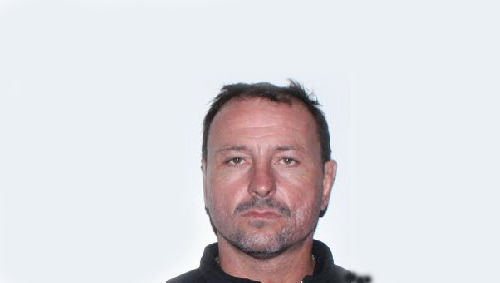
 PHOTO FOURNIE PAR L’AGENCE DES SERVICES FRONTALIERS


 Banques et cocaïne : là aussi j’avais raison


