AVISEUR INTERNATIONAL

Aviseur International renseigne, sans complaisance, sur la problématique de la drogue, du narcotrafic, de la corruption et sur les politiques mises en œuvre par les différents Etats et les dérives que s'autorisent les fonctionnaires des administrations — aviseurinternational@proton.me — 33 (0) 6 84 30 31 81

AVISEUR INTERNATIONAL

Millions Missing From DEA Money-Laundering Operation

DEA

But No One With the Power to Investigate Seems to Care

At least $20 million went missing from money seizures by law enforcers, critical evidence was destroyed by a federal agency, a key informant was outed by a US prosecutor — contributing to her being kidnapped and nearly killed — and at the end of the day not a single narco-trafficker was prosecuted in this four-year-long DEA undercover operation gone awry.

Those revelations surfaced in a recently decided court case filed in the US Court of Federal Claims in Washington, DC.

“Throughout this protracted litigation, the agency [DEA] delayed producing documents until the 11th hour and destroyed potentially relevant evidence,“ states Judge Mary Ellen Coster Williams in an Aug. 30 ruling awarding the informant in the case, with the code name “Princes,” more than $1.1 million. “…The conclusion that there were missing trafficker funds is supported by … DEA documents, including a statement by [a] DEA confidential informant.”

The Princess, a former airline stewardess and mother of two, lived in the US but hailed from an upper-crust Colombian family. Though her two former husbands had ties to the drug trade, she had a clean record and was essentially “scammed” into working as an informant by the threat of prosecution, court records reveal. Consequently, she was completely out of her league in taking on an extremely dangerous undercover role in the world of transnational crime, where she was charged with posing as a money launder to rope in high-level Colombian narco-traffickers for the DEA.

During the course of her undercover assignment, which played out in the early to mid-1990s, she was the target of death threats and even a foiled plot on her life after her cover was compromised. It was blown both by DEA negligence in money-seizing operations and as a result of an Assistant United States Attorney in Chicago disclosing her “status as a confidential informant to a criminal defendant whom the Princess had lured to the United States to be arrested,” the judge’s ruling reveals.

Even after all that, her DEA handlers still sent the Princess back into Colombia to meet with narco-traffickers, with her cover blown, leading to her being kidnapped and held for ransom for some three months “in a windowless, dirt-floor room where she slept on a straw mattress,” court records indicate.

She narrowly averted death due to the intervention of a “criminal associate of many high-level Cali mafia members” who also was a DEA cooperating source in Colombia. The source negotiated her release with a payment of $350,000 from his own funds, because DEA refused to negotiate officially with “terrorists.”

But the subtext to this story goes far deeper than a tale of a botched DEA operation — one that allegedly laundered in excess of $60 million for the narco-traffickers, with more than $20 million still missing, and which, in the end, produced no prosecutions (other than that of a Florida DEA agent, who was convicted of skimming some $700,000 from a money pick-up location in Houston and received a two-year sentence.)

Mike Levine, a former deep undercover DEA agent and supervisor who examined copious DEA documents related to this case as an expert witness for Princess’ lawyers, goes as far as to say in his report to the court that the law enforcers involved with the operation were likely stealing millions from the narco-trafficker funds seized in the operation and may well have been complicit in Princess’ kidnapping.

Princess’ [the informant’s] undercover role posing as a money launderer made her the responsible party for money shortages, of which a large number were noted in reporting, including the 
theft of … trafficker funds by a corrupt DEA agent, Rene De La Cova, and likely
 other corrupt agents whom, due to an absence of DEA oversight, have managed to thus far elude identification. Each of these [money] shortages placed Princess, the one whom the traffickers would blame for the missing money, in clear and present danger of homicide and/or kidnapping, unless resolved.

… The Princess Operation, as a result of lax and/or non-existent oversight by DEA Headquarters, was utilized by corrupt [US law] officers to steal trafficker funds, pad expense accounts, indulge in heavy drinking and the taking of high-expense boondoggle trips, while the safety and security of Princess went entirely ignored, resulting with her predictable kidnapping.

Levine, when asked about the case by Narco News, also provided the following details concerning his testimony before the court:

At one point, the prosecutor cross-examined me by asking if I thought the agents handling Princess were plotting to kill Princess by exposing her to one deadly situation after the other until she was killed. I testified (paraphrased according to my memory) that with more than $20 million missing and unaccounted for, and in consideration of the way they were handling her, it was a reasonable possibility.

The judge later that day ordered that the case be investigated by the US Attorney General’s office. …As you can see, the secrecy surrounding this thing is astonishing. I mean it is certainly not to protect Princess.

Fox Guarding the Chicken Coop

The so-called Operation Princess was overseen by the assistant special agent in charge of DEA’s Fort Lauderdale, Fla., office and was a US Attorney General-sanctioned money-laundering sting. The DEA agents, operating in conjunction with local law enforcers via a task force, used Princess to convince Colombian narco-traffickers to provide her money to launder through her accounts. Princess would charge a fee (a percentage) for the service, and after taking that cut would deliver the laundered cash to accounts controlled by the narco-traffickers.

That was the pretense. In reality, the cash was being picked up at numerous points in the US by the DEA task-force agents and deposited in undercover bank accounts controlled by DEA and then sent to the narco-traffickers after extracting the fees, which were used to fund the DEA operation. Essentially, DEA was in the money-laundering business. The ostensible goal was to follow the money and build evidence to prosecute key figures in the narco-trafficking network.

The way it played out, though, according to Levine and court records, is despite the four years that the money-laundering operation was in play, from late 1991 to 1995, no prosecutions resulted and at least $20 million went missing, unaccounted for in DEA documents — which were either destroyed or nonexistent. Yet only one DEA agent was prosecuted — allegedly for skimming a tiny fraction of the missing cash, $700,000.

To date, DEA has failed to account for that missing money, Levine stresses, hence the judge’s request for an inquiry by the US Attorney General’s office, which oversees the Department of Justice under which DEA operates.

Princess’ lawsuit sought damages from DEA for the long-term serious consequences that her kidnapping had on her health. She claims the ordeal sparked a serious nervous-system disorder that has left her debilitated. The judge’s August ruling found in her favor, ordering DEA to pay out in excess of $1.1 million to cover the cost of the now-former informant’s future health-care costs.

One former federal agent explains that money-laundering operations, such as Operation Princess, are supposed to be under strict controls to prevent skimming. He says absent those controls, which include auditing the books regularly and assuring money from pick-ups or seizures is counted promptly and accurately, it’s not difficult for a greedy agent to skim money off the top.

“When you’re chasing people who are moving cash, and there’s two or three bags of money [at a pick-up location], it’s real easy to stick a bundle of cash in a brief case,” the federal agent explains.

And no one is the wiser — other than the narco-traffickers who provided the money in the first place. Once they check their accounts, after the money is laundered (by DEA), and see the amount is light by $1 million or $2 million, who are they going to blame? In this case, Levine says, they blamed the Princess, figuring she was either a thief or a DEA informant, or both.

It’s the perfect crime, so long as DEA brass decides to look the other way, for fear of embarrassing the agency or undermining a big-budget operation.

The Kent Memo

This isn’t the first time that alleged corruption within DEA has surfaced in relation to Colombian narco-traffickers, informants and money laundering. Similar allegations of DEA corruption were alleged in what is now known as the Kent Memo.

Narco News broke that story in 2006, based on a leaked memo drafted by Department of Justice attorney Thomas M. Kent that referred to DEA operations carried out in Colombia and the US in the late 1990s and early 2000s. In the memo, written in December 2004, Kent alleges that DEA agents in Bogotá, Colombia, assisted narco-traffickers, engaged in money laundering for Colombia’s right-wing paramilitary groups, and conspired to murder informants.

Kent’s memo also alleges that investigations into the alleged corruption carried out by the Justice Department’s Office of Inspector General (OIG) and DEA’s Office of Professional Responsibility (OPR) were derailed and whitewashed by officials within those watchdog agencies.

A CIA “foreign-intelligence source” named Baruch Vega, key to DEA operations at the center of the Kent Memo, also says some of his informants, were, in fact, murdered due to leaks inside DEA and the US Embassy in Bogotá.

Vega claims he was used by multiple US law enforcement agencies simultaneously in the late 1990s and early 2000s to infiltrate and flip key narco-trafficking figures in Colombia — by convincing them to negotiate favorable plea deals with the US government. Some of those narco-traffickers went on to serve as assets for US agencies.

“I know exactly her [the Princess’] whole case.,” Vega claimed, in an interview with Narco News. “It’s exactly the same group [of allegedly corrupt US law enforcers involved]. Nothing changed at all. That was beginning of the North Valley Cartel [in Colombia]. The North Valley Cartel became very powerful immediately after the Cali Cartel was jeopardized by the same group [of US agents].”

Vega contends that the North Valley Cartel was a union of corrupt US law enforcers, including DEA agents; corrupt Colombian National Police; paramilitaries known as the AUC; and Colombian narco-traffickers. The NVC rose to dominance in Colombia in the late1990s and beyond with the demise of the Cali Cartel and traces its roots back to Los Pepes.

Colombia’s ruthless, right-wing paramilitary force, known as the Autodefensas Unidas de Colombia (AUC) [United Self-Defense Forces of Colombia], grew out of a smaller vigilante death squad called Los Pepes, which was established in the early 1990s with US backing to battle the notorious Colombian narco-baron Pablo Escobar. The AUC death squads were aligned against Colombia’s leftist FARC guerillas and also served as tools of oppression against social movements deemed threats to the Colombian power structure.

In yet another twist, DEA documents dug up by Narco News while pursuing its Bogotá Connection series indicate that the CIA was keeping a close eye on the DEA whistleblowers who were the source of the information in the Kent Memo because those agents were “somehow interfering with CIA operations.” That prompted speculation that the CIA may have had an interest in shielding the AUC, which was benefiting from the alleged DEA corruption revealed in the Kent Memo.

Interestingly, the chief suspect in the kidnapping of the Princess is a former Colombian National Police subcommander, court records indicate.

Levine is not willing to speculate on any possible connection between the Princess case and the Kent Memo, however.

In an email to Narco News, he states:

I’m not sure whether or not Mr. Vega has specific evidence, which is basically what I am all about, or his knowledge is general or hearsay. The thing about the Princess case is that I was furnished, via discovery, all the actual reports, depositions and statements, which I spent a considerable amount of time studying….

[Princess] would go to Colombia, with no cover or direction, make the deal, and the dopers would deliver large amounts of cash to people (undercover DEA agents) whom they believed were her « people. »

Each delivery was in a different US location. My study indicated that more than $20 million of the money furnished her « people » [DEA agents] in her name was missing and unaccounted for. The names of the people involved, what they said they did and what reports were never filed [by the law enforcers] are now a matter of record. The data is sufficient probable cause to open a major criminal investigation.

But it doesn’t appear that the DEA or the Department of Justice are onboard with that idea.

Department of Justice Public Affairs Specialist Nicole Navias, when contacted by Narco News for comment on the Princess case, said the DOJ’s Civil Division is still “evaluating the decision to determine the next steps.”

However, those next steps, according to a DEA spokesman, “will probably involve an appeal” of the federal judge’s decision awarding the Princess $1.1 million— as opposed to undertaking an investigation into the still-missing $20 million.

Levine says the bottom line is “that while Princess got upwards of $60 million in narco-trafficker funds, of which more than $20 million is missing, not a single case involving said money was ever brought to prosecution.”

“It appears crime does pay,” he concludes.

SOURCE: http://narcosphere.narconews.com/notebook/bill-conroy/2014/10/millions-missing-dea-money-laundering-operation

0000000000000

MAROC – Narcotrafic: complicité de l’armée marocaine avec le narcotrafic dénoncé dans un nouveau livre

Lire aussi: MAROC: l’une des richesses du roi, c’est le commerce international de la drogue (Narcotrafic)..

°°°°°°°°°°°°°°°°°°°°°°°°°°°°°°°°

A qui profite l’argent du cannabis ?

La liberté de la presse progresse au Maroc. Un site, Le gri-gri, ose publier un article très complet sur une grosse branche du marzen, le business industriel du haschich entre le royaume et l’Europe. Avec un blanchiment moyen de 120 000 euros tous les deux jours, c’est un potentiel d’environ 22 millions d’euros annuel (près de 32 millions CHF) pour une seule filière approvisionnant quatre pays. L’enquête a révélé que 5 millions d’euros avaient transité par les banques suisses, le reste est passé par des comptes israéliens ou a été converti en or pour le retour au bled.

Une entreprise qui ne connaît pas la crise

Ce montant astronomique doit encore être augmenté des frais généraux et des salaires des employés européens pour arriver à une estimation valable du chiffre d’affaire, probablement plus de 25 millions d’euros. Voilà ce qu’un réseau peut collecter et sortir de l’économie légale européenne, voilà ce que nous coûte la prohibition du cannabis. On imagine qu’avec de telles liquidités, il est aisé « d’acheter la route » comme disent les trafiquants pour parler de corruption.

Artisanat ou industrie ?

On pourrait penser que ce réseau est particulièrement gros et livre des marchés très dynamiques. Pas du tout. Un rapport du Health Research Board (HRB) pour 2003 estime à 374 millions d’euros annuel le marché de la résine de cannabis en Irlande, un pays de seulement 4 millions d’habitants. Il faudrait donc quinze filières comme celle décrite dans Le gri-gri rien que pour couvrir le marché de la lointaine Irlande. Ou bien cette filière n’est qu’artisanale, ce qui explique qu’elle est démantelée, et il existe bien plus gros. Ou bien de nombreux entrepreneurs au Maroc et en Europe se livrent au même trafic de fourmi. Certainement un mélange des deux.

Peu de pressions internationales

Tant tous les cas, ces sommes doivent profiter à beaucoup de patrons, banquiers, policiers, douaniers, hommes politiques au Maroc, c’est sans doute la principale ressource du pays après les devises des travailleurs immigrés. Dans un pays pauvre et corrompu, le marzen n’a pas de peine à se développer. Mais pour des volumes et des sommes pareilles, il faut aussi des complicités en Europe. Comment ce petit pays pourrait-il tenir tête à ses puissants voisins ? Pourtant, Mohamed VI est courtisé par tous les dirigeants européens alors que son pays nous pompe chaque année des milliards d’euros hors taxes.

L’économie gangrenée

L’argent du hasch est perdu pour l’impôt en Europe mais il permet au Maroc de payer les nombreuses entreprises européennes, surtout françaises, qui travaillent dans ce pays. Les entrepreneurs européens impliqués dans l’import ou le blanchiment réinvestissent leurs profits, souvent dans leurs entreprises qui deviennent florissantes au prix d’une concurrence déloyale pour les entrepreneurs honnêtes du même secteur. Les banquiers, pas seulement suisses, peuvent-ils encore se passer de ces capitaux flottants souvent disponibles pour des opérations à haut risque ? L’argent du hasch pervertit notre économie à haut niveau, nous sommes loin de l’imagerie d’Epinal des gangs de cités qui survivent grâce au shitstème. Bien au-dessus d’eux, on construit des routes, des usines ou des armes avec l’argent qu’ils collectent en bout de chaîne.

Des solutions ?

Pour justifier la prohibition, on peut disserter des heures sur le syndrome amotivationnel des ados qui abusent du joint, on peut ergoter sur les taux de THC, on peut s’empoigner sur la liberté de disposer de son corps et de son esprit… mais chaque année qui passe sans solution pragmatique gangrène un peu plus notre économie. Une dépénalisation de la consommation privée des adultes et de l’autoproduction pourrait diviser en deux le marché noir sans paraître trop incitatif pour la jeunesse puisqu’il n’y a pas de commerce, donc risque de prosélytisme. Une réglementation de la production et de la distribution à but non lucratif peut être envisagée, ces clubs seraient un recours au marché noir pour les adultes. Un marché réglementé comme pour le tabac et l’alcool aurait le plus d’impact économique mais ne garantirait pas forcément une bonne répartition socio-géographique des emplois. Il n’a jamais été question d’un marché libre, sans restriction d’age, de publicité, de santé publique.

Les solutions existent, plus de 100.000 Suisses ont signé l’initiative populaire pour un marché réglementé, cela correspondrait à environ un million de Français si ce système de démocratie directe existait dans ce pays. Ce processus est assez long et incertain, il ne concerne qu’un pays, il doit servir d’exemple mais à long terme. Devrons-nous attendre dix ans pour réformer cette aberration destructrice ? Oui, si nous ne faisons pas davantage entendre nos arguments partout où c’est possible.

Laurent Appel

°°°°°°°°°°°°°°°°°°°°°°°°°°°°°°°°°°

Maroc : à qui profite le kif ?

Le procès qui s’est ouvert au tribunal de Bobigny le 5 septembre 2005 met à jour les coulisses d’un trafic de hasch, de devises et de lingots d’or. Le Gri-Gri révèle l’implication de magnats marocains et de commerçants du Sentier.

Longtemps, les autorités marocaines ont rabâché une version : le trafic de cannabis est organisé par des mafias étrangères exploitant des paysans du Rif sous-payés. Seulement, en France, pas moins de cinq procédures judiciaires contredisent cette rengaine. À en croire les enquêtes policières qui ont disséqué le fonctionnement de ce juteux commerce, les gros bonnets sont des magnats marocains de l’import-export associés à des commerçants du Sentier, temple parisien de la fringue, originaires du Royaume.

Le 5 septembre, une de ces procédures a abouti à l’ouverture d’un procès fleuve à Bobigny, en banlieue parisienne. Les 26 prévenus, pour la plupart des Marocains, sont accusés d’avoir participé au blanchiment de l’argent du haschich et à son rapatriement sous forme de devises et de lingots d’or vers leur pays d’origine. Entre 100 000 et 140 000 euros tous les deux jours

Une filière entièrement pilotée à distance par des négociants basés au Maroc.

Parmi eux, les C., une famille de Nador, propriétaire d’échoppes de tissus et de cybercafés dans plusieurs villes du Royaume. Une couverture, soupçonne la justice française. Dans leurs arrière-boutiques, ces commanditaires délivrent leurs instructions au jour le jour à leurs intermédiaires basés sur l’autre rive de la Méditerranée. Leur station-service située à Nador sert de plaque tournante. À l’aller, les tonnes de résine de cannabis y sont embarquées à bord de camionnettes, de 4×4, voire de bus. Direction la France, la Belgique, l’Allemagne, et les Pays-Bas.

Au retour, c’est aussi là que les billets et lingots d’or sont déchargés. La fraîche est alors investie dans l’immobilier et dans la culture du chanvre. Et l’or, refourgué aux bijoutiers. Plus intrigant, A. T., l’un des accusés-clés de ce procès (qui comparaît libre !), n’est autre que le bras droit d’un personnage fort connu : …. Soupçonné de blanchiment d’argent par la justice française, ce Franco-Marocain a été arrêté en avril 2004 à l’aéroport de New York et discrètement extradé vers Paris. Très proche, sous le règne d’Hassan II, de Mohamed Médiouri, puissant patron de la sécurité du Palais royal, il est le fils de …, un richissime homme d’affaires du Royaume qui a fait fortune dans le négoce de la ferraille et des engins de travaux publics. Un patriarche si influent qu’il a obtenu que son fils et son acolyte soient défendus par P. H., une star du barreau parisien, également avocat de M. R. (né au Maroc et ami de la couronne), de L. G. et de feu A. S.

D’après les écoutes téléphoniques, A. T., employé de … dans son magasin du Sentier, joue également les coursiers pour le compte de son patron, faisant la navette entre Paris et Lyon pour rapporter des sacs de sport bourrés de billets. Des sommes qu’il confie illico aux bons soins de M. C., collecteur en chef présumé du réseau, basé à Paris. Ce plombier de formation est soupçonné d’avoir organisé le ramassage, le blanchiment et l’expatriation hors de France de la totalité de l’argent issu de la vente du hachisch. Look gentillet, tempérament réservé, ce Marocain de 29 ans a toutes les qualités pour remplir sa discrète mission. De jour comme de nuit, il sillonne l’Hexagone et même l’Europe à bord de sa Mercedes pour récupérer le magot. En province, il ne se déplace jamais pour moins d’un « mètre », soit 100 000 euros dans le jargon des trafiquants. Début 2003, il aurait ainsi collecté 3,2 millions d’euros en deux mois.

Une fois l’argent récolté, l’efficace M. C. s’en débarrasse dans les 48 heures. Le grisbi est d’abord stocké à Clichy-la-Garenne chez A. B. dit le « Boupastélé » (le boulanger en arabe). Un modeste commerçant, en apparence, qui possède tout de même un million d’euros, trois boulangeries et une demi-douzaine d’appartements.

Puis une partie des espèces est écoulée via des comptes bancaires suisses et israéliens. Au total, 5 millions d’euros auraient transité vers le « pays propre », nom de code désignant la Confédération helvétique. Là, détail troublant, dans le dossier apparaît un nom donnant un tout autre relief à l’affaire : J. M.. Du fait de ses liens avec S. H., autre sommité marocaine, ce banquier suisse fait l’objet d’un mandat d’arrêt délivré par le juge d’instruction Philippe Courroye pour blanchiment de capitaux provenant de crimes et délits dans le cadre de l’enquête sur les ventes d’armes à l’Angola.

Quant au reste du pactole, M. C. en convertit une grande partie en or. Chaque semaine, il commande entre 30 et 50 « fèves » auprès de deux agents de change de la Bourse et du Panthéon, à Paris, également poursuivis dans ce procès.

Dernière étape, l’expédition des devises restantes et des lingots vers le Maroc. Le trésor est planqué dans les portières et sièges des voitures confiées à des passeurs marocains, visiblement sélectionnés pour leur allure de bon père de famille. Le principal d’entre eux, A. M.. Bien qu’il soit surnommé « Khadafi », ce retraité de 62 ans, père de 6 enfants, n’a rien d’un bandit de grand chemin : petite moustache, lunettes rondes, visage poupin et aspect bonhomme. Et pourtant, il aurait transporté plus de 600 lingots. C’est lui qui, fin avril 2003, sera arrêté avec 400 000 euros camouflés dans sa vielle fourgonnette Mercedes.

Une interpellation qui permettra aux policiers de démanteler la branche française de ce réseau. Mais ils ne parviendront pas à remonter jusqu’aux commanditaires marocains. Seuls quatre mandats d’arrêts seront délivrés à l’encontre de membres du clan C.. Des mandats restés lettre morte. Plus curieux encore, malgré l’ampleur du trafic, aucun flic, ni douanier, ni gendarme du Royaume n’est inquiété. La complicité des douanes de Tanger ou d’ailleurs reste encore et toujours la partie la plus immergée de l’iceberg.

Les amis du gri-gri

SOURCE: http://www.chanvre-info.ch/info/fr/A-qui-profite-l-argent-du-cannabis.html

Avatar de Marc FievetThe international informant

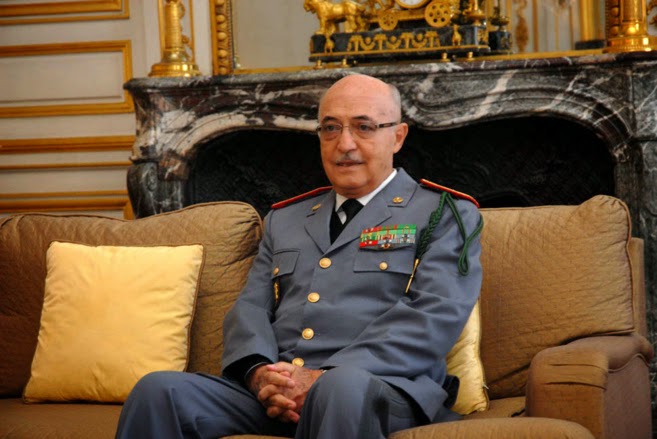
Abdelaziz Bennani Bennani, général dénoncé par l’auteur

Un ancien officier de l’armée marocaine, Abdelila Issou, âgé de 49 ans, raconte dans ses mémoires le business obscur du Général Bennani, le chef de l’Etat Major des troupes marocaines opérant au Sahara Occidental. Selon lui il aurait ouvert les portes aux cartels colombiens pour qu’ils puissent introduire la cocaïne en Espagne.
Diplômé à l’Académie Royale militaire de Meknès, il a fini par travailler pour les services secrets espagnols, CNI, avant de s’exiler en Espagne en 2000.
Dans son livre « Mémoires d’un soldat marocain La Face cachée du royaume enchanté », Issou dénonce la corruption de la plus haute hiérarchie militaire marocaine en apportant des preuves accablantes de la complicité de l’armée marocaine avec le trafic de drogue.
Le lieutenant Abdelillah Issou commandait une unité qui patrouillait entre Cap Malabata, entre Tanger et Ceuta. Sa tournée commençait tous les jours à 21h02…

Voir l’article original 152 mots de plus

U.S. District Judge Marcia Morales Howard sentenced Arnold Clayton (42, Sanderson) to 19 years and six months in federal prison

usDEA1September 15, 2014
Contact: Public Information Officer
Number: 954-660-4602

Sanderson Drug Dealer Sentenced to over 19 Years

SEP 15 (JACKSONVILLE, Fla.) – U.S. District Judge Marcia Morales Howard sentenced Arnold Clayton (42, Sanderson) to 19 years and six months in federal prison for one count of distributing cocaine base and cocaine, and for violating his supervised release in a prior federal case. Clayton was also sentenced to a term of six years of supervision, after his release from prison.  Clayton pleaded guilty on June 9, 2014.

According to court documents, on July 13, 2012, Clayton sold cocaine base and cocaine to a confidential source for $320. Clayton was sentenced as a career offender because of his two previous federal drug convictions. On July 27, 1999, Clayton was sentenced to almost five years in federal prison for conspiracy to distribute cocaine and cocaine base. On August 16, 2007, he was sentenced to over eight years in federal prison for distribution of cocaine base. Clayton was still on supervised release for the 2007 case when he distributed cocaine base and cocaine in the current case.

This investigation was conducted by the Drug Enforcement Administration and the Baker County Sheriff’s Office. It was prosecuted by the United States Attorney’s Office for the Middle District of Florida.

http://www.justice.gov/dea/divisions/mia/2014/mia091514.shtml

000000000000000000000000000000

CHICAGO (AP) — The head of the Drug Enforcement Administration’s…

DEAAPNewsBreak: Chicago DEA chief heading to DC. FILE – In this Dec. 11, 2012 file photo, Jack Riley, center, head of the Drug Enforcement Administration in Chicago, points out local Mexican drug cartel problem areas on a map in Chicago. Riley who has been outspoken about the growing influence of Mexican cartels in the American heartland is leaving Chicago to take one of the agency’s top posts in Washington, D.C. Riley has been named as the DEA’s new chief of operations and will be responsible for overseeing all agency law enforcement within the United States and international. Photo: M. Spencer Green, AP
CHICAGO (AP) — The head of the Drug Enforcement Administration's...APNewsBreak: Chicago DEA chief heading to DC.
CHICAGO (AP) — The head of the Drug Enforcement Administration’s Chicago division, who has drawn attention to the growing influence of Mexican cartels in the American heartland, is leaving to take one of the agency’s top posts in Washington, D.C., a DEA official said Tuesday.

Jack Riley, 56, has been named the DEA’s new chief of operations — considered the federal agency’s No. 3 position — and will oversee all agency enforcement activities within the U.S. and internationally, Rusty Payne, a spokesman with the DEA in Washington, told The Associated Press.

In an interview at his office Tuesday, Riley said the two biggest changes in the trafficking landscape since he came to Chicago in 2010 have been the entrenchment of Mexico’s cartels in the Midwest and the resurgence of heroin, including in suburban neighborhoods.

Heroin has become more popular, in part, because it’s now available in easier-to-use powder form and can be snorted rather than having to be injected with needles, he explained.

« People who never would have done heroin are doing it today, » Riley said.

As the special agent in charge in Chicago, Riley has directed DEA operations in Illinois, Indiana, Wisconsin, Minnesota and North Dakota. His previous posts included head of the agency’s El Paso, Texas, office.

In recent years, Riley highlighted how Mexican cartel operatives had pushed deep inside the U.S., including Chicago, which has become a hub through which the syndicates distribute drugs farther afield.

« They’ve cemented themselves, » Riley said.

Riley also backed the creation of a Chicago Strike Force headquarters, which opened last year. At the new facility, federal agents, police and prosecutors work together year-round, often targeting the point of contact between cartel-backed traffickers and local gangs who serve as street-level salesmen.

In 2013, Riley joined the non-governmental Chicago Crime Commission in naming Sinaloa cartel boss Joaquin « El Chapo » Guzman, as the city’s new Public Enemy No. 1 — the same label once assigned to gangster Al Capone.

Mexican authorities captured Guzman earlier this year; they haven’t indicated whether he might be extradited to face trial in Chicago or another American city.

Riley is expected to begin his new job next month. His replacement in Chicago has not been named.

SOURCE: http://www.mynextfone.co.uk/breaking-news/chicago-ap-the-head-of-the-drug-enforcement-administrations-h26851.html

0000000000000000000000000000

GIBRALTAR, le film diffusé actuellement sur Canal +, s’est inspiré très librement de l’histoire de Marc Fievet

Quelques opérations parmi d’autres!

Eté 1993

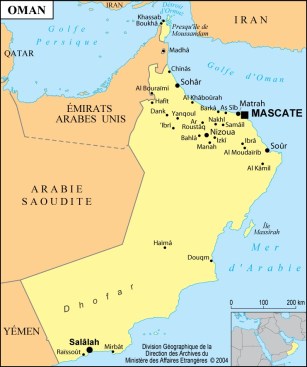
Quelques problèmes en mer d’Oman!

ile-de-Socotra

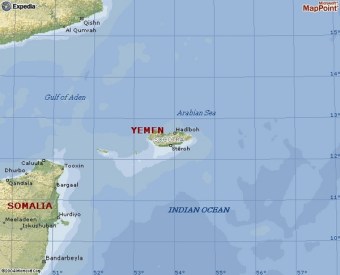
L’intervention américaine en Somalie perturbe les plans de Claudio Pascuale Locatelli. Des avions de l’US Air force ne cessent de survoler la zone où le cannabis afghan enlevé dans la région de Gwadar, sur la côte ouest du Pakistan, devait être transféré à bord du Melor, entre l’extrême Est du Yémen et le Nord de l’île de Socotra.

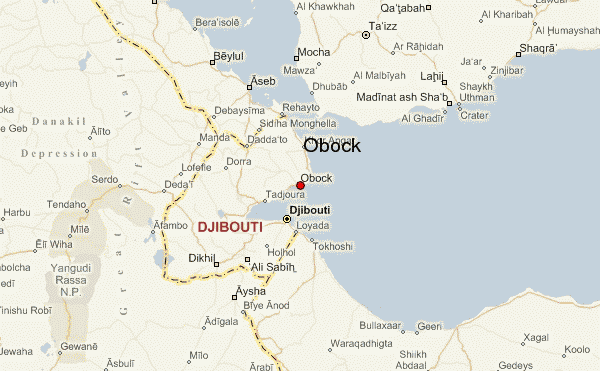
Le cargo iranien qui avait chargé  dans le port pakistanais n’a pu attendre le Melor et a improvisé en transférant les trente-deux tonnes  à bord d’un discret boutre local qui attend sagement le navire Melor dans la zone de Obock, au nord-est de Djibouti, sans attirer l’attention des pilotes américains.

Obock.8

D’un saut d’avion, NS 55 (Marc Fievet) va rejoindre l’équipage en escale à Djibouti avant l’opération de chargement, et s’assure que tout est en ordre.

Le transbordement  s’effectuera le 14 juillet  1993 sans problème.

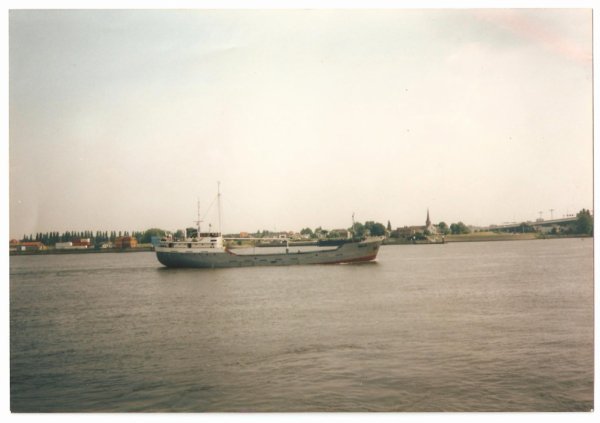
MELORM/S Melor finançé à l’origine par la Douane française pour l’opération « Claudine » menée avec le British Customs Excise

mer-d-Oman-golf-d-Oman-golf

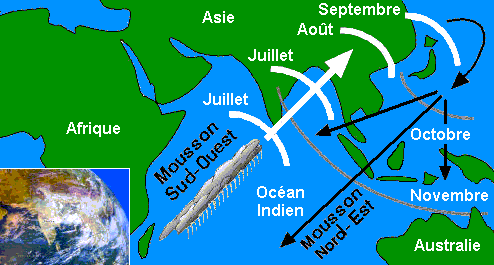
Malheureusement le Melor n’a qu’un « Brons » de 360 CV et ne peut affronter les vagues , le vent et les courants de la mousson qui s’est établi dans l’océan indien.

mousson-so-ne

Claudio Pascuale Locatelli trouve la solution en nolisant un « supplyer » à Mascate.

supplyer

Gil, le  responsable de la marchandise, a suivi avec le télex du Melor pour assurer la continuité des communications. Toutes les factures qui arrivent à la compagnie Rio Plata ltd de Gibraltar seront transmises à Jean Paul Garcia, attaché de la Douane française à Madrid, aujourd’hui en 2014 directeur de la DNRED;

Les numéros contactés parleront: des échanges avec un télex dans le Var en France mais sur liste rouge…Et de nombreux échanges avec une grande banque de New York!

Le TRACFIN n’ a certainement pas eu les moyens de s’exprimer!

Début novembre 1993 en atlantique nord

Europe-mers-d-Europe-Océan-Atlantique-Amérique-du-Nord

27 tonnes pour le Canada

Ricky Anthony Parsons, rentre au port de Clarenville-St Jones, au Nouveau Brunswick.  Son bateau, le « M/V Cutknife II » est chargé de vingt-sept tonnes de cannabis afghan qu’il a récupéré sur le supplyer  en eaux internationales. La Royal Canadian Mounted Police (RCMP)  saisit la cargaison.

5 tonnes pour l’Angleterre

Le 3 novembre, un bateau de pêche, le  » Schema  » est arraisonné par les douanes anglaises à Bideford, en Cornouailles. Il y a cinq tonnes de cannabis afghan à bord.

***************************************************

DEA – SAN FRANCISCO NEWS: Six Sacramento Area Residents Indicted for Trafficking in Methamphetamine and Heroin

AUG 28 (SACRAMENTO, Calif.) –A federal grand jury returned a 17-count indictment today against Kenneth Tam, 53; Gerald Osborne, 56; Sherlynn Charles, 52; Marco Antonio Borja, 38; Adalberto Valenzuela-Ruiz, 30; and Nelson Gutierrez, 26, charging them with conspiracy to distribute and to possess with the intent to distribute methamphetamine and heroin, and possession and distribution of methamphetamine and heroin.

According to court documents, in January 2014, a seven-month investigation began after law enforcement received reports that Tam was trafficking large amounts of methamphetamine and heroin throughout Sacramento, Yolo, and El Dorado Counties. Tam acquired large amounts of methamphetamine from Borja, Valenzuela-Ruiz, and Gutierrez, as well as heroin from other sources, and used sub-dealers, including Osborne and Charles, to distribute those drugs on his behalf. Through controlled purchases, searches, and other law enforcement activity, investigators seized over nine pounds of methamphetamine and nearly two pounds of heroin.

This case is the product of an investigation by the Drug Enforcement Administration. Assistant United States Attorney Michael D. McCoy is prosecuting the case.

If convicted, Kenneth Tam and Gerald Osborne face sentences of 20 years to life in prison and a $20 million fine. The four remaining defendants each face 10 years to life in prison and a $10 million fine. Any sentence, however, would be determined at the discretion of the court after consideration of any applicable statutory factors and the Federal Sentencing Guidelines, which take into account a number of variables. The charges are only allegations; the defendants are presumed innocent until and unless proven guilty beyond a reasonable doubt.

SOURCE: http://www.justice.gov/dea/divisions/sf/2014/sf082814.shtml

000000000000000000000000000000

Le scénariste de « Un prophète » et « Braquo » règle ses comptes avec le cinéma français et revient sur le tournage du film Gibraltar diffusé en ce moment sur Canal +

vendredi 10 janvier 2014 – 16h45

Interrogé par nos soins à l’occasion de la diffusion prochaine de « Braquo » saison, 3,  Abdel Raouf Dafri, le scénariste des deux « Mesrine » ou encore du film de Jacques Audiard, « Un prophète », s’est exprimé sur le système de production des films français et du traitement réservé aux scénaristes dans l’hexagone.


La controverse soulevée par Abdel Raouf Dafri suite à la sortie du film Gibraltar

Lauréat d’un César pour Un prophète, Abdel Raouf Dafri est sans conteste l’un des grands noms du scénario en France. Mais il est également connu pour ses propos sans langue de bois. Ainsi, interrogé par nos soins sur le travail des scénaristes en France, il n’a pas pris de gants pour dévoiler le fond de sa pensée et livrer une vision virulente du système.

Morceaux choisis :

– « Aux Etats-Unis, le scénario c’est ce qu’il y a de plus sacré. »

– « Qu’est-ce que c’est que raconter une histoire ? Aujourd’hui en France, on a perdu ça ! »

– « La plume c’est comme la bouche : si t’as rien à dire, ferme ta g….e ! »

– « En France on ne valorise pas l’écrit »

– « Quand vous regardez le cinéma français, vous pleurez ! »

– « On fabrique du Doliprane. »

Propos recueillis par Clément Cusseau / Cadrage : Constance Mathews


la video: http://www.allocine.fr/article/fichearticle_gen_carticle=18629966.html

#Posté le lundi 09 juin 2014 23:54

Modifié le mardi 10 juin 2014 00:07

La controverse suite à la sortie du film Gibraltar et ma réponse publiée sur Allociné
La controverse suite à la sortie du film Gibraltar et ma réponse publiée sur AllocinéRéponse de Marc Fiévet, suite à la polémique autour du tournage de Gibraltar, dans son intégralité
 

Bonjour à toutes et à tous, je m’appelle MARC FIÉVET, je suis l’homme qui a inspiré le film « GIBRALTAR » après la parution de mon livre « L’AVISEUR ».

Suite aux vidéos mises en ligne sur Allocine (celles d’Abdel Raouf Dafri et Julien Leclercq) et la controverse soulevée, j’estime nécessaire d’apporter quelques précisions supplémentaires sur le film produit par Dimitri Rassam et réalisé par Julien Leclercq, avec dans le rôle de Marc Duval, Gilles Lellouche, dans le rôle de l’officier recruteur des douanes françaises et agent traitant, Tahar Rahim et dans le rôle du narco Claudio Pasquale Locatelli – considéré comme le Copernic du narcotrafic mondial par Roberto Saviano dans son dernier livre Zero, zero, zero – Riccardo Scamarcio.

Le  scénario initial tiré du livre « L’Aviseur » que j’ai écrit, et qui a inspiré l’écriture par Abdel Raouf Dafri, du scénario auquel j’ai participé et pour lequel j’ai signé un contrat de consultant, n’a pas été respecté par le réalisateur et ne correspond en rien à ce qui devait être tourné…

En effet comment aurais-je pu accepter d’être présenté comme ce Marc Duval, tenancier d’un « bar à tapas » de troisième zone, incapable de faire marcher son business et s’entêtant toutefois à garder un voilier qu’il n’était pas capable d’assumer financièrement ?

Comment aurais-je pu accepter que le réalisateur Julien Leclercq tourne des scènes qui n’ont strictement rien à voir avec la réalité de mon vécu ?

Comment aurais-je pu accepter de voir sali le rôle que j’ai joué auprès des autorités régaliennes et des opérations undercover des services de lutte contre le narcotrafic ?

J’ai rencontré le réalisateur Julien Leclercq pour la première fois lors de la projection privée à laquelle j’ai assisté, accompagné de mes avocats, le 15 juin 2013. Je lui ai immédiatement demandé pour quelles raisons la scène de ma rencontre avec le ministre Michel Charasse ne figurait pas dans le film (alors qu’elle se trouvait dans le scénario d’Abdel Raouf Dafri)?  Après un bafouillage, il m’expliqua que c’était une question de coût !

Fichtre, tourner une scène dans un bureau avec un ventru à bretelles fumant le « Cohiba » aurait au moins démontré la volonté politique des actions d’infiltration. Mais c’était trop cher !

Ce sera l’unique rencontre que j’aurais eu avec ce « grand » professionnel.

Ce qui me navre, c’est que je suis présenté dans ce mauvais film comme un pauvre mec aux abois et pis encore, comme un mauvais agent d’infiltration. Pourtant, si l’on en croit les propos de :

Christian Gatard (le douanier joué par Tahar Rahim) interviewé par Ouest France le 7 octobre 2013:

« Marc Fiévet a été très productif et très professionnel en matière de renseignements. Il travaillait de manière rigoureuse avec une production dense, riche et intéressante sur les individus et les mouvements de bateaux. Il a rencontré plusieurs fois le ministre, Michel Charasse, et les Douanes lui ont même financé l’achat d’un restaurant près de Marbella. Notre coopération opérationnelle a duré six ans et malheureusement il a été arrêté par les Britanniques, à la demande des Canadiens. »

À la question « Pourquoi a-t-il été arrêté ? » :
« Au fil du temps, il s’est infiltré dans les réseaux et a été, entre autre, en relation avec un gros baron de la drogue, Claudio Locatelli. Il a participé à de nombreuses opérations, notamment six tonnes de cocaïne au Canada. Bien que les Britanniques aient profité des renseignements de Marc Fievet, ils avaient une dent contre lui au sujet d’une livraison de cocaïne pour l’IRA qui n’avait pas eu lieu et ils l’ont « flingué ».
Grâce à lui, on les avait informés de cette livraison, ils étaient très intéressés, ils espéraient arrêter des membres de l’IRA et ont donné des instructions précises.
Marc Fievet devait attendre en pleine mer la livraison par avion, en provenance du Vénézuela. Mais, dans la zone concernée, les Américains ont procédé inopinément à des contrôles renforcés et le largage n’a donc pas eu lieu.
Après un mois d’attente, Marc Fievet est reparti et les Anglais ont été très désappointés.
Cet épisode est d’ailleurs relaté dans le film de manière déformée. Après son arrestation, il n’a pas été soutenu par la France. Il aurait peut-être pu bénéficier d’une remise de peine suite à son rapatriement du Canada, deux ans après sa condamnation, mais le directeur général des douanes avait changé ainsi que le ministre. »

Que pensez-vous du film ?
« Il est assez violent. Heureusement, ces meurtres n’ont pas existé ! Il y a des invraisemblances. On me fait faire des contrôles en Espagne alors que c’est impossible. Il y a des choses aménagées par rapport à la réalité.
Je n’ai pas un mauvais rôle, mais le film ne retrace pas les nombreux échanges qu’on a eus avec Marc Fievet. J’ai toujours des contacts avec lui et une certaine admiration, car il fallait du courage pour faire ce qu’on lui demandait. »

Interrogé à mon tour le 18 octobre 2013 par Ouest France

Comment avez-vous rencontré Christian Gatard ?
« J’étais en recherche d’emploi, il m’a contacté par téléphone puis nous nous sommes rencontrés à Gibraltar. J’ai accepté de travailler pour les douanes car c’était une activité d’observation dans laquelle je pensais pouvoir m’intégrer et obtenir des résultats. J’estimais que j’étais en capacité de donner le change afin d’éviter le danger et de pouvoir passer au travers des suspicions et de la paranoïa des narco-trafiquants.
Nous avions des résultats exceptionnels. Cela a bien marché jusqu’à un changement de politique en mars 1993. Nicolas Sarkozy devenu ministre du budget du gouvernement Balladur a donné pour directive de supprimer toutes les actions d’infiltration, mais moi, j’étais déjà infiltré dans l’organisation dirigée par Claudio Locatelli, baron de la drogue. Les responsables des douanes avec lesquels j’étais en relation ont été mutés.
À l’époque, je naviguais sur un bateau, financé à 50 % par les douanes françaises et pour le reste par des narco-trafiquants anglais. N’étant pas informé de cette nouvelle orientation politique, j’ai continué mon activité et fin juin, j’ai organisé à l’hôtel Meurice un rendez-vous avec deux financiers d’un trafic de quatre-vingts tonnes de cannabis. J’ai avisé Christian Gatard pour que soit mis en place un dispositif afin de les identifier. La direction parisienne a refusé de mettre à disposition des hommes pour soutenir l’équipe nantaise et le dispositif a échoué. »

Quelles ont été vos relations avec Christian Gatard ?
« Christian Gatard me disait d’être prudent, mais j’étais axé sur la culture du résultat et infiltré à un niveau tel que je ne pouvais plus reculer. Je me suis retrouvé sous la coupe de Locatelli qui m’a mis à l’abri avec ma famille à un moment où j’étais menacé ; les douanes françaises que j’avais sollicitées m’avaient laissé tomber.
Christian Gatard a ensuite été muté à Marseille et a reçu l’ordre de ne plus suivre mon affaire. Il a cependant été sollicité par sa hiérarchie pour se rendre au Canada après mon arrestation pour me dire que je devais plaider coupable, que je serai après rapatrié en France et qu’on solliciterait une grâce présidentielle.
Quand je suis rentré, le directeur général des douanes de l’époque a refusé d’intervenir et d’assumer la continuité du service de l’Etat. De son côté, Michel Charasse, que j’avais rencontré cinq fois, n’est pas intervenu auprès de Jacques Chirac pour que je sois gracié. Ce sont eux les deux responsables.
Christian Gatard ne m’a pas laissé tomber, on a travaillé ensemble pendant six ans et je ne vois pas pourquoi je lui en voudrais. On se rencontre de temps en temps et c’est toujours un plaisir, même si cela provoque chez moi un retour d’adrénaline et me renvoie des années en arrière. »

Que pensez-vous du film Gibraltar ?
« Il ne reflète pas du tout la réalité, ce n’est pas mon histoire. Je passe pour une vieille tâche. On oublie les relations politiques, il n’y a plus d’adoubement. La chronologie n’est pas du tout respectée et (lors de la promo de sortie du film faite par Gilles Lellouche) Je suis présenté par les médias comme un narco-trafiquant repenti, ce qui est faux. »

Au début, j’ai eu un contrat de coscénariste et j’ai participé aux quatre premiers scénarios (il y en a eu sept). Après j’ai été écarté et je n’ai plus eu de nouvelles. Je n’ai pas été approché par Julien Leclercq, le réalisateur, ni par Gilles Lellouche qui joue mon personnage.

Comment aurais-je pu approuver le rôle du personnage censé me représenter, tel que le joue Gilles Lelouche, alors même que ce dernier s’est refusé à toute rencontre avec moi, arguant du fait qu’il ne voulait pas être « subjugué » ou « déçu ».

Un acteur, pour moi, lorsqu’il joue le rôle d’un individu bien réel qui a inspiré un scénariste,  doit respecter le profil de celui qu’il incarne à l’écran. Et s’il a la chance que ce dernier soit vivant et qui plus est consultant sur le film, le minimum semble au moins qu’il accepte de passer quelques jours avec lui sur le tournage. Au lieu de cela, et c’est Gilles Lellouche lui-même qui le précisera lors d’une interview le 7 septembre 2013 avec Charlotte Bouteloup (Télématin-France 2),  il réécrivait les dialogues et revoyait la mise en scène avec Tahar Rahim lors des soirées à l’hôtel, pendant le tournage en Andalousie. L’acteur a donc arrangé le scénario et les dialogues à sa façon, avec l’aval du prétendu réalisateur.

Dans ces conditions, les états d’âme de Gilles Lellouche sont surprenants.

Alors, pourquoi ce film qui ne représente en rien la réalité ? C’est la question que je me pose et que je pose à Dimitri Rassam !

Pourquoi avoir changé le scénario, le titre du film et le nom du personnage principal ?

J’ai appris de la bouche même d’Abdel Raouf Dafri (qui le tient de Dimitri Rassam avec lequel il a eu une conversation téléphonique assez houleuse à ce sujet) que le changement de mon nom en Marc Duval venait d’informations transmises à SND (le distributeur du film) par un agent de la DST (La Direction de la Surveillance du territoire était un service de renseignements du ministère de l’Intérieur, au sein de la Direction générale de la Police)… Ce mystérieux agent aurait informé la société SND que je serais un individu sulfureux… Et qu’il valait mieux changer mon nom.

Dafri n’en a pas cru un mot, s’est brouillé définitivement avec le producteur et le réalisateur et a tourné le dos au film, 8 jours avant le début du tournage.

Personnellement, je pense qu’il vaut mieux en rire quand on sait que la DST n’existait déjà plus à l’époque de la mise en chantier du film, car remplacée par la DCRI (Direction centrale du Renseignement intérieur) au 1er juillet 2008, et que la postface de mon livre, Infiltré, au coeur de la mafia, fut écrite par un ancien patron de la DST qui « connait la chanson »!

Marc Fievet

http://www.allocine.fr/article/fichearticle_gen_carticle=18630521.html

000000000000000000000000000000000000

US DEA helps China Make $7m Cocaine Bust in Shanghai

Chinese cocaine shipping container Shanghai DEAUmberto Bacchi

By

August 29, 2014 13:18 BST
Chinese police seized 70kg of cocaine hidden in a shipping container in Shanghai(AFP PHOTO/Peter PARKS)

US and Chinese police forces cooperated to make the single largest drug bust in China’s recent history, Beijing said.

Acting on a tip-off by US Drug Enforcement Administration (DEA) officials, Chinese security forces seized 70kg of cocaine that had been smuggled to Shanghai from South America, the Ministry of Public Security said.

In August, the DEA informed its Chinese counterparts of a suspect shipping container coming from Peru via Mexico.

US officials said that analysis of phone messages and emails of a murdered Mexican drug cartel member suggested the cargo was to transit from Shanghai, where it was to be loaded on another ship bound to New Zealand.

As the ship docked in China’s largest city, it was searched Police and customs officials revealing a large quantity of cocaine.

The haul, which according to estimates had a street market value of more than $7m (£4.2m) in China, was the single largest amount seized by local authorities in recent years, state news agency Xinhua reported.

« The ministry said it has in recent years strengthened cooperation with foreign agencies including the DEA, with which it has regular intelligence exchanges, and that the efforts have apparently paid off, » the agency wrote.

The case came as Chinese president Xi Jinping has launched a tough crackdown on illegal drug use, which has risen in recent years fuelled by the growing income enjoyed by China’s middle-class.

Several celebrities, including the including the son movie star Jackie Chan and actor Kai Ko, have been arrested on drug charges in the last few months.

SOURCE: http://www.ibtimes.co.uk/us-dea-helps-china-make-7m-cocaine-bust-shanghai-1463146

000000000000000000000000000000000

Opération DINERO: le résumé actuel de l’opération du DEA écarte pour toujours la DNRED!

Les « historiens » du DEA semblent refaire l’histoire de cette opération à laquelle a participé la DNRED!

Operation Dinero (1994)
Operation Dinero, a joint DEA/IRS (Internal Revenue Service) operation, was launched by the DEA’s Atlanta Division in 1992. In this investigation, the U.S. Government successfully operated a financial institution in Anguilla for the purpose of targeting the financial networks of international drug organizations. In addition, a number of undercover corporations were established in different jurisdictions as multi-service “front”businesses designed to supply “money laundering” services such as loans, cashier’s checks, wire transfers, and peso exchanges, or to establish holding companies or shell corporations for the trafficking groups. Believing these services were legitimate, the Cali mafia engaged the bank to sell three paintings, a Picasso, a Rubens, and a Reynolds. These paintings, estimated to have a combined value of $15 million, were seized by the DEA and IRS in 1994. The operation resulted in 116 arrests in the United States, Spain, Italy, and Canada and the seizure of nine tons of cocaine, and the seizure of more than $90 million in cash and other property. The two-year joint enforcement operation was coordinated by the DEA, IRS, INS, FBI, and international law enforcement counterparts in the United Kingdom, Canada, Italy, and Spain.

SOURCE: http://www.justice.gov/dea/about/history/1994-1998.pdf

0000000000000000000000000000000000000000000000

MAROC: l’une des richesses du roi, c’est le commerce international de la drogue (Narcotrafic).

Avatar de Marc FievetThe international informant

Maroc: révélations accablantes de l’ex-officier des services secrets marocainsVu ses révélations accablantes sur les vérités de la monarchie marocaine et ses services d’espionnage dans les enlèvements, la torture et le trafic de drogue, on vous présente la traduction intégrale de l’interview de l’ex-officier marocain des services secrets comme publiées dans le journal Echourouk “Echoroque”http://www.echoroukonline.com/ara/articles/209832.html
Quelles sont les raisons qui vous ont poussés à quitter les services secrets marocains, et quelles sont les tâches qu’on vous a consignés?

Maroc: révélations accablantes de l’ex-officier des services secrets marocainsTous d’abord je dois remercier le journal d’Echoroque et son équipage d’avoir offert cette occasion qui est rare dans mon pays bien-aimé à cause des pratiques sordides du Makhzen qui impose la censure contre toutes les voies libres qui demandent le changement, la liberté et la vraie démocratie.

Revenons à votre question, l’une des raisons qui m’a poussé à quitter les services secrets marocains est l’absence d’une loi qui encadre ces services et définit leur mission. Au même temps, il…

Voir l’article original 1 716 mots de plus

East Lancasshire (UK) – Narcobusinessman Darren Bowling involved in a conspiracy to supply class A and class B drugs and money laundering

Lancashire Telegraph: Businessman Darren BowlingA ‘NOTORIOUS’ drug dealer was living a luxury lifestyle while peddling thousands of pounds of cocaine and cannabis.

Businessman Darren Bowling was involved in a conspiracy to supply the drugs which spread across the North West and the entire country, police said.

Investigators said breaking up the gang represented a ‘massive dint’ in the importation and selling of class A and B drugs in East Lancashire.

Police said Bowling had been living in a luxury €1.5million villa in Malaga, complete with swimming pool and had properties in Bulgaria as

well as a converted barn in East Lancashire.

Lancashire Telegraph: Businessman Darren BowlingThe 48-year-old drove a Porsche Cayenne with a personal number plate 36 BOW and also had a brand new Volkswagen Golf.

He owned his own storage company in Hapton as well as a car sales business in Burnley and had a stake in a popular town centre bar.

But despite all of this, police said they had never seen him do a hard day’s work.

Officers said Bowling teamed up with Paul Bell, 49, from Cheadle, and alleged dealer Michael Donnelly, to set up an underground drugs business.

Donnelly has not been seen since he fled the United Kingdom to South Africa via Dubai in September last year.

Bowling, who admitted, conspiracy to supply class A and class B drugs and money laundering, was living the life of a millionaire while organising drug deals police said.

Speaking after the hearing Det Insp Martin Kane, who led the year-long serious and organised crime unit investigation, said: « In my experience of investigating organised crime, Darren Bowling was certainly one of those individuals that lived a fantastic luxury lifestyle from the proceeds of crime.

« From our investigation, we know that he owns property in Spain and Bulgaria and has a converted barn-style house in Barrowford. He owns the Castle Mill premises, Mojitos bar and the Castle Car Sales and he drove around in a Porshe.

« But we never saw him do a hard day’s work, despite him owning all these things.

« There is no doubt Bowling has become a very wealthy man over the years from importing and supplying cocaine into the United Kingdom and Lancashire. »

Dennis Bury, who co-owned Mojitos bar with Bowling, of Colne Road, Barrowford, said he bought his business partner’s share as soon as the allegations against him came to light.

He said: “Mojitos has nothing more to do with Bowling. That company ceased trading and Dennis Bury Ltd bought it.

“I wanted nothing to do with him and I had no idea what was going on.”

The police’s Operation Victor investigation, which saw officers seize more than 2kgs of cocaine, 15kgs of amphetamine, cannabis and £200,000 in cash, came to a head in January.

They had been monitoring Bowling’s activities, which included him frequently heading to his properties in Spain to arrange for cocaine to be imported to the UK.

He would then meet up and talk with his co-conspirators to organise deals.

Also involved in the conspiracy was Mark Waring, 39 of Peel Mount, Blackburn. He was described as a courier for Donnelly and pleaded guilty in December 2013 to possession with intent to supply 2kgs of cocaine and production of cannabis. He was sentenced to seven years imprisonment.

Shaun McDonald, 37, of Colshaw Road, Manchester, was a courier for Bell, who had only been out of prison for a short while after being sentenced to 20 years in 2003 for being part of a gang that imported drugs with a street value of £200million, when he got involved with the conspiracy.

McDonald admitted being in possession with intent to supply 15kgs of amphetamine and money laundering in October 2013 and was sentenced to three years four months behind bars.

Stephen Barton, 42, of Brandy House Brow, Blackburn, was a customer of Donnelly and was found guilty of conspiracy to supply class B drugs at Preston Crown Court. He was cleared of charges of possessing criminal property.

Barton stood trial alongside Melvin Harrison, 52, of Causey Foot, Nelson, who faced two charges of concealing criminal property. He was an employee of Bowling who had worked for the family company for 27 years.

The court heart how he admitted creating a hide from a cardboard box with a metal container inside for his boss at Castle Storage, Hapton but denied he knew or suspected the cash inside to be ‘dirty’ drugs money. He was found not guilty on both charges.

Det Insp Kane said: « This investigation is another example of Lancashire’s serious and organised crime unit’s relentless effort to combat the supply of controlled drugs.

« Drugs like cocaine cause misery to communities. The amount of cocaine and the scale of the supply of it on the streets of Lancashire can never be underestimated.

« We are now continuing to investigate the properties and wealth Bowling has amassed over the years to support proceeds of crime proceedings later this year. »

The gang will be sentenced on October 10.

source:http://www.lancashiretelegraph.co.uk/news/11428803._Notorious__East_Lancs_cocaine_kingpin_s_life_of_luxury/?ref=var_0

000000000000000000000000000000000000000000000

MIAMI NEWS (USA): Diego Perez Henao, colombian Narcotics Kingpin, sentenced to 360 Months in Prison

http://diarioadn.co/actualidad/colombia/extradici%C3%B3n-a-ee-uu-de-alias-diego-rastrojo-1.74146

August 6, 2014
Contact: Public Information Officer
Number: 954-660-4602

AUG 06 (MIAMI) – Mark R. Trouville, Special Agent in Charge, Drug Enforcement Administration (DEA), Miami Field Division, Wifredo A. Ferrer, United States Attorney for the Southern District of Florida, and George L. Piro, Special Agent in Charge, Federal Bureau of Investigation (FBI), Miami Field Office, announce that U.S. District Judge Patricia A. Seitz sentenced Diego Perez Henao, a/k/a “Diego Rastrojo,” 43, a Colombian national, to 360 months in prison. Perez Henao was also ordered to forfeit $1,000,000 to the United States.

Perez Henao had been indicted by a federal grand jury on February 8, 2011, and previously pleaded guilty on January 24, 2014, to a single count of conspiring with others to manufacture and distribute five or more kilograms of cocaine from 1993 until February 2011, knowing that the cocaine would be imported into the United States.

Perez Henao acknowledged that he was involved in the manufacture, investment or shipment of in excess of 81,100 kilograms of cocaine during the timeframe of his conspiracy.  He further acknowledged that he controlled numerous armed workers in his organization and used both airplanes and semi-submersibles to ship the cocaine north from South America to points in Central America and Mexico – en route to its eventual destination of the United States.

Following Perez Henao’s indictment, the U.S. Department of State offered a reward of up to $5 million for information leading to his capture. Perez Henao was ultimately captured by Venezuelan authorities in Venezuela on June 3, 2012. The Venezuelan authorities sent Perez Henao to Colombia, which in turn extradited Perez Henao on August 28, 2013, to the United States to face the current charges.

DEA Special Agent in Charge Mark R. Trouville stated, “Diego Perez Henao, one of the last leaders of the North Valley Cartel, was responsible for smuggling more than 80 tons of cocaine into the United States.  He used violence and intimidation to line his greedy pockets at the expense of his own people and had no regard for those who would consume this addictive poison. Today’s sentencing is a reminder that there is no place to hide, the DEA along with our domestic and international law enforcement partners will continue to pursue and prosecute those who engage in drug trafficking into our borders.”

“For over a decade, Perez Henao – one of the most powerful and prolific drug lords in recent history – controlled dozens of heavily-armed workers in his drug trafficking organization and oversaw the manufacture and distribution of over 80 tons of cocaine into the United States,”  said U.S. Attorney Ferrer. “Perez Henao will now spend the next three decades of his life in prison.  With this sentence, one of the largest cartel heads in Colombian history was brought to justice.”

“Diego Perez-Henao was a notorious, international drug kingpin who for years profited from the shipment and sale of illegal drugs,” said Ken Sena, Acting Assistant Special Agent in Charge, FBI Miami. “His illicit career was brought to an end through close cooperation with our law enforcement partners.”

The indictment of Perez Henao is the result of an ongoing Organized Crime Drug Enforcement Task Force (OCDETF) led by DEA and FBI. The principal mission of the OCDETF program is to identify, disrupt and dismantle the most serious drug trafficking, weapons trafficking and money laundering organizations, and those primarily responsible for the nation’s illegal drug supply.
This investigation was conducted by the DEA, FBI, the DEA Andean Region and their Colombian law enforcement partners. The case was prosecuted by the U.S. Attorney’s Office for the Southern District of Florida.

SOURCE: http://www.justice.gov/dea/divisions/mia/2014/mia080714.shtml

00000000000000000000000000000000000000000000000

BROOKLYN, N.Y.(USA): Leader of Maritime International Drug Transportation Organization Arraigned in Brooklyn

August 18, 2014
Contact: Public Information Officer
Number: 212-337-2906

The defendant allegedly transported thousands of kilograms of cocaine by boat and submarine

AUG 18 (BROOKLYN, N.Y.) – Earlier today, Jair Estupinan-Montano was arraigned at the federal courthouse in Brooklyn, New York, on charges relating to international narcotics trafficking. Estupinan- Montano was arrested in Panama on October 14, 2013, on a provisional arrest warrant issued from the Eastern District of New York.

The arraignment was announced by Loretta E. Lynch, United States Attorney for the Eastern District of New York, and James J. Hunt, Acting Special Agent in Charge, Drug Enforcement Administration (DEA), New York Division.

According to court filings, prior to his arrest, Estupinan-Montano was the leader of a narcotics trafficking organization responsible for transporting shipments of cocaine from Colombia to locations in Central America and Mexico for ultimate delivery to the United States. Estupinan-Montano allegedly worked closely with the violent “Los Rastrojos” drug trafficking organization, a paramilitary organization that employed hundreds of individuals and controlled drug trafficking along the Pacific coast of Colombia.

Estupinan-Montano was responsible for arranging boats and submarines that transported the cocaine from Colombia to other members of his organization in Central America, who then transported the cocaine north to be sold to Mexican cartels for eventual shipment to the United States. A detention memo filed today by the government details that, between 2010 and 2012, the United States Coast Guard seized two ships and a semi-submersible vessel that had been sent from Colombia by Estupinan-Montano. In total, those vessels contained over 7,200 kilograms of cocaine when they originally left South America.

“Evoking Jules Verne, the defendant Estupinan-Montano relied on boats and submarines to ferry his illegal cargo, and was an essential link in the flow of illegal narcotics from Colombia to the United States,” stated United States Attorney Lynch. “The illegal narcotics trade is a scourge, both in the United States and throughout the world. With the help of our international allies, we will continue to strike at those who enrich themselves off this violent industry wherever they are found.” Ms. Lynch thanked the New York Drug Enforcement Task Force, comprised of officers and agents of the DEA, New York City Police Department and the New York State Police; the DEA’s Bogota Country Office and Panama Express Task Force; the United States Coast Guard; the Department of Justice Office of International Affairs; and the Republic of Panama for their help in investigating and capturing Estupinan-Montano.

The defendant was arraigned this afternoon before United States Magistrate Judge Steven M. Gold at the federal courthouse in Brooklyn. The charges in the indictment are merely allegations, and the defendant is presumed innocent unless and until proven guilty.

The government’s case is being prosecuted by Assistant United States Attorneys Tyler Smith, Amir Toossi, Justin Lerer, and Robert Polemeni.

The Defendant:
Jair Estupinan-Montano
Age: 31
COLOMBIA

E.D.N.Y. Docket No. 12-CR-793 (SLT)

Dallas (USA): Dallas Man Sentenced to Serve 25 Years in Federal Prison on Drug Trafficking and Money Laundering Convictions

AUG 18 (DALLAS) —A Dallas man who pleaded guilty to felony offenses stemming from his role as a major participant in a marijuana distribution conspiracy operating in north Texas was sentenced this morning in federal court in Dallas, announced U.S. Attorney Sarah R. Saldaña of the Northern District of Texas.

Andres Hernandez, Jr., a/k/a “Gordo,” 34, was sentenced by U.S. District Judge Sam A. Lindsay to serve a total of 300 months in federal prison.  Hernandez pleaded guilty in September 2013 to one count of conspiracy to distribute 100 kilograms or more of marijuana and one count of money laundering.  Judge Lindsay sentenced him to 25 years on the drug conspiracy conviction and 10 years on the money laundering conviction, to run concurrently.

Hernandez and others were arrested on November 1, 2012, following a law enforcement operation led by the Drug Enforcement Administration (DEA) and the North Texas High Intensity Drug Trafficking Area (HIDTA) task force, during which federal search warrants were executed at various locations, including Hernandez’s residence on W. Colorado Blvd. in Dallas.  At his residence, law enforcement located approximately 20 pounds of marijuana, digital scales and a loaded firearm.  Hernandez has remained in custody since his arrest.
According to documents filed in the case, Hernandez admitted that on multiple occasions between January 2011 and the date of his arrest, he received multi-pound quantities of marijuana from several supply sources, including co-defendants Serviano Contreras, a/k/a “Seven” and “Junior,” 27, and Virgilio Espinosa Delacruz, a/k/a “Chaparro,” 41.  Hernandez admitted that he stored this marijuana both at his residence and at the residence of co-defendant Benicio Pena, Jr., a/k/a “Nene,” 63, on Lourdes Street in Dallas.  Contreras, Delacruz and Pena pleaded guilty to their respective roles in the conspiracy and are serving federal prison sentences of 48 months, 44 months, and 42 months, respectively.

Hernandez admitted that he routinely distributed multi-pound quantities of marijuana to co-defendants Jarvis Holmes, 43; Claudia Castillo, 21; Jerry Cardenas, 32; Lamont Morgan, 35; Roberto Lopez Delacruz, 27; and Paul Santoy, 28.  They each pleaded guilty to their roles in the conspiracy.  Holmes was sentenced to 51 months; Cardenas, 48 months; Morgan, 46 months; Roberto Delacruz, 16 months; and Santoy, 15 months.  Claudio Castillo is scheduled to be sentenced on November 17, 2014.

Hernandez further admitted that in March 2012, an individual purchased a parcel of land located in Barry, Texas, using $28,854 in cash provided by Andres Hernandez’s wife, Griselda Hernandez, 34. That same day, that individual deeded the property to Andres and Griselda Hernandez.  Andres Hernandez admitted that the cash used to purchase the property included drug proceeds.  Griselda Hernandez also pleaded guilty to her role in the conspiracy and was sentenced to 57 months in federal prison. Assistant U.S. Attorney Phelesa Guy was in charge of the prosecution.

SOURCE: http://www.justice.gov/dea/divisions/dal/2014/dal081814.shtml

000000000000000000000000000000000000000000000000000

Vermont (USA): Bunthan Sam Sentenced to 10 Years for Conspiracy to Distribute Heroin

Bunthan Sam Sentenced to 10 Years for Conspiracy to Distribute Heroin

AUG 18 (BURLINGTON, Vt.)- Michael J. Ferguson, Acting Special Agent in Charge of the Drug Enforcement Administration for New England and The Office of the United States Attorney for the District of Vermont stated that Bunthan Sam, 35, of Chicago, Illinois, was sentenced to 120 months in prison, having pleaded guilty to the charge of conspiracy to distribute at least 100 grams of heroin. United States District Judge William K. Sessions III, sitting in Burlington, also sentenced Sam to 4 years of supervised release.

Court records show that Sam, who went by the alias Adam or Taun, sold heroin in the Burlington area over a period of about two years. He obtained this heroin from suppliers in Chicago and Connecticut. Sam was arrested on the conspiracy charge in Chicago on July 24, 2013, and incarcerated thereafter.

Court records further show that Sam is a member of a larger group with ties to Chicago; Lowell, Massachusetts; and Connecticut that distributed an especially strong form of heroin in the Burlington area from about mid-2011 through the time of the arrest of Sam’s brother, codefendant Chandara Sam, on April 10, 2013. Chandara Sam, who went by the alias Po, was taken into custody in White River Junction, after selling approximately 40 grams of heroin to an individual cooperating with law enforcement. Some of the heroin sold by the conspiracy was known as Chi town or Chi, short for Chicago, and has caused several overdoses in the last several years. The Vermont State Police Drug Task Force began an investigation into Sam’s heroin ring in December 2011.

In January 2013, members of the Essex Police Department and the Drug Enforcement Administration arrested two individuals, Edward Chavin, also known as Tommy, and Christopher Nason in the Handy’s Suites in Essex. Chavin was found in possession of more than 100 grams of heroin. He and Nason were subsequently indicted for conspiracy to distribute 100 grams or more of heroin, and both have pleaded guilty. The Handy’s Suites raid occurred following a heroin overdose in a nearby room. Investigation revealed that Chavin, Nason, and the Sams were part of the same heroin ring, and that Chavin had been transporting heroin from Chicago to the Burlington area for nearly a year prior to his arrest.

In early June 2014, one of conspiracy leaders, codefendant James Nastri, of Deep River, Connecticut, was convicted of conspiracy to distribute at least 100 grams of heroin following a jury trial before Judge Sessions in Burlington.

Court records further reveal that Bunthan Sam possessed handguns at various points during the Vermont heroin trafficking conspiracy. Sam also has a criminal history that includes numerous prior felony offenses, violent offenses, and several instances of unlawful weapons and firearms activity.

For his crime, Sam faced a maximum penalty of 40 years in prison. In sentencing Sam, Judge Sessions noted the devastating impact heroin has had on Vermont communities, citing specifically the potency of the heroin Sam sold. Judge Sessions further noted that Sam had continued to sell heroin after learning that a person had overdosed on the Chi-town heroin and after Lowell, Massachusetts police pulled him over and seized a firearm from his vehicle, resulting in a felony charge.

The investigation was a collaborative effort of the Vermont State Police Drug Task Force; the Drug Enforcement Administration; the Bureau of Alcohol, Tobacco, Firearms, and Explosives; the Essex, Burlington, and South Burlington Vermont Police Departments; and the Lowell, Massachusetts Police Department.

SOURCE: http://www.justice.gov/dea/divisions/bos/2014/bos081814.shtml

000000000000000000000000000000000000000

La guerre à la drogue et la DEA : le gâchis d’argent public par excellence. Mais, si l’on cesse ces inepties gouvernementales, à quoi les occupera-t-on ces budgétivores?

DEALa guerre à la drogue et la DEA : le gâchis d’argent public par excellence

Publié le 20 août 2014 dans Amérique du Nord

Par Kevin Saab.

De nombreux éditorialistes de Contrepoints ont déjà démontré en long et en large la futilité du plan gouvernemental de Guerre à la Drogue actuellement en place aux États-Unis (cf ici, ici). J’aimerais cependant prendre le temps de démontrer encore une fois au lecteur dubitatif, en faisant appel à son bon sens de contribuable, pourquoi une telle approche prohibitive n’est qu’un gigantesque bûcher d’argent public.

Pour ce faire, plongeons sans tarder dans les dossiers de la Drug Enforcement Administration (DEA), la fameuse agence fédérale créée par Nixon en 1973 pour chapeauter le programme de Guerre à la Drogue (« War on Drugs » en version originale).

Dotée de 2,867 milliards de dollars de budget et de 11 025 employés pour 2014, la DEA pointe allègrement à 260 000 dollars de dépenses par employé. Un chiffre difficilement justifiable au vu des résultats obtenus. Ainsi de 2005 à 2013, la DEA affirme avoir saisi des actifs et des drogues ayant causé aux trafiquants des pertes de 25,7 milliards de dollars. C’était sans oublier les lois les plus basiques de l’économie et la relation entre le prix, l’offre et la demande. Pour faire simple, à chaque fois que la DEA crée 1 $ de perte marchande au gang A en saisissant sa marchandise, le gang B se frotte les mains en voyant disparaître un concurrent sans avoir à tirer un coup de feu, une fois n’est pas coutume dans ce milieu, avant de saisir la balle au bond et de venir combler le vide. Si les coups de filet se multiplient et que l’offre vient réellement à se tendre un peu plus, on peut potentiellement assister à une augmentation des prix et à une baisse des consommateurs potentiels. Sans vouloir entrer dans un débat technique d’économiste sur l’élasticité de la demande de drogue en fonction du prix, on peut aisément comprendre qu’il est naïvement simpliste d’affirmer que causer 25,7 milliards de pertes à certains trafiquants, revient à causer 25,7 milliards de pertes à tous les trafiquants, loin de là.

flic credits Elvert Barnes (licence creative commons)

Pour atteindre ce montant de saisies entre 2005 et 2013, la DEA a dépensé sur la période près de 23,2 milliards de dollars. Bref, pour chaque $1 dépensé, la DEA a à peine stoppé $1,11 de revenu aux trafiquants. Une efficacité douteuse pour une agence gouvernementale qui broie à elle-seule près de 3 milliards de dollars par an.

Enfin, selon l’inventaire du très sérieux Cato Institute, les dépenses annuelles totales, locales et fédérales, résultant de la lutte contre la drogue totalisaient pas moins de 41,3 milliards de dollars en 2010. À l’heure où les États-Unis attendent (encore) un déficit d’environ 500 milliards cette année, il est vraiment temps de tirer une croix sur cet (autre) héritage coûteux et inutile de l’ère Nixon qu’est la « Guerre à la Drogue ».

source/ https://www.contrepoints.org/2014/08/20/177593-la-guerre-a-la-drogue-et-le-dea-le-gachis-dargent-public-par-excellence

00000000000000000000000000000000000000000000

DEA: Major Heroin Distribution Ring Dismantled in Onondaga County, NY

DEAAugust 13, 2014
Contact: Public Information Officer
Number: 212-337-2906

AUG 13 (SYRACUSE, N.Y.) – Onondaga County District Attorney William J. Fitzpatrick and DEA Resident Agent in Charge, Ed Duffy announced today the conclusion of a major heroin investigation.  The investigation was conducted by the DEA High Intensity Drug Trafficking Area of Central New York (HIDTA).   HIDTA Force members include the DEA, the Onondaga County District Attorney’s Office, the Onondaga County Sheriff’s Office, the U.S. Marshals Service, the NY National Guard Counter Drug Program and the Syracuse Police Department.  The HIDTA Task Force is currently designated the “CNY HIDTA Heroin Strike Force.” Its main focus is to stop the influx of heroin into the region.

This was a yearlong investigation of a heroin trafficking organization centered in Syracuse, NY.  The main target was Calvin Marshall, who along with several other co-conspirators, were trafficking large quantities of heroin from New Jersey into Central New York.  Thus far this investigation has resulted in 19 arrests with estimated seizures of $100,000 in currency and property, 10,000 packets of heroin totaling approximately 13 ounces, and a handgun.

The defendants were arrested pursuant to warrants issued out of Onondaga County Court and will be prosecuted by the Onondaga County District Attorney’s Office.  The following individuals were arrested yesterday, Tuesday August 12, 2014, in a coordinated raid by members of the HIDTA Task Force

Marshall, Calvin of 207 Hier Ave. Syracuse, NY
-Operating as a Major Trafficker
-Conspiracy 2nd degree
-Conspiracy 4th degree
-Criminal Possession of a Controlled Substance in the 2nd degree
-Criminal Possession of a Controlled Substance in the 3rd degree

Stone, Robert A. of 2941 Rt. 41 Cincinnatus, NY
-Conspiracy 4th degree
-Criminal Possession of a Controlled Substance in the 3rd degree

Rodriguez, Samuel H., of 1656 State Street (Left) Watertown, NY
-Criminal Possession of a Controlled Substance in the 3rd degree
-Conspiracy in the 4th degree

Todd, Jeremy R. of 310 Idlewood Blvd. Baldwinsville, NY arrested at 555 S. State St. Syracuse, NY
-Criminal possession of a Controlled Substance in the 3rd degree
-Conspiracy 4th degree

Carducci, Douglas T. of 2007 W. Genesee St. #1 Camillus, NY
-Conspiracy in the 4th degree

Townsend, Anthony F. of 127 Green St. #1 Syracuse, NY
-Conspiracy in the 4th degree

Five defendants remain at large and arrest warrants for these five individuals have been issued.

Eight defendants have already pleaded guilty in Onondaga County Court. They are:

Eric Williams– pleaded to Criminal Possession of a Controlled Substance in the Third Degree (2 counts) and Criminal Possession of a Controlled Substance in the Seventh Degree (2 counts). He was sentenced to four year determinate State Prison sentence-he also pleaded to a second indictment for Criminal Sale of a Controlled Substance in the Third Degree, Criminal Possession of a Controlled Substance in the Third Degree and was sentenced to an eight year determinate State Prison sentence to run concurrently with the first sentence imposed.

Bennie Smith– pleaded to Criminal Possession of a Controlled Substance in the Third Degree and was sentenced to an eight year determinate State Prison sentence

Walter Brown– pleaded to Criminal Possession of a Weapon in the Second Degree and he received an eight year determinate State Prison sentence

Shawn Dunnell- pleaded to Criminal Possession of a Controlled Substance in the Third Degree and Criminal Possession of a Controlled Substance in the Fourth Degree. He was sentenced to a three year determinate State Prison sentence.

Joseph Rolfe pleaded guilty to Criminal Possession of a Controlled Substance in the Third Degree (intent to sell), Criminal Possession of a Controlled Substance in the Third Degree (weight over one-half ounce), and Criminal Possession of a Controlled Substance in the Seventh Degree.  He received a three year determinate State Prison sentence.

Vanessa Santiago pleaded guilty to Criminal Possession of a Controlled Substance in the Third Degree and was sentenced to a two year determinate State Prison sentence.

Shawn Cox entered a guilty plea to Criminal Sale of a Controlled Substance in the Third Degree and received a two year determinate State Prison sentence.

Joseph Teta– entered a guilty plea to Criminal Sale of a Controlled Substance in the Third Degree (three counts), Criminal Possession of a Controlled Substance in the Third Degree (three counts) and Criminal Possession of a Controlled Substance in the Seventh Degree (three counts). His case is still pending.

“This investigation and the arrests announced today will not end our efforts to stop the influx of heroin in the Syracuse area,” District Attorney Fitzpatrick said.  “The HIDTA task force is an outstanding example of how collaboration and coordination by federal, state and local law enforcement can put a serious dent in narcotics trafficking. We will continue to work together with our partners to end the proliferation of heroin into this community,” Fitzpatrick added.

« These arrests signal a united effort by law enforcement to deny sanctuary to those who sell drugs or guns, » said DEA Acting Special Agent in Charge James J. Hunt. « Residents of the Onondaga County deserve a safe, drug-free place to live and play, and today they are closer to that reality. »

SOURCE: http://www.justice.gov/dea/divisions/nyc/2014/nyc081314.shtml

000000000000000000000000000000000000000000000000

La Justice canadienne…ou les tartuffes en action!

Avatar de Marc FievetThe international informant

La demande de révision de Marc Fievet AKA NS 55 DNRED

RCMP

La réponse de Maître Eric CLEMOT, LL.D. Avocat, Ministère de la Justice du Canada, Groupe de la révision des condamnations criminelles, 284, rue Wellington (222 Queen, 11ième étage -OTTAWA, Ontario – K1A OH8) pour rejeter ma demande de révision.

Vous prétendez aujourd’hui que vous agissiez à l’époque en qualité d’informateur des Douanes dans la lutte que se livrait l’Etat français contre le trafic de stupéfiants. Vous dites que vous avez été recruté en 1988 par le D.N.R.E.D. et que vous étiez enregistré sous le N° : NS 55. Vous avez commencé à travailler pour les Douanes françaises le 5 mai 1988. Vous n’étiez pas un agent des douanes et étiez rémunéré pour toute information menant directement à une poursuite judiciaire. Vous prétendez que vous étiez à l’époque en contact avec les autorités douanières jusqu’à une date antérieure à votre…

Voir l’article original 6 571 mots de plus

DEA offers 5 Million reward for Mexican Drug Lord Rafael Caro Quintero

DEABillboards offer a $5 million reward for Rafael Caro Quintero, who has been spotted, according to counter-narcotic sources, on various highways in Los Angeles.

Publicity on Highway 5, 91 and 60 has been paid for by the United States Drug Enforcement Agency (DEA). The ads display three photographs of the Mexican drug commander, and the announcement of a $5 million award to anyone who provides information for his capture.

On Aug. 4, a commercial billboard was placed on Highway 5 near Slauson Avenue, in the city of Montebello, one of the main routes heading to the Mexican border. The billboard will remain there until the end of September.

“We place these rotating ads in areas with high vehicle influx so that thousands of people will see them,” said Vijay Rathi, DEA spokesman in Los Angeles.


A new billboard has gone up next to I-5 near Commerce. This one offers a reward for information leading to the arrest of Mexican drug lord Rafael Caro Quintero (Photo: ALMA FAUSTO, STAFF)

Similar posters have been installed by the DEA in San Diego, Phoenix, and El Paso. An email address and two phone numbers appear on the posters to help provide information for Caro Quintero’s capture.

Caro Quintero, who led the defunct Guadalajara Cartel in the 1970s, had served 28 years of a 40 year sentence at a federal prison in Mexico when a court ordered his release.

He is considered a fugitive by the federal court at the central district of California, where he is accused of the kidnapping, torture and murder of DEA agent Enrique “Kiki” Camarena in 1985.

The $5 million reward is being offered by the DEA under the Narcotics Reward Program, which was created by Congress to find violators who transport drugs into the United States.

People with information about Caro Quintero can call 866-629-6036 or email caroquinterotips@usdoj.gov

Source: http://www.ocregister.com/

0000000000000000000000000000000000000000000000

Les 850 000 dollars de l’agence anti-drogue américaine pour des informations gratuites

Les 850 000 dollars de l’agence anti-drogue américaine pour des informations gratuites

Si les plaintes contre les tarifs prohibitifs de la SNCF sont récurrentes, l’entreprise ferroviaire française a encore beaucoup à apprendre de son homologue américaine, l’Amtrak.

Selon un rapport d’inspection de la société publié lundi 11 août et détaillé par l’agence de presse AP, un salarié de l’Amtrak a touché plus de 854 000 dollars (639 000 euros) de la part du service anti-drogue de la police fédérale américaine, la Drug Enforcement Administration (DEA), en échange de l’accès à des données confidentielles sur ses passagers. Pourtant, selon ce même rapport, la DEA pouvait avoir accès gratuitement à ces données, dans le cadre d’une brigade de lutte contre le trafic de drogue menée en partenariat avec le société ferroviaire.Amtrak Drug Enforcement

Selon AP, la DEA versait en effet depuis plus de vingt ans des sommes variables à un « informateur » anonyme, simplement désigné comme travaillant « pour une équipe liée au secteur ferroviaire ». Selon le rapport, l’employé en question a été mis à la retraite, et ne devrait pas faire l’objet d’une sanction disciplinaire. Il avait pourtant « régulièrement » vendu à la police fédérale des données sur les passagers de la société – numéro de passeport, détails d’itinéraire, personnes à contacter en urgence, etc. – sans l’accord de quiconque au sein de l’entreprise.

Le rapport souligne cependant qu’Amtrak permet explicitement de vendre ou partager les données personnelles de ses passagers avec certaines entreprises, ou des « partenaires commerciaux dignes de confiance ».

Le sénateur Chuck Grassley a critiqué l’annonce de cette « dépense inutile », et appelé à une réflexion « sur les pratiques de la DEA », rapporte mardi le site américain The Verge. L’agence, elle, n’a pas commenté la publication du rapport.

SOURCE:http://bigbrowser.blog.lemonde.fr/2014/08/12/les-850-000-dollars-de-lagence-anti-drogue-americaine-pour-des-informations-gratuites/

000000000000000000000000000000000000