Warning Graphic images: Woman caught at airport with £1.7m worth of cocaine in her breast implants
Répondre
VILLY-LE-PELLOUX
Deux kilos de cocaïne saisis dans un car
Les quatre pains de drogue étaient cachés dans un vanity, emballés sous plusieurs couches de ruban adhésif imprégné d’un mélange de marc de café et d’olives.
Photo Douanes du Léman
 Les quatre pains de drogue étaient cachés dans un vanity, emballés sous plusieurs couches de ruban adhésif imprégné d’un mélange de marc de café et d’olives. Photo Douanes du Léman
Jugée en comparution immédiate ce mardi, la mère de famille qui voyageait avec son enfant a été condamnée à un an de prison ferme.
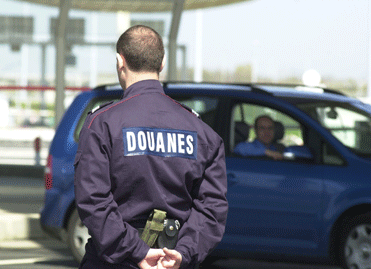
Lors du contrôle dimanche dernier des passagers d’un bus immatriculé en plaques suisses et assurant la liaison entre l’Espagne et la Suisse, les douaniers du Léman postés au niveau de la barrière de péage de Villy-le-Pelloux sur l’autoroute A41 dans le sens Annecy-Genève ont mis la main sur une importante quantité de cocaïne.
Lors de la fouille du sac à main d’une passagère résidant en Espagne et voyageant avec son fils mineur, les agents des douanes vont extraire un vanity à l’intérieur duquel ils découvrent quatre paquets de forme rectangulaire recouverts de ruban adhésif marron, dont la passagère déclarait ignorer le contenu.
Sous plusieurs couches de ruban adhésif et de cellophane imprégnés d’une substance noirâtre et huileuse dégageant une forte odeur (mélange de marc de café et d’olives), les agents vont mettre à jour près de 2,272 kilogrammes d’une poudre blanche compactée qui réagira positivement au test de la cocaïne.
La mère qui avait la garde de son fils durant les vacances pensait que la présence de celui-ci permettrait de ne pas éveiller l’attention lors du voyage. Contacté par les douaniers, le père du mineur, résident suisse qui assure la garde habituelle de l’enfant, est venu chercher son fils au siège de l’unité.
La mère était quant à elle remise au service de police judiciaire d’Annecy. Jugée en comparution immédiate mardi dernier, cette dernière a été condamnée à un an de prison ferme et cinq ans d’interdiction du territoire.
Depuis le début de l’année, les services des douanes du Léman ont saisi plus de 14 kilogrammes de cocaïne sur leur secteur d’intervention.
Par Vincent BOUVET-GERBETTAZ | Publié le 14/08/2014 à 10:38
0000000000000000000000000000000000000000000000000

Nezavisimaya Gazeta
La prensa latinoamericana indica que Bolivia y Perú firmarán el acuerdo correspondiente en octubre. Se estima que en el territorio peruano se colocarán cinco o seis radares y en el boliviano, tres o cuatro.
Según los policías, los intentos de EEUU de eliminar el narcotráfico y destruir los cultivos de coca en Colombia hicieron que la producción se desplazara hacia Perú y Bolivia. Según la policía peruana, el 95% de la droga que sale del país en aviones pequeños va al territorio boliviano. En lo que va de año fueron interceptadas 16 aeronaves con más de 1,5 toneladas de cocaína a bordo.
Es probable que Perú adquiera los radares en Rusia puesto que la colaboración militar entre ambos países comenzó hace 40 años y los peruanos conocen bien los equipos rusos.
La semana pasada el jefe del Comité Antidroga ruso, Víctor Ivanov, visitó varios países latinoamericanos para estrechar la colaboración a causa de un brusco incremento del tráfico de la cocaína desde la región a Rusia. Según las fuerzas del orden, al año los narcotraficantes intentan hacer llegar por mar y aire entre 200 y 300 toneladas de esta droga a Rusia y otros países europeos donde el precio de un gramo se eleva a 150 dólares.

Narcotráfico mundial
El presidente de Rusia, Vladímir Putin, también abordó el problema del narcotráfico durante su reciente visita a América Latina.
La región es la segunda productora de drogas después de Afganistán y los policías locales consiguen interceptar solo el 30% de los estupefacientes. Para mejorar la situación, los especialistas rusos abrieron en 2012 cursos de formación profesional en Nicaragua y Perú donde el año pasado estudiaron más de 230 oficiales.
Además, los servicios antidroga rusos realizan operaciones conjuntas con sus colegas de Perú, Nicaragua, El Salvador, Honduras, Costa Rica y otros países.
Fuente: http://sp.ria.ru/revista_de_prensa/20140814/161275109.html
0000000000000000000000000000000000000000000000000000

La policía brasileña desarticula un grupo que introducía droga desde Bolivia y Paraguay
La policía federal brasileña desarticuló este martes un grupo de narcotraficantes que introducían droga y armas en autobuses y camiones a través de la frontera de Paraguay y de Bolivia, informaron fuentes oficiales.
La desarticulación fue posible gracias a una gran operación policial, denominada Urutau, que tuvo lugar en cinco estados del norte, centro-oeste, sur y sureste de Brasil al mismo tiempo.
Cuatro de los cinco estados en los que el grupo actuaba, Mato Grosso, Mato Grosso del Sur, Paraná y Rondonia, forman parte de la frontera occidental brasileña y limitan con Paraguay, Bolivia y Argentina, si bien este último país no albergaba la actividad de los narcotraficantes.
Según los datos difundidos por la policía, el grupo adquiría marihuana, cocaína y armas en la localidad de Umuarama, en estado de Paraná (sur) y después transportaba la mercancía en falsos fondos de autobuses y camiones para otros estados brasileños a través de la frontera con Paraguay y con Bolivia.

Panorama mundial del consumo y la producción de drogas
Posteriormente, la droga era transportada para los grandes núcleos urbanos de Brasil, especialmente Sao Paulo y Río de Janeiro, las dos grandes metrópolis del país suramericano.
Desde el inicio de las investigaciones, el pasado mes de marzo, tres personas residentes en Umuarama han sido detenidas durante el proceso de transporte de drogas, mientas que otras cuatro personas fueron arrestadas en diferentes localidades de los estados de Sao Paulo y Mato Grosso.
Las autoridades incautaron tres toneladas de marihuana, 401 kilos de cocaína, ocho de hachís, 321 balas y armas de diferente calibre, además de cinco vehículos que eran utilizados para el transporte de la droga.
En otra operación contra el tráfico de drogas, cerrada este martes por la Policía Federal en Río de Janeiro, los agentes incautaron 2,5 toneladas de marihuana y detuvieron a cinco personas.
Según fuentes policiales, la droga fue encontrada durante dos acciones diferentes desarrolladas de forma simultánea en la carretera que une Sao Paulo y Río de Janeiro, las dos ciudades más pobladas de Brasil.
source: http://sp.ria.ru/bilaterial_relations/20140812/161247170.html
0000000000000000000000000000000000000000000000000

Gibraltar has numerous advantages and incentives when looking to incorporate an offshore company. Like all British Isles it enjoys a reputation of stability as well as being a respected offshore jurisdiction, however unlike the other British Isles it also has the added attraction of being part of the EU.
http://bit.ly/1pzNlxn
La demande de révision de Marc Fievet AKA NS 55 DNRED

La réponse de Maître Eric CLEMOT, LL.D. Avocat, Ministère de la Justice du Canada, Groupe de la révision des condamnations criminelles, 284, rue Wellington (222 Queen, 11ième étage -OTTAWA, Ontario – K1A OH8) pour rejeter ma demande de révision.
Vous prétendez aujourd’hui que vous agissiez à l’époque en qualité d’informateur des Douanes dans la lutte que se livrait l’Etat français contre le trafic de stupéfiants. Vous dites que vous avez été recruté en 1988 par le D.N.R.E.D. et que vous étiez enregistré sous le N° : NS 55. Vous avez commencé à travailler pour les Douanes françaises le 5 mai 1988. Vous n’étiez pas un agent des douanes et étiez rémunéré pour toute information menant directement à une poursuite judiciaire. Vous prétendez que vous étiez à l’époque en contact avec les autorités douanières jusqu’à une date antérieure à votre…
Voir l’article original 6 571 mots de plus
 Marc Emery and his wife Jodie were greeted by supporters in Windsor, Canada on Tuesday
Related Stories
Canadian Marc Emery’s arrest in 2005 was hailed by the US Drug Enforcement Agency (DEA) as a significant blow to the legalisation movement. Now, after a five-year stint in a US jail, Canada’s « Prince of Pot » returns to a completely different cannabis landscape.
Marc Emery’s voice is filled with an inescapable joy the day after he returned home to his native Canada after spending nearly five years in a US federal prison.
« The transition was surreal – I was in leg irons with a chain iron around my stomach, driving 12 hours from the jail in Louisiana, » says Mr Emery, 56, speaking to the BBC from Toronto.
« Then, all of a sudden you’re released and you’re choosing your own food – it’s a lovely feeling. »
In 2005 Mr Emery was arrested and in 2010 he was extradited to the US for selling nearly $3m (£1.8m) worth of marijuana plant seeds from his cannabis store to US buyers.
Most of that money, Mr Emery says – nearly $2.1m of it – was donated to legalisation efforts in the US.
That was why, at the time of his arrest, the DEA crowed that jailing him would halt efforts to legalise marijuana in the US and Canada.
« Drug legalisation lobbyists now have one less pot of money to rely on, » the DEA said at the time.
 Mr Emery speaks to supporters at a legalisation rally in 2005, just before his arrest
Now, visibly paler and with a few more grey hairs, Mr Emery says he was heartened to find out that the millions of dollars he had donated to legalisation efforts in the US had an impact.
But, what he calls the « rich irony » of his situation – for instance, the Washington State prosecutor who put him in jail later ended up working with Mr Emery’s wife, Jodie, to write Washington’s recreational marijuana laws – has not escaped him.
« The silence is deafening in Canada and the cowardice not to discuss marijuana legalisation is really peculiar, » he says, especially given how a refusal to legalise cannabis could be hurting the once vibrant British Columbian weed, or « BC Bud », economy.
Role reversalFor some, it is more than just peculiar.
In a reversal that few would have predicted, in the nearly five years that Mr Emery has been in jail, the US has taken the lead in the effort to legalise cannabis, stunning many observers who had long believed that Canada would be first.
« It’s ironic isn’t it? » says Robert Gordon, a professor of criminology at Simon Fraser University in Vancouver, Canada.
« We used to be bleating here in Canada that our drug policy was being regulated by the US and that the DEA and other US agencies would never allow Canada to shift to a more liberal regime in terms of drug regulation.
« Then, all of a sudden in the matter of a year, the roles reversed and certain states in the US are adopting the liberal regulation that many of us wanted in Canada, » he says.

Canada’s cannabis laws

Unlike in the US, where a piecemeal approach to legalisation has resulted in several successes for legalisation advocates, in Canada – where medicinal marijuana is regulated on the federal, not provincial, level – legalisation efforts have stalled and, in some cases, got more strict.
Many have said that this is a result of the current Canadian government – controlled by the Conservative Prime Minister Stephen Harper, who has said marijuana should remain illegal to keep it away from children.
« In Canada, you’ve seen a significant increase in terms of marijuana possession arrests – they’ve been really aggressive on this, » says Clayton Mosher, a professor at Washington State University, who notes that the arrests have not been evenly distributed.
But there has been a silver lining: in keeping marijuana legislation at a federal level, investors have been more keen to invest in medicinal marijuana growers in Canada, where at least the laws are more black and white.
‘Winning the lottery’And further south, the tightening in Canada has has been a boon to those hoping to cash in on the « green rush ».
John Evich says he was convinced to invest in Top Shelf Cannabis, one of the first legal recreational marijuana stores to open in Bellingham, Washington, after running into a friend at the post office who asked him if he would join him in business if he « won the lotto » for a cannabis store licence.
 John Evich ended up becoming an investor in Top Shelf after a chance run-in at the post office
Now, Mr Evich says he has barely slept since the store opened on 6 July to hundreds of customers – over 10% of whom were Canadians who drove just an hour south to see what was happening.
Demand was so strong in the first few days – and supply so scarce – that Mr Evich and his business partners were forced on several occasions to temporarily close the shop and turn away customers,
Now Mr Evich has been reduced to stalking potential legal suppliers, looking for a few dozen pounds here, a few pounds there – all in order to keep up with demand, which was once directed northwards, at the estimated $4bn « BC Bud » industry.
« It’s odd to me to see the huge change – there were thousands of pounds [of marijuana] a month coming down from BC to here and now we’re getting all of them [the Canadians] coming down here, » he says.
 Top Shelf has sometimes been forced to close due to a limited cannabis supply in the area
Need for greenMr Emery says that he hopes his return to Vancouver will help restart the legalisation debate in Canada.
His wife Jodie has said she plans to run for elected office as part of Justin Trudeau’s Liberal Party, which has stated support for legalisation efforts, in the next nationwide elections, expected sometime in 2015.
 Top Shelf Cannabis says that it hopes to attract weekend customers from Canada
But for Mr Emery, the matter is more than political: he is returning to his business, the Cannabis Culture store.
« We need to earn some money – I owe back taxes, » he says.
In some ways, like almost every other Canadian cannabis-related business, Mr Emery is now struggling to keep customers in Canada.
 Billboards offer a $5 million reward for Rafael Caro Quintero, who has been spotted, according to counter-narcotic sources, on various highways in Los Angeles.
Publicity on Highway 5, 91 and 60 has been paid for by the United States Drug Enforcement Agency (DEA). The ads display three photographs of the Mexican drug commander, and the announcement of a $5 million award to anyone who provides information for his capture.
On Aug. 4, a commercial billboard was placed on Highway 5 near Slauson Avenue, in the city of Montebello, one of the main routes heading to the Mexican border. The billboard will remain there until the end of September.
“We place these rotating ads in areas with high vehicle influx so that thousands of people will see them,” said Vijay Rathi, DEA spokesman in Los Angeles.

Similar posters have been installed by the DEA in San Diego, Phoenix, and El Paso. An email address and two phone numbers appear on the posters to help provide information for Caro Quintero’s capture.
Caro Quintero, who led the defunct Guadalajara Cartel in the 1970s, had served 28 years of a 40 year sentence at a federal prison in Mexico when a court ordered his release.
He is considered a fugitive by the federal court at the central district of California, where he is accused of the kidnapping, torture and murder of DEA agent Enrique “Kiki” Camarena in 1985.
The $5 million reward is being offered by the DEA under the Narcotics Reward Program, which was created by Congress to find violators who transport drugs into the United States.
People with information about Caro Quintero can call 866-629-6036 or email caroquinterotips@usdoj.gov
Source: http://www.ocregister.com/
0000000000000000000000000000000000000000000000

Photo Fotolia
C’est ce qu’est venu exposer hier le policier à la retraite Dany Fournier, 92e et dernier témoin de la Couronne au procès pour trafic de stupéfiants de Serge Pomerleau, Yves Denis et Denis Lefebvre. L’expert en crime organisé a analysé les calendriers et les carnets de notes saisis lors d’une perquisition survenue chez Jean Alari, présumé responsable des comptes de l’organisation.
Le témoin a effectué différentes corrélations entre ces documents, ce qui lui laisse croire qu’il s’agit d’éléments de comptabilité liés au trafic de stupéfiants. Selon ces analyses, les entrées et les sorties de cocaïne étaient minutieusement notées en langage codé. Un kilogramme était surnommé un «bloc» et chaque paquet était identifié par la lettre «B», suivie d’un numéro séquentiel.
623 paquets
Selon la preuve, le réseau aurait ainsi écoulé 623 kg de cocaïne, numérotés de B-19 à B-642, entre janvier 2007 et octobre 2010. Le prix du kilogramme aurait aussi évolué en cours de route, passant de 52 500 $ à 70 000 $.
Huit «acheteurs principaux» auraient mis la main sur cette drogue. Ces derniers auraient été affublés d’un numéro et inscrits à l’agenda. Les dettes et les comptes à recevoir étaient aussi soigneusement notés.
«Cette dynamique-là va être suivie dans les quatre années de calendrier avec une constance régulière», a résumé le policier à la retraite, dont le témoignage se poursuivra ce matin.
°°°°°°°°°°°°°°°°°°°°°°°°°°°°°°°°°°°°°°°°°

Les 850 000 dollars de l’agence anti-drogue américaine pour des informations gratuites
Si les plaintes contre les tarifs prohibitifs de la SNCF sont récurrentes, l’entreprise ferroviaire française a encore beaucoup à apprendre de son homologue américaine, l’Amtrak.
Selon un rapport d’inspection de la société publié lundi 11 août et détaillé par l’agence de presse AP, un salarié de l’Amtrak a touché plus de 854 000 dollars (639 000 euros) de la part du service anti-drogue de la police fédérale américaine, la Drug Enforcement Administration (DEA), en échange de l’accès à des données confidentielles sur ses passagers. Pourtant, selon ce même rapport, la DEA pouvait avoir accès gratuitement à ces données, dans le cadre d’une brigade de lutte contre le trafic de drogue menée en partenariat avec le société ferroviaire.
Selon AP, la DEA versait en effet depuis plus de vingt ans des sommes variables à un « informateur » anonyme, simplement désigné comme travaillant « pour une équipe liée au secteur ferroviaire ». Selon le rapport, l’employé en question a été mis à la retraite, et ne devrait pas faire l’objet d’une sanction disciplinaire. Il avait pourtant « régulièrement » vendu à la police fédérale des données sur les passagers de la société – numéro de passeport, détails d’itinéraire, personnes à contacter en urgence, etc. – sans l’accord de quiconque au sein de l’entreprise.
Le rapport souligne cependant qu’Amtrak permet explicitement de vendre ou partager les données personnelles de ses passagers avec certaines entreprises, ou des « partenaires commerciaux dignes de confiance ».
Le sénateur Chuck Grassley a critiqué l’annonce de cette « dépense inutile », et appelé à une réflexion « sur les pratiques de la DEA », rapporte mardi le site américain The Verge. L’agence, elle, n’a pas commenté la publication du rapport.
000000000000000000000000000000000000
“Niebla also alleged that Operation Fast and Furious was part of an agreement to finance and arm the cartel in exchange for information used to take down its rivals”. The details of the unholy agreement between the DEA and the Sinaloa cartel was that the DEA would allow 80% of all drug shipments into the United States in exchange for intelligence information on the other drug cartels. Why would the DEA want intelligence on the other cartels, yet, they would allow the Sinaloa cartel to continue with their drug operations right under the noses of the DEA. “The agents stated that this arrangement had been approved by high-ranking officials and federal prosecutors,” the Zambada-Niebla lawyer wrote”.
« Gowdy knows and Congressman Issa also knows the operational details that I am going to reveal both in this report, and in subsequent reports. Yet, neither Congressman will touch this issue with a 10 foot pole as they…
Voir l’article original 18 mots de plus


 Kathryne Lamontagne
 AVISEUR INTERNATIONAL